10 thoughts on predicting future trends:
1. If it's talking point on Reddit, you're probably early. If it's a talking point on Linkedin, you're definetly late.
2. If the media is building something up -- be ready for them to tear it down.
3. If you're over the age of 25, assume your initial reactions about new trends are wrong.
4. If you're mocked for doing something, it doesn't mean it's the future. But if nobody mocks you, it's not the future.
5. Mainstream topics of 6-12 months downstream of memes on Twitter, Reddit and 4chan. The Overton Window is guided by memes.
6. The future isn't evenly distributed -- you can get on a 5-hour flight and move 5 years ahead.
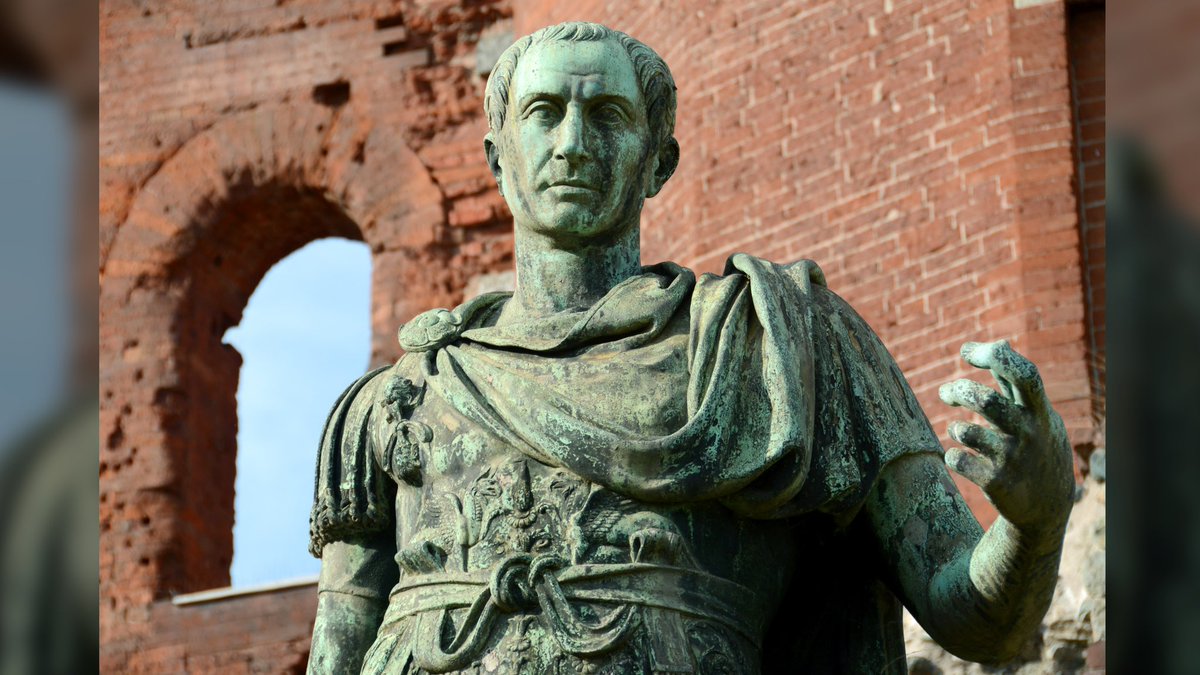
7. If you wait for the news to tell you, you'll probably be wrong or too late. Historians now recognize the Roman empire fell in 476 -- but it wasn't acknowledged by Roman society until generations later.
8. If multiple smart friends tell you about a new idea, don't wait to understand it before you put a small bet on it. If you wait for society to educate you, you'll be too late.
9. Avoid reading about new trends. Get your hands dirty with practical time. You'll spot things 6 months ahead of the journalists.
10. Don't rely on algorithms. Have specific accounts you visit manually. If they're predicting unpopular future trends, it's unlikely the algorithm will be rewarding the content.
Your comments are filled with "Option B", the quick and easy route that only leads to noise and no leads.
"Visual design" speaks volumes than your words. I spent 6 months doing "Option A", yes it's time-consuming but it's rewarding. If your plan is to grow organically and build a reputation that goes beyond your words, I would go with "Option A".
This is from someone who went through the entire journey and typing this post while generating over 50+ organic leads in the last 4 weeks and over 200+ organic leads in the last 2-3 months. If you can follow the path of "Option A", you will never spend a dime on ads or cold calls.
Quick is Easy, but it doesn't result in anything valuable. Make a mark and make people trust you beyond your words, show them what you're with your design skills.
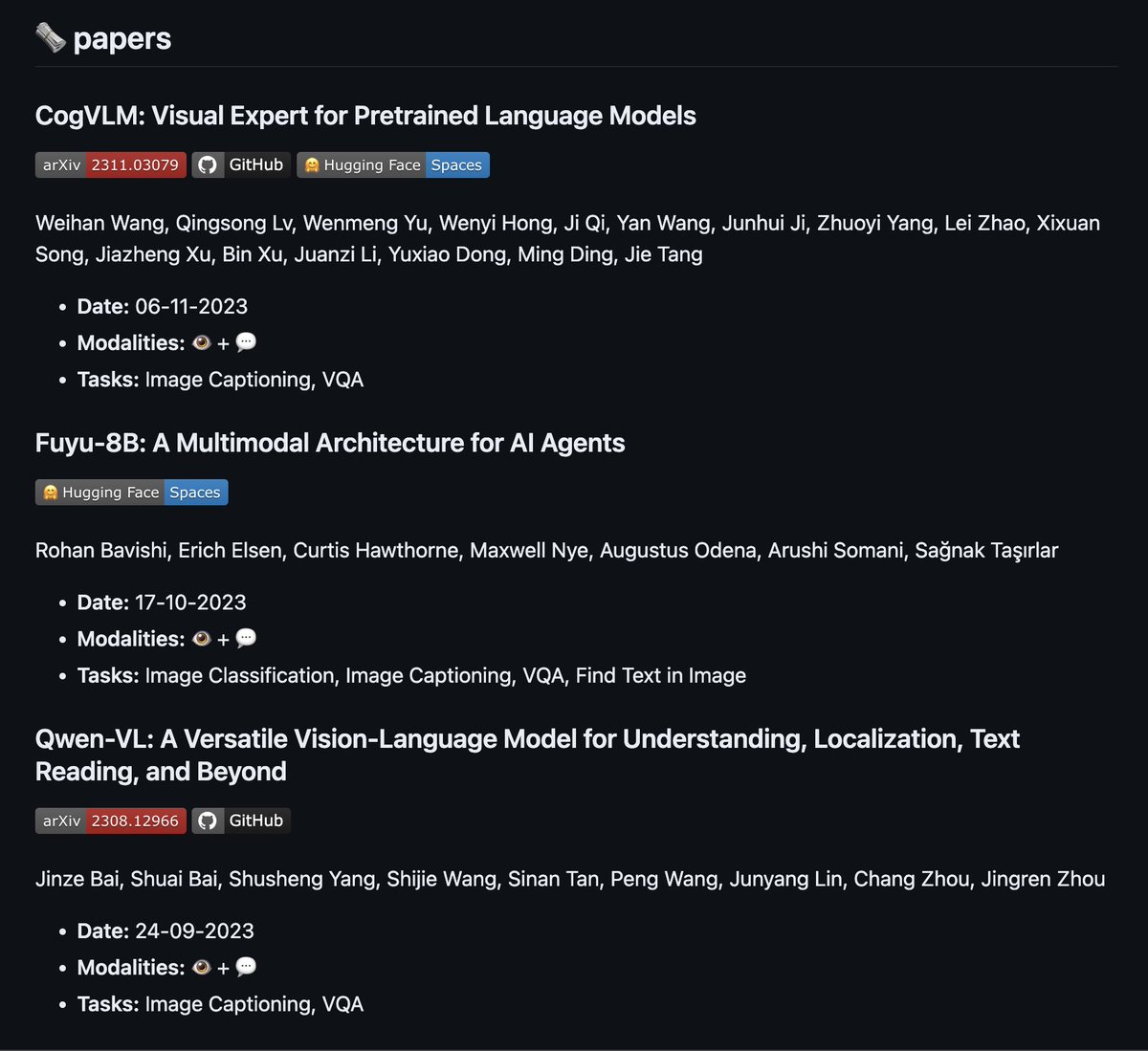
looking for OpenAI-4V alternatives?
- LLaVA
- BakLLaVA
- CogVLM
- Fuyu-8B
- Qwen-VL
I am working on a short blog post discussing some GPT-4V alternatives. It will probably come out today.
links all resources: https://t.co/4cfuXPnbJh
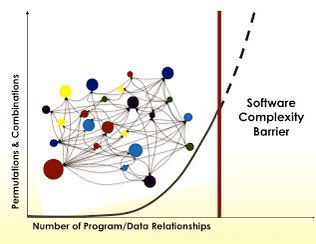
As we near AGI, you should be incredibly bearish on SaaS
Software is basically akin to sandpapering a niche process. You write code to make a pre-existing workflow smooth
AGI just does any workflow. It doesn’t need a smooth environment.
B2B SaaS will fall first
THIS reading list will 10x your understanding of tech and capitalism:
1. Andreessen archive: https://t.co/zZvOiYS7Iv (@pmarca)
2. Balaji archive: https://t.co/DGKIVzs7uI (@balajis)
3. Altman archive: https://t.co/BnDEX8F0wG (@sama)
4. Peter Thiel archive: https://t.co/3NzErMUu8f
5. Paul Graham archive: https://t.co/OQUjfIpGlH (@paulg)
6. Bill Gates archive: https://t.co/7akmXtuhdD (@BillGates)
7. Naval archive: https://t.co/vJzH8qVon1 (@naval)
8. Lenny archive: https://t.co/TN4bgQh5rp (@lennysan)
9. Morgan Housel archive: https://t.co/dqVehKAved (@morganhousel)
And finishing off with a Write of Passage alum:
10. Packy McCormick archive: https://t.co/EEwKmoAQ0z (@packyM)
The web is the new university, and these are the best classes on campus.
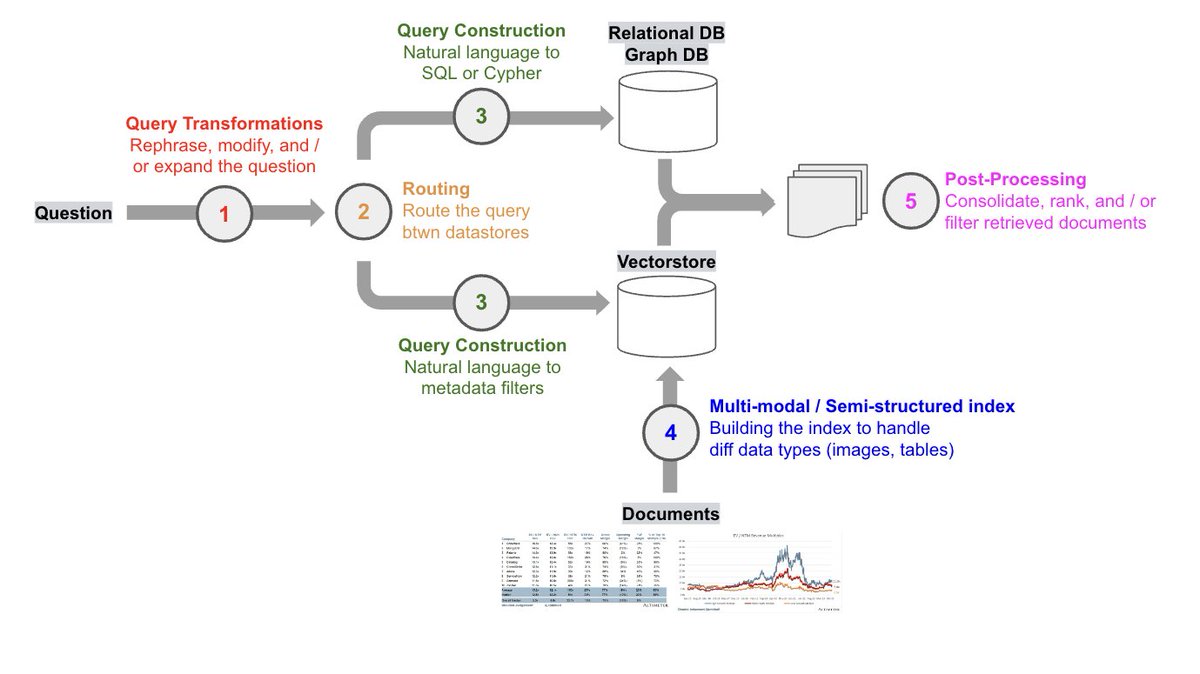
Deconstructing RAG
It can be hard to follow all of the RAG strategies that have come out over the past months.
I created a few guides to organize them into major themes and show how to build multi-modal / semi-structured RAG on complex docs (w/ images, tables).
Here's a few of the major themes:
1. Query Transformations - User questions may not be well-posed / -worded for retrieval. There's a host of methods that re-write and / or expand (fan-out into multiple sub-questions) questions that maximize the chance of retrieving relevant documents. See blog: https://t.co/38Pbrhw1Zf
2. Routing - Queries may need to be routed to different data sources depending on what is being asked. Recent blog reviewing OpenAI's RAG strategies provides some guidance on question routing: https://t.co/QnjjtZ77sp
3. Query Construction - To access structured data, natural language needs to be converted into specific a query syntax. Various approaches can access data in SQL, SQL w/ semantic columns (pgvector), graph DBs, vectorDB w/ metadata filters, etc. See blog: https://t.co/Z5ynzlzmWK
4. Index Building - One of the most useful tricks I've been using is multi-representation indexing: decouple what you index for retrieval (e.g., table or image summary) from what you pass to the llm for answer synthesis (e.g., the raw image, a table). See blog:
https://t.co/dUlYZHP9b9
4a. Multi-Modal -
This cookbook show how I used this approach for RAG on a substack (@jaminball's Clouded Judgement) that has many images of densely packed tables, graphs:
https://t.co/ANJ1PhrvRw
4b. Semi-Structured -
This cookbook show how I used this for RAG on a docs (papers) with tables, which can be split using naive RAG text-splitting (that does not explicitly preserve them):
https://t.co/00jLXU05i1
5. Post-processing - Given retrieved documents, there are various way to rank / filter them. Recent blog reviewing OpenAI's RAG strategies provides a few ideas on applying post-processing: https://t.co/QnjjtZ77sp
💯 Smaller models, tuned and configured to reason, coupled with RAG and knowledge graphs, will absolutely eat a lot of white collar jobs. Maybe not in the next 6 months, but it’s inevitable.
That’s why it’s so important that the open source / open LLM community start *now* on standards for data governance, provenance, and licensing. We have the biggest opportunity for democratizing and resetting the scales of economic equity, since the rise of consumer internet and seminal open source like Linux and GCC.
If you’re an indie founder I think you should spend max 6 hours at the office every day.
30 mins to prioritize.
4hrs of deep work.
1hr misc.
This leaves plenty of other time for non-work stuff to keep you mentally healthy.
All day at the office is a red flag 🚩
The recipe:
- have lots of kids
- instill family as one of their highest values
- raise them to be fiercely loyal towards eachother
- heavily encourage and reward enterprise
When you look throughout history at the families that RAN shit. They always followed this model.
Just keep making great shit, keep your costs in check, charge appropriate prices for your work, share as much as you can, and let the chips fall where they may.
Been our strategy from day 1. Going on day 8880.
I got a pretty crazy call from a founder friend...
“I got an offer for $100M to buy my company and I’m taking it.”
Let’s grab a drink. I need to hear the story.
I’ll give you the details so you’re on the inside but keeping the company name anonymous.
So, he raised ~$25M of venture, 2 co-founders, business is 9 years old.
Owns 6% of the business after all the VC dilution.
Had an M&A offer at 20x ARR in 2021. Didn’t take it.
Had an M&A offer at 15X ARR in early 2022. Didn’t take it.
Got an acquisition offer at 5x ARR for $100M. Ended up taking it.
“I turned 30 and was just really burnt out. And truth is, I’ve been building this for 9 years and I didn’t think I could raise my next round at the valuation I wanted ”
I mean the guy did start with the best head of hair of out my friend group and now looks as bald as Mr. Clean.
After I gave him a quick cheers congratulating on the wire hitting, he got real with me:
“I’ll make $6M pre-taxes which is obviously incredible to make that much. But I wonder would of happened if I never raised that funding in 2020”.
See, my buddy ran it as a profitable business until 2020 and then swung for the fences. He was making $1.5M/year in profit at the time of the first round.
But it gets you thinking….
If you’re making $1.5M/year of free cash-flow, and you grow a conservative 30% year over year…
Your outcome is probably better than if your raised venture capital. And it’s definitely less stressful.
Less stakeholders, less pressure, more dividends.
And my favorite part is without that pressure and with those dividends, you get to live a pretty dope lifestyle.
From 2017-2019, I was the CEO of a venture-backed startup.
I was earning $75k USD/year living in SF. Could barely afford brunch on that ;).
I almost had an opportunity to do a secondary in our Series A, but it all fell through.
Being reliant on VC to sign terms sheets isn’t that fun.
I like relying more on myself.
And my friend who sold his company for $100M… I asked him if he’s going to work at the acquirer:
“No, I’m going to go buy some distressed VC-backed assets like someone did to me and not raise a penny of VC and dividend and compound like there is no tomorrow”.
Probably a pretty smart idea…
--
Follow me @gregisenberg for more startup stories. I don't use ChatGPT to write my X posts, just lots of coffee
And follow a few of my other companies if you're into...
@boringmarketer - all "boring marketing" ways to grow ur biz
@DispatchDesign - design
@youneedarobot - AI and productivity
@MultipreneurGuy - multipreneurship (making multiple cash flowing companies)
@latecheckoutplz - my holding company
Have a beautiful day!
Just chatted with a 24-year-old running three startups. In my lingo, that's 'multipreneurship'. In plain English, he's wildly passionate.
One's an AI venture, another's in sustainable fashion, and the third is an app nudging you to call your mom (I'm already a fan).
Here’s the twist: he sleeps like a log. His secret? 'Hire operators.
I focus on vision; they manage the chaos. Diversify your dreams, but don’t try to micromanage them.'
This isn’t about burning candles at both ends. It’s strategic, like a chess grandmaster playing three boards at once.
Lesson from this? If your heart's set on multiple dreams, chase them.
Just make sure you're not the only one running.
Bring in the right people, so you can dream big and sleep well.
Turns out, you can build empires and catch Z's.
---
Follow me @MultipreneurGuy for more insights on the multipreneur movement
I used to run an agency.
I loved the money. I hated the lifestyle.
I was 25 and looked 52.
I know they call it a lifestyle business.
But when you have clients DMing you like there is no tomorrow, it's a difficult life.
I met someone at an ecommerce dinner in LA.
His intro... "I run 12 agencies and love it. I make $1m of profit per month".
I GASPED.
How the hell can this happen.
Here I was running an agency and would do anything for a 25th hour in a day.
And this guy has 12x the headaches I have but looks like he just came out of a GQ ad.
So I asked him:
How do you do it?
He mentioned one sentence to me and I'll never forget it:
" Be an owner, not an operator"
He kept going:
"As soon as you figure that out, you'll like any business. Doesn't matter what it is".
Damn. He was right.
So many of us are building businesses, not building portfolios.
Too many of us are entreprenurs, not multipreneurs.
We're founders, not funders.
That was the beginning of my multipreneur journey....
Follow along @MultipreneurGuy if this resonated...
There’s no point in using GPT-3.5 in production — the API has frequent downtime, plus high response latencies lead to subpar end user experiences.
Instead, I’ve found a Mistral 7B finetune deployed with VLLM to be 10x faster(!), way cheaper, and *stupidly* simply to self-host.
Move faster. Slowness anywhere justifies slowness everywhere.
2021 instead of 2022. This week instead of next week. Today instead of tomorrow.
Moving fast compounds so much more than people realize.
Weak desires are the BANE of modernity. Making Pro-Con tables is no way to live. Weak desires are a terrible energy leak; it's most exhausting to think a lot but go nowhere. Every patch of ambivalence inside you is toxic. IFs & BUTs are your enemy. Fuck Yes is your friend
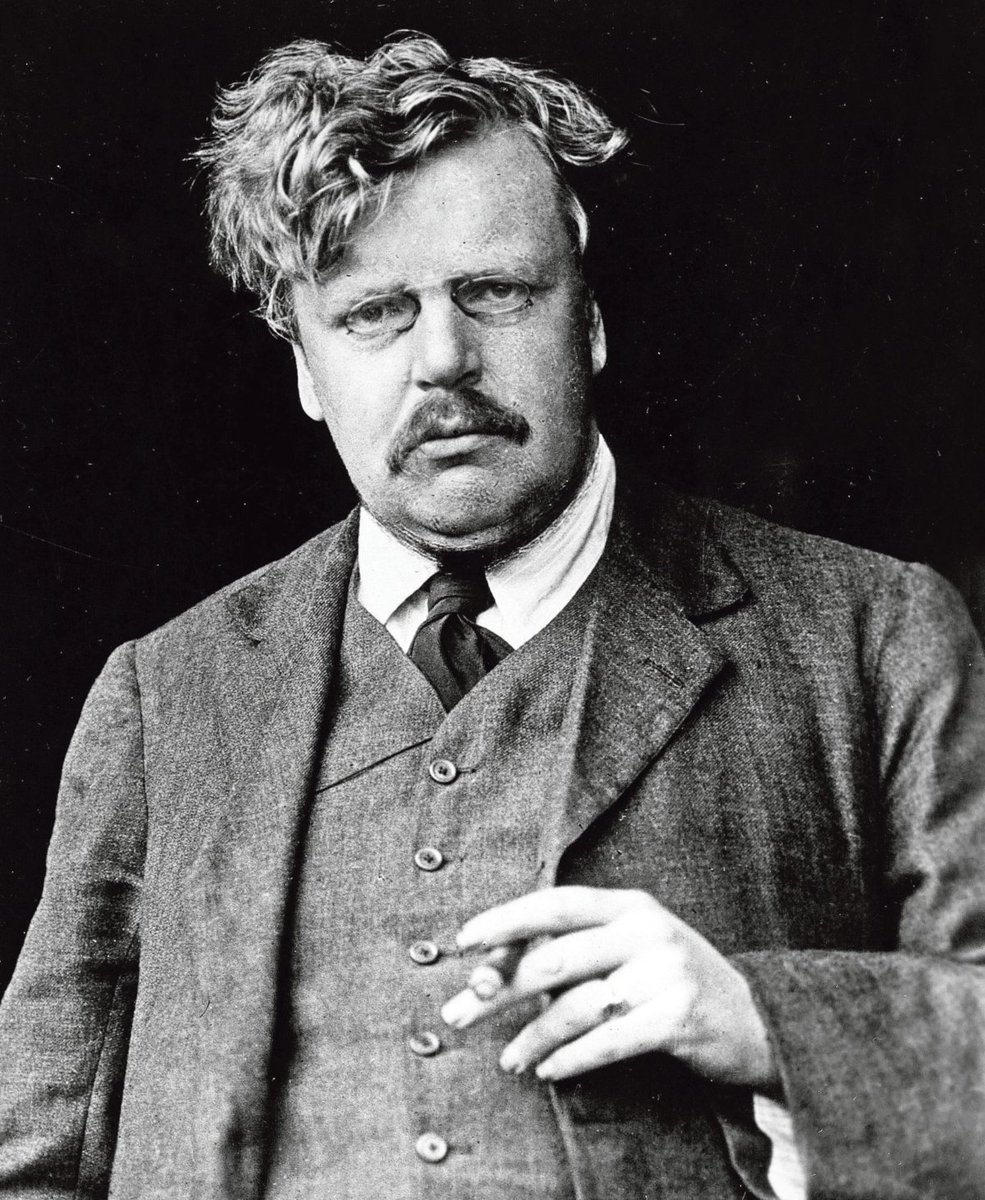
Orthodoxy (1908) is G.K. Chesterton's best book
A curated list of its 10 best ideas:
1. Love precedes lovability: "Men did not love Rome because she was great. She was great because they had loved her." A "primary devotion" to a place, thing, or person is the source of the creative energy that transforms it. Begin with love, not scorn.
2. Modern streets are "noisy with taxicabs and motorcars," but that's the noise of "laziness and fatigue," not activity. If everyone walked, streets would be quieter but more alive. Modern thought is like a modern street - noisiness, long words, loud ideas...hiding laziness.
3. The paradox of fairytales: "All the beauty of a fairy-tale lies in this: that the prince has a wonder which just stops short of being fear. If he is afraid of the giant, there is an end of him; but also if he is not astonished at the giant, there is an end of the fairytale."
4. How to think about the environment around us: "This is not a world, but rather the material for a world. God has given us not so much the colors of a picture as the colors of a palette. But he has also given us a subject, a model, a fixed vision."
5. Healthy men have bandwidth for superfluity: "It's the happy man who does the useless things; the sick man isn't strong enough to be idle. It's exactly such careless and causeless actions that the madman could never understand...he generally sees too much cause in everything."
6. Old humility v/s New humility: "The old humility made a man doubtful. about his efforts, which might make him work harder. But the new humility makes a man doubtful about his aims, which will make him stop working altogether." There's such a thing as toxic humility...
7. Art requires limitations: "The essence of every picture is the frame. If you draw a giraffe, you must draw him with a long neck. If, in your bold creative way, you hold yourself free to draw a giraffe with a short neck, you'll really find that you're not free to draw a giraffe."
8. It is impossible to critique without standards. Chesterton: "When little boys in the street laugh at the fatness of some distinguished journalist, they are unconsciously assuming a standard of Greek sculpture."
9. Why its anti-democratic to ignore tradition: "Tradition means giving votes to the most obscure of all classes, our ancestors. It is the democracy of the dead. Tradition refuses to submit to the small and arrogant oligarchy of those who merely happen to be walking about."
10. Chesterton on the emptiness of the atheist's worldview: He has "nothing to show us except more and more infinite corridors of space lit by ghastly suns and empty of all that is divine." We need more than that to live...