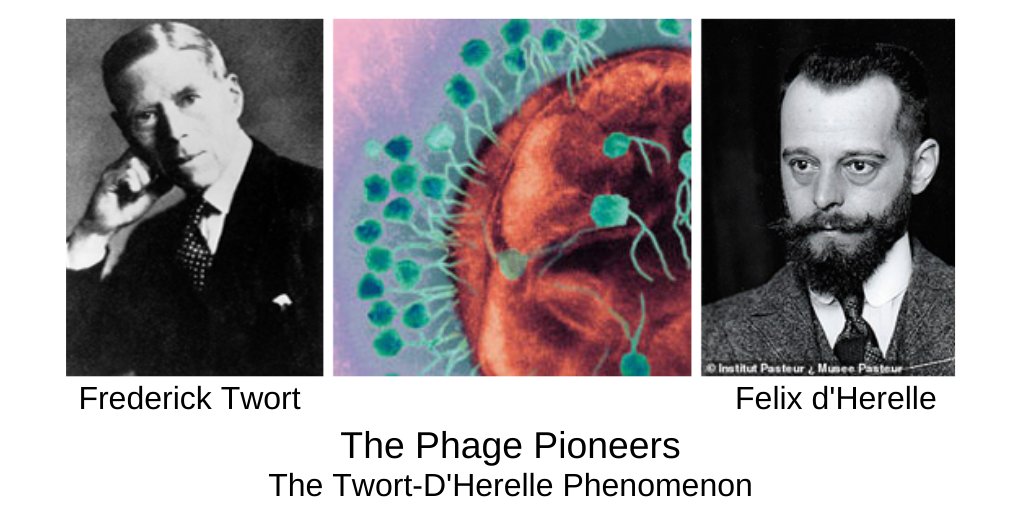
@AgeofthePhage, @PidaRipley, initiators of the #WorldPhageWeek 22-28 Oct #WorldPhageDay 22 Oct conclude this years event. Huge appreciation to all who participated and supported 'Waking the World Up to the Phage'. We look forward to the 5th year of these events in October 2023.
About a decade ago, a baker in a small mountainous village in southern Austria noticed his cow doing something unusual. When Veronika had an itch, she would grab a stick in her mouth and use it to scratch her body. Over the years, the brown bovid’s technique improved. She could pick up objects as large as a broom or rake and move them around with her prehensile tongue, changing their length and orientation to ensure the best possible scratch.
The behavior isn’t just a clever trick: It’s the first documented case of tool use in cattle, scientists report.
And, it turns out, one of Veronika’s skills has only been seen in humans and chimpanzees. Learn more: https://t.co/iVyXt180Oh
A study reports increased proportions of specific bacteriophage species in the lung, suggesting that they promote the development of hospital-acquired pneumonia in critically ill, ventilated patients. Read a full summary in the February 2026 SM&A: https://t.co/83gdr37hLW
Get expert mentorship for your AI startup. 💡
Join the #AWS Generative AI Accelerator, where startups like Phagos develop AI solutions to fight against bacterial infections.
Applications close July 10. https://t.co/iv406X17Vc #generativeAI#Startups
🧬 Can Viruses Help Us Defeat Superbugs?
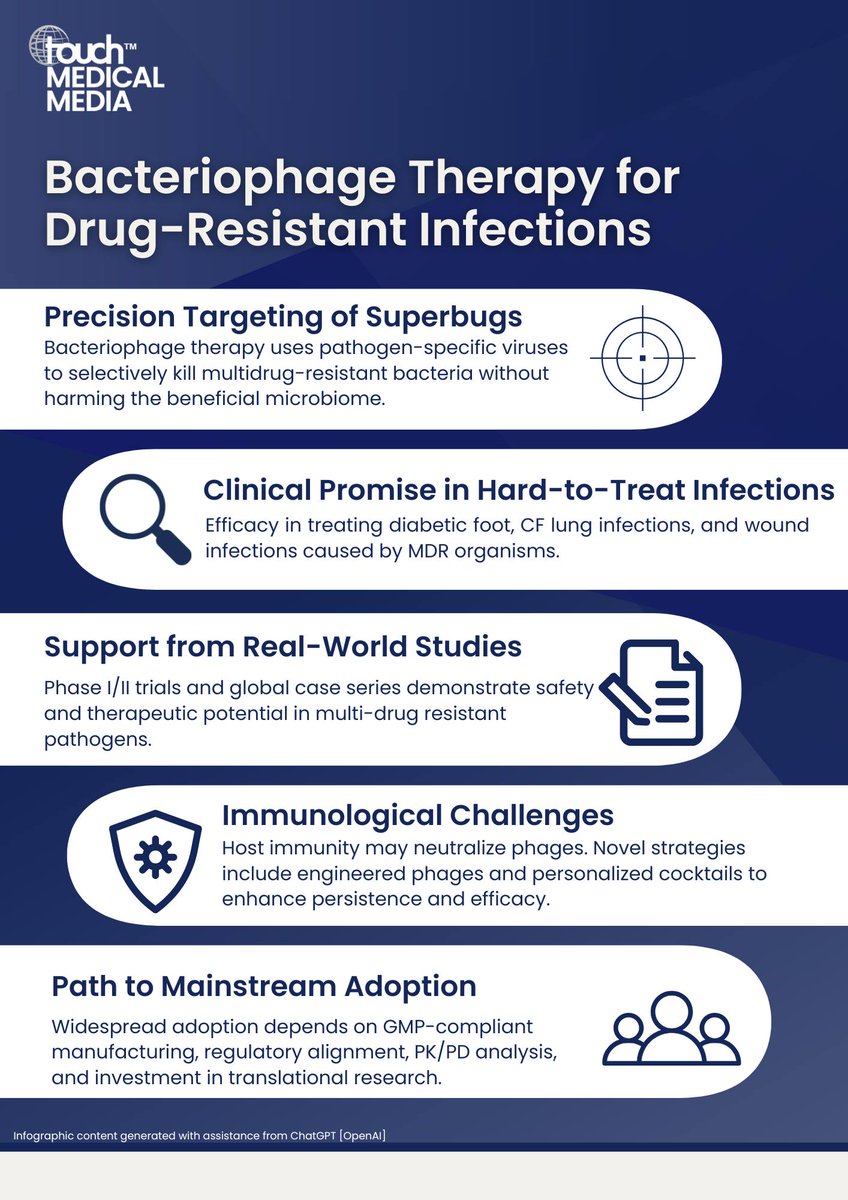
Bacteriophage therapy is gaining renewed attention as antibiotic resistance continues to rise worldwide. Unlike broad-spectrum antibiotics, phages precisely target harmful bacteria while leaving the beneficial microbiome intact.
In our Q&A, Dr Ikechukwu Moses (Division of Infectious Diseases, EPM-UNIFESP, São Paulo, Brazil) shares key insights on:
🔹 Why phage therapy is re-emerging as a promising alternative
🔹 The infections and patient groups most likely to benefit
🔹 Ongoing global studies driving clinical adoption
🔗 Discover more: https://t.co/Ozb1Dzg3PI
#PhageTherapy #AntibioticResistance #InfectiousDiseases
Great news! Today we are publishing our first work on phage therapy applied to osteoarticular infection. An important milestone for our team. Thank you @MariadelMarTom 🙌🔬#MicroTM#Mepram
https://t.co/GUbZNfoZsy
🦠@EC_HERA, @EMA_News & #TATFAR experts from the #EU, US, UK, NO, and Canada have published an article on phage therapy — outlining regulatory frameworks, evidence gaps and opportunities to boost cooperation against #AMR.
Read the article🔗👉https://t.co/V3Eooy9Jft
@Rainmaker1973 The bacteriophage angle is promising—custom phages could be a real answer to antibiotic resistance. But the Microsoft Research finding about evading DNA synthesis screens is concerning. We're in a race between detection and evasion, and right now detection is playing catch-up.
"Phage-associated Cas12p nucleases require binding to bacterial thioredoxin for activation and cleavage of target DNA"
Wang Z [..] Ji Q. Nat Microbiol. 2026-01-02.
https://t.co/2knq3dppaA
... represents an unexpected phage–bacteria interaction, in which the bacteriophage co-opts a bacterial factor to augment its own genome degradation machinery, potentially against competing phages.
#DYK that Cyotphage has a FarmPhage product line that specifically focuses on #poultry health? Learn more about our AviPhage, OvaPhage and PhageFend products:
https://t.co/lGecq8FIP4
📢 Nuestra #Fagoteca en los medios:
@genotipia : 'La Fagoteca One Health impulsará la tecnología basada en fagos frente a la resistencia a los #antibióticos'
Lee la información 👇👇
https://t.co/aNCYg4auWv
New Year and a New PhageCast episode out!
New Phagebite episode, this time with Carmen Chen, MSCA PhD student in Finland and Milan, on how bacteriophages interact with the human complement system to kill antibiotic-resistant A. baumannii.
Listen to here:
https://t.co/pZ4aPnsgoG
Scientists have discovered a biological "arms race" unfolding aboard the ISS. New research reveals that microgravity forces phages to evolve into more efficient predators to survive the lack of fluid mixing in space.
https://t.co/mkHan4P3ab
@ShiningScience Huge win against AMR!
Tailored phages could save lives where antibiotics fail. But the same tech could engineer deadly human viruses from scratch → dual-use nightmare for engineered pandemics. Biosecurity must catch up FAST!
🧬🛰️ Space station microbes may offer a new weapon against drug-resistant superbugs
Researchers studying bacteriophages — viruses that infect bacteria — on the ISS found that microgravity nudges evolution in unusual directions. Phages exposed to space conditions developed mutations that made them better at attacking certain bacterial strains back on Earth, including some that are notoriously hard to treat.
Why it’s promising:
• microgravity creates evolutionary pathways we don’t see on Earth
• some space-shaped phages showed enhanced bacteria-killing ability
• antibiotic resistance is a major global crisis with few new drugs in the pipeline
It’s early science, but it suggests space could become a biotech testbed, not just a physics lab — and that outsmarting superbugs might require thinking beyond the planet that created them.
¿Cómo destruyen los fagos las bacterias? #Asturias se pone a la vanguardia de la guerra contra las bacterias resistentes a los antibióticos con la primera colección de bacteriófagos https://t.co/HZIkrl4aiW