Our high margin is not simply the result of the industry choice, but also the way we operate. The former invites competition but the latter is industry agonistic.
Thanks Maxx for this report.
When we build products at AppLovin, we don’t believe that customers being willing to spend is, by itself, a sign of success. We need to convince ourselves that our products create real, long term value for our customers.
That’s a standard we hold ourselves to, and we welcome external scrutiny and independent validation like this.
I believe AppLovin will overtake Google's share of wallet for most D2C brands in 2026/2027.
Here’s why:
1. Cold audience at scale
AppLovin's consumer platform only rolled out about 18 months ago. For our clients Axon is already the third largest ad channel, behind Meta and Google.
Our clients spend roughly 70 percent of their ad dollars on Meta because Meta converts cold audiences with no buying intent. A good product, a strong algorithm, and good creative can persuade someone who was not looking to buy.
That means scale is possible.
Google does not do this well. It captures demand. It does not create it.
So the scale is limited.
The only platforms that tap the same cold audience layer are TikTok and AppLovin.
That is the gap Axon walks into.
2. The pixel is the moat. And Axon's runs on a different graph than Meta's.
For an ad algorithm to predict who will convert, it needs to tie web events back to a known identity. Without that, the model is guessing.
Meta does this through its logged in user graph. Every event captured by the Meta pixel gets tied back to a Facebook or Instagram profile with years of behavioral history. That is what makes the model work. The pixel without the user graph is useless.
From what I understand, AppLovin built a different kind of graph. They spent years running their SDK inside thousands of mobile apps, mostly in gaming. They know which device played a game last night, downloaded an app last week, made an in app purchase last month.
When the Axon pixel fires on an advertiser site, the conversion gets tied back to a device with a real behavioral history. The model trains on that.
Two things follow from this.
First, the Axon graph is independent from Meta's and resilient to the iOS privacy changes that broke parts of Meta's attribution.
Second, it compounds with every new pixel install.
Right now, Axon's pixel is on a small fraction of US ecommerce sites. When AppLovin opens the platform to all advertisers, that footprint scales fast.
More pixels means more web events tied back to the device graph, which means a more accurate model.
That is what compounds.
3. More advertisers means a better model.
yrevEbuyer types. This is the same flywheel Meta rode for a decade.
We have already seen a meaningful step up in ROAS across our Axon accounts since the latest model update a few weeks ago. The model improves every quarter. I see no reason to believe that stops.
4. The team is the variable that does not get priced in.
The AppLovin team is one of the sharpest I have watched operate. Driving incremental revenue at a CPA or ROAS that works for an SMB is the only thing that matters in this business. They get that
So the setup is: cold audience platform, expanding pixel footprint on a graph independent from Meta's, sharp team shipping model improvements every quarter.
That is the gap that compounds.
Thoughts on $APP
This quarter was honestly absurd. The numbers almost don’t look real. Revenue grew 59% to $1.84b, net income grew 109% to $1.2b, and adjusted EBITDA hit $1.56b with an 85% margin.
An 85% EBITDA margin at this scale is one of the craziest economics you’ll see in public markets. That means for every extra dollar flowing through the system, most of it drops straight down to profit. This is the type of operating leverage investors dream about.
What’s fascinating is how little the company spends relative to revenue. Sales and marketing was only about $61m on $1.84b revenue. R&D was only $94m. Total operating expenses excluding cost of revenue were tiny compared to the amount of money flowing in.
That tells you the core engine is software like. Once the AI models and ad systems work, the incremental economics become extremely powerful. The machine basically scales itself.
The free cash flow generation is probably the most impressive part of the report. They produced $1.29b in operating cash flow and about $1.29b in free cash flow in just one quarter.
That means the business converted around 70% of revenue into free cash flow. Those are almost monopoly like economics.
Then they used roughly $1b to buy back stock in a single quarter. That’s important because this isn’t one of those companies generating fake adjusted profits while massively diluting shareholders. Shares outstanding actually declined from 338 m to 336m .
The guidance was also very strong. They guided Q2 revenue to about $1.92b to $1.95b with EBITDA margins still around 84% to 85%.
So now let’s talk about the red flags because every business has them. Scary how extreme the margins are. 85% EBITDA margins are incredible, but they also raise the question of sustainability. Markets eventually attract competition when economics become this attractive.
There’s another subtle thing here too. The business is becoming almost too efficient. Sometimes when companies generate this much profit this quickly, investors start extrapolating perfection forever. That’s where valuation risk comes in. You can have an unbelievable business and still have mediocre stock returns if expectations become impossible to beat.
But operationally? This quarter was elite. A company doing 59% growth at nearly $2b quarterly revenue while printing 65% net margins and over $1b quarterly free cash flow is extremely rare.
The main question is no longer “is this business good?” The real question is whether these economics are durable for many years or whether they’re temporarily benefiting from an unusually strong position in the advertising cycle and AI optimization advantage.
🌹
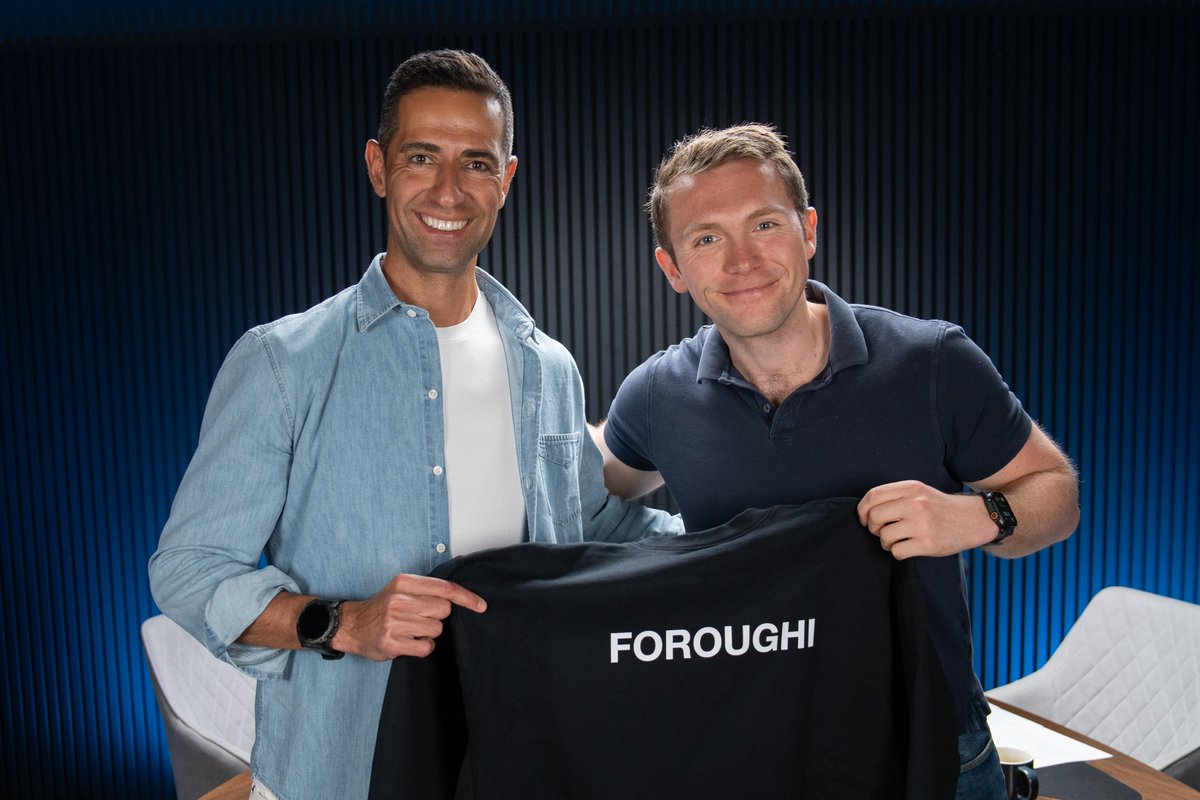
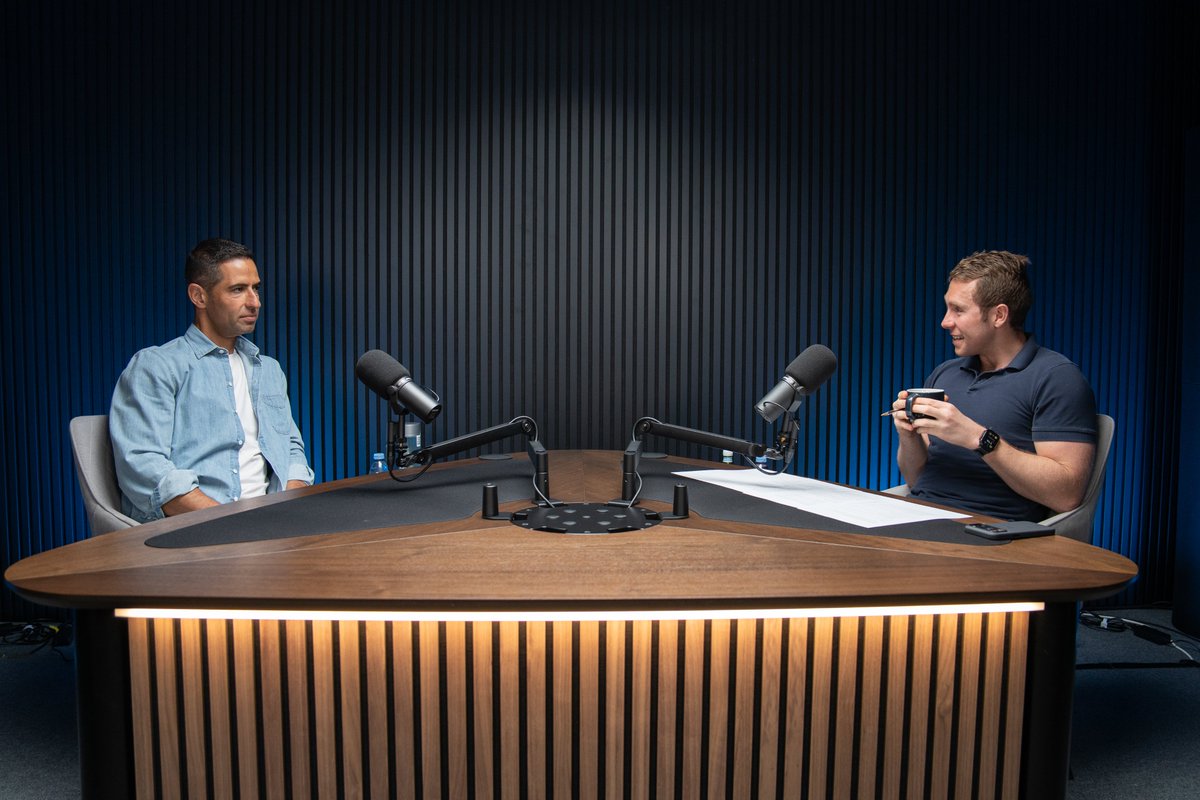
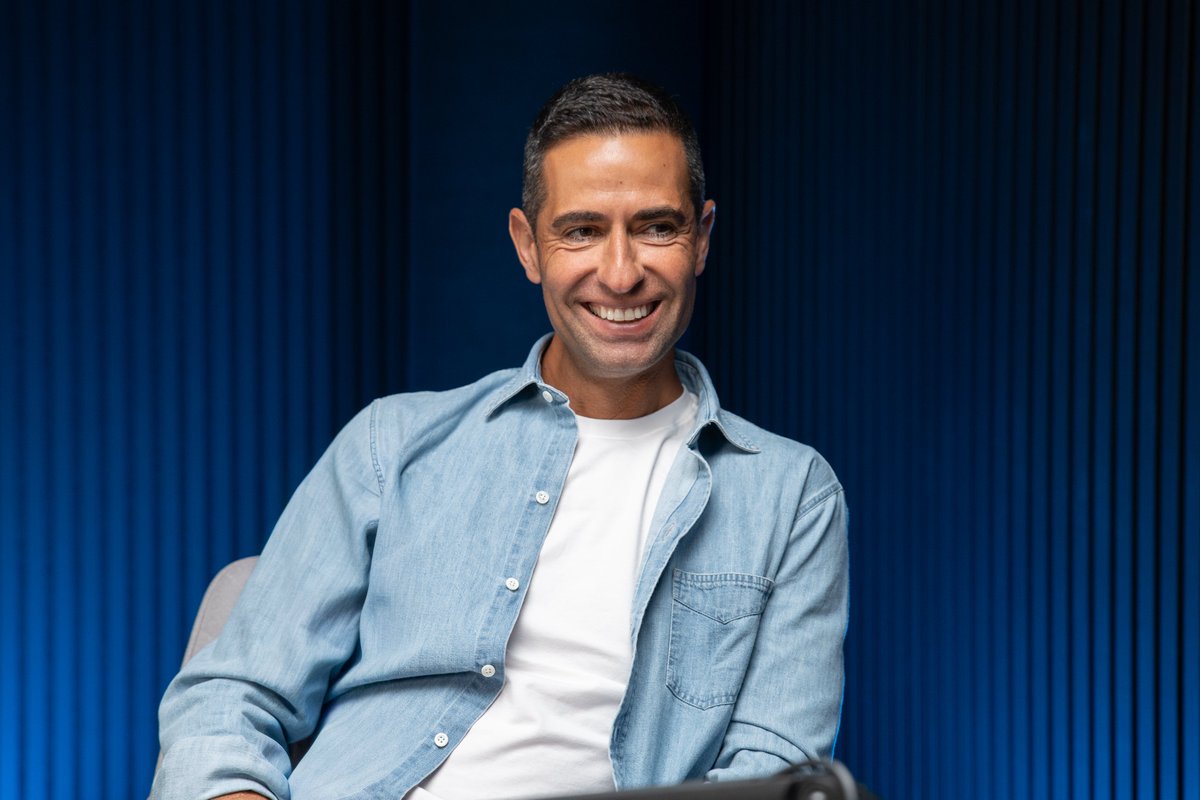
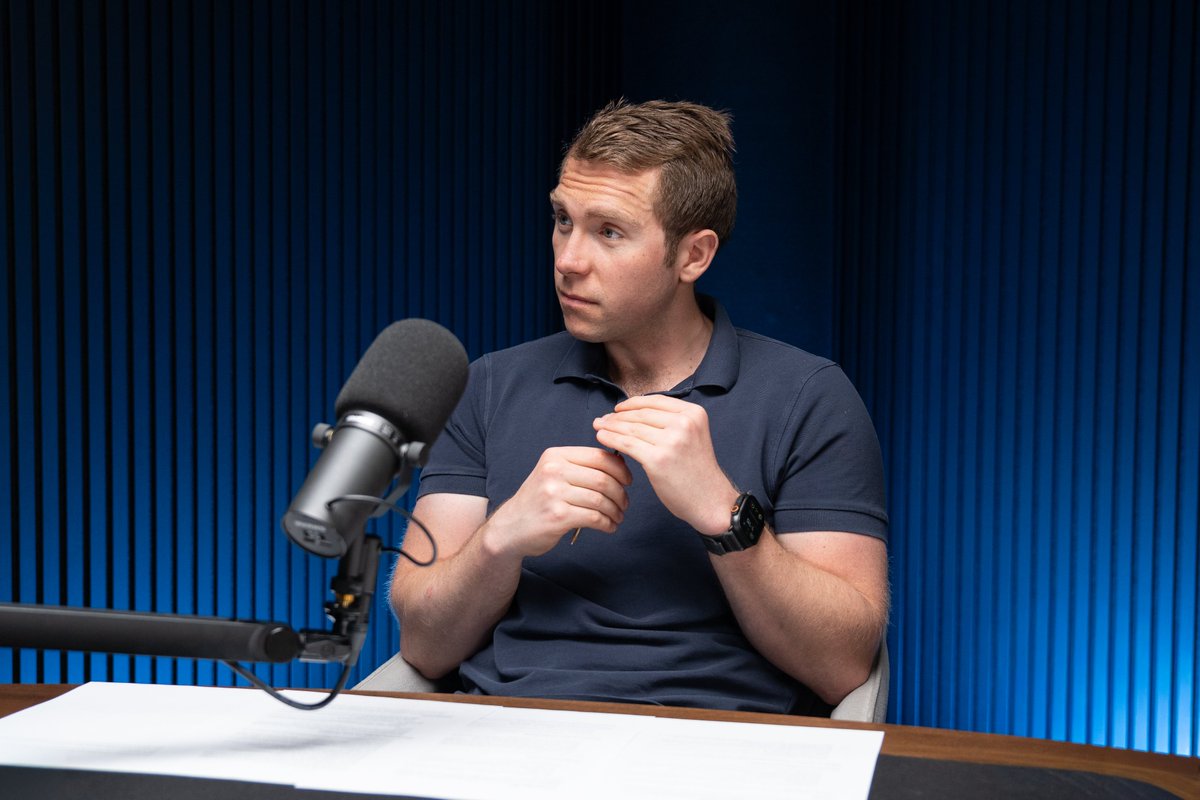
Adam joined @HarryStebbings on 20VC for a candid look at how we operate.
Our culture, his conviction, and what it actually takes to build something that lasts.
Worth a watch: https://t.co/HaiYfr4e32
@AppLovin $APP
I've known Adam since early 2014, and without a doubt, this is the best public representation of how he thinks and operates.
Yes, I'm an $APP shareholder and a fan of Adam personally, but I think anyone running a business in today's tech landscape can learn a lot from him as a leader.
nice interview @HarryStebbings
https://t.co/g2H6zf7tlE
What if launching on @AxonAdsManager took one click?
No setup. No guesswork.
→ Your best ads pre-loaded
→ Goals already set
→ Tracking ready
→ Campaign live instantly
→ Free credits to get started
We partnered with @triplewhale to make this a reality for their customers. Now we’re opening it up to a small group of beta testers. If you want early access, fill out the form below👇
https://t.co/8CjItBKXP3
I lost my account with over 440,000 followers. And, X hasn't been helpful so far.
My account @Akshat_World has been hacked.
My team has tried to coordinate with X support. But, it just keeps hitting a bot. We are clueless at this point how to approach this further.
It had taken me several years to build this account.
Not sure if I will ever get it back.
Just hoping that good folks would help me escalate this. @elonmusk@nikitabier
Thank you :)