A mind-blowing paper has come out today in @Nature
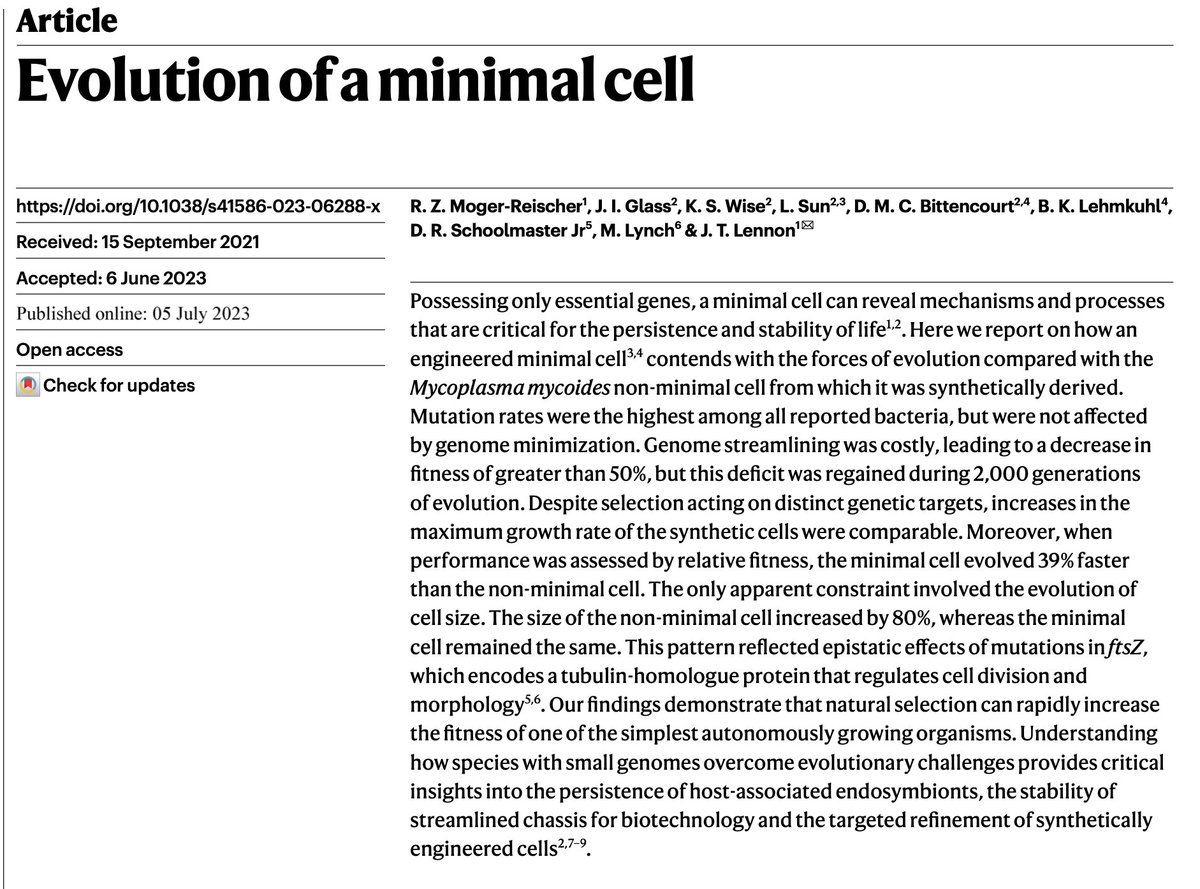
In 2016, JC Venter Institute scientists trimmed a bacterial genome to its barest minimum required for life to synthesize what they called a "minimal genome" (https://t.co/Rk8oZJ0bUj).
Today, a group of scientists from Indiana University reports how that minimal genome evolved over 2000 generations in comparison to the non-minimal genome.
The authors found that even when you reduce a bacterial genome to its absolute minimum where every nucleotide matters, the genome undergoes mutational events generation after generation as much as the non-minimal genome. One simply cannot stop the evolution.
Just over 300 days of evolution (equivalent to 40,000 years in humans) the minimal cell has gained everything it lacked in fitness on day one in comparison to the non-minimal cell.
When comparing the evolved traits between the minimal and non-minimal cells, the scientists found something striking. The evolutionary process increased the cell size of non-minimal cells but not that of the minimal cell. But that is not the striking part.
The scientists were able to identify the key mutation that resulted in cell size evolution. And it turned out that the mutation that helped the non-minimal cells to grow bigger is the same that helped the minimal cells to stay smaller. Growing bigger had a survival advantage for non-minimal cells and not growing bigger had a survival advantage for minimal cells. So, the mutation had a context-dependent effect. This just demonstrates that the evolutionary effects on traits have no absolute direction. All that matter is what is beneficial for the organism's survival.
The conclusion of the paper is metaphorically a quote from the Jurassic Park movie:
“Listen, if there’s one thing the history of evolution has taught us is that life will not be contained. Life breaks free. It expands to new territories, and it crashes through barriers painfully, maybe even dangerously, but . . . life finds a way". (https://t.co/UlxRlb86CT)
https://t.co/zA9OAqSoAu
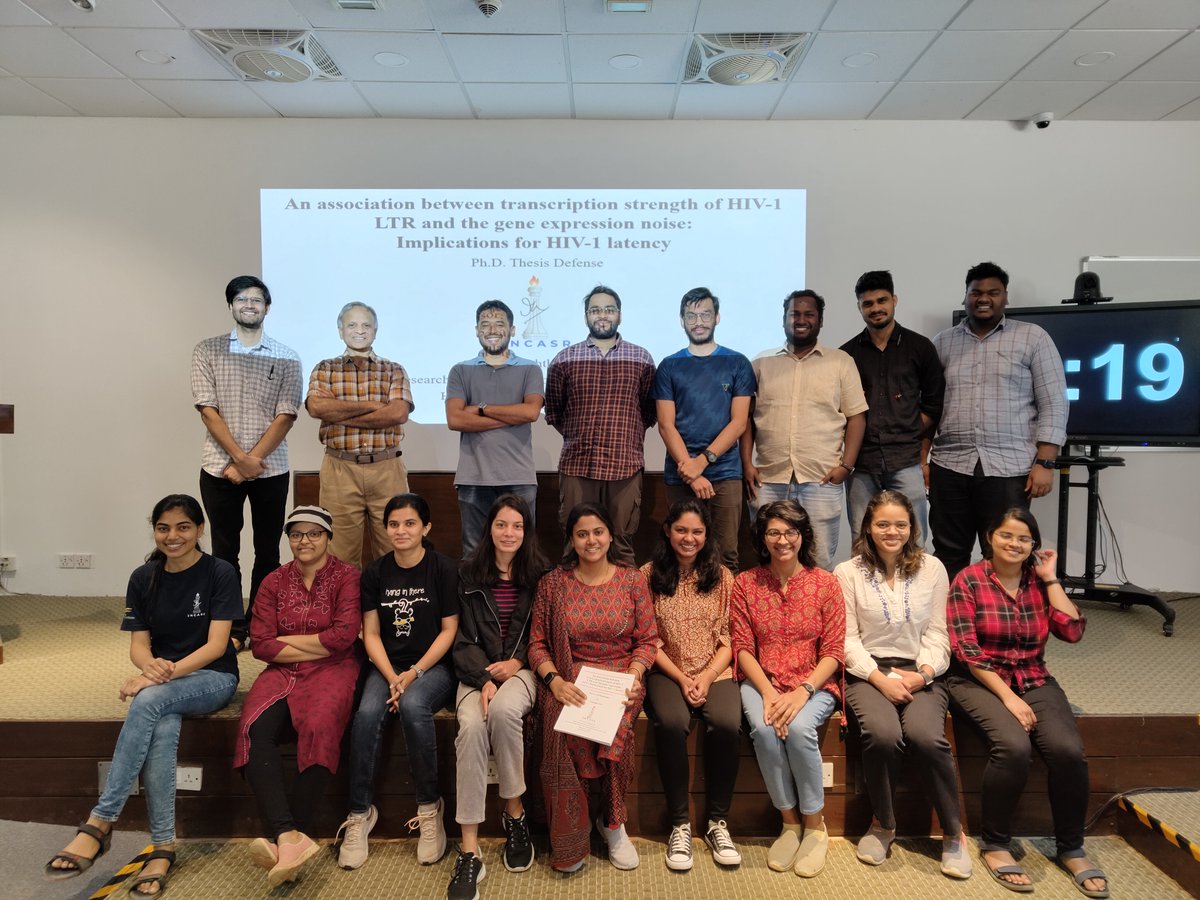
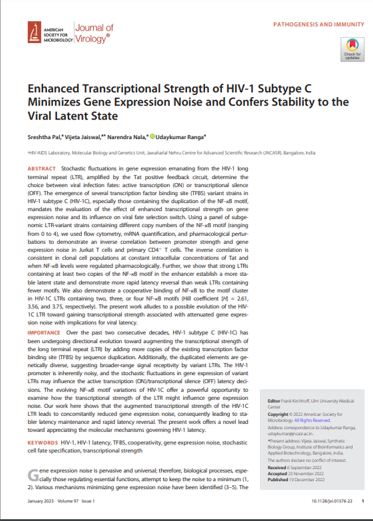
Congratulations to Dr. Srestha Pal for defending her thesis titled -
"An association between transcription strength of HIV-1 LTR and the gene expression noise:
Implications for HIV-1 latency"
"Build your opinion on facts, data and knowledge.”
Chemistry laureate Ben Feringa urges us all to build our opinions on facts, data and knowledge.
Watch the full student roundtable here: https://t.co/W0v50bv06R
#NobelPrize
Our paper describing NEAT-seq, a method to simultaneously measure transcription factor protein abundance, ATAC-seq, and RNA-seq in single cells, is now out at Nature Methods! Congrats to Amy and Ben! https://t.co/UeDR5KtcW1
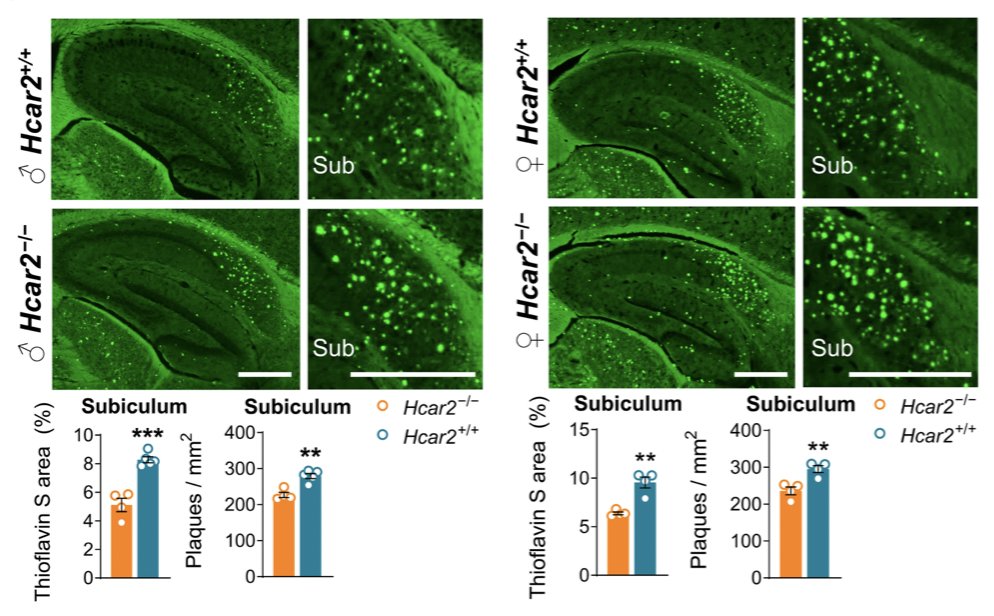
An approved formulation of the vitamin #Niacin slows the death of neurons and the progression of #AlzheimersDisease in mice by correcting #Microglia, according to new research in @ScienceTM. #Neurology https://t.co/p2fOxYHLLO
Be humble. Be teachable. The universe is bigger than your view of the universe. There's always room for a new idea. Humility is necessary for growth. 🧠
New Huberman Lab Podcast Out Now:
BREATHING FOR MENTAL & PHYSICAL HEALTH & PERFORMANCE
w/Dr. Jack Feldman @UCLA
• Breathing Science
• Anxiety Control
• Enhancing Memory
• Physical Performance
• Immune Function
• For Focus
https://t.co/Fb7OTMGtUP
I am honored to share the first episode of the new podcast, Lifespan with Dr. @DavidASinclair. David is both a friend and a colleague, and I am delighted to have helped him in the creation of this new series. https://t.co/fUn3qmoLh4
The world's oldest living person has turned 119, a reminder that we humans have at least another 40 years and, even then, there is no law that says we must age https://t.co/fFcmptfKAT