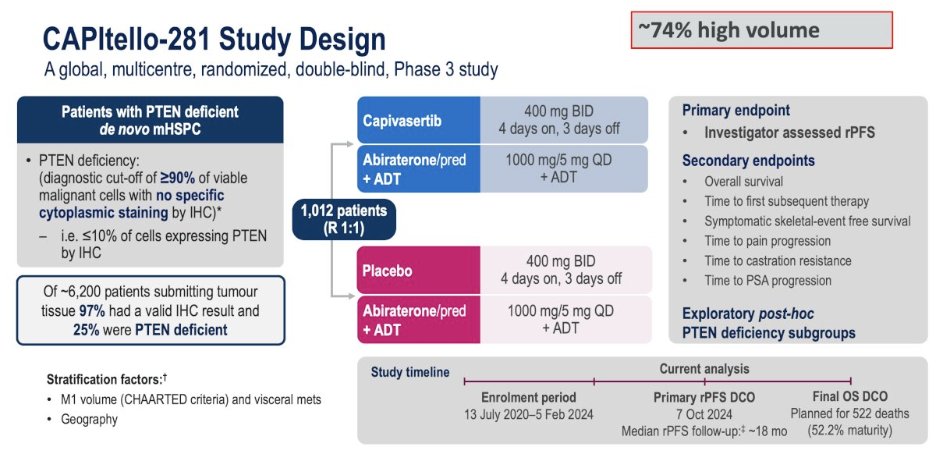
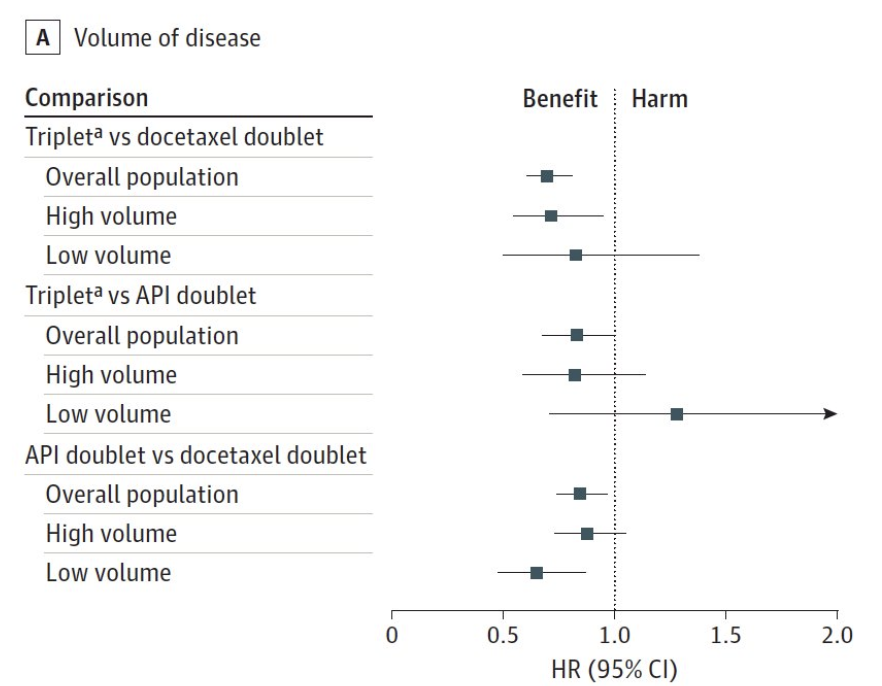
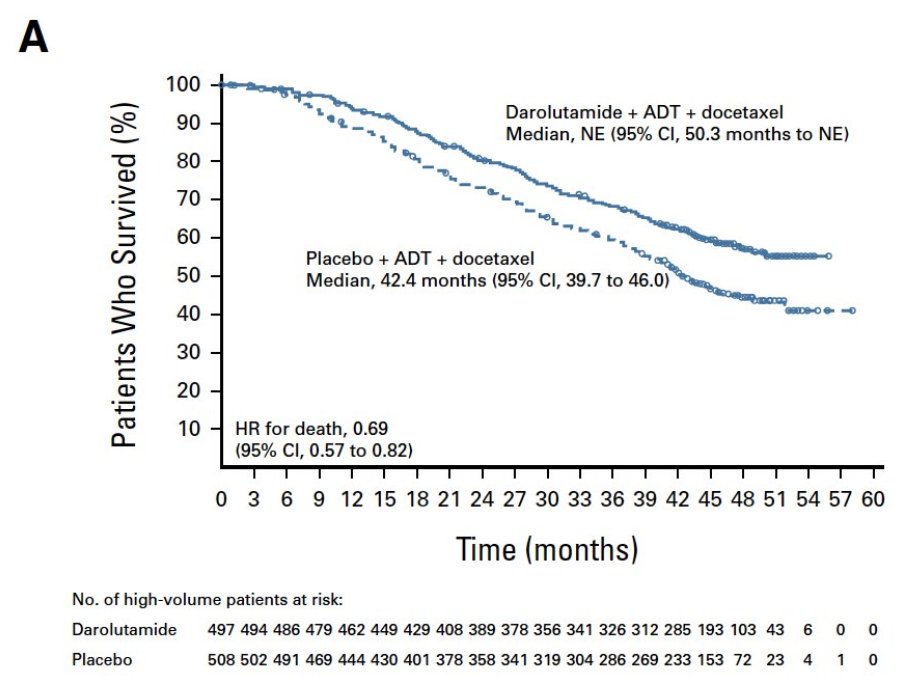
🧬 Capivasertib + abiraterone offers a precision-medicine alternative to chemotherapy-based triplet therapy in PTEN-deficient metastatic APMN/S prostate cancer.
At #USPCC26, Dr. Russell Szmulewitz @UChicagoMed highlighted CAPItello-281: in 1,012 patients with PTEN-deficient de novo metastatic disease, capivasertib improved median rPFS from 25.7 to 33.2 months, with the largest apparent benefit in complete PTEN loss. OS is still immature, while toxicity—including diarrhea, hyperglycemia, rash, and anemia—was manageable but led to discontinuation in ~18%.
Bottom line: For high-volume, de novo PTEN-deficient disease, capivasertib + abiraterone targets a poor-prognosis biology at the earliest opportunity—without requiring docetaxel.
Written coverage by @zklaassen_md on UroToday > https://t.co/LEiVlqqq17
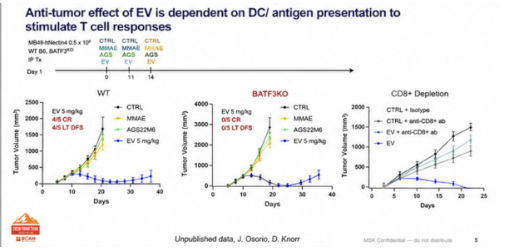
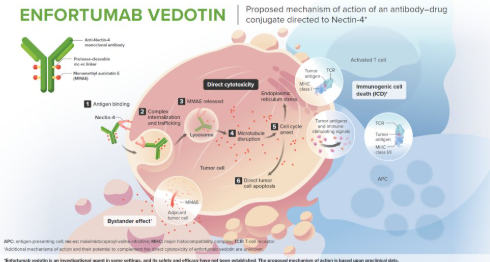
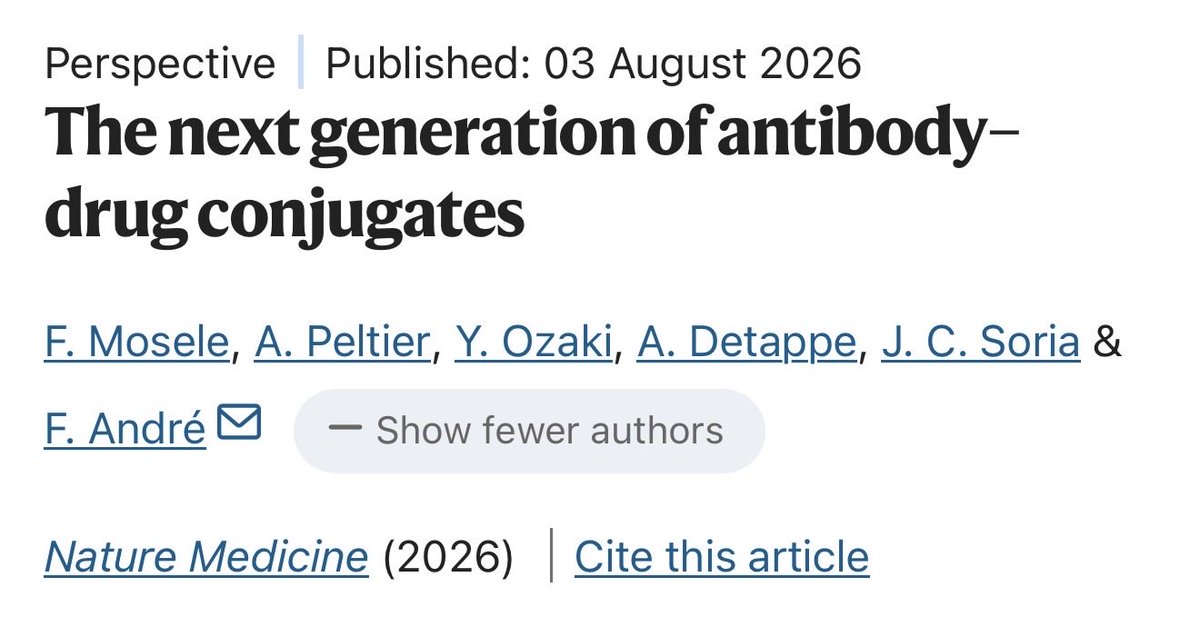
I enjoyed going through this paper by @FerMosele and @GustaveRoussy team. It outlines a roadmap for the future of ADCs from soup to nuts. It was just published in @NatureMedicine —a must read for everyone with @FIFAWorldCup ⚽️ withdrawal!
Link: https://t.co/t4mXf4Ajn7
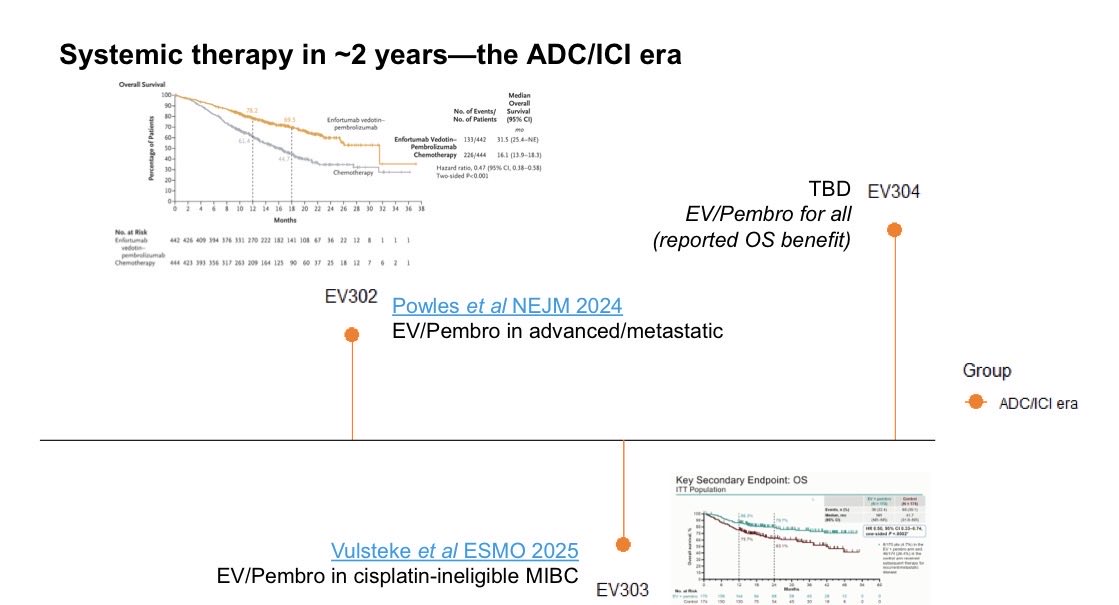
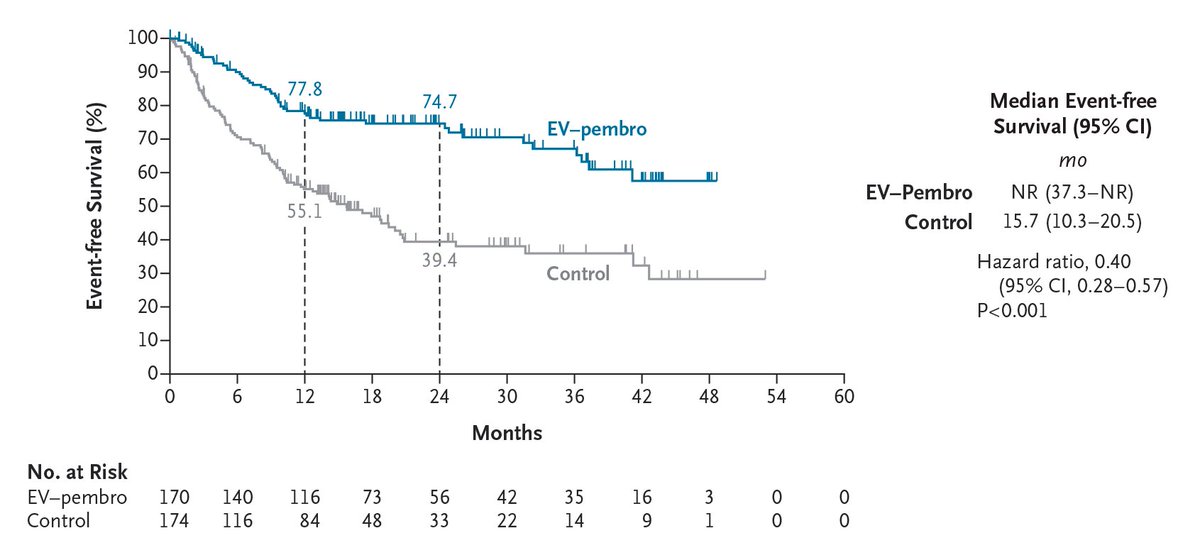
In cisplatin-ineligible patients with muscle-invasive bladder cancer, enfortumab vedotin–pembrolizumab plus surgery led to better event-free survival (74.7%, vs. 39.4%) and overall survival (79.7%, vs. 63.1%) than surgery alone at 2 years. Full phase 3 KEYNOTE-905 trial results and Research Summary: https://t.co/bzVbmJXHMD
Original Article: Perioperative Enfortumab Vedotin and Pembrolizumab in Bladder Cancer (phase 3 KEYNOTE-905 trial) https://t.co/liPEVlPfHV
Editorial: Enfortumab Vedotin plus Pembrolizumab as Perioperative Therapy https://t.co/wIH8w21yJg
#Oncology
🩻Contrast-induced AKI:
one of the biggest myths still shaping clinical decisions
For decades we were taught:
👉 “Contrast damages the kidneys”
👉 “Avoid CT with contrast in CKD”
👉 “Hydrate, protect, delay imaging if needed”
But what if… most of this is wrong?🤔
->The uncomfortable reality
Modern evidence shows:
👉 Low-osmolar contrast rarely causes true nephrotoxicity
👉 Even in CKD, AKI, and ICU patients
👉 The risk is often overestimated—or nonexistent
So where did the fear come from?
📍 1950s high-osmolar contrast (actually toxic)
📍 Poorly controlled observational studies
📍 “Creatinine rise = contrast injury” assumption
👉 Correlation became causation
👉 And the dogma stayed
⚠️What recent data tells us
✔ No difference in AKI rates with vs without contrast
✔ No benefit from bicarbonate, NAC, or aggressive hydration
✔ Even ICU and AKI patients show no worsening outcomes
->Translation to real life
👉 The patient was going to develop AKI anyway...Not because of contrast!!
->The real problem: “Renalism”
👉 Avoiding necessary imaging
👉 Delaying diagnosis
👉 Choosing inferior tests
And that leads to:
❌ Missed PE
❌ Delayed sepsis source control
❌ Worse outcomes
->Clinical mindset shift
Instead of asking:
👉 “Will contrast harm the kidneys?”
We should ask:
👉 “Will NOT doing the scan harm the patient?”
->Who still deserves caution?
✔ eGFR <30
✔ Severe hemodynamic instability
✔ Multiple nephrotoxins
Even then:
👉 Optimize volume
👉 Minimize dose
👉 Don’t delay critical imaging
🤓Bottom line
✔ Contrast nephrotoxicity exists… but is rare
✔ The fear is bigger than the risk
✔ The harm of NOT imaging is often greater
In critical care
👉 We don’t treat creatinine
👉 We treat patients
And sometimes…
👉 The most dangerous thing is NOT the contrast
👉 It’s hesitation.
📃Reference
Florens N, Demiselle J.
Kidney360 7: 445–449, 2026. doi: https://t.co/CWzi7WC9Wx
We keep rediscovering the same truth—hormonal biology works. Estrogen returns in prostate cancer, this time via patches, with noninferior outcomes and potentially better tolerability. Not new—just better applied. Study in @NEJM by the #Stampede group/@MRCCTU
https://t.co/Pq17ahdPgu
Safety profile of darolutamide + adt compared to enzalutamide, apalutamide, and abiraterone in #mCSPC#ProstateCancer: results from the first safety matching-adjusted indirect comparison. Presented by Neal Shore, MD, FACS @CURCMB. #GU26 written coverage by @RKSayyid@UAUrology > https://t.co/LmiyckHICi @ASCO
Real-world patient characteristics and treatment patterns among patients with #mCRPC treated with talazoparib + enzalutamide in the US. Presented by @PBarataMD@caseccc. #GU26 witten coverage by @RKSayyid@UAUrology > https://t.co/rmigMrllud @ASCO#ASCOGU26
📢 New publication in European Urology
We are pleased to highlight a new study published in European Urology, titled "Reconstruction of a Devastated Ureter: Multi-institutional Experience with Robotic Intracorporeal Ileal Ureter Replacement".
👏 Congratulations to Ji E. et al. on this excellent contribution, together with all co-authors.
🔗 Read the full article here:
👉 https://t.co/MKSQI0yCbA
#EuropeanUrology #Urology #UroOncology #Research #MedicalResearch #AcademicUrology
1/2 KN905 Enfortumab Vedotin + Pembro continues to transform bladder cancer in spectacle fashion. In cisplatin ineligible operable disease it beats cystectomy with EFS HR 0.4, OS HR 0.5. pCR of 57% is much ⬆️ than anything before #ESMO25 pCR> 50% questions unselected surgery
Optimizing patient selection and treatment timing for emerging intravesical therapies. @VigneshPackiam@RutgersCancer joins @zklaassen_md@GACancerCenter to discuss a patient case of a 74-year-old male with multifocal CIS. Dr. Packiam reviews the expanding treatment landscape and emphasizes that direct efficacy comparisons between trials are challenging due to selection bias and improved surgical techniques over time. #WatchNow on UroToday > https://t.co/yHYWv5A4ql
Persistent PSA after prostatectomy: Timing and mortality risk implications, #JournalClub. @RKSayyid@USC & @zklaassen_md@GACancerCenter discuss study results showing patients with persistent PSA at 2-3 months post-surgery, those with pre-surgical PSA >20 had significantly better survival outcomes than those with PSA ≤20—a 31% reduction in all-cause mortality and 59% reduction in prostate cancer-specific mortality. #WatchNow > https://t.co/uyZU68lzhj
This chart unfortunately says it all.
NIH funding for new research grants under Trump 2025 is falling far far behind past administrations. This isn’t just slowing science - it is undermining America’s global leadership in research and innovation.
Among >140k #prostatecancer radiation tx pts in the @VizientInc database, 21% rate of cystitis, with much higher rates by age, race & social vulnerability #aua25