Klich et al. showed that hydrogel delivery of IL-2 and IL-12 intratumorally (IT) and CpG-adjuvanted agonistic anti-OX40 (agOX40) peritumorally (PT) increased cargo retention relative to IV delivery. Hydrogel cytokine delivery IT boosted efficacy in mouse models compared to PT or soluble IT delivery, and skewed the TIME toward antitumor Tcm cells and activated DCs. Relative to IT, PT delivery of agOX40 extended tumor control, increased Tem cells, and reduced immunosuppressive Tregs in the TdLNs and TIME. Hydrogel delivery of cytokines IT + agOX40 PT improved survival and cleared distal tumors, while IT/IT or PT/PT delivery was less active. Adding anti-PD-1 boosted long-term survival. https://t.co/pVXBLBaBvz
@StanfordMed@AppelGroup
Faculty fellow @AppelGroup, former CBI trainee Shoshana Williams & team built an AI tool to identify promising antibiotic candidates that are polymer-based and less prone to resistance that could help find new ways to treat challenging infections: https://t.co/dPx2MCG4oM
@hubermanlab@Mark_Sisson Not all good California wine requires a standalone overpriced trip to experience.
Why not blend your SF to Yosemite trip with a beautiful garden winery pit stop @zinchousefarm right off the 120.
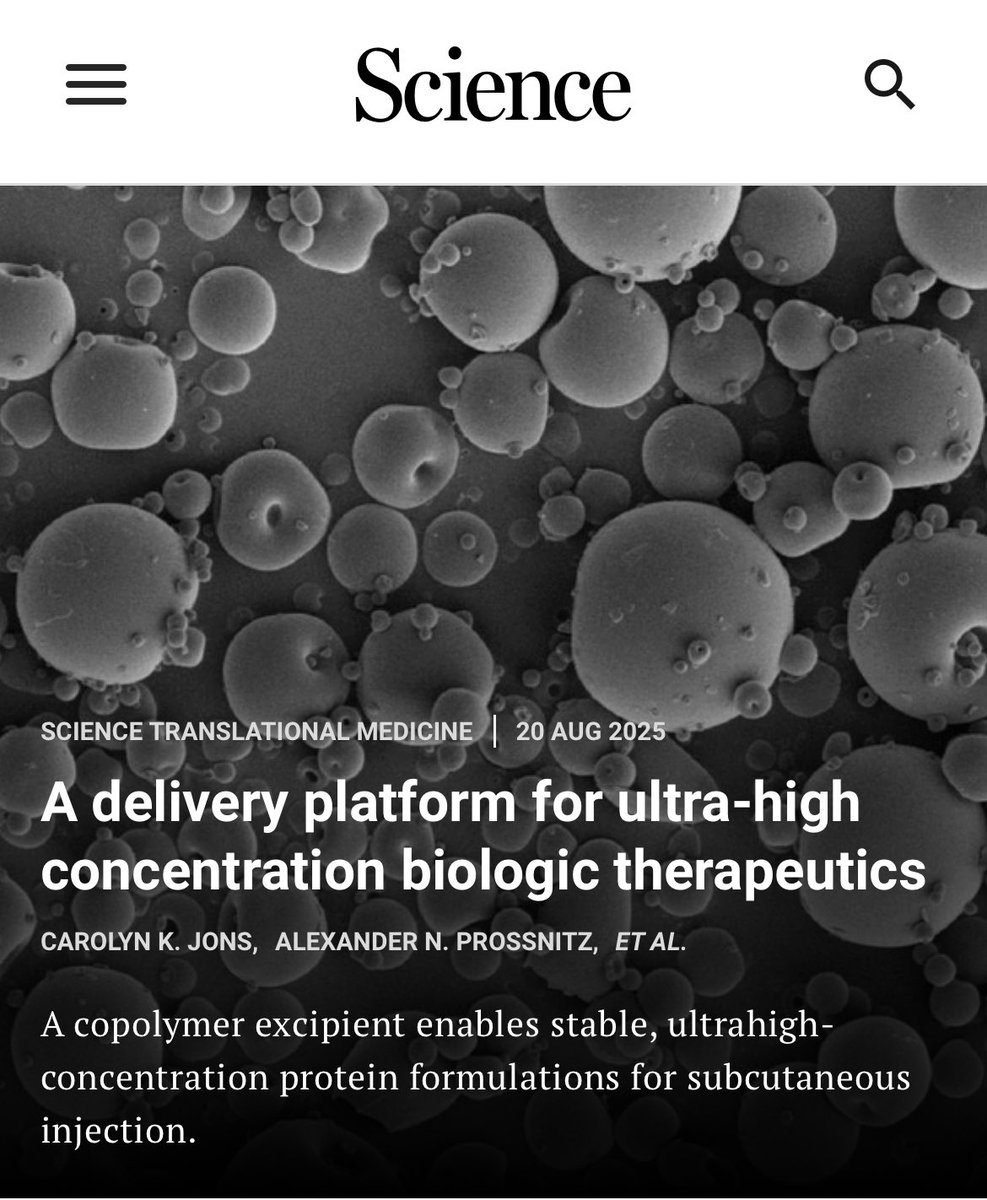
Spray-dried microparticles with a stabilizing polymer excipient enable ultra-high protein concentration therapeutics for subcutaneous injection, and could expand home use of these critical pharmaceuticals. @ScienceTM https://t.co/OejicPpH0x
IV Therapies Transformed into Injections with a Novel Spray Drying Platform
A new delivery platform allows protein #therapeutics to be delivered in higher concentrations and injected with a standard syringe
@AppelGroup@Stanford#drugdelivery#proteins
https://t.co/NtnfkecXDA
Spray-dried microparticles with a stabilizing polymer excipient enable ultra-high protein concentration therapeutics for subcutaneous injection, and could expand home use of these critical pharmaceuticals. @AppelGroup@StanfordMSE https://t.co/GXeUg3J9fC
Ultrahigh-concentration biologic therapeutics enabled by spray drying with a glassy surfactant excipient
"The technology could open the door for home injection of many protein-based drugs that are only available in the clinic."
https://t.co/MZ7TBiaNWQ
Check out new work from Carolyn not-on-X Jons and @AlexProssnitz on ultrahigh-concentration biologic therapeutics enabled by spray drying with a glassy surfactant excipient, out today in Science Translational Medicine @ScienceTM!
https://t.co/P8yTIrNl6f
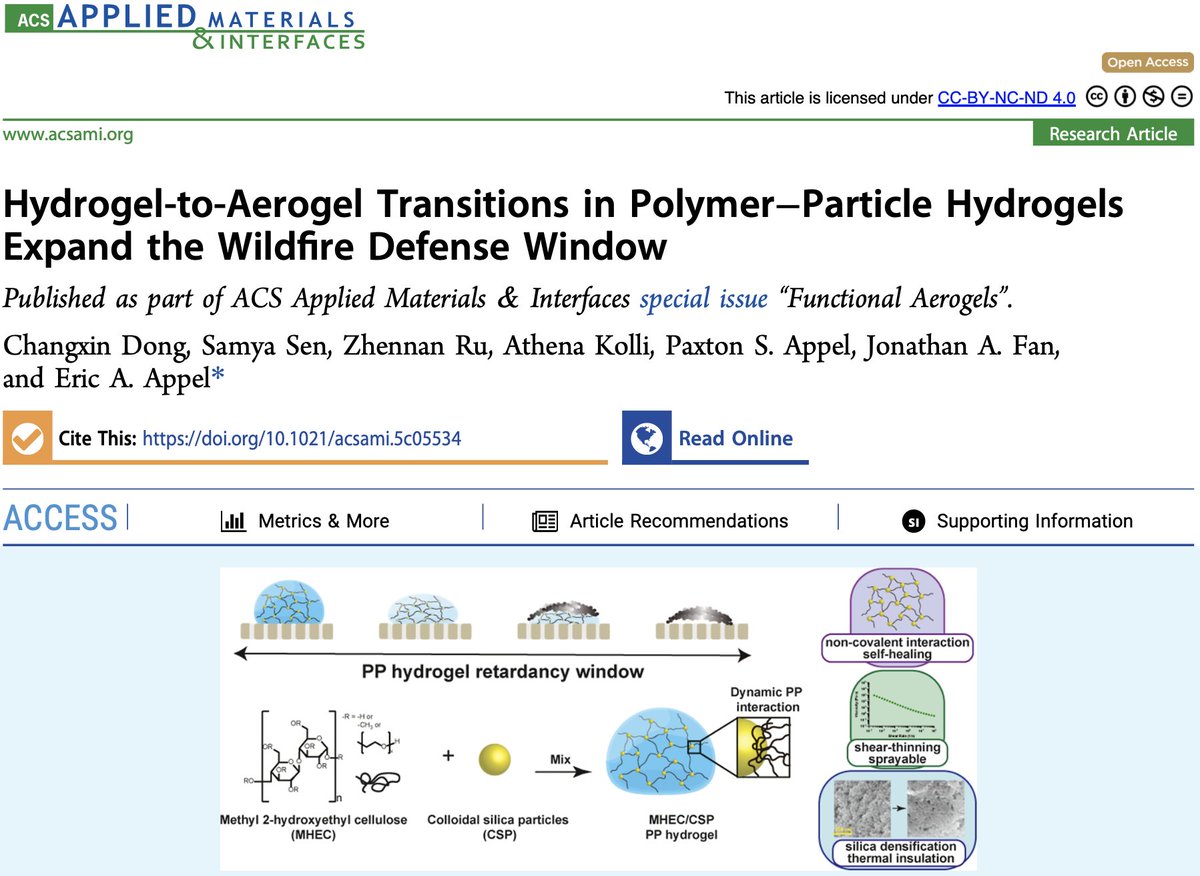
Fun fact… this work grew out of Paxton’s middle school science project looking into how well various gel technologies work at different levels of simulated evaporation. It turns out our PP gels dramatically expand the window for wildfire defense.
Just published the lab's 100th publication in @ACS_AMI!
This work further characterizes our wildfire gels. The LA #wildfires caused widespread destruction and displacement, and severe economic losses, highlighting the urgent need for better technologies.
https://t.co/shVsCeVtXH
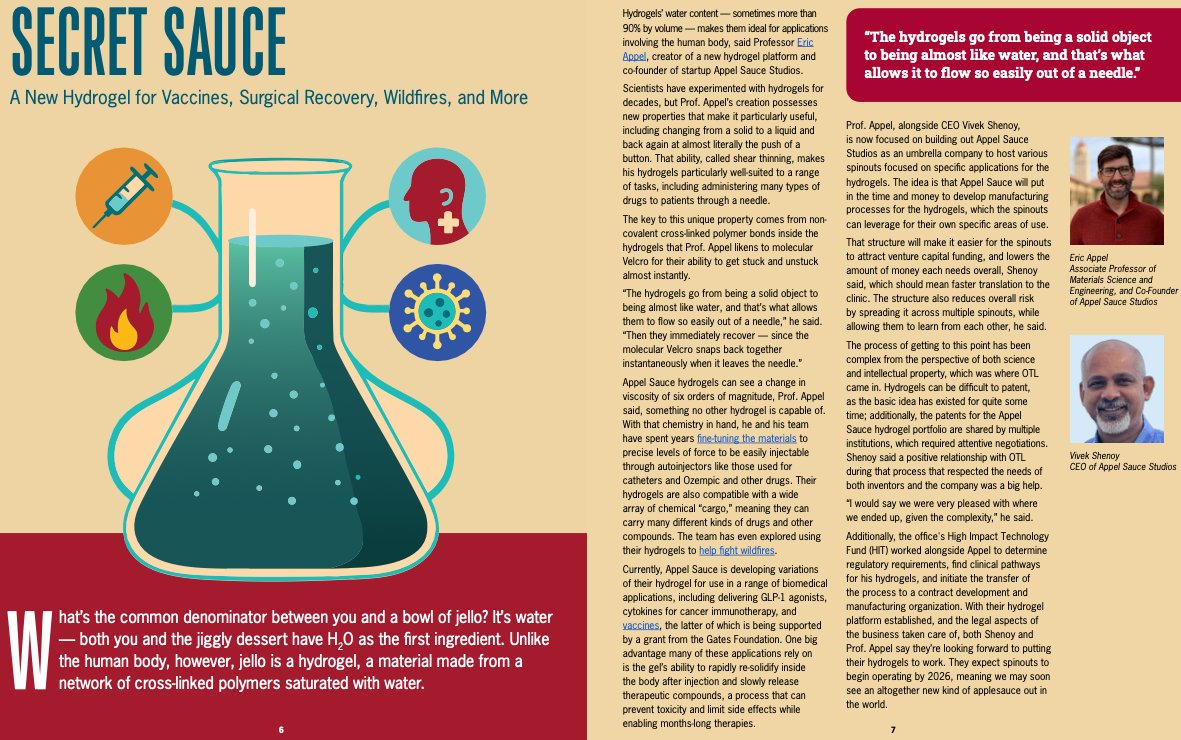
Awesome @StanfordOTL spotlight on Appel Sauce Studios, who is commercializing the injectable hydrogel depot technology we've developing over the past few years @stanford@StanfordMSE:
https://t.co/hTYqYe0QV2
Eric Appel (@AppelGroup) designs new materials to improve the delivery of drugs. His research is yielding more effective medications, new methods of wildfire prevention, and more. #ResearchMatters https://t.co/Bk2NuuH200
"Turning wastewater pollutants into valuable chemical products can help achieve sustainability goals, enable circular economies, and mitigate pollution all at once.”
William Tarpeh @StanfordWoods
https://t.co/SLKndlLmp6