FIRST LOOK: The California Science Center has announced that the “Samuel Oschin Air and Space Center” expansion will open November 13th, 2026
Featuring the full-stack vertical display of @NASA Space Shuttle Endeavor
📸 - California Science Center
I've got an agent in a loop optimizing a renderer with the goal to minimize frame times (and tests to measure). It got times down from 88ms to 2ms and allocations down from ~150K to 500. Sounds good, right? Wrong. This is exactly why agent psychosis is a big fucking problem.
As an experiment, I rewrote the Ghostty core render state in Go, with access to identically laid out data structures as Ghostty and the exact same validation tests. I made a purposely naive renderer (simple, correct, but slow). 88ms per frame with 150,000 allocations (horrendous, lol)!
I then kickstarted a Ralph loop to bring the frame times down. I told it it can't modify input data structures or the public API or tests (they're correct), but it can do anything else it wants. It got to work.
It has worked for about 4 hours. I've spent around $350 on this experiment so far. The results?
88ms => 1.5ms
150K allocs => ~500 allocs
Incredible right? Nope.
My hand-written renderer I ported has frame times (same benchmark) of ~20us (0.020ms) and 0 allocations in the update path.
This is the problem with psychosis and lacking systems understanding. If you don't understand the system, you're going to accept that this is an incredible result. If you understand the system, you'll see better solutions immediately and can do roughly 75x better on throughput.
The people who blindly trust agent output are in the former camp. They're sheeple, overdrinking from a fountain of mediocrity.
Standard disclaimer: I use AI all the time. I like AI. The point I'm making is to not blindly accept results. Think. Analyze. Learn.
Before it took off, the bird ate parts of its own liver, kidneys, and gut. That was the only way to be light enough to fly. Then it flew 8,425 miles from Alaska to Australia, in 11 days, without eating, drinking, or landing once.
The bird is called B6. It's a bar-tailed godwit, four months old, weighing about as much as a can of beans. In October 2022, scientists at the US Geological Survey tracked its flight from Alaska all the way to Tasmania. The trip took 11 days and 1 hour. It is still the longest non-stop flight of any animal on Earth.
For two weeks before takeoff, godwits eat until they almost double in weight. Fat ends up being 55% of their body, more than any bird ever measured. Then they shrink their own insides. About a quarter of their liver, kidneys, stomach, and intestines gets broken down and reused for fuel, making room for the extra fat and cutting weight. Their heart and wing muscles grow bigger at the same time.
They never drink along the way. The water they need comes out of burning fat, the same reaction their muscles use for energy. They also never really sleep. B6 flapped its wings for 264 straight hours, cruising around 35 miles per hour with help from storm tailwinds. By the time it landed, it had lost almost half its body weight. The shrunken organs grew back over the following weeks.
Scientists still cannot explain the navigation. B6 had never made this flight before. Adult godwits leave Alaska weeks earlier, so young birds fly alone with nobody to follow. How a four-month-old bird finds its way across 8,425 miles of open ocean to a place it has never seen is still an open question.
About 100,000 bar-tailed godwits leave Alaska every fall. Most of them land in New Zealand or Australia 10 or 11 days later, having eaten parts of themselves to get there.
Someone sent me a DM asking if a weird Minecraft thingie was malware (pinkiecraft(dot)com). I poked it with a stick
> pinkiecraft(dot)com
> vibe coded site
> "installer" for "program" is .rar
> extract .exe from .rar
> .exe is normal installer
> open installer
> .exe and uninstaller (normal)
> look at .exe
> big af
> look inside
> electron app (.js to .exe)
> look inside
> NSIS
> app-64.7z
> open app-64.7z
> pinkiecraft.exe
> look inside
> electron js (again)
> open .exe with .7z
> app.asar (electron js)
> extract
> npm extract app.asar
> look inside
> program heavily obfuscated
> contains "scripts" folder
> lots of js dependencies for https and sqlite
> scripts/discord-injection-obf
> lolwtf
> bonk with stink
> aes256 encrypted (lolwtf?)
> decrypts using similar technique as chrome passwords
> split password into fragments
> "su" + "per" + "pa" + "ss" + "word"
> aes256 master big ass base64 blob
> ok lolwtf
> bonk with really big stick (annoying me)
> decrypt
> checks if on windows
> kills discord with "taskkill /F /IM Discord.exe"
> modifies discord on pc
> injects scripts/discord-injection-obf into discord
> restarts discord
> discord now running discord-injection-obf
> discord-injection-obf heavily obfuscated
> checks email, password, 2fa
> sends your data to website they made
> network-sync-protocol(dot)net/api/send
tl;dr tl;dr
> pinkiecraft.exe
> kill discord
> inject discord with dumb .js file
> restart discord
> discord work ok still
> js inside discord steal your email and password
Rocket Bunny just revealed this R32 kit for the Suzuki Twin and it may be the best thing I’ve seen all year (🤪).
This is not AI, repeat NOT AI. I’m in love 🥰
Genuinely once I started using this I went a little insane.
Searching for files on windows is SO BAD by default that I thought we had run up against some law of physics.
But no, searching for files can just be instantaneous. Microsoft is just evil and stupid.
Munrolive's BMW i3 teardown should be required reading for anyone in mechanical engineering.
It consists of 23,793 pages, split across 10 PDFs each for one sub-assembly of the car and is a complete teardown all the way down to individual sheet metal parts and rivets.
They even listed out each assembly step including time, success rate and all costs associated with it.
I bought mine for $10 around 4 years ago and it has actually been useful in designing robots for scale.
Their legislation is a lot more comprehensive in terms of who's responsible in the EU act responsibilities are only for providers and deployers, in China it's that plus distributors (platforms, social media apps) + app stores and end-users (eg: you repost the image on X but didn't create it) creating a huge audit trail. Additionally circumvention of the watermark system is also explicitly illegal.
Some crazy people on Reddit managed to extract the "SynthID" watermark that Nano Banana applies to every image. It's possible to make the watermark visible by oversaturating the generated images.
This is the Google SynthID watermark:
It’s a bit easier to just explain how we got here.
In the old days, memory and CPU ran at the same speed. The laws of physics make it incredibly hard to ramp up the MHz of the CPU while keeping physically separated memory chips in sync. The distance is just too far for the electricity to travel in time available.
The solution was to manufacture a small amount of memory on the chip that is in sync with the chip. Then access the rest of the memory as an external device. Sort of like a linear hard drive. That on-chip memory became the L1 cache and the external chips became DRAM main memory as we know it today.
The second problem was the sheer size of RAM was making it hard to keep the CPU fed. The amount of RAM in the L1 cache was too small. And making it bigger wasn’t a very good option from a price and scaling perspective.
So a faster bit of RAM that was physically closer to the CPU was invented. Slower than L1, but faster than main memory. This sped up operations that were too large to fit in the L1.
Thus L2 was born and eventually moved onto the CPU die rather than being a separate chip on the motherboard.
The final piece of the puzzle isn’t about individual CPU performance at all. As CPUs became multi-core, the cores would fight over which one was accessing main memory. A bit of a “dining philosopher’s” problem.
Even worse, if data was moved between cores, the first core had to send it all the way back to main memory before the second core could read it.
The solution was to create a large chunk of fast memory that was shared between the cores. This acted as a staging point to share memory, and also acted as a place to buffer copies from main memory. The staging point could request a bit more than needed from main memory under the theory that reads would stream from main memory. That way data was available before the core even needed it.
This space became the L3 cache. The only singular cache in today’s CPUs. Each core has their own L1 and L2 caches, meaning there are as many copies of L1 and L2 as there are cores.
And that’s how we got to today’s 3-level cache.
> openai sora released
> misinformation nightmare
> ai slop nightmare
> *scroll*
> redhat breached
> sensitive stuff included like nsa stuff
> *scroll*
> iran government leaks
> targets and malware logs and stuff
another day of internet schizophrenia
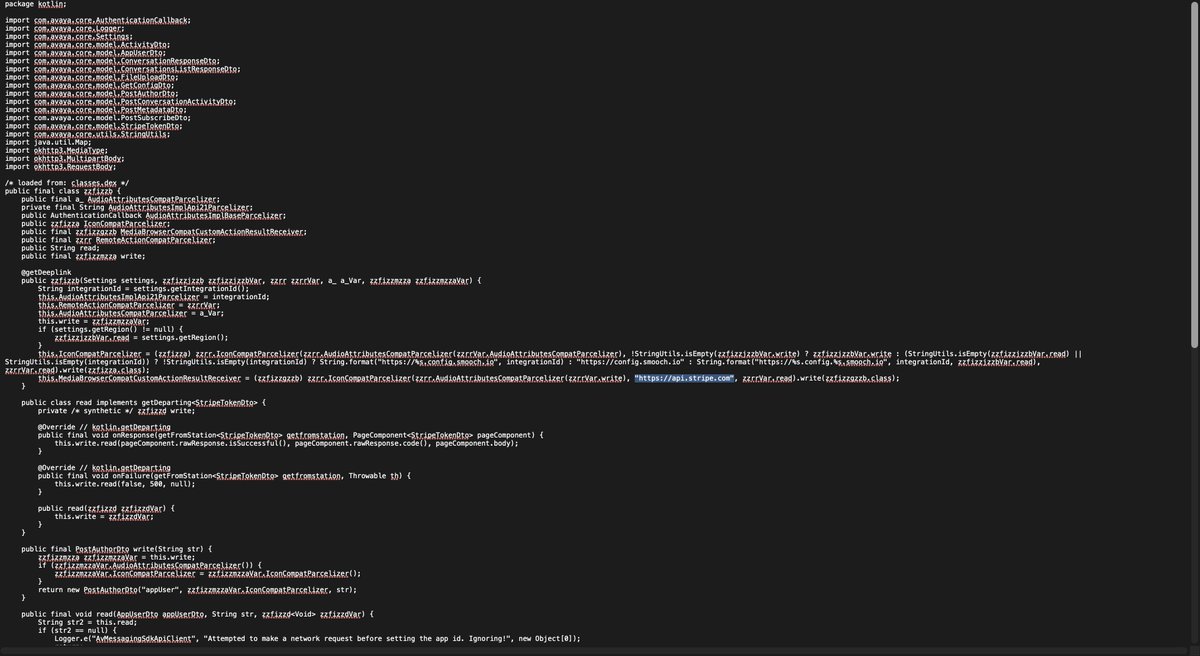
and here's some code.... I'm gonna go make the tea and goto bed.... sucks if the dude got robbed.... but I'm not getting very strong "IT WAS THE WIFI' vibes.....