In 2023, we brought a sample of an asteroid called Bennu to Earth, part of a plan to study remnants of our early solar system. These grains of rock have shown that the building blocks of life and the conditions for making them existed on Bennu's parent body 4.5 billion years ago.
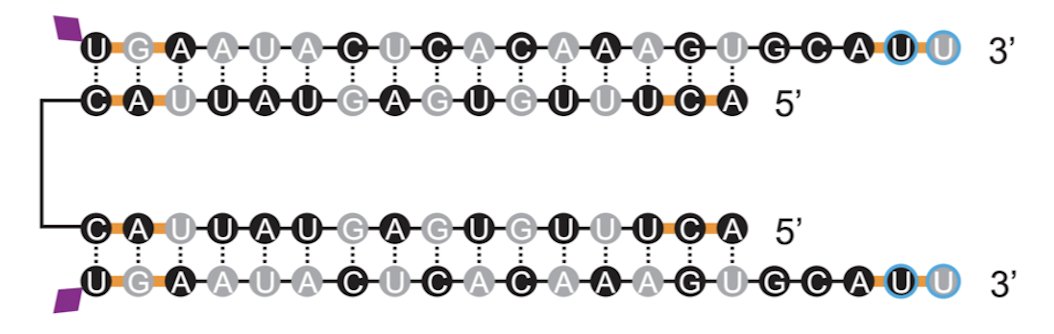
Today we introduce a new drug candidate for prion disease: a PrP-lowering divalent siRNA. A 4-year collaboration with @RTI_UMassChan enabled by @NINDSfunding IGNITE & URGenT mechanisms. https://t.co/Z10daPZGEw
Our hope is to advance this to the clinic, wish us luck!
Fresh preprint! Leveraging the largest Inflammatory Bowel Disease (IBD) sequencing dataset to date, we established a protective role of Cystic Fibrosis-risk variants against IBD. https://t.co/ltx0Yoh3KO
Delighted to share the bulk of my PhD has just been published in @Gut_BMJ! (https://t.co/RiuxT1mQwr). In this multidisciplinary study I co-led with @vidya87_, we sought to investigate how variation at a single genetic region increased colorectal cancer (CRC) risk. A 🧵: 1/
One of the strongest risk loci for SLE lies on the MHC region. Earlier work by Steve McCarroll's group (Kamitaki et al Nature 2020; https://t.co/pKeEX0V65W) used African ancestry samples to break down the LD between HLA and Complement gene variants and showed that the risk locus is primarily driven by C4 copy number. Now a new study by scientists from Kyung Hee University in Republic of Korea (Yu, Shin, et al.) use East-Asian ancestry samples and show that both HLA and C4 copy number contributes to disease risk at this locus.
"Our refined MHC-SLE association model provided superior explanations for SLE risk over previous association models." Fascinating paper!
Yu, Shin, et al. medRxiv
https://t.co/a5jfuYSVul
Large biobank resources are transforming epidemiological research🧑🤝🧑🧬🧪
Key elements:
👉large sample sizes
👉genetics
👉deep phenotyping with omics/imaging
👉longitudinal follow-up with access to EHR
👉global data access to researchers
Great review📖: https://t.co/HAMTA6CdUz
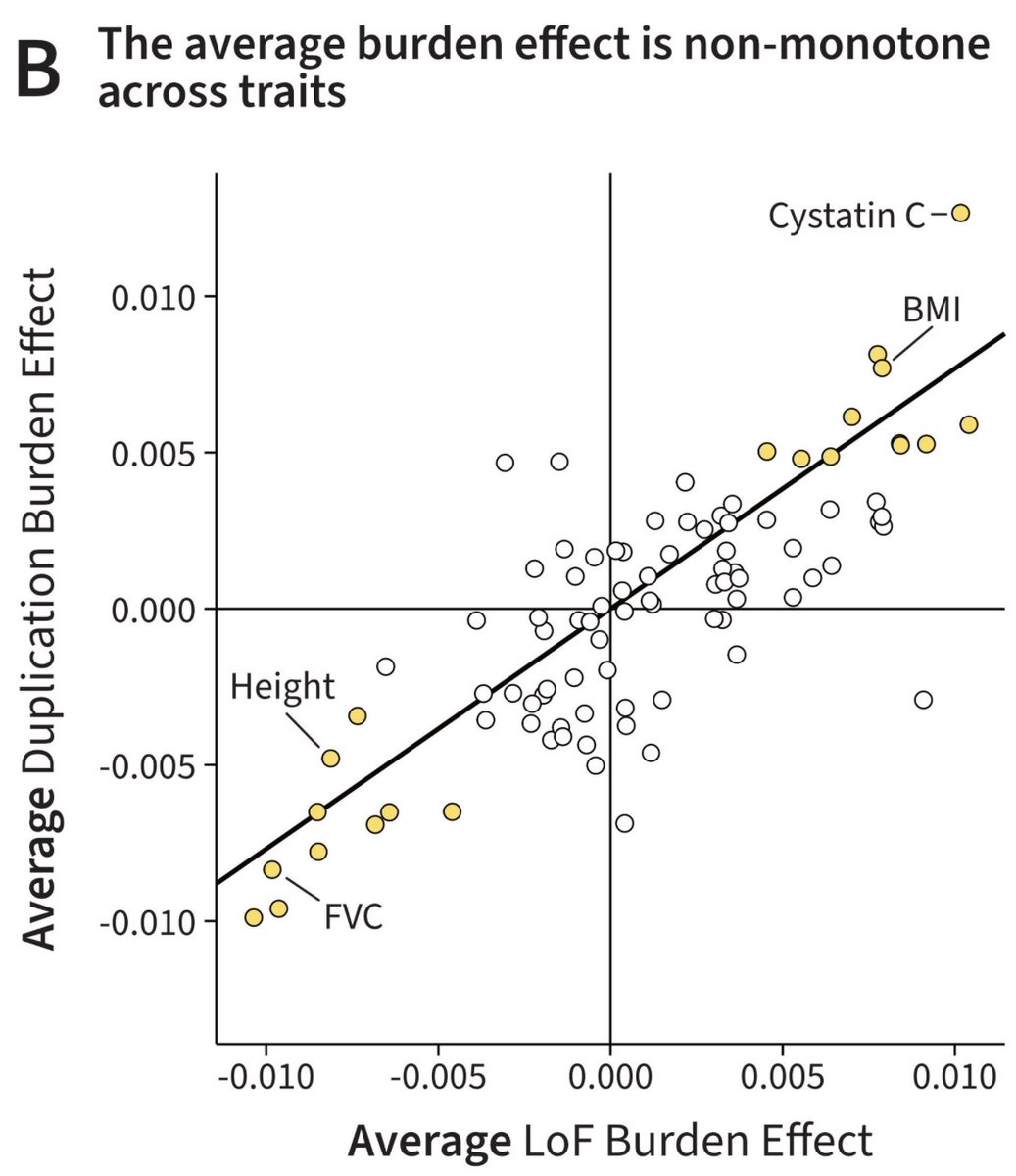
In a new preprint led by @TheNikhilMilind, we explored a fascinating paradox:
For many traits the number of duplications or loss-of-function (LoF) mutations is correlated with phenotype. Curiously, for most traits, the AVERAGE direction of LoFs and Dups is the SAME. Why?
ML-discovered drugs are cool, but the serendipity of 'old school' hand-to-hand combat drug discovery makes for far more interesting stories.
@TraceNeuro's $101M launch today is a great example of a novel-worthy drug discovery trail of breadcrumbs:
1) Start with a well-known protein called TDP-43 in ALS patients that is mysteriously found in clumps in the brain and spinal cord.
2) Realize that these TDP-43 clumps outside the cell nucleus mean that the protein can't do its usual job of splicing central nervous system mRNA
3) Make a list of 66 genes with 'bad/abnormal' splicing from the lack of TDP-43 and realize that one (UNC13A) is also linked to ALS in genetic studies
4) Find out that the UNC13A gene has an extra couple of nucleotides that would usually be spliced by TDP-43 in healthy folks
5) Find the specific single-letter UNC13A variant that (when unspliced) is highly linked to ALS disease risk, showing that UNC13A is likely a disease-causing gene.
6) Create a drug to target UNC13A
7) Go raise $101M from some of the best investors in biotech including @RACapitalMgmt@ThirdRockV@atlasventure@GVteam
The measles vaccine is given as a shot but it is surprisingly good at inducing protective immunity in the respiratory tract (mucosal IgA). Our new study @YaleMed and @JohnsHopkinsSPH provides some clues about why...a thread (1/8) https://t.co/YbiePqbJYd
Delighted to share the new publication from @anderson_carl team at @NatureComms, led by the brilliant Dr Elizabeth Goode
The study characterises Primary sclerosing cholangitis (PSC) GWAS loci
https://t.co/A3A61WSxUu
Thrilled to travelling to #ASHG2024 today! If you want to hear about how we can use large scale single cell RNA sequencing to better understand susceptibility to common complex diseases - drop by my talk on Wednesday!
"Common pitfalls in drug target Mendelian randomization and how to avoid them" published at @BMCMedicine and led by @dpsg108: https://t.co/cfn6xXBcf1. Have previously re-tweeted, but worth a quick thread:
Finally biologists can also use numpy (array programming). Handling e.g. DNA and protein sequences with convenience and speed, like physicists and machine learners for decades have worked with numerical data: https://t.co/06MjAmBINx (1/3)
EMBL congratulates Victor Ambros and Gary Ruvkun on winning the 2024 #NobelPrize in Physiology or Medicine for the discovery of microRNA and its role in post-transcriptional gene regulation.
Passive immunity from mother to offspring is important for protecting against infections early in life but can also hamper immune responses to vaccines in newborns. This is why some vaccines are not given as early after birth as we'd like (ex measles). New interesting work from @katha_lahl lab & @TheYuanLab show that de novo immune responses are in fact delayed, but not blunted by maternal abs with B cell responses traced back to original infection by lineage tracing. Nice work! https://t.co/aegqemn72W
📢 On World #IBD Day weekend @anderson_carl and I are delighted to introduce Open-IBD!
£11M funding from @OpenTargets and @sangerinstitute@OpenIBD will study serial multi-omics and longterm outcomes from diagnosis in 1,000 people with IBD
More👇
https://t.co/lArpRIHdGj