Introducing EpiBench, an agentic benchmark for practical epigenomics analysis.
106 evaluations span CUT&Tag/CUT&RUN, ATAC-seq, ChIP-seq, and DNA methylation workflows. The best agent–harness pair passes 45.0% of evaluations.
Evaluations reflect the assay outputs scientists use in practice. A task may depend on alignment files, peak calls, methylation tables, QC metrics, sample metadata, genomic annotations, or downstream summaries. Solving them requires a mix of coding, data analysis, and scientific judgment.
Ground truth is hard to define even for short-horizon scientific tasks. Alternative task interpretations can produce multiple plausible answers. Candidate tasks are hardened through manual quality control. We remove prompts that over-specify the method, answers that can be solved with general literature knowledge, and ground truths that fail to reproduce under peer reproduction.
Short-horizon tasks are the current frontier for scientific agents in epigenomics. Before models can own deeper biological reasoning, they need to become reliable at local assay-specific decisions.
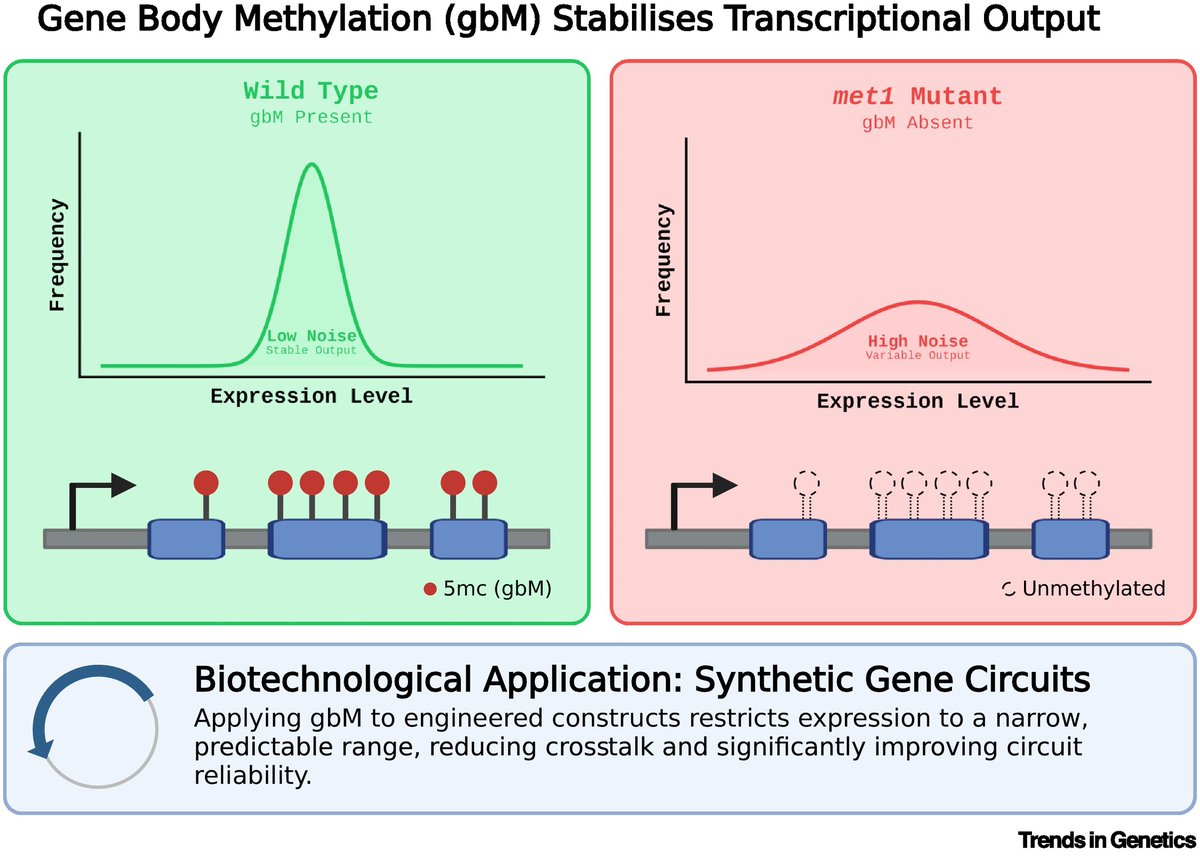
Epigenetics Update - Gene body methylation suppresses intragenic transcription and permits epigenetic inheritance in a cnidarian https://t.co/uHVVKxQp1y
Lan Xu and @deMendoza_Alex (@QMUL) in Nat Ecol Evol
#Epigenetics#DNAm#Cnidaria
---
https://t.co/WmSYDGWPJD
Single somatic plant cells have the remarkable potential to dedifferentiate and regenerate entirely new plants. However, the cell states and regulatory dynamics enabling dedifferentiation competence had not been fully explored... dun dun dun ⬇️ (1/12)
https://t.co/bca6Pbt6Mp
Rare disease diagnoses can rely on exome sequencing, but answers may be hiding in noncoding regions. 🧬 PromoterAI is a new deep learning tool that identifies pathogenic promoter variants, which may account for up to 6% of rare disease genetic burden 🔍
https://t.co/1GoPVcAwNW
Exciting new insights on CpG islands (CGIs) regulation by transcription factors (TFs)! CGIs drive most transcription initiation with unclear regulation. We find that chromatin-opening TFs are key players—following a surprisingly simple rule.
https://t.co/mXkDodTALR
1/9
طلاب الدكتوراه 🚨
هل ما زلت تقضي ساعات في مقارنة الأوراق البحثية يدويًا؟
مع Tabbit يمكنك مقارنة 10 أوراق في ثوانٍ:
• اجمع الأوراق في مكان واحد
• افتح Chat داخل المتصفح
• اختر نموذج الذكاء الاصطناعي
• اطلب مقارنة شاملة بين الدراسات
وسيمنحك مقارنة واضحة
https://t.co/czbgb2YnvF
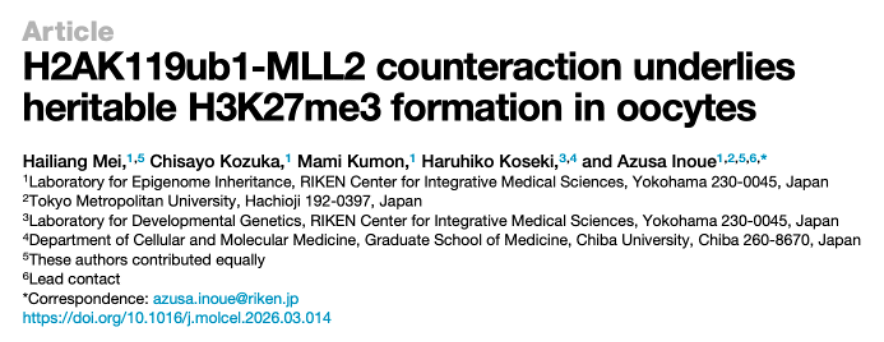
Hello Polycomb and genomic imprinting lovers!
Our new paper is out in @MolecularCell — we uncovered how H3K27me3 (also non-canonical imprinting) is established in mouse oocytes. This was made possible by generating oocyte-specific triple cKO mice!
Summary in thread↓↓ (1/10)
Excited to share that my second paper from graduate school is out now at Nature Genetics. We show that Enhancer-Promoter interactions can form de novo in the absence of loop extrusion.
https://t.co/GOGyzCf8U8
DNA demethylation suppresses a state of enhanced cellular pluripotency and regeneration competence in Arabidopsis. https://t.co/3ndjDFChrf #biorxiv_plants
Our paper is out in @ScienceMagazine
Here we describe how stem cell retain epigenetic inflammatory memory long-term. Full text in the link below!
Congratulations @chris_cowley14@SairajSajjath@LFSoto12 and everyone else involved!
https://t.co/G2MLNwTh6D
BAF complexes maintain accessibility at stimulus-responsive chromatin and are required for transcriptional stimulus responses https://t.co/PNxoPkJlOl #biorxiv_genomic
📣Our paper is finally out!🤩 We found that local modification of H3K9me3 using CRISPR/dCas9 at hotspots changes crossover activity, bringing us closer to targeted recombination in plants.🌱
Huge thanks to @SzymanskaLejman, Wojtek, Ania, and Karolina!💪
https://t.co/VJ8DHs9yf8