Excited to share CellBridge, our new preprint led by @sevdoche in collaboration with @pafrossard and @DorinaThanou at @EPFL_en! 🔬
Looking at an H&E slide, we can learn a remarkable amount about a tissue: its architecture, the cells within it, and how they interact. But identifying exactly which cells are present can be harder. A lymphocyte may be recognisable, while telling whether it is a T cell or a B cell often requires additional markers.
Spatial transcriptomics provides that molecular detail by measuring gene expression in individual cells. But it is much harder to obtain routinely than an H&E slide.
Could we use these molecular measurements to teach an image model more about cell identity and help it recognise when appearance alone is not enough?
This is the idea behind CellBridge.
We trained CellBridge on millions of cells with paired H&E images and Xenium spatial transcriptomic profiles. During training, the model learns to connect each cell’s appearance with its molecular identity. Once trained, it predicts cell types from H&E images alone.
Across our benchmarks, CellBridge improved fine-grained cell classification over leading pathology models, with gains of up to 16 percentage points in macro F1.
But better classification is only part of the story. Some biologically important distinctions remain difficult to resolve from an image.
Our Cell-Ontology-Fallback (COF) module lets the model adjust how specific its answer should be. For example, when the evidence does not support distinguishing a T cell from a B cell, it can report “lymphocyte” rather than commit to an uncertain subtype.
COF combines the biological relationships in the Cell Ontology with branch-calibrated conformal prediction to make these decisions.
What excites me is the possibility of extracting more cellular detail from routinely available slides while making clearer where additional molecular measurements are still needed.
🎥 Our 1-minute video walks through the idea.
Jointly supervised by @pafrossard, @DorinaThanou, and me. A huge thank you to our co-authors: @arpitdm, @AmirhVahidi, Dabin Jeong, @SebastianBirk_, Adam Boxall, @Adib_m_, Marta Rosa Sallese, and Yinshui Chang.
📄 Preprint: https://t.co/d1nlvkXt9t
💻 Code: https://t.co/109B21la32
📓 Tutorial: https://t.co/aWBOb22d6c
#ComputationalPathology #SpatialOmics #CellTypeAnnotation #MultimodalLearnin
Are plant roots really made up of concentric layers of homogeneous, differentiating cell types?
In our new study, out now in @Nature, we show a more complex picture: two distinct cell states within root lineages, shaped in part by the environment. 🧵👇
https://t.co/OXSI992sPl
Exciting day for DNA Typewriter w/ 2 papers from the lab & SeaHub out today :)
1. Mouse lineage from E0 to E13.5
https://t.co/wTVo9mHQ5P
2. A fluctuation test for gastruloid heterogeneity
https://t.co/hkXNM9lgZK
Paper #1 covered in quoted thread. More on paper #2 here. 1/n
I am proud to share my No-AI-assisted perspective review "Plant Peptide Hormones: Three Decades of Discovery and Emerging Paradigms" for the Centennial issue of @PlantPhys🌱🍅. It's OA, so everyone can access! 1/
https://t.co/svAuZ7erDK
Ever observe maize produce 90 leaves before flowering? See Mark's and Zuhaa's preprint for their new proposed flowering time model.
Multimodal single cell analysis reveals a link between flowering and leaf initiation https://t.co/gWKRWvR3Cd
‼️A new story from our lab!🙌 We show that SNI1, a component of the SMC5/6 complex, acts as a temperature-dependent brake on class II crossovers, helping shape where genetic exchange occurs in Arabidopsis. Huge effort by Alex made it happen🙏
🚨How many reads in a single-cell barcode come from that cell? 🚨
We loaded maize and Arabidopsis nuclei into separate wells of the same scifi-ATAC plate.
Arabidopsis barcode averaged 73% maize reads, yet standard QC looked normal!
New preprint 🧵
https://t.co/Jo3GbEYSSP
1/10
🚨New preprint🚨 from super postdoc, @FabioGomezCano1, on modeling and removing ambient contamination (i.e. nuclei-free chromatin 🧬) in single-cell scifi-ATAC-seq experiments using his new tool, AmbientMapper.
https://t.co/5LxY8I4Y5w
📣 Please share!
We’re recruiting to build predictive models of gene regulation in plants. We’d love to hear from anyone with strong foundations in regulatory genomics or ML and fluency with coding agents. Any career stage; no plant background needed. https://t.co/5wifHMO1if 1/4
Great work by Ingram & Zipfel labs. Congratulations, everyone!
An embryo-derived peptide signal directs endosperm polarity in Arabidopsis
https://t.co/17vIQoUHj4
My MCDB Dept is hiring, again!
Assistant Professor Faculty Search. Please Repost! Applications Due Oct 1st
We welcome applications from all areas of cellular/molecular biology in prokaryotes, plants, and animals.
More info can be found HERE: https://t.co/b2Rll1ivYG
Our new Review is online!
Nutrients can act as spatial signals that organise plant-microbe interactions. We discuss emerging tools and propose a cell-state framework linking plant and microbial cell states through local nutrient landscapes.
https://t.co/vX4Yn9SKB8
Congratulations to the team, @Jiang_luguang, @FabioGomezCano1, Andrew Luo, and Mark Minow for their enormous effort. We appreciate any feedback or insight the community is willing to offer. 10/10
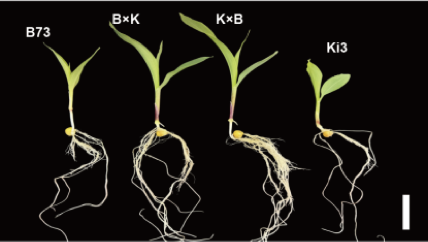
A comprehensive understanding of heterosis has long been out of reach. Led by postdoc Luguang Jiang, we applied scifi-ATAC-seq to 🌽 inbreds and their recip hybrids, and identified a widespread loss of cell-type-specific ACRs in hybrid genomes 🧬 1/10
https://t.co/8CmGtJ5UTA
Taken together, we believe cell-specific regulatory mechanisms play a much larger role in heterosis than previously appreciated. Importantly, none of these discoveries would have been possible without single-cell genomics. 9/10