Introducing the Schlein Center for Cybersecurity. Founded through a transformative gift from University Trustee Ted Schlein (C’86, PAR’20), the Center will bring together experts across disciplines to address emerging cyber threats and advance more secure technologies in the age of AI.
Read more.
https://t.co/i9SY0CKpfY
@PennEngAI | @CIS_Penn
In @nytimes, Professor @Lee_BenjaminC (@ESEatPenn, @cis_penn) explains how AI training workloads are distributed across thousands of chips working in parallel, and why the growing scale of generative AI is making models increasingly expensive to train. https://t.co/1Qt7k7FNuS
Penn Engineering researchers used AI to analyze @Reddit posts about gray-market formulations of the unapproved GLP-1 drug retatrutide, identifying self-reported symptoms that may warrant further study. https://t.co/lZ6kwrfMP2 #GLP1
Today is the @WarrenCntrPenn's birthday!
13 years ago, the Center was established. Since then, we've continued to bring together students, faculty, and the public, all united in a common interest in the role of data and algorithms to understand networked systems.
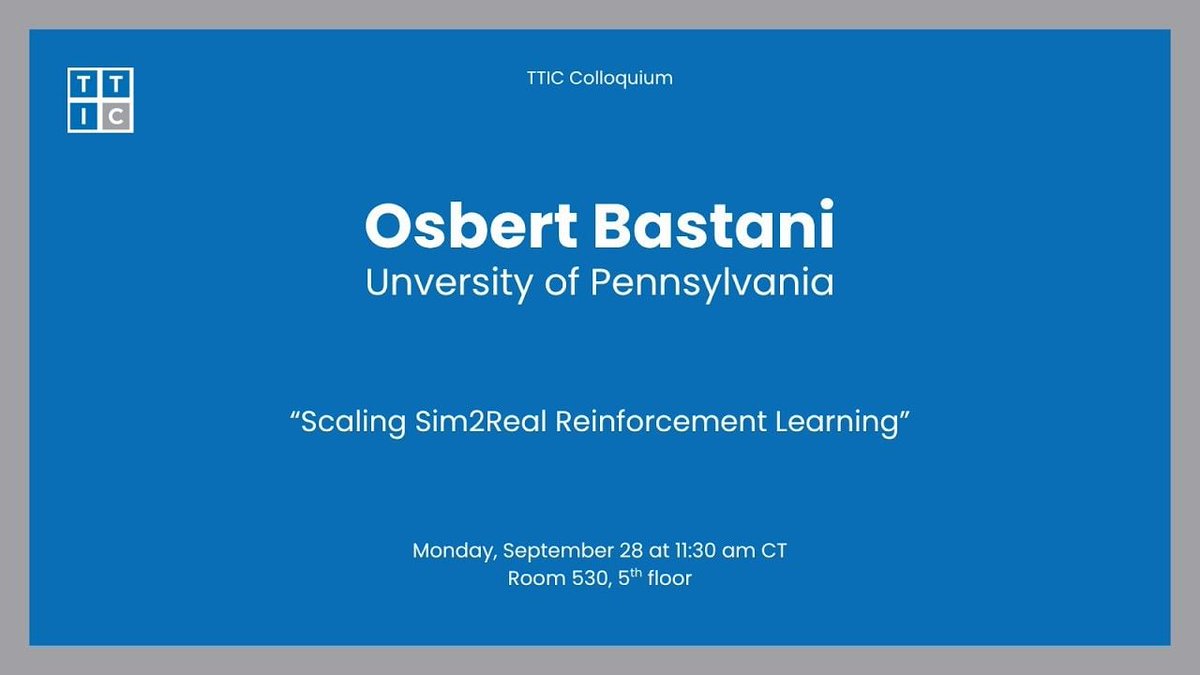
"Scaling Sim2Real Reinforcement Learning," a TTIC Colloquium talk by Osbert Bastani @obastani of @CIS_Penn, is now available to stream on YouTube: https://t.co/QH8dWolcpp
For Cybersecurity Awareness Month, Linh Thi Xuan Phan, @PennEngineers professor in @cis_penn, explains how AI and other emerging technologies could reshape cybersecurity for spacecraft and satellite networks. https://t.co/MQPpbRaDyl #AIResearch#CybersecurityAwarenessMonth
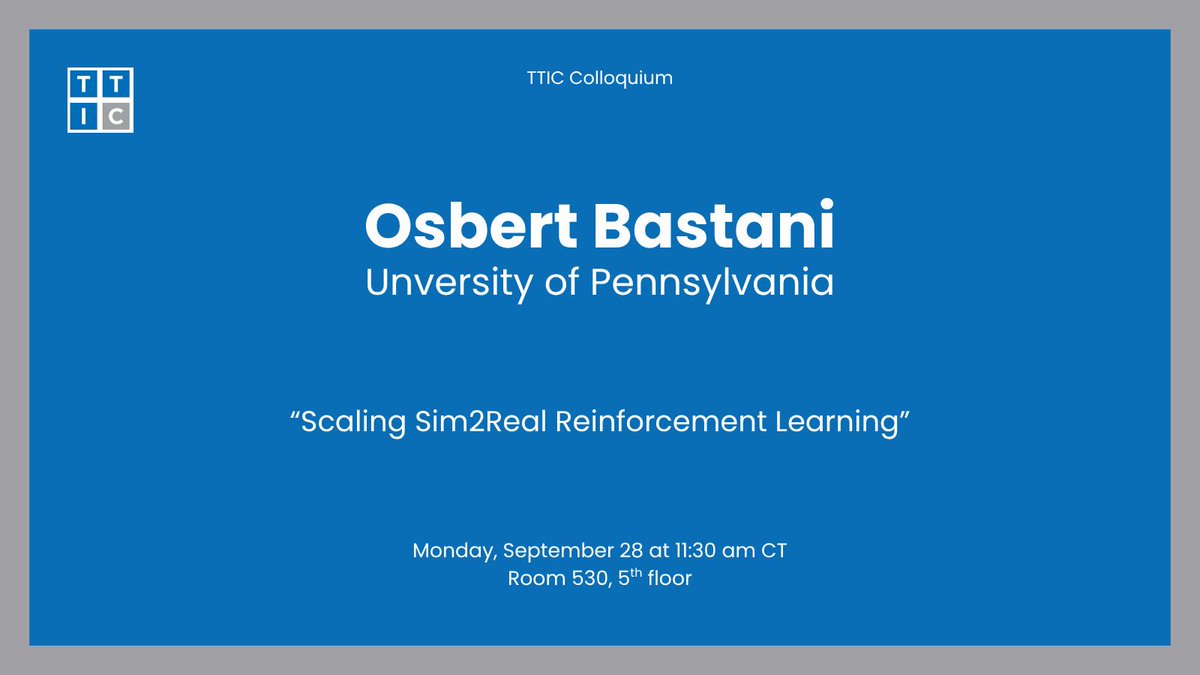
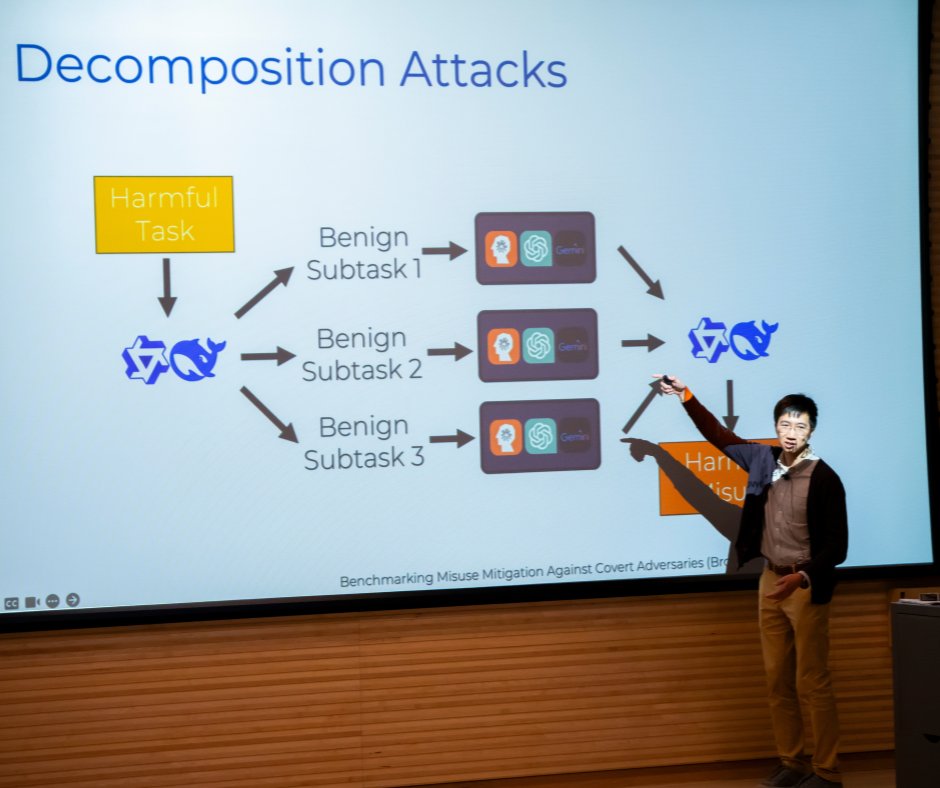
Monday, September 28 at 11:30am: TTIC Colloquium presents Osbert Bastani @obastani of @CIS_Penn with a talk titled "Scaling Sim2Real Reinforcement Learning." Please join us in Room 530, 5th floor.
Penn Engineering’s Digital Media Design (DMD) program is evolving into Visual and Interactive Computing (VIC), beginning in Fall 2026.
VIC builds on DMD’s strengths in computer graphics, interface design and interactive media while giving students more flexibility to explore generative AI, computer vision, immersive environments and more.
Learn more.
https://t.co/8oSGDadLqN
@CIS_Penn
Incredibly honored and grateful to receive the ACM SIGGRAPH Significant New Researcher Award! My sincere thanks to SIGGRAPH and the award committee, and to my mentors, students, collaborators, colleagues, and family for all their support along the way. It’s an exciting time for 3D and AI, and I feel fortunate to be part of this community. Thank you, Kostas, for the kind words and continued support!
Penn Engineering has launched a new MSE in Data Science & Artificial Intelligence (MSE-DSAI), bringing together data science, AI and a systems perspective.
Students build foundations in statistics, machine learning and algorithms while learning to develop reliable, scalable systems.
“By confronting challenges like scale, failures and performance trade-offs firsthand, [students] develop the systems intuition to understand not only how complex infrastructure works, but why particular designs succeed and where they can break down," says Linh Phan, Professor in @cis_penn and co-director of the MSE-DSAI program.
Applications for Fall 2027 are now open.
https://t.co/nLXQQDRYyH
@PennEngAI | @PennEngGrad
@Meta’s new AI agent, Muse, can manage tasks across email, calendars and more. @PennEngineers Professor @RICEric22 (@cis_penn) spoke with @NBCPhiladelphia about what users should consider when deciding how much access to give an AI agent. https://t.co/2VcMz5sX5j #AIAgents
Penn Engineering welcomes retired Air Force General Timothy D. Haugh as Senior Fellow in the Schlein Center for Cybersecurity and Adjunct Professor in @CIS_penn. General Haugh most recently served as Commander of U.S. Cyber Command and Director of the NSA/CSS, bringing 30+ years of experience in cybersecurity, intelligence and national defense.
Read the full announcement today.
https://t.co/HchsnAPCLX
A new study examines how ChatGPT, Gemini and Claude respond to political and public policy questions. @PennEngineers@cis_penn Professor Chris Callison-Burch spoke with @6abc about the findings and how personalization can shape AI responses. https://t.co/kGkV4wfAkP
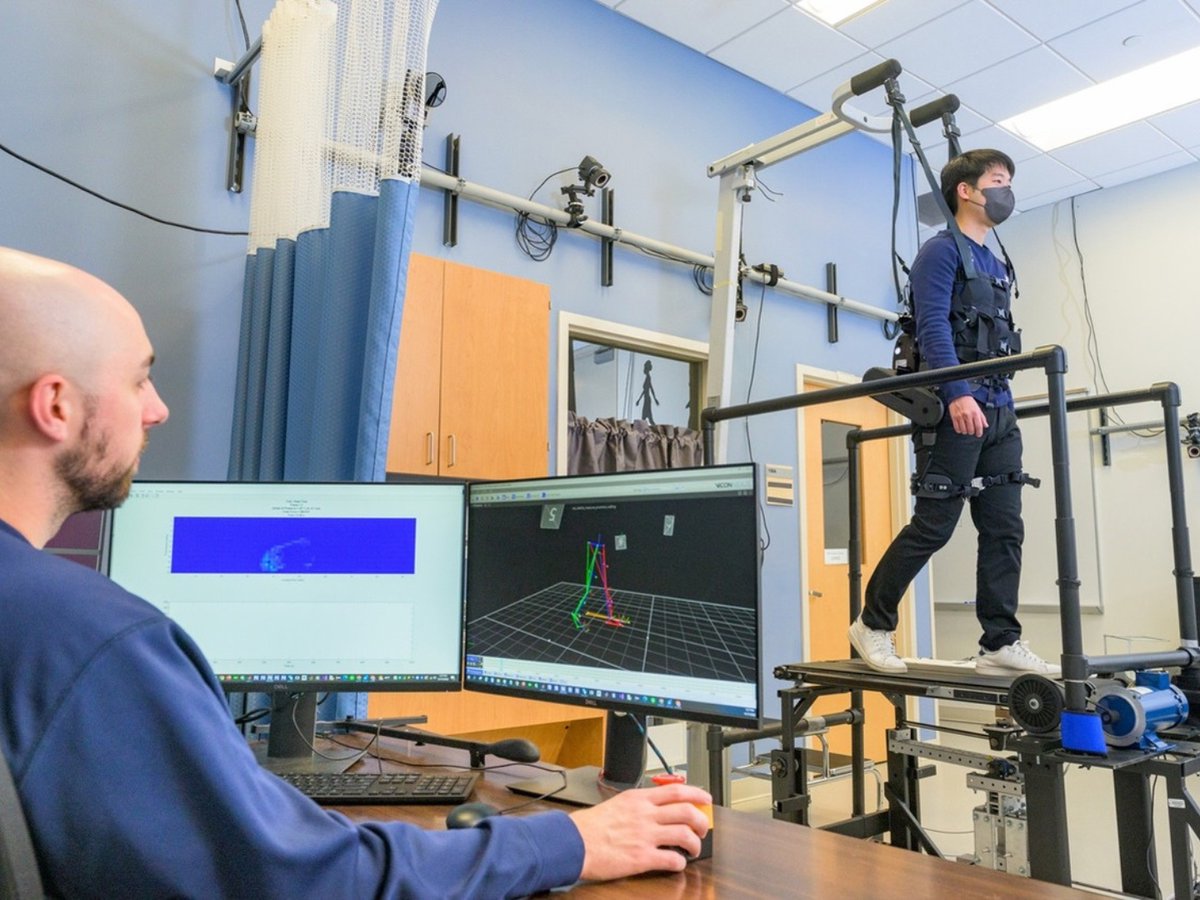
A new @NSF AI Institute for Human-AI Cooperation (@HAICinstitute) will explore how AI can work alongside clinicians and physical therapists to improve healthcare. The five-year, $21.5 million institute brings together researchers from Penn and partner institutions to advance human-AI collaboration.
"Rather than building standalone AI tools, we're developing collaborative AI systems that can act as true clinical partners in real-world healthcare settings," says Eric Eaton (@EricREaton), a Research Associate Professor at @PennEngineers and managing director of @HAICinstitute.
The institute brings together expertise from Penn Engineering, @PennMedicine and @Wharton, alongside partners at @UDelaware, @DelStateUniv, @Princeton, @UF and more than 40 collaborators across academia, healthcare, industry, government and nonprofit organizations.
Read more: https://t.co/kgbaMyA5un
Eric Eaton is a Research Associate Professor in @cis_penn at Penn Engineering, a faculty member of @GRASPlab, and managing director of HAIC.
#AIResearch #HumanCenteredAI
Researchers at @PennEngineers and @KennedyKrieger developed CAMI-2DNet, an AI-powered computer vision system that uses ordinary video to assess motor imitation, helping make autism screening more accessible. https://t.co/16rvFc9LcM #AIResearch#AutismResearch
Penn Engineering researchers have developed PeptiVerse, an open-source AI platform that could help identify promising peptide drug candidates earlier in the discovery process.
Published in @NatureComms, the platform predicts key drug properties before lab testing, helping researchers focus on the most promising candidates.
https://t.co/s1JassE3Zw
@PennEngAI@CIS_Penn@pennbioeng
Last week, Penn Engineering participated in the 2026 Pennsylvania Defense & Innovation Summit, connecting with leaders across government, industry and academia to showcase innovations in robotics, AI and advanced manufacturing that are helping shape the future of national defense.
Hosted by @DaveMcCormickPA, the Summit featured a Defense Expo highlighting Pennsylvania's innovation ecosystem, from emerging startups to established manufacturers and research institutions.
Read more about the Summit today.
https://t.co/6ExUKuz0zG
Penn Engineering startup SubVysion has joined @ycombinator's Summer 2026 batch.
Underground utility strikes cause an estimated $30B in damages each year. Founded by Maxwell Stone (ENG'27, GEng'28) and Wenson Tang (ENG'25), SubVysion creates 3D maps that help contractors dig safer and smarter.
https://t.co/JfWWziLkYa
Penn researchers developed a low-cost AI system to help Sierra Leone forecast demand for essential medicines. Following a pilot, the government expanded the system nationwide, where it now supports allocation decisions for more than 70 medical products. https://t.co/Ho5GKjHZcW