compulsive gamer in biology, shadok philosopher, associate professor 'lost in translation', interested in stem cell, organoid, mecano & synthetic biology
Well, the best answer to this video is to quit X on January20 isn't it ? #HelloQuitX will help you to migrate all your community and recover social environment. See https://t.co/bIhhNro8tL for more information.
We’re excited (@ThomasBertero) to share our work describing the role of mechano-dependent sorbitol in biomolecular condensate formation, published today @CellCellPress https://t.co/S2h1864s3z tweetorial👇
Excited to share our latest work revealing ECM stiffness as a key regulator of biomolecular condensate formation in vivo via mechanical stress-dependent control of polyol metabolism published in @CellCellPress. https://t.co/9IjdgBrQK5
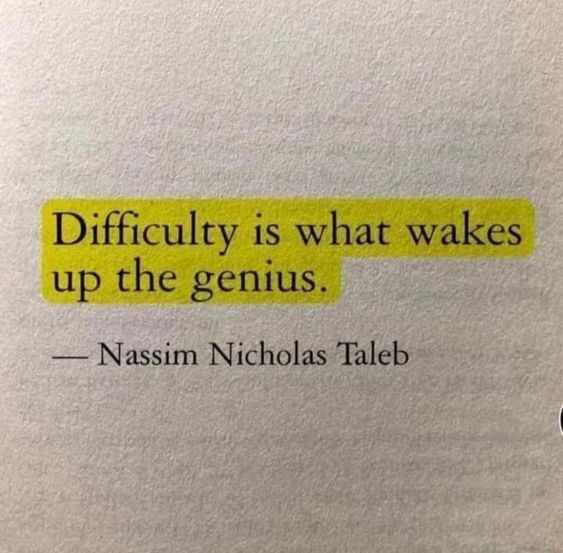
The single greatest misunderstanding about science by the public is that scientists solve problems; in reality, scientists are primarily concerned with creating them.
Ivanov lab paper ! Very happy to see our story on monocyte glucose metabolism online in @NatureComms today. Inhibition of Glut1 depletes the majority of blood monocytes, yet atherosclerotic plaques still develop normally🧐 @LP2M_Lab
https://t.co/COd6e7bYxf
In case you are looking for an interesting/easy reading this weekend, how about some thoughts on in vitro human cell-based models https://t.co/okYvj3QWGP @CellPressNews@TheLutolfLab@TakebeLab
Hi, I’m David Brückner @d_brueckner. I’ll take you through how cells in a tissue can use information distributed by biochemical gradients to make decisions, and how we can measure such positional information.
https://t.co/UfK2r9EGRE
Cancer is not a genetic disease
Even though mutations are often found in tumors, the genetic model of cancer is not sufficient to explain various aspects of cancer biology.
Well summarized by @drmichaellevin
“Thus, one way to view cancer (from the perspective of basal cognition) is as a pathological rolling back to the smaller cognitive light cones of the deep past. This has already been conformed for transcriptional profiles, as proposed in the atavistic theory of cancer [163-165], and has been extensively discussed in the literature addressing the inadequacies of the mutation theory of cancer [166-170]. But more specifically, the cognitive light cone model suggests that cancer cells are not more selfish, they just have smaller selves. They begin using action loops with much smaller local goals, in effect shrinking the boundary between self and world, and fragmenting in a kind of dissociative identity disorder where the rest of the body (and their neighboring cells) are treated as external environment and outside the set of variables that must be maintained in desired ranges.”
https://t.co/CkAiyBIqPF
Looking for a summer read?🏖️🌞📄 You're in luck 😂. Our paper on optogenetic leader cells is out @NaturePhysics. We found a force-velocity relation for collective cell migration. Experiments by @LeoneRossetti, theory by @ricardalert. @IBECBarcelona
https://t.co/eAxUVIDs5P
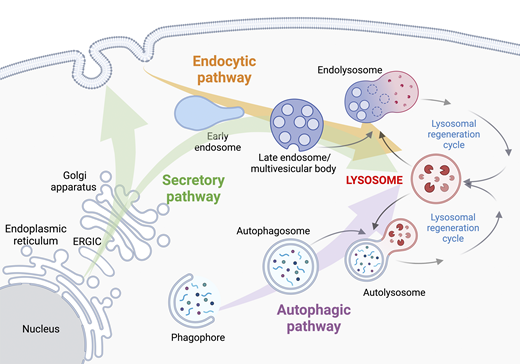
Eloïse Néel, Marioara Chiritoiu-Butnaru, Julien Villeneuve et al. review how #endolysosomes, positioned at the crossroads of multiple intracellular trafficking pathways, play critical roles in conventional and unconventional protein #secretion https://t.co/800lB5xwlX
#trafficking
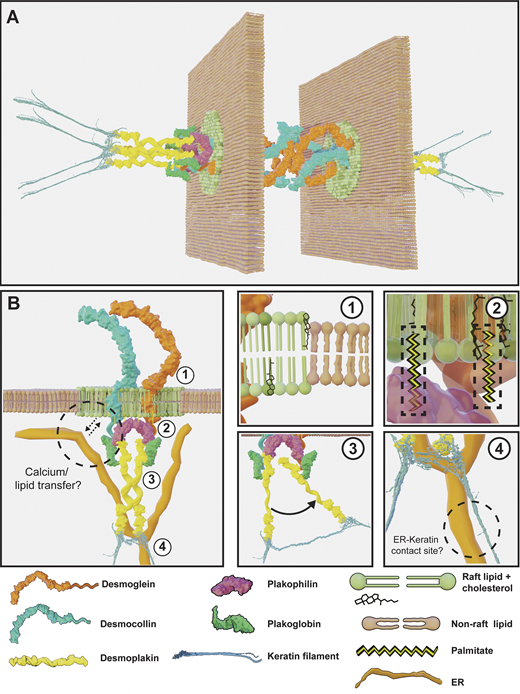
Navaneetha Bharathan @genehackrman, Alexa Mattheyses, and Andrew Kowalczyk @CellJxn provide a historical perspective on the discovery of #desmosomes and how imaging technologies have advanced our understanding of this adhesive intercellular junction. https://t.co/Buv2jEl9sT