The area of planted forests has increased in all regions since 1990, but globally the the rate of increase slowed in the last ten years.
Get more data on the world’s forests in @FAO’s Global Forest Resources Assessment 2025 👉 https://t.co/GLcObttjks
#FRA2025
Octant Epoch 12 closes tomorrow ✨
Wondering what your allocation contributes to? Here's what we'd do with it: more stories from the Ethereum for Good ecosystem, new tools and our first nonprofit cohort, and accessible guides to @OctantApp.
Allocate at https://t.co/XLMbn7pS6M
Your Genes, Your Medicine.💊
Pharmacogenetics helps us understand how genetic differences influence the way people respond to medication. 🔍
It is an important step toward personalised medicine, where treatment can be guided by the unique biology of each patient. ❤️🩹
At NIOME, we support this future through the simulation of synthetic human genomes, giving you access to scalable and accurate data without the privacy risks or ethical constraints of real patient data. 🧬
Explore today’s poster to learn more about pharmacogenetics, or check out NIOME: https://t.co/Vmho9gxN1T
On #TropicsDay, we highlight the Chico Mendes Extractive Reserve in Brazil, where forests and biodiversity sustain life.
#IndigenousPeoples and local activists play a key role in protecting this fragile balance amid rising climate stress. Learn more: https://t.co/DNXxj0OcRR
Terms used to discuss climate change and the nature crisis can be daunting.
That's why we've prepared an easy-to-understand guide for anyone looking to get involved.
Explore @UNDP’s #ClimateDictionary, featuring key terms on nature and biodiversity: https://t.co/rGCAmOxFFz
Only 4 days left in Octant Epoch 12! ⏰
Still need to allocate your rewards or contribute?
We sat down w/ @nicnode of @OctantApp for a demo on how to allocate GLM & make direct ETH donations, plus a look inside what's new in Octant V2! 💸🎥
https://t.co/MVKmuDkhOp
Fossil fuels are fueling the climate crisis and global instability.
UN Secretary-General @antonioguterres stresses the need to transition to clean energy, improve climate resilience, and ensure climate justice.
More via @UN_News_Centre: https://t.co/iMhV47c5su
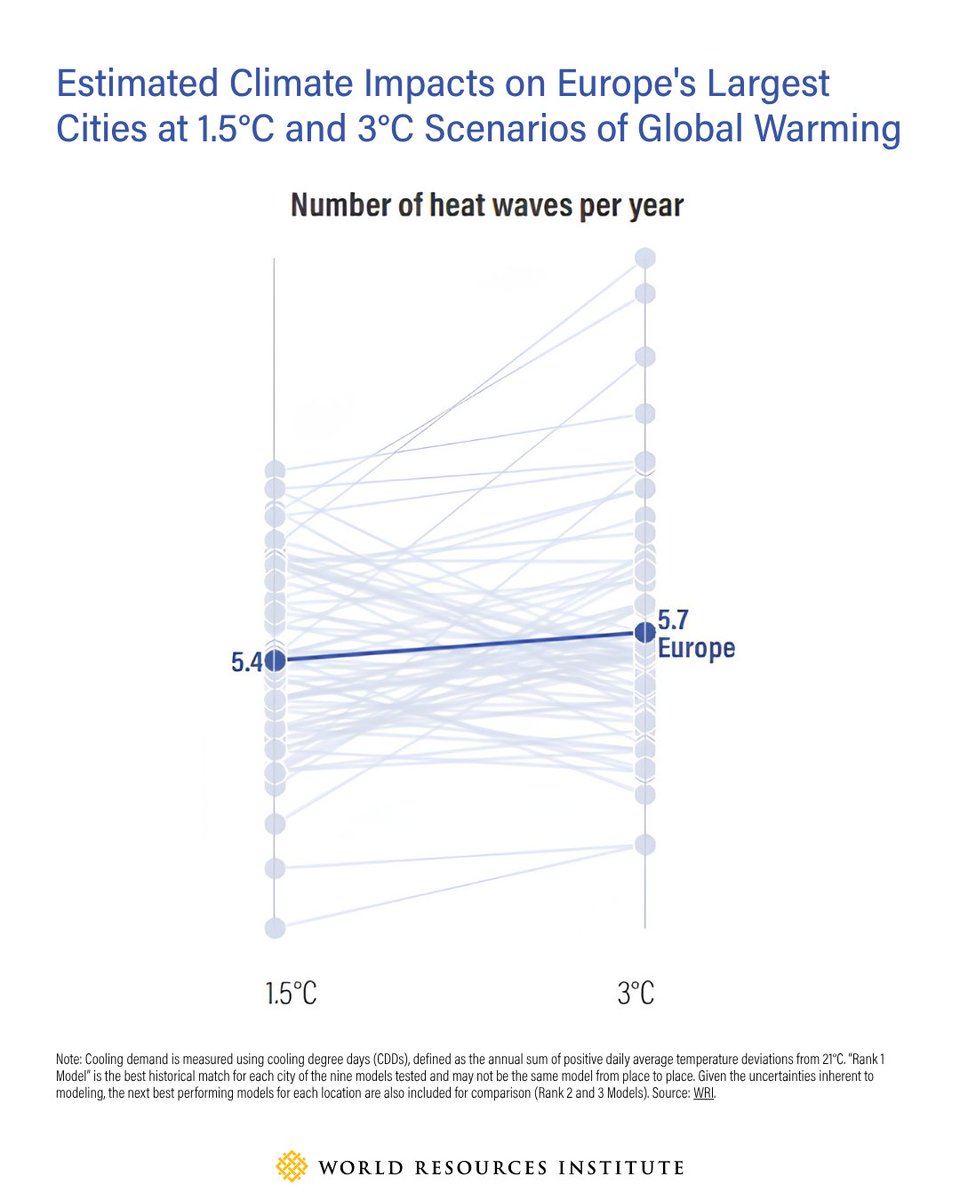
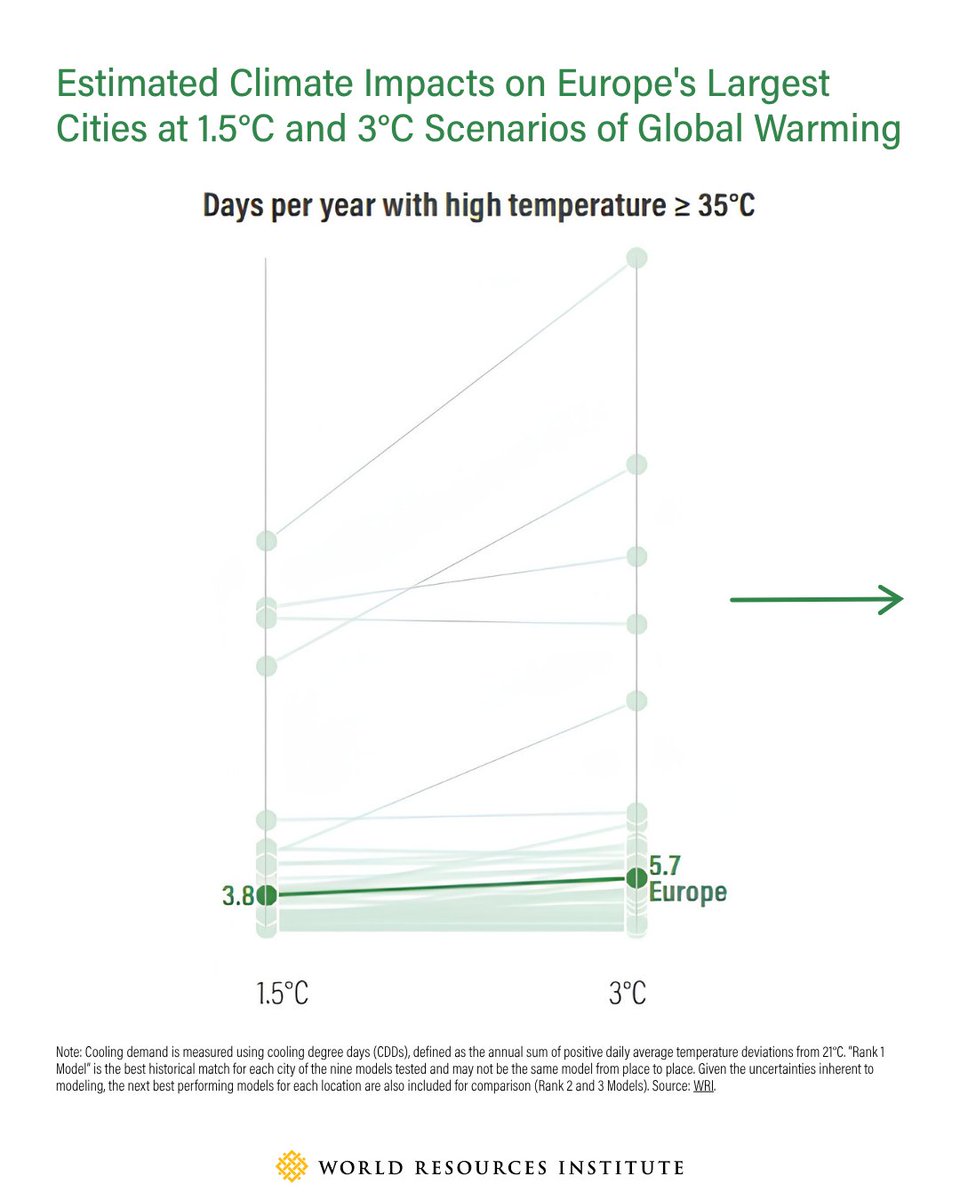
A WRI analysis of 69 of Europe’s largest cities – home to 165 million people, or about 22% of the continent’s population – found that the number of days at 35 degrees C (95 degrees F) or more could rise by 53% if global temperatures increase by 3 degrees C. Heat waves would also last longer under this scenario, making their impacts more severe.
👀Look at data on Europe’s rising urban heat and explore how cities can adapt by pairing efficient, low-carbon air conditioning with long-term passive cooling solutions➡️ https://t.co/P4aUwaajNc
What if impact funding was more of a stream than a storm?⛈️🌊
@GravenPrest of @flowstatecoop shares how streaming funds shift funding from transactional to relational, creating deeper engagement 🤝
GoodBuilders is testing it in real-time ▶️
Full chat w/ @gooddollarorg below👇
Forests have a healthy influence on us. Not only do trees filter our air, the sight of a tree lowers our stress level. The air in a coniferous forest is particularly germ-free and even anti-inflammatory due to the many essential oils they emit - comparable to a natural antibiotic
What if everyday transactions could feed a family or fund cancer research?🍽️🔬
We sat down w/ @aaronjrafferty & @MartinSimms9 of @wydeorg to explore the concept of contributory consumption, where trading & spending funds verified impact 💸💚
🎧Listen: https://t.co/JWT2Cq8sYB
We discuss:
🍽️ How WYDE turns everyday financial activity into thousands of meals for those in need
🪙 The mechanics of the $EAT token, where a portion of every trade flows directly to hunger relief with no extra donation required
🤝 How their partnership with Feed the Children is helping turn cryptocurrency transactions into real impact
🌍 And how we can build more sustainable models for crypto philanthropy that are rooted in community and engagement
🌱🛰️Data from TerraFund, the financing arm of WRI’s #RestoreLocal initiative, shows that when restoration is designed with communities at its center and then tracked rigorously, these projects do more than just repair ecosystems.
📖Learn more here➡️ https://t.co/rNUhCDfmHt
📢 Calling cities everywhere! 🌍
Ready to transform urban spaces to deliver economic, social & environmental benefits?
Join the @FAO#GreenCities Network for tools, training & events for greener, healthier & more resilient cities.
Apply online 👉https://t.co/ox35Y1Nv2N
"I say that we write our story now in blockchain" 📚⛓️
In their mission to revive villages and regenerate land across Ukraine, @RodovidMe of @gen_ukraine shares how onchain impact tracking lets them share their story of resilience with the world in real time 💚🌐
Plastic is no longer just a waste issue.
It is becoming a health issue, a water issue, a packaging issue, a policy issue, and an infrastructure issue. ♻️🌍🔬
That is the shift happening right now.
In 2026, the U.S. government moved microplastics into the federal drinking-water conversation through EPA’s Draft CCL 6.
HHS also launched a $144M ARPA-H program focused on measuring, researching, and developing ways to remove microplastics and nanoplastics from the human body.
That is a major signal.
At the same time, new research shows everyday packaging is still one of the most visible parts of the global pollution problem.
A recent global coastal litter study found plastic food and drink packaging was the most common litter on coastlines across surveyed countries.
Wrappers.
Bottles.
Lids.
Caps.
The things people use for minutes are becoming pollution for years.
And in the U.S., new research warns that plastic waste and pollution could double by 2060 without stronger interventions across the supply chain.
So the conversation is changing.
It is no longer enough to say:
“We need more recycling.”
The plastic problem is getting more visible.
The response has to become more organized. ♻️⚡🌍
The future of synthetic biology depends on more than innovation, it requires responsibility.‼️
As biosafety, biosecurity, and governance challenges grow alongside scientific advances, new approaches to oversight are needed.🩺
NIOME investigates how transparency and decentralized models can strengthen innovation in science.🧬
🎉 Ep 1 of our new series, Building for Good with G$, is live!
To kick it off, we welcome Rael & @meriiifdez of @gooddollarorg & @GravenPrest of @flowstatecoop to explore how they're using streaming funds to reimagine public goods funding 🌱
🎧Listen: https://t.co/5swl7jf0q3
Building for Good with G$ is a new series exploring the people, projects & communities powering the GoodDollar ecosystem 🎙️
In episode 1, we discuss:
🌱 How GoodDollar has evolved from a universal basic income (UBI) protocol into a growing public goods ecosystem
💸 How they're partnering with FlowState to pioneer streaming-based funding, where money flows to builders continuously instead of in one-off grants
📊 Highlights and standout stories from GoodBuilders Season 3
🔁 How any ecosystem or community can run their own streaming funding rounds with G$
👀 Updates and alpha on GoodBuilders Season 4!
🔌🪫An EV battery does not reach end-of-life when it leaves a vehicle.
Most are retired at ~70–80% capacity, leaving a chunk of usable energy. This creates a clear second stage in the battery lifecycle. Currently, most of 'second life' value is lost.
The structure and governance will determine whether that can change 👉
https://t.co/tJHJxWYpOX
When most people think of @gooddollarorg, they think of UBI 💸🌐
But as @meriiifdez explains, it's much more than that.
Tomorrow, we're excited to kick off a new podcast series exploring the GoodDollar ecosystem and the people & projects shaping it! 🌱🎙️
More info below 👇