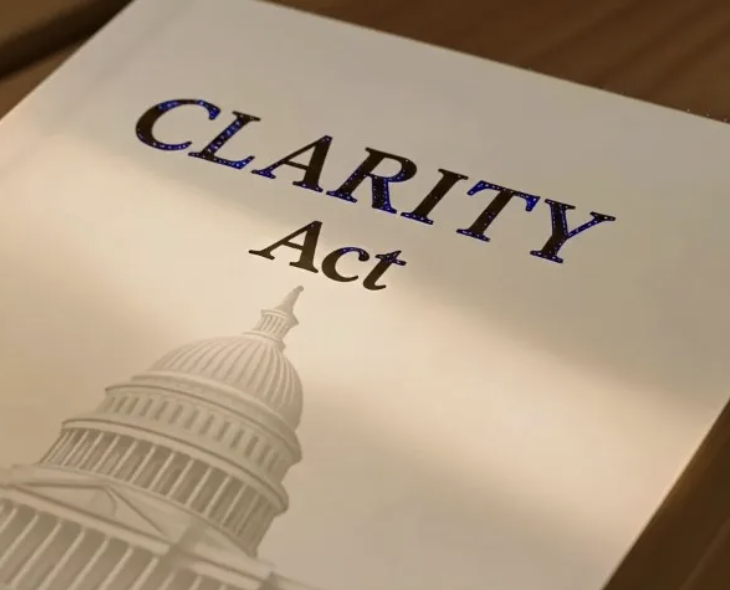
Giving the digital asset industry the commonsense rules it needs to thrive isn't a Republican issue or a Democrat issue. It's an American competitiveness issue. Pass the Clarity Act.
SENATE BANKING COMMITTEE CHAIR TIM SCOTT SAYS THE CLARITY ACT "BRINGS DIGITAL ASSETS OUT OF THE SHADOWS AND INTO A SYSTEM THAT IS SAFER, FAIRER, AND MORE TRANSPARENT."
BREAKING: 200 crypto companies sent an emergency letter to the US Senate demanding an immediate vote on the CLARITY Act.
Crypto lobby groups urged Senate leaders John Thune and Chuck Schumer to bring the bill to a floor vote as soon as possible.
While the bill is on the Senate calendar, leadership has not scheduled a floor vote.
And Galaxy Digital also cut the odds of passage in 2026 from 75% to 60%. If the bill does not clear the Senate before the August recess, it is effectively dead for the year.
🚨NEWS: Administration officials will host law enforcement groups at the White House Wednesday as part of ongoing efforts to address concerns that certain provisions in the Clarity Act, including developer protections derived from the Blockchain Regulatory Certainty Act, could make it harder to combat illicit finance, according to three sources familiar with the meetings.
The issue, along with ethics, remains one of the major sticking points that must be resolved before lawmakers can bring the bill to the Senate floor. Several Democrats have signaled they will not support the legislation unless law enforcement believes its concerns have been adequately addressed.
The meetings come on the heels of a broader industry push to win support for the bill from lawmakers and law enforcement, including a town hall and a fly-in featuring former law enforcement officials now working in crypto.
JUST IN: Senator Lummis says she has spent years building toward this moment. The Clarity Act is the most consequential financial legislation of this generation and we are going to get it done
Those of us who have been around tech long enough recognize this pattern: When the internet was first commercialized, the largest companies resisted putting their businesses online because they did not want their data on the public internet. So they built proprietary extranets, closed and permissioned networks that used TCP/IP but only allowed certain companies in.
But open networks beat closed ones. Every one of those extranets died, and now every business runs on the open internet.
The same thing is happening in banking right now. JPMorgan, Citi and Wells Fargo can see that blockchains are superior (faster, cheaper, global) but they want to control them. So they are launching their own private, permissioned networks. Sound familiar?
This too will fail. Interoperability and global reach always beat control.
The banks will spend years and billions trying to keep their closed networks competitive with open ones, and they will lose that race.
The web3 startups building new payment, banking and financial services companies onchain should be thrilled about this. Every year the banks continue this doomed strategy is another year of head start for the people building on open rails.
Thanks @DashaBurns for the great conversation. We need to pass the CLARITY Act now more than ever: strong rules to protect consumers, unlock innovation, and build the future of finance here in America.
🚨 JUST IN: JPMorgan, Citi, and major US banks plan to launch a tokenized deposit network next year to fend off growing competition from stablecoins and crypto firms.