Shedding light on the molecular determinants of how GPCRs control the selective activation of different G protein subtypes.
Grateful to have been part of this fantastic collaboration @AashishManglik@yifan_ucsf @Thal_DM & @DrorLab! https://t.co/B6ejzNS510
Cryo-EM structures of active NK1R bound to substance P from @AashishManglik@DrorLab @Thal_DM & @yifan_ucsf show that interactions with the receptor extracellular loops regulate G-protein signaling selectivity. Free to read: https://t.co/yhX0pSG1lW https://t.co/MqV8zAVjq0
Introducing Pearl: the first co-folding model to outperform AlphaFold 3 in protein-ligand structure prediction – a critical step in rational drug design.
Thanks to our world-class ML team and @NVIDIA collaborators! Full technical report: https://t.co/7AEmqnVKBu
#pearlAI
Check out this review article the great Dave Nichols and I wrote on the "Chemistry/structural biology of psychedelic drugs and their receptor(s)". Online today! This is a big milestone as it represents the first independent publication from my lab! https://t.co/sj0dAbnVIf
FlexSBDD: Structure-Based Drug Design with Flexible Protein Modeling
- FlexSBDD is a novel deep generative model designed to account for protein flexibility during drug design, offering a major leap in generating 3D ligand molecules that bind more effectively to target proteins.
- Unlike previous models that treat proteins as rigid, FlexSBDD dynamically adjusts protein structures to account for "induced fit," improving protein-ligand interactions by reducing steric clashes and increasing hydrogen bonding.
- FlexSBDD adopts an E(3)-equivariant network and flow matching framework, allowing the model to capture both geometric and chemical information efficiently.
- Extensive experiments show that FlexSBDD significantly outperforms state-of-the-art models, achieving a Vina Dock score improvement of up to 0.92, showcasing its ability to generate high-affinity, realistic protein-ligand complexes.
- A standout feature is the use of novel data augmentation techniques, such as sidechain repacking and structural relaxation, which improve the model’s ability to simulate real-world protein flexibility.
- Case studies, including KRASG12C, demonstrate FlexSBDD’s ability to discover cryptic binding pockets, opening up new possibilities for drugging previously "undruggable" targets.
@ZaixiZhang
📜Paper: https://t.co/gB3iHfe2jW
Accelerating Fragment-Based Drug Discovery Using Grand Canonical Nonequilibrium Candidate Monte Carlo
- The paper introduces the Grand Canonical Nonequilibrium Candidate Monte Carlo (GCNCMC) method, a cutting-edge approach designed to overcome limitations in molecular dynamics simulations, specifically for fragment-based drug discovery (FBDD).
- A key advantage of GCNCMC is its ability to insert and delete fragment molecules into a protein’s binding site without prior knowledge of binding modes, making it highly efficient for exploring complex protein-ligand interactions.
- GCNCMC outperforms traditional methods by enabling accurate sampling of occluded binding sites that are not easily accessible by molecular dynamics alone. This drastically reduces simulation time for fragment binding predictions.
- The method allows for the simultaneous identification of multiple binding modes of fragment molecules, which is crucial for FBDD, where fragments may bind in various orientations.
- By eliminating the need for artificial restraints and symmetry corrections, GCNCMC enhances the calculation of binding affinities, providing results that are in excellent agreement with more established methods like Absolute Binding Free Energy (ABFE) calculations.
- The study demonstrates GCNCMC’s effectiveness through several case studies, including T4-lysozyme (T4L99A) and Major Urinary Protein 1 (MUP1), showcasing its utility in predicting binding sites and modes in real-world drug discovery scenarios.
@marley_samways
💻Code: https://t.co/gfYfBzAgzG
📜Paper: https://t.co/yXiTniP2Wg
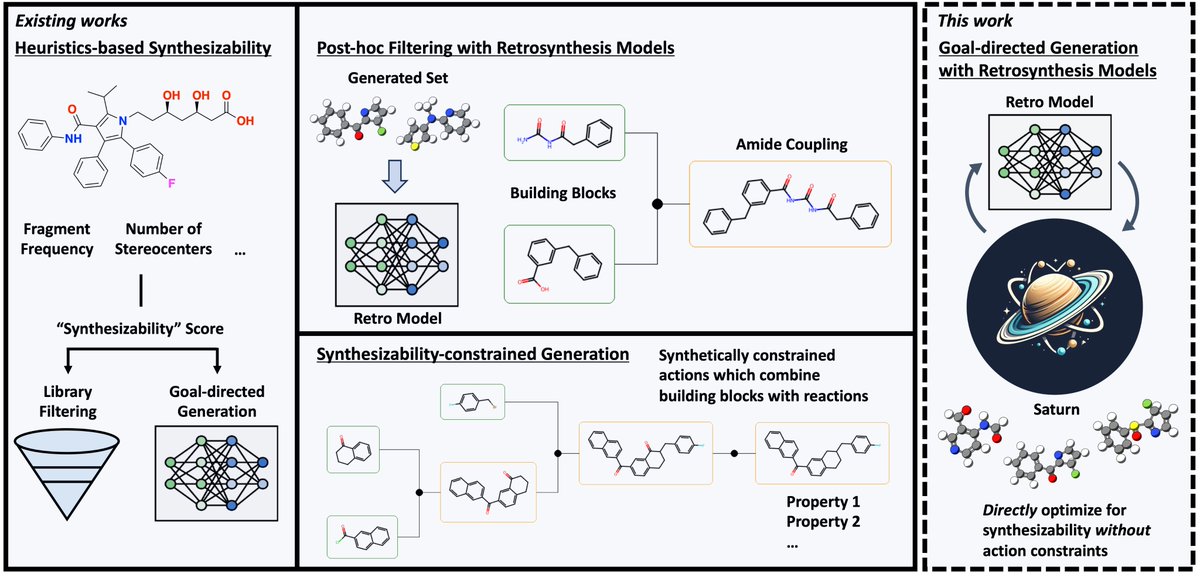
Molecular generative models can *directly* optimize for synthesizability using retrosynthesis models!
Check out initial results which can be an alternative to synthesizability-constrained generation
Pre-print: https://t.co/3PFTuhuQRZ
Code: https://t.co/dcpziGIL8U
(1/2)
Excited that our #OpenFold is out! Following the recent #AlphaFold3 announcement, the need for a trainable, fast, and efficient pipeline for biomolecular modeling is becoming more critical! 1/5
🎉🚀 Excited to share that my internship work, "Benchmarking Active Learning Protocols for Ligand Binding Affinity Prediction," has been published in ACS @JCIM_JCTC!
🔗 https://t.co/QezFgYuQpd
Find 🧵 below for a quick overview.
@exscientiaAI
Extremely happy to present our work, a tour de force of 10+ years, where we show the structural analysis and conformational dynamics of a holo-adhesion GPCR and reveal interplay between extracellular and transmembrane domains. A thread: 1/8
https://t.co/y06sTyL9k3 #gpcr#drgpcr
It took a while but it's here: the Fragmenstein preprint!
https://t.co/kysZwziyZF
A big thank-you to everyone who helped in its creation, especially user feedback!
Thrilled to have our genAI NeuralPLexer research featured on the cover of @NatMachIntell. The pub shows how our model has set the standard for 3D protein-ligand structure prediction for drug discovery. Thanks to our collaborators @NVIDIAAI and @Caltech
https://t.co/oprb9pTNXS
Now out in JCTC: Our paper on our Separated Topologies method for more flexible relative free energy calculations, combining benefits of relative and absolute calculations. https://t.co/8LYVv0cvNC
"Reliable protein-protein docking with AlphaFold, Rosetta and replica-exchange"
Some promising results on antibody-antigen complex prediction
https://t.co/vlUszvFCwB
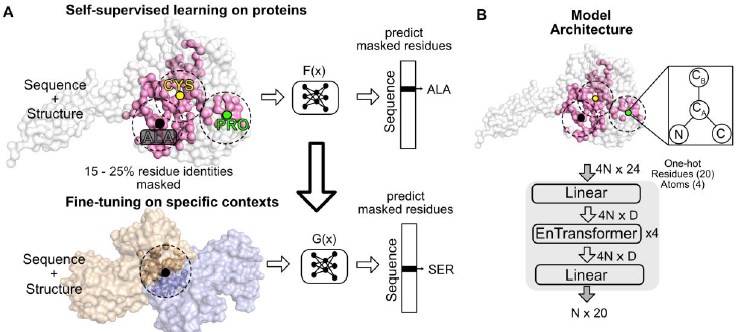
Toward docking and interface design, our latest DL tool is a graph neural net for protein interfaces, with the representation learned in different structural contexts. Work by Dr. Sai Pooja Mahajan, also with @jeffruffolo.
https://t.co/ErSlMT4zjd
👉We recently published Leonard's and Helmut's study explaining "Why solvent response contributions to #solvation free energies are compatible with Ben-Naim's #theorem" @arxiv Feedback most welcome! Read it here: https://t.co/YxafUATWaM
I'm happy to announce that we've released the entire PocketMiner training and validation data on our Github with detailed instructions. This should make it much easier for others to train and test models for cryptic pocket prediction. (https://t.co/L158YHD0hL)
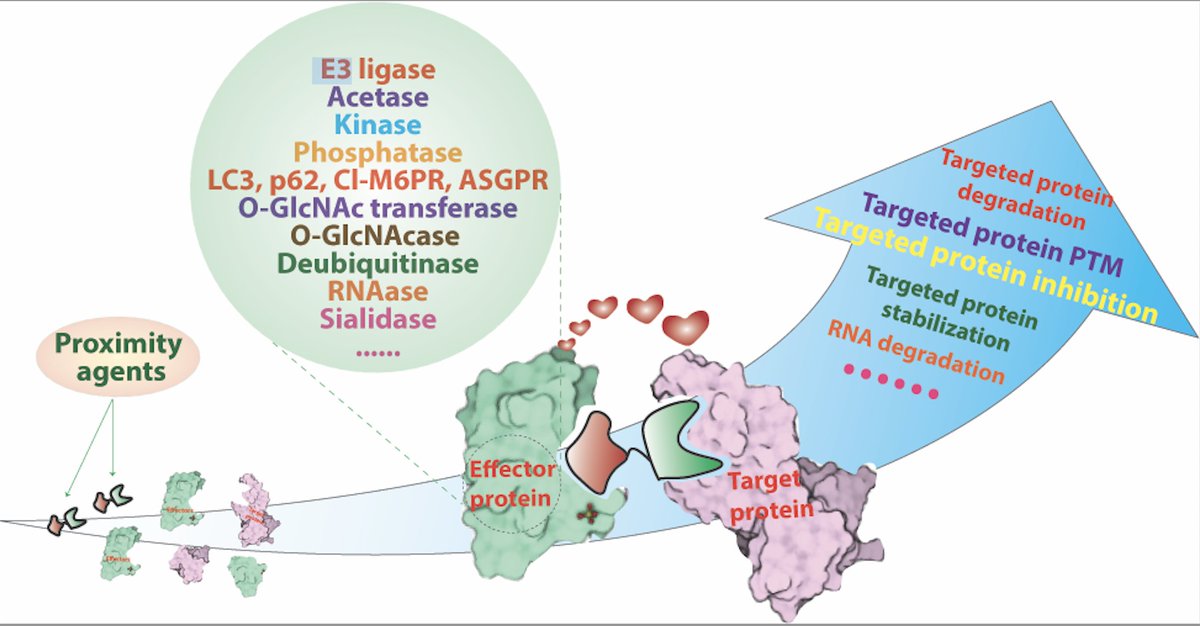
Excited to share our new review on Proximity-Based Modalities for Biology and Medicine | Just out ASAP in ACS Central Science @ACSCentSci https://t.co/bkDdnQS2TM