バイオインフォマティシャン@都立駒込病院、ゲノム解析、#AML、#MDS
Bioinfomatician@Tokyo Metropolitan Cancer and Infectious diseases Center Komagome Hospital, Genome analysis, #AML, #MDS
Prognostic impact of variant allele frequency in intensively treated patients with NPM1-mutated AML: a PETHEMA study @BloodPortfolio
https://t.co/2OqncUbCxL
#Myeloid diversity in tumors: shaped by genes, location, and time. Review by Maria Nogales-Pons, Mariola Munárriz-Paños, Teresa Aceña-Gonzalo, & María Casanova-Acebes @Casanova_Acebes: https://t.co/jjWBCjZ9UX
📘 Part of JEM #Cancer Collection: https://t.co/YPWs2KQyqx
#EACR2026
Our new paper is out in DEN Open! We developed a T1b-specific risk stratification framework for lymph node metastasis (LNM) in colorectal cancer using a reproducible Worst Histology (WH) approach.
🔗 Read it here: https://t.co/ULka1SKiem
MDS/AML with MDR mutations display overall different mutation profiles and improved prognosis, when compared to corresponding AML subtype. Read the full article in Blood Advances: https://t.co/UA0lqk0DUC #AML#BloodAdvances
The impact of female-to-male allogeneic hematopoietic cell transplantation on survival outcomes varies by recipient age @ASTCT_Journal
https://t.co/ykPPR1n3bv
Integrative genomic profiling improves diagnostic resolution and risk stratification of B-ALL using WHO-HAEM5 and ICC classifications. Updated classifications reveal distinct subtypes and highlight limitations that require refinement of B-ALL taxonomy. https://t.co/VZNKhhFzYC
Presented at #ASCO26:
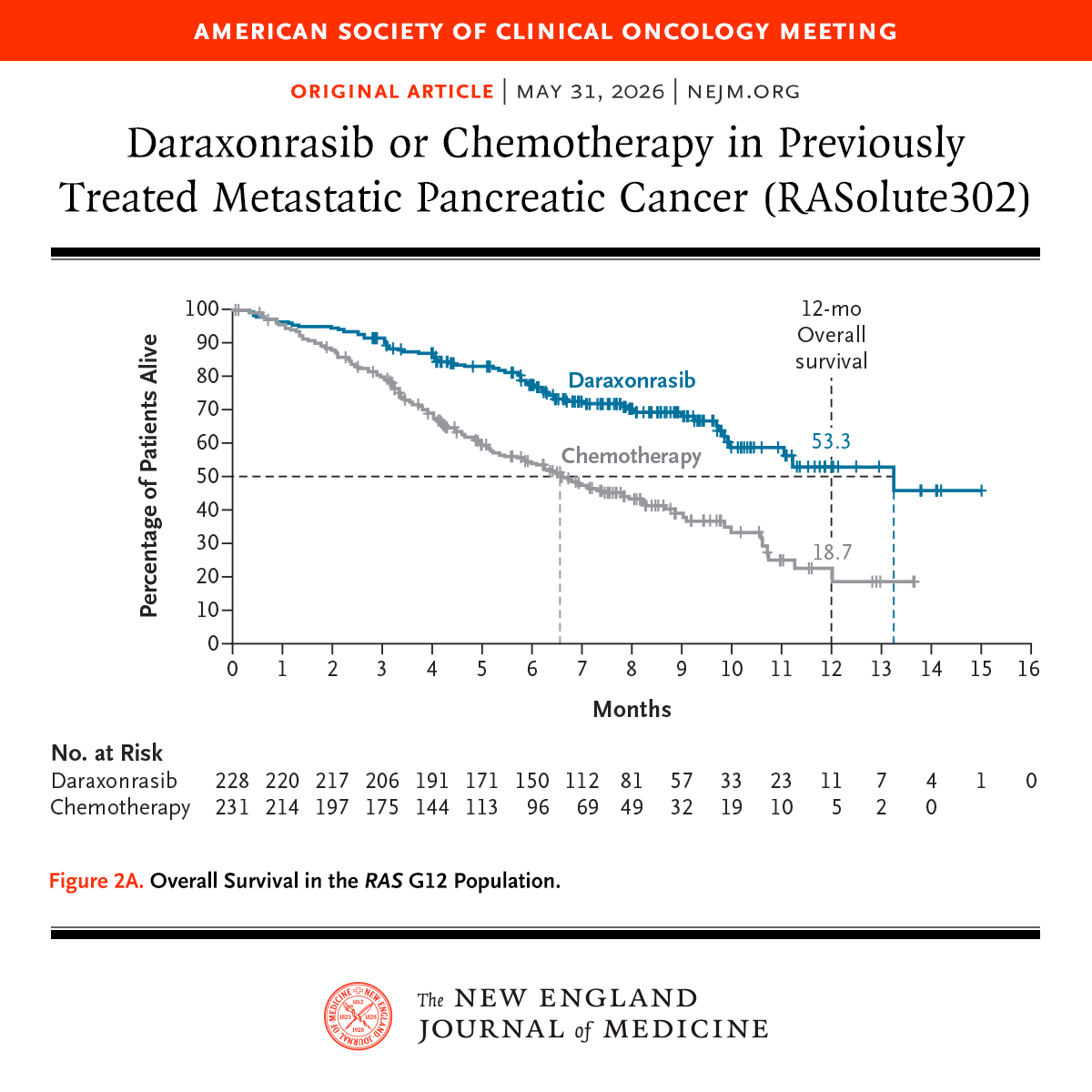
Among patients with previously treated metastatic pancreatic ductal adenocarcinoma, the RAS(ON) inhibitor daraxonrasib led to significantly longer overall survival and progression-free survival than chemotherapy. Full phase 3 RASolute 302 trial results: https://t.co/xwLWBZYRzq
@ASCO
DDX41 may be the most common inherited AML/MDS predisposition syndrome… yet many cases are likely missed.
Think:
• older AML/MDS
• longstanding cytopenias
• normal karyotype
• subtle family history
Why it matters:
⚠️ donor selection
⚠️ family screening
⚠️ transplant decisions
Interestingly, DDX41 AML also appears highly venetoclax-sensitive with surprisingly favorable outcomes.
PSNS summary below 👇
#AML #hemetwitter
#BMT #MDS
Dr. Fun +G
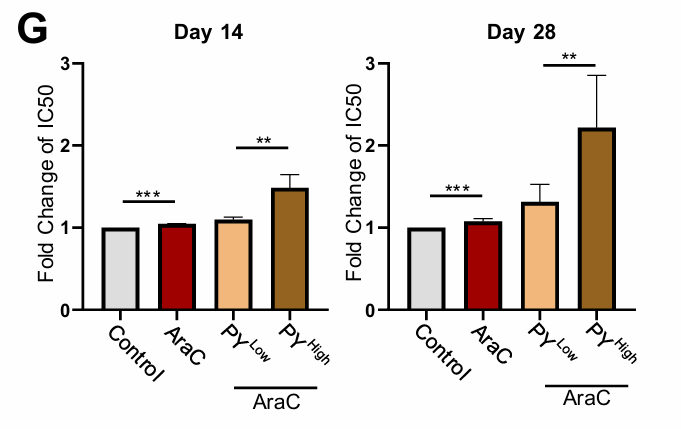
Read this just published research article by Ulrich Steidl, et al. “Rapid Transcription Dynamics Confers Cytarabine Resistance in Acute Myeloid Leukemia.” #Myeloid2026 https://t.co/rQWihjz6G0 @MontefioreNYC
Review series on clonal hematopoiesis: how should clinicians approach clonal hematopoiesis in practice?
This review outlines current strategies for risk assessment, monitoring, and clinical decision-making.
https://t.co/GLf7CKmA1Q
Excited to present the first pre-print from our group, an investigation the human bone marrow microenvironments in patients with myelodysplastic syndromes (MDS) and normal age-matched subjects using Xenium genotype-informed spatial transcriptomics:
https://t.co/5fS09Yl38G
Low-dose azacitidine maintenance after #HCT is well tolerated in pediatric high-risk myeloid malignancies with 3-year OS 91% and RFS 73%. Favorable outcomes support prospective study. Read more: https://t.co/RtM8uVZkAI
Daraxonrasib in PDAC now published in NEJM.
We have had press releases and presentations, but now a publication.
And yes, the data still look very real. 🧬
Pancreatic cancer is a RAS disease.
90% have activating RAS mutations.
G12D, G12V, G12R dominate.
And historically we have had essentially nothing direct to do about it (G12C inhibitors exist but they are a subpopulation).
Phase 1/2
Previously treated RAS-mutant PDAC
n=168
Oral RAS(ON) multi-selective inhibitor
Phase 3 dose: 300 mg daily
• ORR 35%
• mDoR 8.2 months
• mPFS 8.5 months
• mOS 13.1 months
As context; 2L chemo w/ PDAC has ORR <10% with OS ~5-7 months and significant side effects. So yes, this is huge.
Toxicity is real too:
• Any-grade TRAE 96%
• Grade ≥3 TRAE 30%
• Rash, diarrhea, nausea, mucositis, vomiting, fatigue
This is not a “write the script and see them in a month” drug.
Up-front oncoderm involvement is going to be critical. Rash needs to be anticipated, managed early, and dose modifications need to be normalized rather than viewed as failure.
BUT this is a absolute game-changer in pancreas cancer (and other KRAS driven diseases).
Importantly, this no longer exists in a phase 1/2 vacuum.
By press release, RASolute 302 met its primary and key secondary endpoints, with PFS and OS benefit versus standard chemotherapy. Full data still matter, but the confirmatory study appears to have confirmed the signal.
Terrible disease.
Great signal.
Real (but manageable) toxicity.
Practice-changing.
https://t.co/lJ8IbQydlP
@OncoAlert@TheGutOncLab@Onco_Nexus