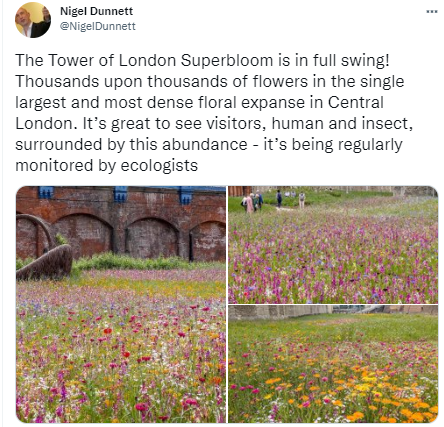
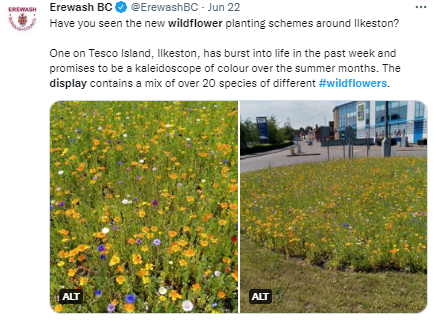
It's "wildflower" season again on social media. Great colourful displays BUT issues which need to be raised :
1) They are often not WILDFLOWERS
2) They are not the best for INSECTS, they may be (not always) to POLLINATORS
3) They certainly aren't MEADOWS
Let me explain 1/n
🌿Huge thank you to our school community for the incredible turn out as we embark on the first phase of rebuilding our outdoor learning area. Hard graft on a Saturday afternoon 💪🏻❤️ @habitat_people@KirktownGC@EdScotLfS @EcoSchoolsScot #ImprovingTogether#community 🌱
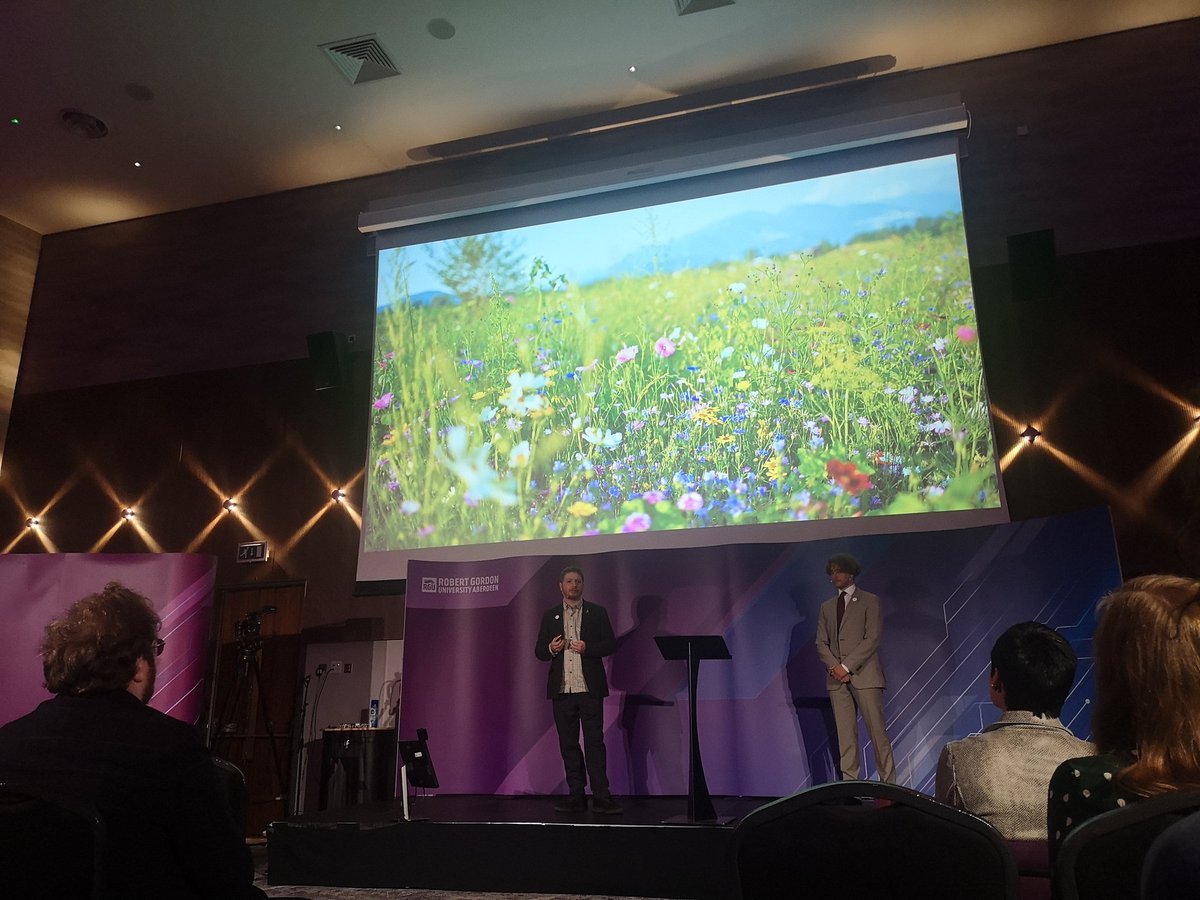
We are delighted to announce that we are through to the final of the RGU Regional Startup Accelerator with our Carbon Offsetting Scheme, the Carbon Shop!
We are among 9 companies to make it to this final, all with fantastic projects. Join us online to view the event on 12/05!
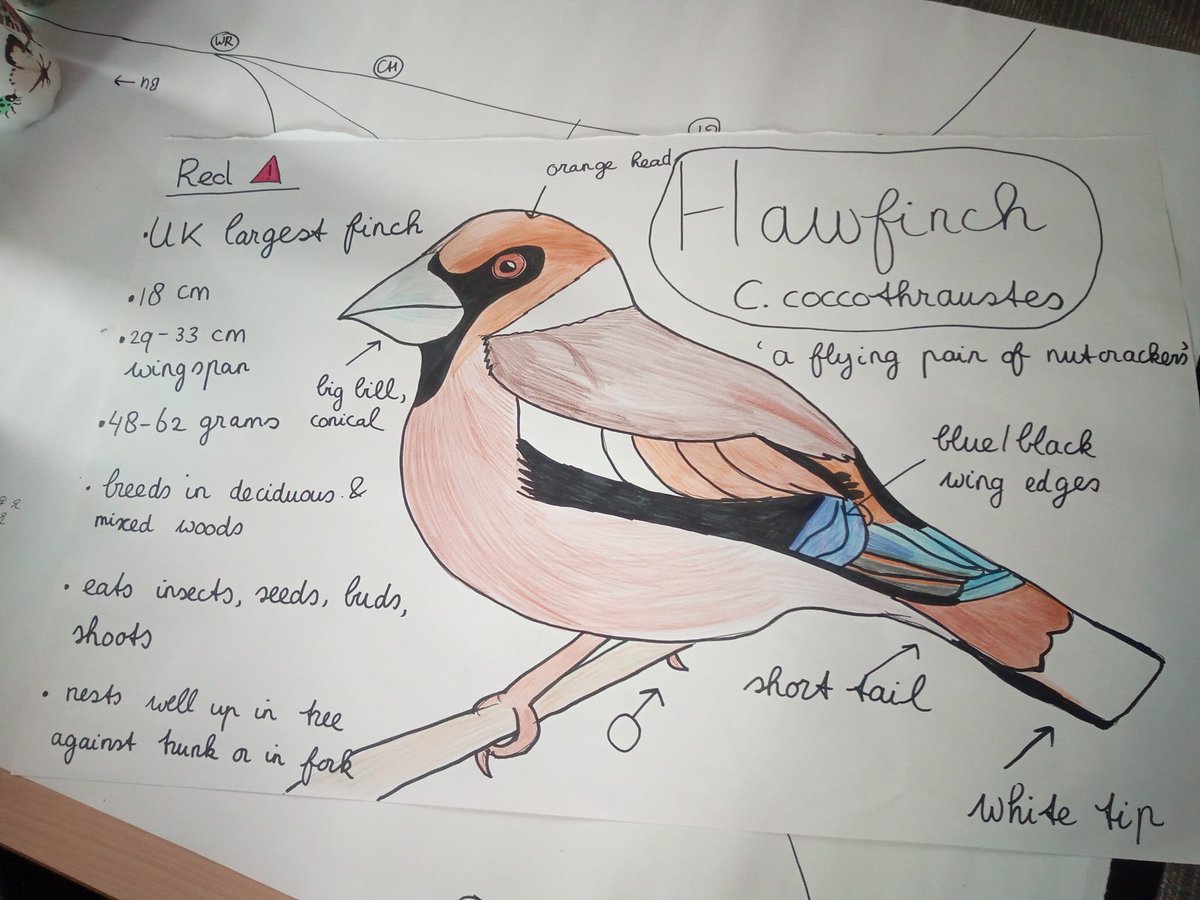
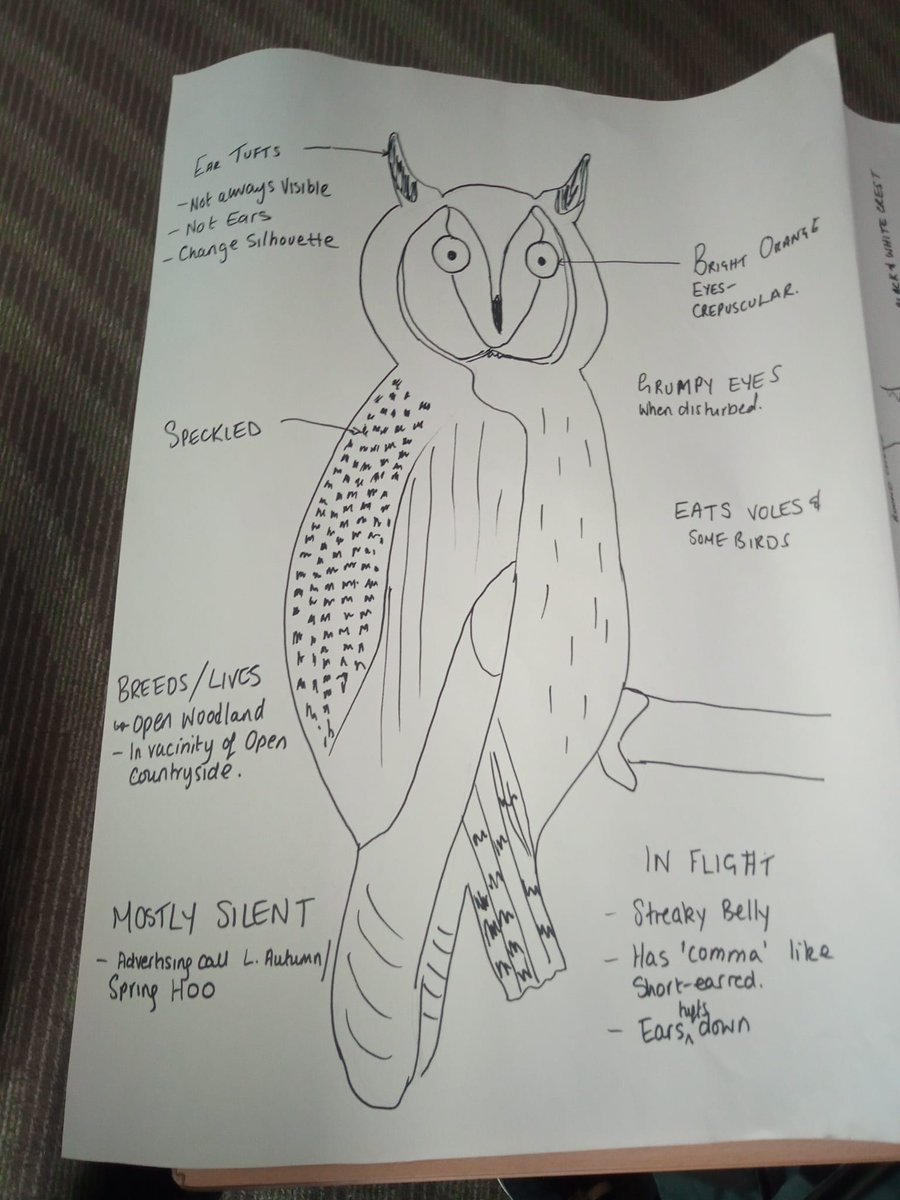
We had a great spring Ornithology course session last weekend, including a dawn chorus walk on Sat morning and presentations done by our participants on Sun, with some great drawings! Visit our website to learn more about our OFSTED approved course: https://t.co/L5h1LaYJB2
Thrilled to have passed my PhD viva after a truly enjoyable 4yrs studying 🏴#chough conservation!
Huge thanks to my wonderful supervisors @janemreid1@DavyMcCracken Eric Bignal &Pat Monaghan for their support,& @RobThomas14 @pt98765 for an interesting & encouraging viva! #PhDone
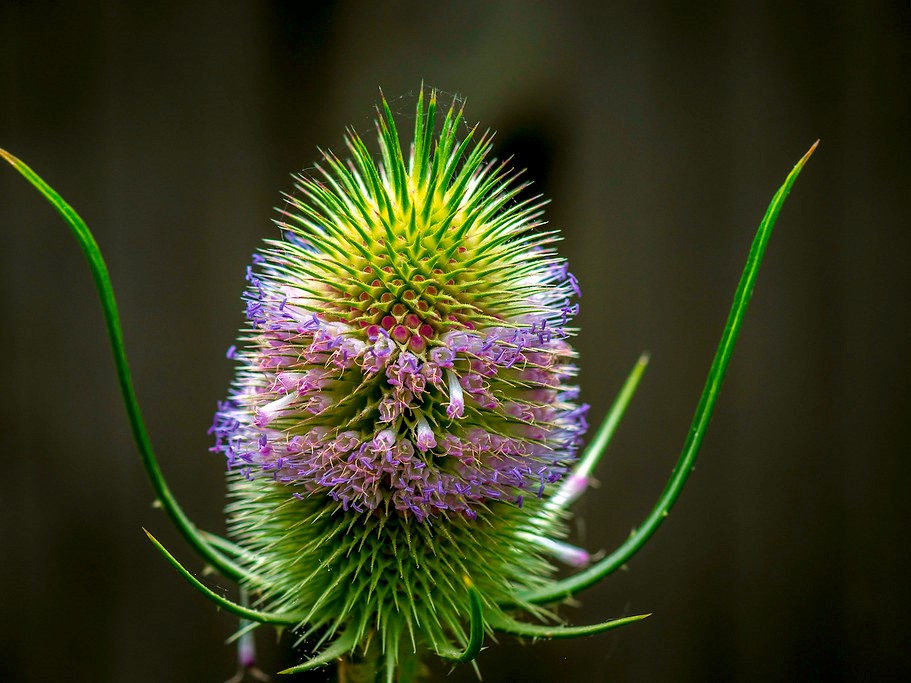
We have been busy working in our wildflower nursery, many species have started to germinate and are ready to be potted up. We did around 50 teasel and 150 yarrow last Friday🌼
New analysis based on real-world satellite observations show that more than 75% of Amazonian forest has lost its stability. This could lead to the mass release of many tonnes of CO2. Read full article here:
https://t.co/sFz9WVMVwb
#ClimateAction#CarbonCapture#climatechange
#Ecology twitter–I’m looking for paper suggestions!
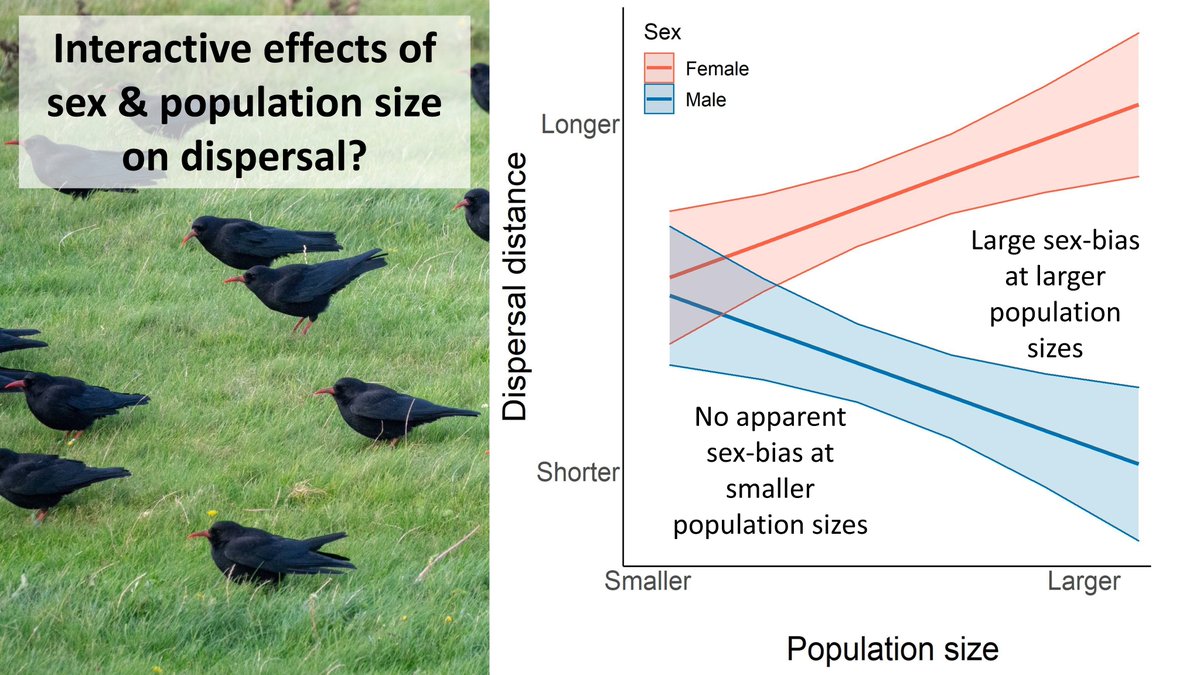
We see an interesting sex by #population size interaction in natal dispersal distances in Scottish chough (see fig).
Can anyone recommend other studies that explicitly tested for sex by density effects on #dispersal distances?
Hi @Audiodaan, I was wondering whether I might be able to get permission to use your 'UK wildlife' soundcloud playlist as background song for my website? You would of course get full accreditation! Thanks! 😄
2/ For effective evidence-based #conservation, we need to understand how targeted interventions might impact NON-TARGET individuals within focal populations (e.g. different age classes), and how such collateral impacts affect overall conservation success and future management.
3/ The small Scottish #choughs population (~ 50 pairs) faced imminent extinction, due to low food availability during late summer and autumn that caused a drastic decrease in first-year survival during 2007-2009.
4/ To try prevent extinction, an emergency supplementary feeding programme targeting sub-adults was implemented in key areas since 2010. But, many adults also attended feeding stations. So what impacts did this have on demography & population growth?
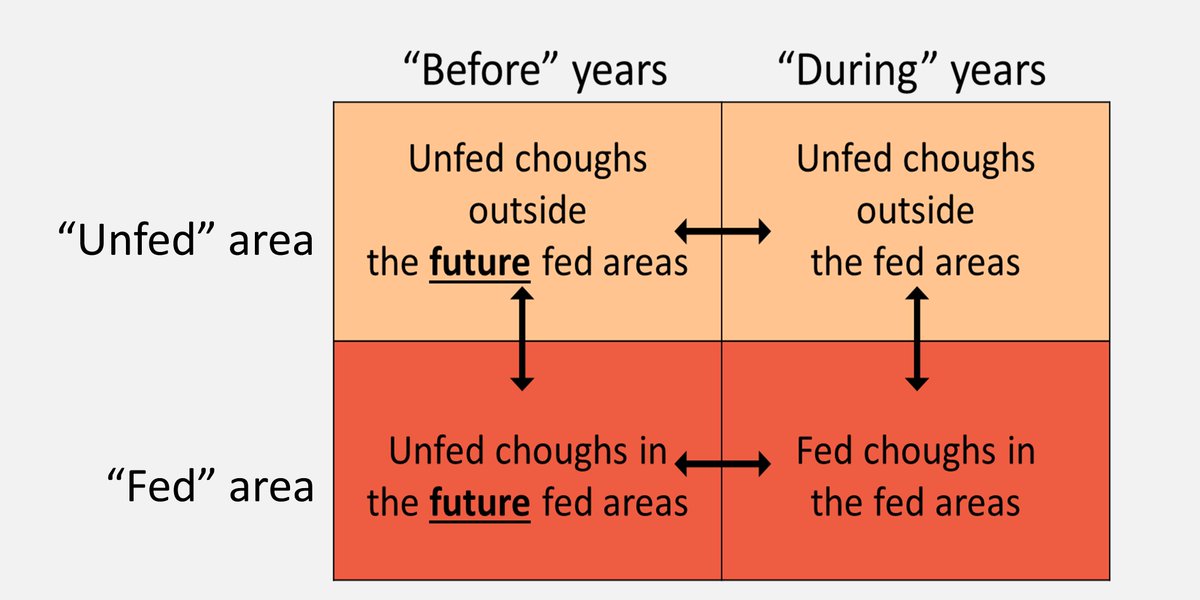
5/ We used 15 years of individual-based data within a before-after control-impact analysis to test how feeding influenced adult survival and reproductive success, by comparing rates of adults that lived in “fed” and “unfed” areas, both before and during feeding.
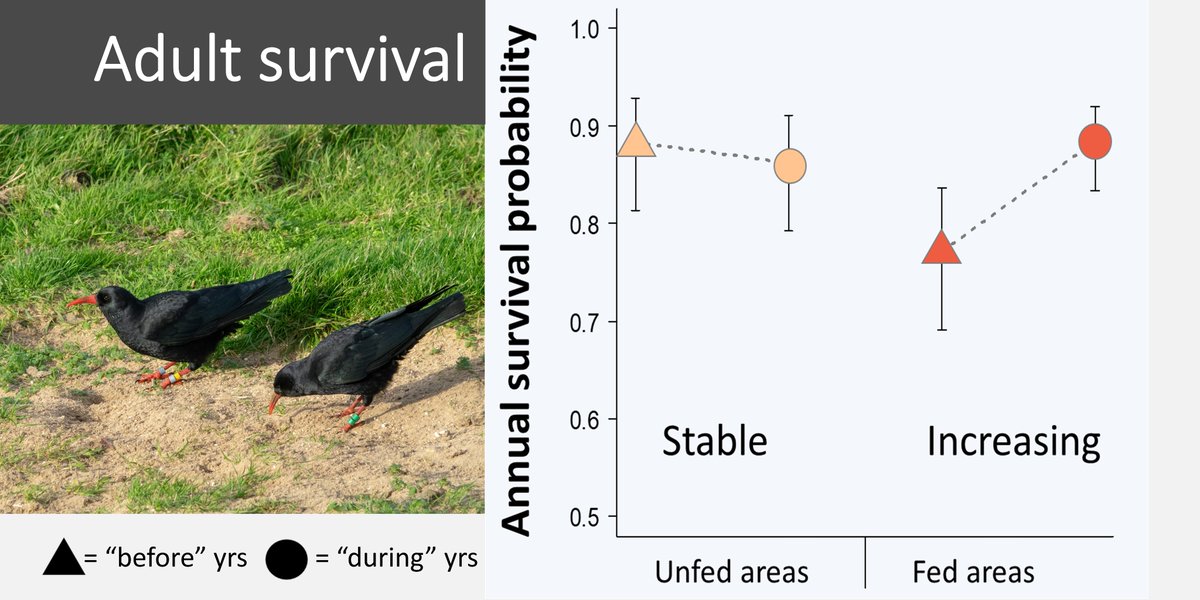
6/ Adult survival remained stable in “unfed” area between “before” and “during” periods, but survival in “fed” area increased substantially from a low baseline. This effect was large, and was only apparent with the BACI analyses.
7/ Furthermore, the proportion of pairs that successfully produced at least 1 fledgling increased in “fed” area between “before” and “during” periods, but decreased in “unfed” area. However, there was no effect on the number of fledglings within successful nests.