Owner & Director of Sports Science and Athletic Development at Novanta Sports Performance. Specializing in Youth Strength & Conditioning and Soccer Fitness.
@FootballFitFed Thank you for having me on the Podcast. It was a real pleasure chatting with you. Really hope the listeners take something away with them. Appreciate all the good work you guys are doing!
#23 of the podcast is live with Head of S&C at Athletic Solutions @ASI_Strength, we spoke about:
The challenges he faces in 🇨🇦⚽️
🏋️♀️ The importance of movement quality
👨🏫 How he educates players/parents on S&C
📈His approach to monitoring
https://t.co/E4qjnW7h3b
🆕Epidemiology of ACL injuries in the "Top 5" @UEFA Leagues ⚽️
➡️"Most ACL ruptures occurred through non-contact mechanisms, typically during defensive actions, particularly while pressing an opponent"
👉D. Ortiz-Sánchez et al. 2026 🇪🇸
📂Open Access: https://t.co/UurDPallLh
A new randomized controlled trial examined whether adding the Copenhagen Adduction Exercise to an 8 week rehabilitation program could improve outcomes in male soccer players with adductor related groin pain.
Both groups completed supervised rehabilitation twice per week, but the intervention group also progressed through a modified Copenhagen Adduction Exercise program. The progression started with assisted isometric holds and advanced toward the full Copenhagen exercise, using pain response as a guide. Progression only occurred when athletes stayed at or below 4 out of 10 pain on the Numeric Rating Scale.
The results were meaningful. The Copenhagen group demonstrated greater improvements in eccentric hip adduction strength, larger reductions in pain, and better scores across all HAGOS subscales compared with the control group. The intervention group improved eccentric hip adduction strength by 22 percent, exceeding the study’s stated 15 percent threshold for a clinically meaningful difference.
The practical takeaway is simple: the Copenhagen Adduction Exercise is not just a prevention tool. When progressed appropriately, it may be a valuable rehabilitation asset for soccer players dealing with adductor related groin pain.
The key is dosage, progression, and symptom response. = It is not about forcing the full exercise early. It is about building the athlete from tolerable isometric and modified positions toward higher load eccentric demands while respecting pain and movement quality.
🆕"The first study to quantify the incidence, severity, & burden of match & training injuries in professional academy ⚽️ in @ScottishFA 🏴"
▪️Both match & training injury incidence rates generally ⬆️ with age
👉@SteveCurnyn et al. 2026 🏴
📂Open Access: https://t.co/qzHQQkTf8X
A paper I co-authored is now published in Football Studies:
Match-Running Demands by Playing Position in Colombian Men’s Professional Soccer
Interesting project examining positional match-running differences across the Colombian professional game.
https://t.co/Z0WbDmlJAc
🆕"The @UEFA expert group conducted a narrative review of the scientific evidence relating to nutrition, drawing on their expertise, scientific literature & practical experience ⚽️"
👉@JamesCollinsPN R. Maughan @Jeukendrup et al. 2026 🏴
📂Open Access: https://t.co/h7EihHKJZR
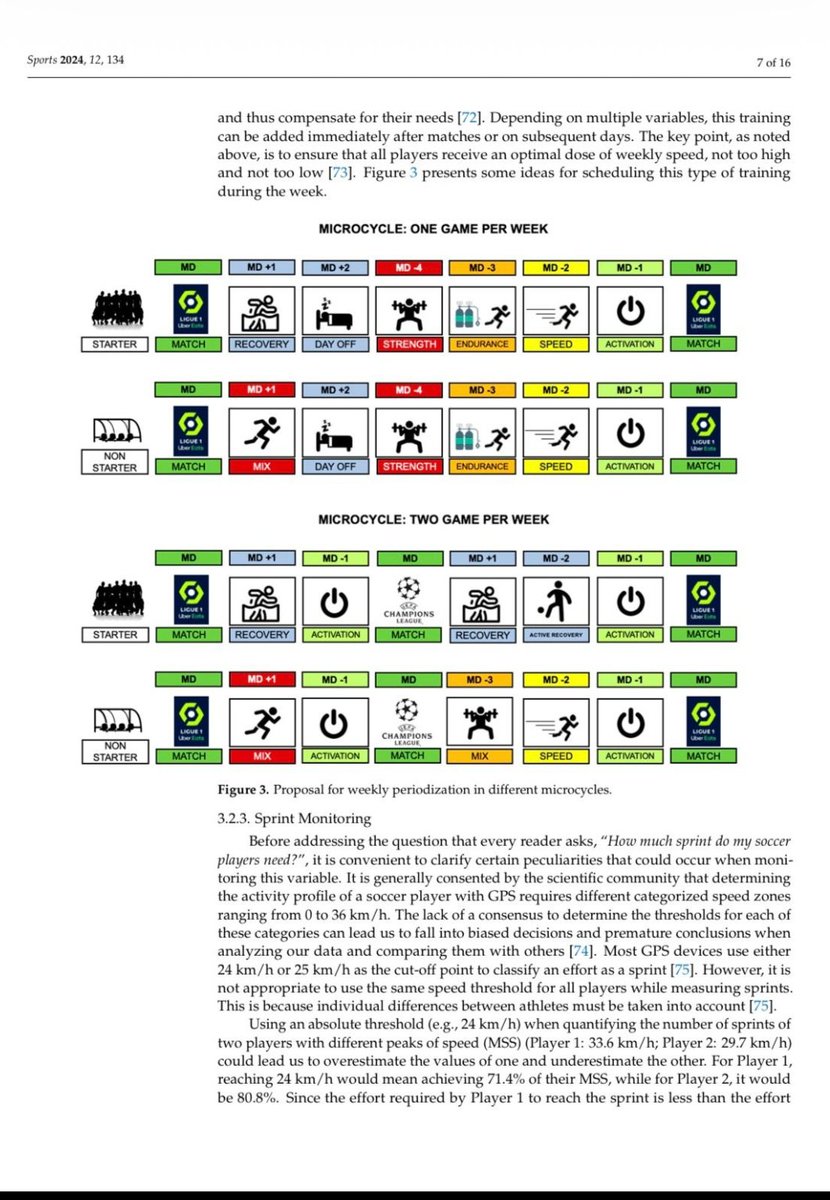
⚽📊 If You Want to Prevent Hamstring Injuries in Soccer, Run Fast: A Narrative Review about Practical Considerations of Sprint Training
https://t.co/wBrDp06N82
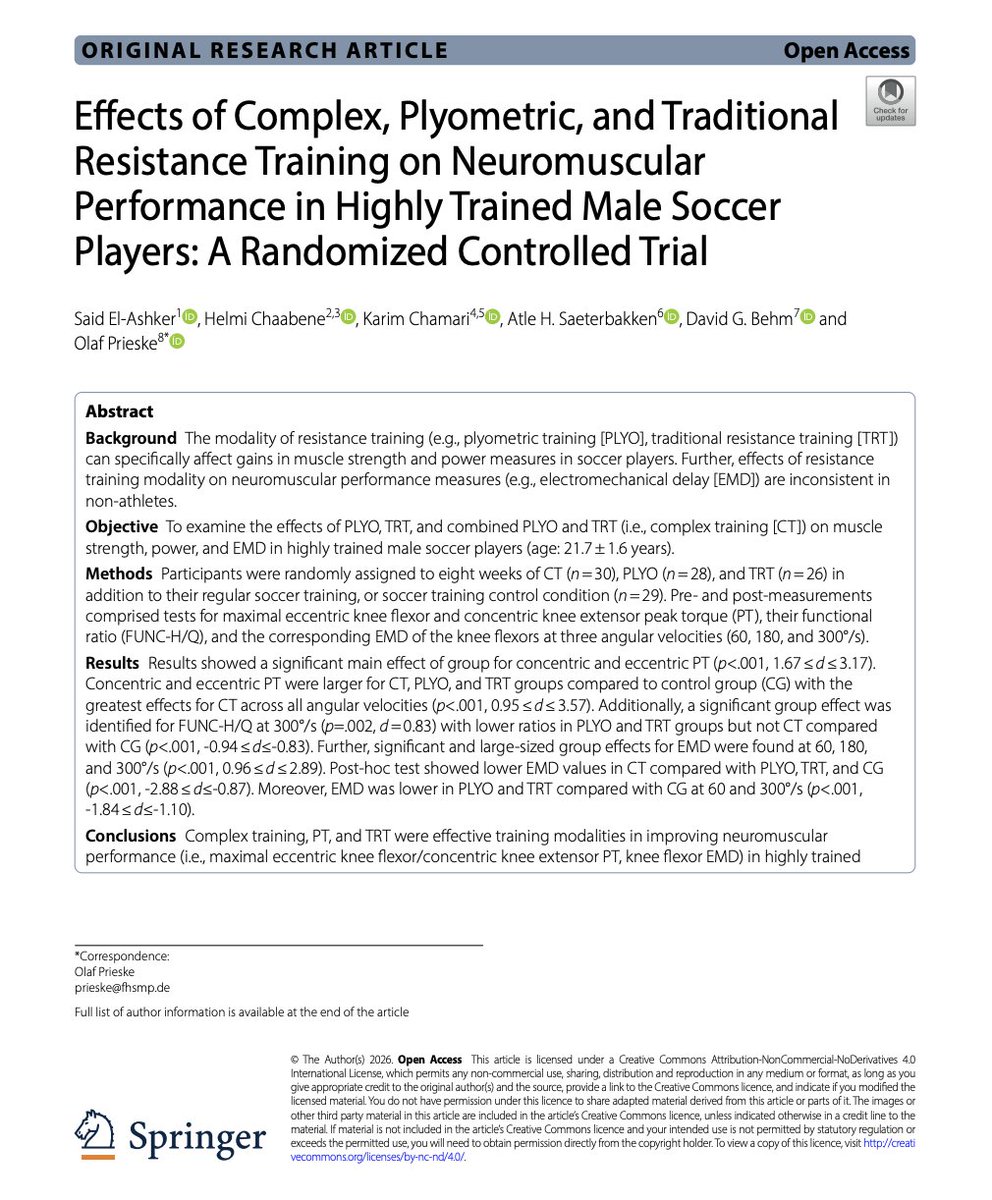
🆕"Complex training appears to be more effective in improving maximal isokinetic muscle strength when compared with plyometric & traditional resistance training in highly trained male ⚽️ players"
👉 Said El-Ashker et al. 2026 🇸🇦
📂Open Access: https://t.co/Aq6hdZHeHs
A great insight from the professor why hip mobility is important for football players. This highlights the importance of athletic development and who Arsenal emphasised “most efferent movers
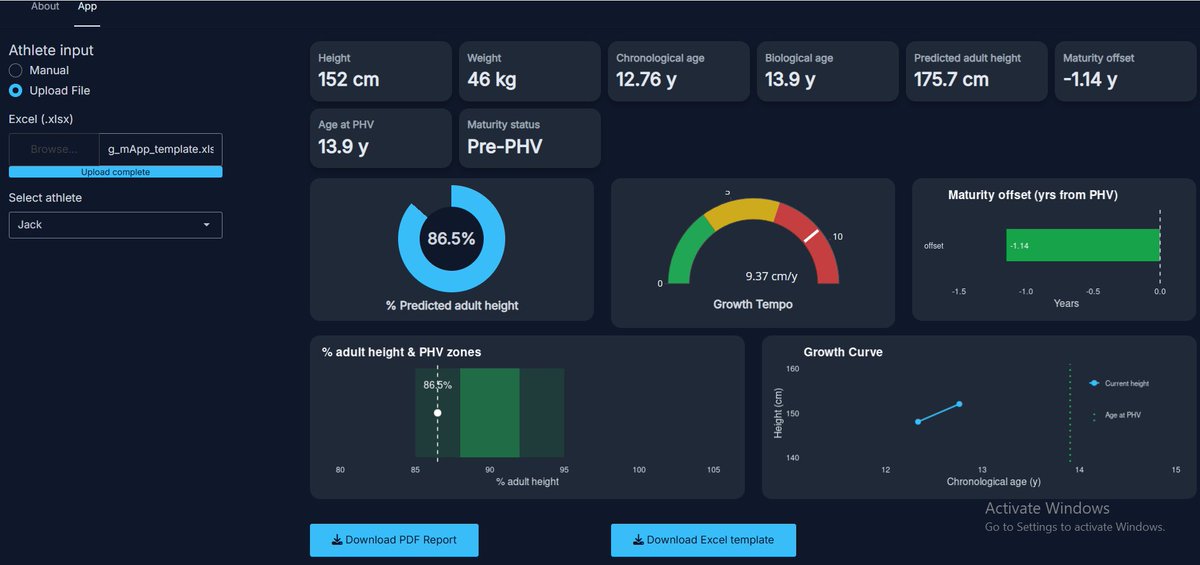
I built my first Shiny app called Growth & Maturation App . It is a simple tool for coaches and practitioners to estimate:
•Maturity Offset using the Mirwald (2002) equations
•Age at Peak Height Velocity (PHV)
•Predicted Adult Height using the Khamis–Roche method🧵⬇️
High-intensity interval training improves the reactive strength index and motor ability of youth footballers #FootballScience#footballresearch https://t.co/jy3Xz2em55
Brilliant! Working in the youth space, we are told repeatedly that teams/players lack fitness & need to run more. Having the capacity to meet the demands of the sport is important, but how it applies to your game model (context) matters more.
1/2
More running ≠ better performance. It depends.
Across decades of match data, there is no universal rule. Top teams succeed with very different physical outputs, even within the same league. It’s shaped by game model, opposition and context.
Beyond excited to share my 3rd book, The Pinnacle Effect!
Explore how context reshapes match demands across men’s, women’s & youth international football. Thanks to those that supported me along the way.
Link👇
https://t.co/xI2MkJlIUF