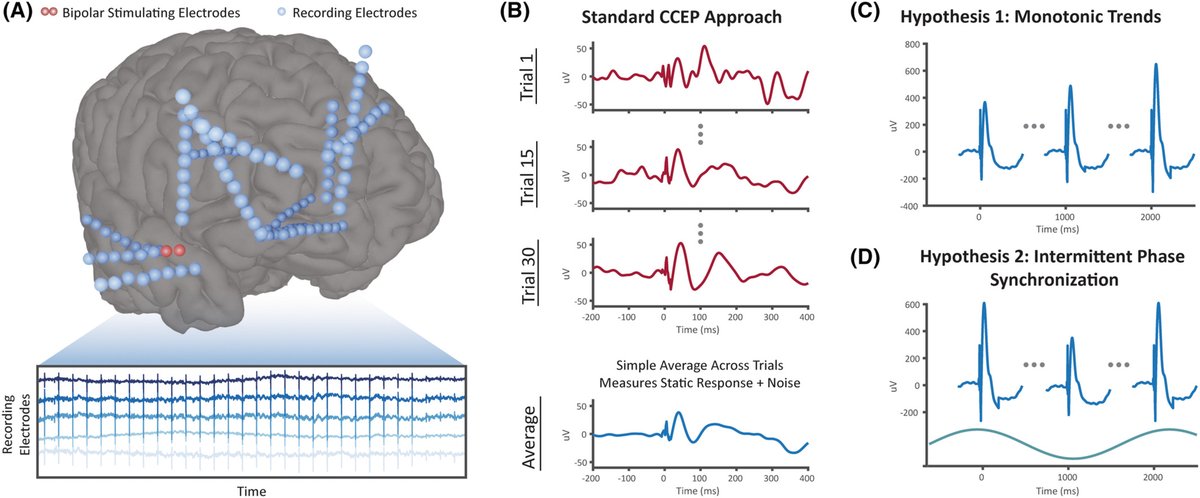
Excited to share my first foray into #Epilepsy and #brainstimulation research! We study temporal variability in the brain's response to low frequency intracranial stimulation
Big group effort w/ Erin Conrad @katedavis12341 @BrianLitt2@alfrelucs & others
https://t.co/O9fsPRkDbV
Looking for a post-doc interested in neuroimaging/neurophysiology in disorders of consciousness, who wants to join our @RECOVER_program to understand, predict and promote consciousness recovery. Please contact for more info, and spread the word to any who might be interested!🧠⚡️
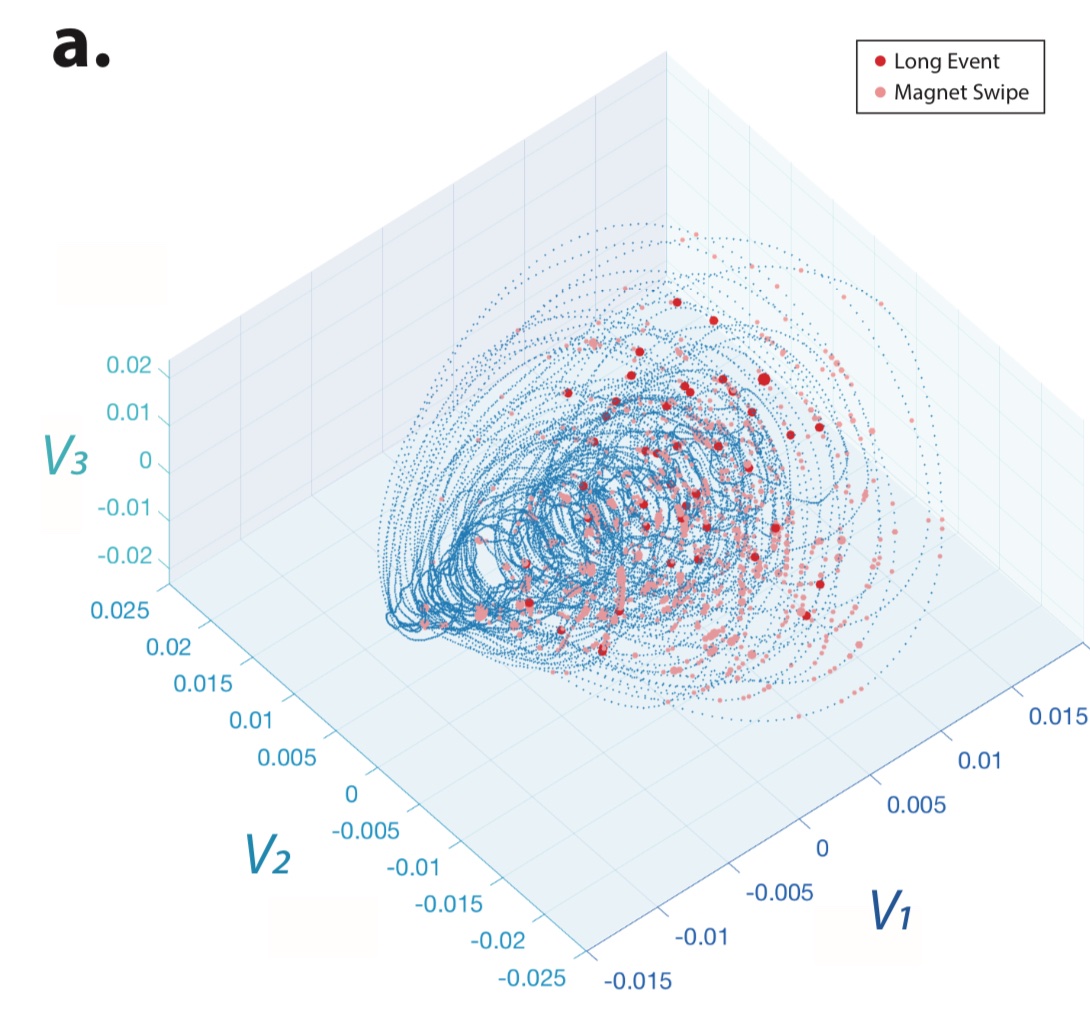
Seizures are unpredictable but don’t occur completely randomly. Here together with @ArianAshourvan we reconstruct the cyclical patterns that drive seizure risk, based on epileptiform activity recorded in individual patients over several months and years.
https://t.co/6gumW70XdJ
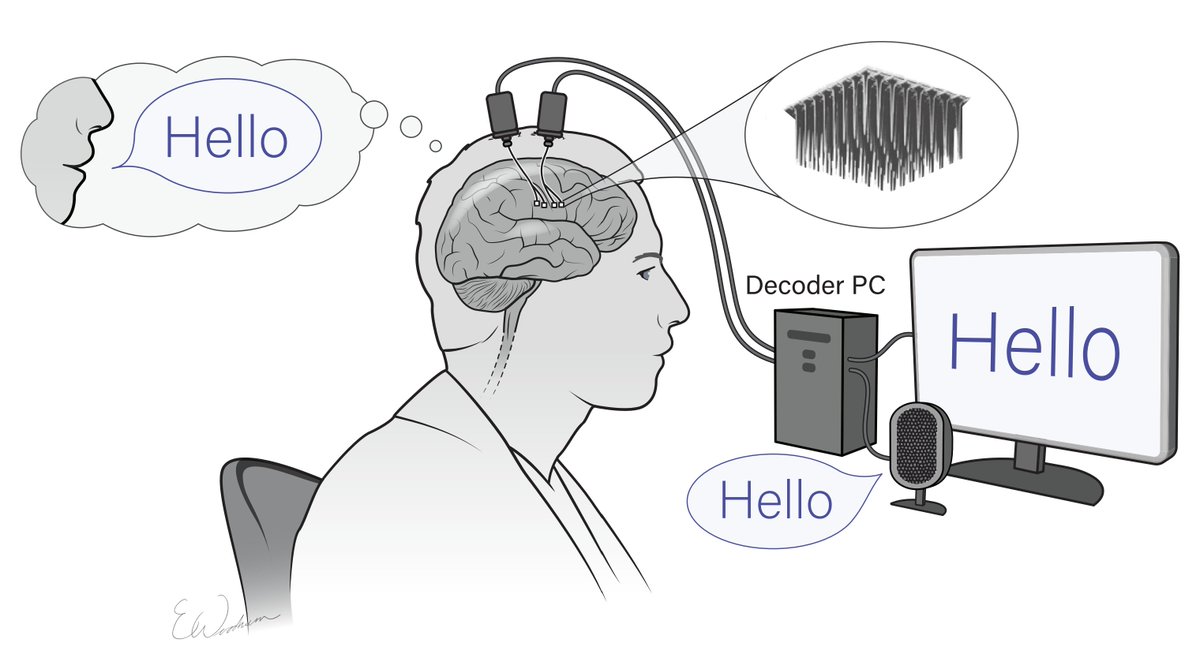
Our new study is out today in Nature! We demonstrate a brain-computer interface that turns speech-related neural activity into text, enabling a person with paralysis to communicate at 62 words per minute - 3.4 times faster than prior work. 1/3 https://t.co/6pB7NLAqjG
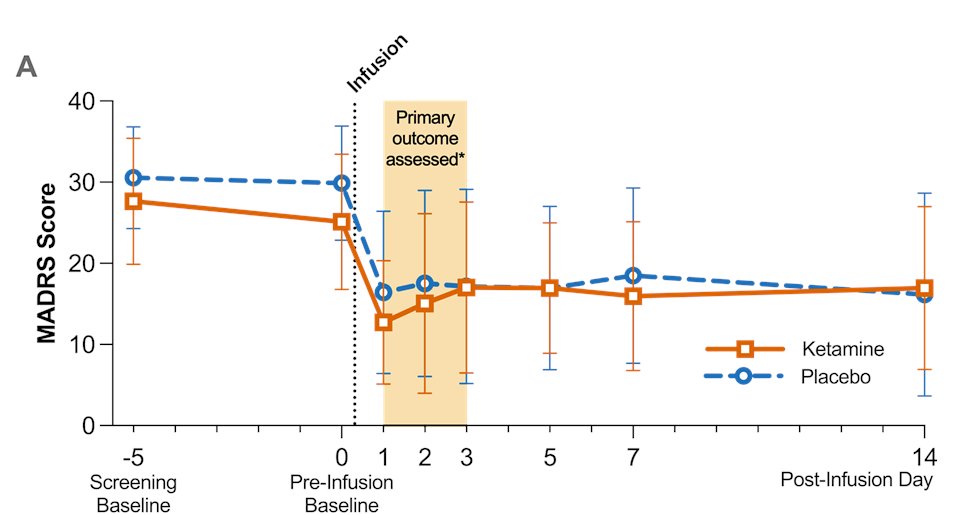
SPIKED: Stanford Placebo vs Intraop Ketamine Evaluated for Depression. We masked ketamine with surgical anesthesia in depressed patients. Full details now published, peer review pending. Huge antidepressant response in both groups. @TheresaLii 1st auth
https://t.co/o9zdg0WY1Z
Excited to share my first foray into #Epilepsy and #brainstimulation research! We study temporal variability in the brain's response to low frequency intracranial stimulation
Big group effort w/ Erin Conrad @katedavis12341 @BrianLitt2@alfrelucs & others
https://t.co/O9fsPRkDbV
Got one into neuron! LMK if you don't have access, but here's the link https://t.co/wAICL0YrNN, and I'll explain why I think we're onto something big below:
Lastly, we include a citation diversity statement in this paper, reporting gender imbalance in neuroscience reference lists, and using freely available code from
@neuro_dz and methods by @jddwor and @DaniSBassett. https://t.co/krtjdlZssN
Big thank you to everyone that made this project possible, namely the patients who agreed to participate in data collection. Please reach out if you have ideas or questions!
Our latest paper in @NEJM describes how focused ultrasound ablation of the internal segment of the Globus Pallidus can help people with medication-refractory Parkinson’s disease.
@PennNSG@PennMedicine
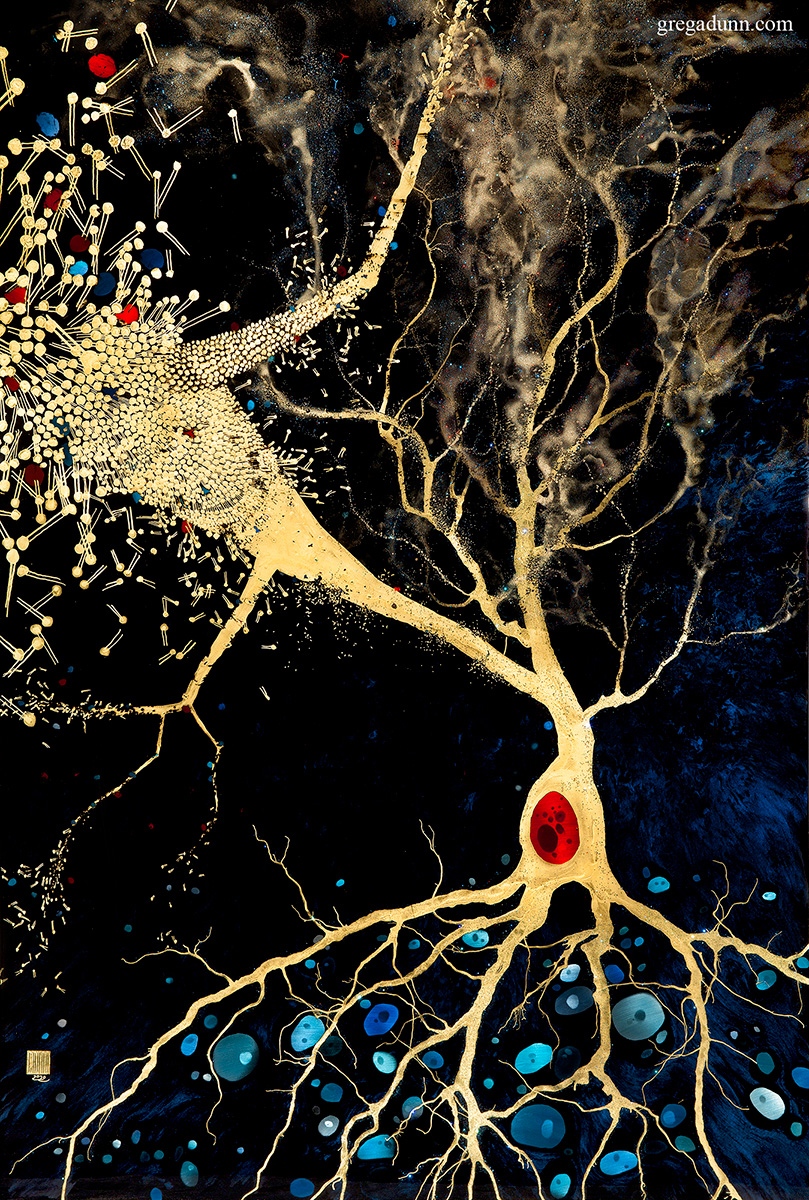
PRINT GIVEAWAY, a 16" X 24" print of Molecules to Neurons!
https://t.co/GisTszCjbR
TO ENTER:
1) Like & retweet
2) tag friends, colleagues, etc. that would like this print!
3) Follow @gdunnart
winner chosen Feb 24
#spinalcord#sfn22#sfn2022#neuron#sciart#neuroscience