I am a rehabilitation therapist involved in devising novel rehab protocols based on hormesis and preconditioning to be applied on various kind of patients.
🧠 Your Mind Can Make You Stronger — Without Lifting a Single Weight
What if getting stronger didn’t always start in the gym, but in your mind? 🤯
Science says it’s possible.
Studies from the American Physiological Society found that people who simply imagined lifting weights increased their muscle strength by more than 13% — without moving a muscle. When you visualize an action, your brain activates the same neural pathways used during real physical training.
In simple words, your mind rehearses the workout as if your body is actually doing it. This strengthens the connection between thought and movement, making your body respond when it’s time to act. Focused imagination isn’t just daydreaming — it’s training your nervous system.
So next time you doubt the power of your thoughts, remember this: your mind doesn’t just guide your body… it can transform it. 💪
Your implicit learning (intuition) is incredible at pattern recognition without your reflective awareness...that's what makes it so powerful.
But this means that it suffers from two major blind spots:
- it cannot distinguish between correlational and causal patterns (or illusory and real patterns)
- it can only pick up on presented patterns and cannot actively seek out new ones
If you like what your implicit learning does, you call it your intuition. When it throws up something you realize was illusory, you call it being insensitive, bigoted, etc.
A glimpse of the brain-eye connection:
Here’s how the optic nerves and neural pathways work together to create 3D vision.
While we often think of vision as a simple act of looking, it is actually an intricate feat of biological engineering. When light hits the retina, it is converted into electrical impulses that travel along the optic nerves to the optic chiasm. This critical intersection allows signals from both eyes to partially cross, ensuring that information is distributed across both hemispheres. This complex wiring is exactly what grants us depth perception and a unified field of view, transforming two separate images into a single cohesive experience.
The true magic of sight happens deep within the brain's visual processing centers, where raw signals are reconstructed into the shapes and colors of our world. This perspective reminds us that we do not merely see with our eyes—we see with our brains. By interpreting neural data, the brain actively constructs our perception of reality, proving that vision is a sophisticated neurological achievement rather than a passive camera-like observation.
source: American Academy of Ophthalmology. (2022). Anatomy of the Eye and Visual System. EyeWiki.
What is an “immune system”? It differentiates self from non-self. It forms memory traces. It coordinates tissue-wide plasticity responses. It builds up and breaks down barriers between organism and environment. And it may be integrating far more than chemical information alone, reading mechanical, electrical, and other energetic signals across the body to decide how tissues should respond.
This is so much more than a germ-killing mechanism. The immune system is the equivalent of city planning for the body: the painstaking work of interpreting many streams of information to realize a larger biological plan.
Imagine if we could learn to read, and eventually revise, those blueprints.
Every workout helps maintain the cellular machinery that supports sharper decisions today and greater cognitive resilience with aging.
Your brain is only 2% of body weight yet consumes ~20% of total energy.
This 2026 mechanistic review explains how exercise strengthens neuronal mitochondria, supporting ATP production, synaptic plasticity, and learning. Train your mitochondria, and you strengthen your brain's capacity to adapt
Every workout is shaping your brain's biology, not just your fitness, with implications for resilience, cognition, and healthy aging.
A 2026 mechanistic review describes how exercise induced exerkines regulate the NLRP3 inflammasome, a key driver of neuroinflammation. This strengthens a growing model that muscles send protective signals to the brain, making exercise information, not simply movement.
We underestimate how early cardiovascular health begins influencing long-term cognitive performance.
In a 3.5-year prospective cohort of 73 adults, lower cardiac function predicted later brain microstructural changes linked to poorer memory.
Observational evidence, yet a reminder that protecting the brain may start with protecting the heart.
As a pharmacist focused on healthy aging, I don't say this lightly: this study changed how I think about longevity.
Researchers checked which genes were switched on or off in more than 11,000 tissue samples: from mice, rats, monkeys, and humans.
Aging left the exact same fingerprint in all four.
Why that matters 👇🧵
1/4 #supplements #longevity
Perché in Italia abbiamo così pochi laureati rispetto al Regno Unito? Dipende anche da come facciamo gli esami?
Il divario è impressionante.
Nel Regno Unito il 60% dei giovani tra 25 e 34 anni possiede un titolo di studio terziario. In Italia siamo attorno a un giovane su tre.
Ma il dato forse ancora più significativo riguarda chi entra all’università.
Nel Regno Unito il 67% degli studenti conclude il bachelor nei tempi previsti. In Italia soltanto il 37%. Considerando anche i tre anni successivi alla durata teorica del corso, si arriva all’84% nel Regno Unito e appena al 56% in Italia.
Da dove nasce una differenza così grande?
Le cause sono numerose: disuguaglianze familiari di partenza, orientamento insufficiente, minore convenienza economica percepita della laurea e debole collegamento tra università e mercato del lavoro.
Ma dovremmo porci anche una domanda: quanto conta il nostro modo di insegnare e valutare?
Nelle università italiane hanno ancora un peso molto rilevante esami orali e scritti concentrati sulla capacità di ricordare e riprodurre grandi quantità di contenuti. Nel sistema britannico è più frequente trovare una combinazione di esami, saggi preparati durante il corso, progetti, presentazioni, lavori di gruppo, dissertation e prove take-home. Non significa che gli esami siano facili o che si possa “fare tutto a casa”. Significa che la valutazione è spesso distribuita nel tempo e misura una gamma più ampia di capacità: comprensione, scrittura, applicazione delle conoscenze, ricerca, argomentazione e soluzione di problemi.
Il nostro nuovo lavoro sull’istruzione nell’era dell’IA parte proprio da questa contraddizione.
Il mercato del lavoro richiede sempre più capacità critica, comunicazione, lavoro di squadra, competenze digitali, giudizio e uso intelligente dell’IA. Molti esami continuano invece a selezionare soprattutto la memoria di breve periodo: memorizzare, ripetere, dimenticare.
La memoria e una solida conoscenza di base restano indispensabili. Il problema nasce quando diventano quasi l’unico criterio di valutazione.
Un sistema costruito su esami molto concentrati, stressanti e prevalentemente mnemonici può scoraggiare studenti che possiedono ottime capacità relazionali, creative e applicative. Talenti preziosi per il lavoro e per la società, ma poco riconosciuti dall’università, finiscono così per rallentare, abbandonare o non iscriversi affatto.
La soluzione è costruire esami di seconda generazione: una combinazione trasparente e rigorosa di conoscenze fondamentali, analisi di casi, progetti, presentazioni, lavoro di gruppo e capacità di utilizzare e verificare criticamente gli strumenti di IA.
Domandiamoci se il modo in cui valutiamo gli studenti non contribuisca a selezionare una gamma troppo ristretta di talenti e ad allontanare persone che avrebbero molto da offrire.
https://t.co/BommPSpRpq
"Every country will be run by AI within 30 years, 40 at most."
Emad Mostaque (.@EMostaque), founder of @StabilityAI, believes NO ONE is ready for what's coming.
His 8 predictions on how the world changes in the next few decades:
1) AI will cure most diseases within 10 years
Mitochondrial health is one of the most important determinants of healthspan. A new study from Iñigo San Millán's @doctorinigo lab provides the clearest mechanistic evidence yet that sedentary behavior drives mitochondrial dysfunction at multiple levels simultaneously.
If you are interested in longevity science you should read this paper.
The power of this study lies in its ability to paint a clear picture of what an efficient metabolic engine looks like versus a compromised one.
San Millán's lab compared sedentary versus active healthy adults using muscle biopsies, high-resolution respirometry, and isotope tracing. The findings reveal coordinated impairments across the entire mitochondrial energy production system:
• Complex I and II (the main energy generators) reduced by 30-36%
• Mitochondrial pyruvate carrier (MPC1) down 49% (blocks sugar-derived fuel entry)
• CPT1 activity reduced by 51% (blocks fat-derived fuel entry)
• Cardiolipin content decreased (disrupts the assembly line for ATP production)
• ROS production elevated (more oxidative damage per unit of energy made)
Let's break down what these stats mean.
The MPC1 finding is critical. This transporter moves pyruvate, the end product of sugar breakdown, into the mitochondria where it gets burned for energy. A 49% reduction creates a metabolic traffic jam. Glucose can enter the cell normally (GLUT4 was identical between groups) but can't reach the energy production cycle inside the mitochondria.
The parallel 51% reduction in CPT1 means the same problem exists for fat. CPT1 is the transporter that shuttles fatty acids into mitochondria for oxidation. Both major fuel sources, sugar and fat, are now blocked at the mitochondrial entry point. This dual blockage forces cells into metabolic inflexibility, meaning they lose the ability to switch between burning fat and burning glucose based on what's available.
Cardiolipin is a specialized fat molecule found only in the inner mitochondrial membrane. It acts like scaffolding that holds the respiratory complexes (the actual ATP-making machinery) in the correct position for efficient energy transfer. When cardiolipin content drops, this scaffolding weakens. The machinery still runs, but electrons don't flow as smoothly and more leak out as reactive oxygen species (ROS), creating oxidative stress. Sedentary individuals showed elevated ROS production per unit of oxygen consumed, meaning their mitochondria were less efficient and more damaging.
All this suggests the metabolic engine (the mitochondria) is less efficient and emits much more hazardous byproducts.
During exercise testing, the metabolic inflexibility became visible in performance. Sedentary individuals accumulated 60% more lactate at moderate workloads. Lactate buildup is what causes that burning sensation during hard exercise, it signals that your body is relying too heavily on sugar metabolism because it can't access fat efficiently. They also showed 35% lower fat oxidation rates and hit their crossover point (where the body switches from primarily burning fat to primarily burning sugar) at much lower exercise intensities than active individuals.
The cellular deficits measured in muscle biopsies translated directly to whole-body exercise capacity. The blocked fuel transporters and damaged mitochondrial machinery weren't just lab findings, they determined how much work these people could perform before hitting metabolic limits.
The correlations reveal how tightly coupled this system is. How well your mitochondria could process pyruvate at rest predicted how well you could burn fat during exercise (r=0.65). The amount of MPC1 protein you had predicted your fat burning capacity during exercise. Your blood lactate levels during exercise correlated inversely with how much MPC1 you had (r=-0.73, meaning less MPC1 equals more lactate accumulation).
These aren't separate problems happening in parallel. They're interconnected components of a single energy system. When one part breaks, the whole system compensates poorly and performance degrades as a unit.
The metabolic engine of sedentary individuals sputters, plagued by inefficiencies like increased lactate production, heightened oxidative stress, and an inability to efficiently use an array of fuel sources, which compromise their ability to sustain energy production and manage metabolic stress.
This study establishes that mitochondrial dysfunction is the mechanism linking physical inactivity to accelerated aging. Every longevity intervention ultimately depends on mitochondrial capacity to generate ATP efficiently, handle substrate flux, and maintain redox balance. When MPC1, CPT1, cardiolipin, and respiratory chain function decline simultaneously, cells lose the energetic foundation required to sustain proteostasis, autophagy, DNA repair, and immune surveillance.
Sedentary behavior isn't a passive state. It's an active driver of mitochondrial remodeling that produces measurable molecular atrophy across substrate transport, electron transport efficiency, and metabolic flexibility. Understanding these pathways is understanding how aging accelerates at the cellular level.
An intact human heart, rendered transparent.
Because disease doesn't happen in 2D.
Whole-organ tissue clearing + microscopy reveal coronary vessels (magenta) and atherosclerotic plaques (gold) across the intact organ.
More at: https://t.co/b0HX6wBe4P
🫀🔬#FluorescenceFriday!
Are NAD infusions actually working, or is it a placebo?
Weiss personally sees patients improve in his clinic, but notes there aren't many studies on it's benefits for adults or extending lifespan. He says if we're seeing it work, we should continue doing it, despite the lack of studies.
Kaeberlein pushes back on this:
"It may be placebo, and we don't know the long-term safety of it."
He suggests the need for large clinical trials for it, where we can evaluate it's efficacy and safety.
— Johannes Weiss and Matt Kaeberlein (.@mkaeberlein)
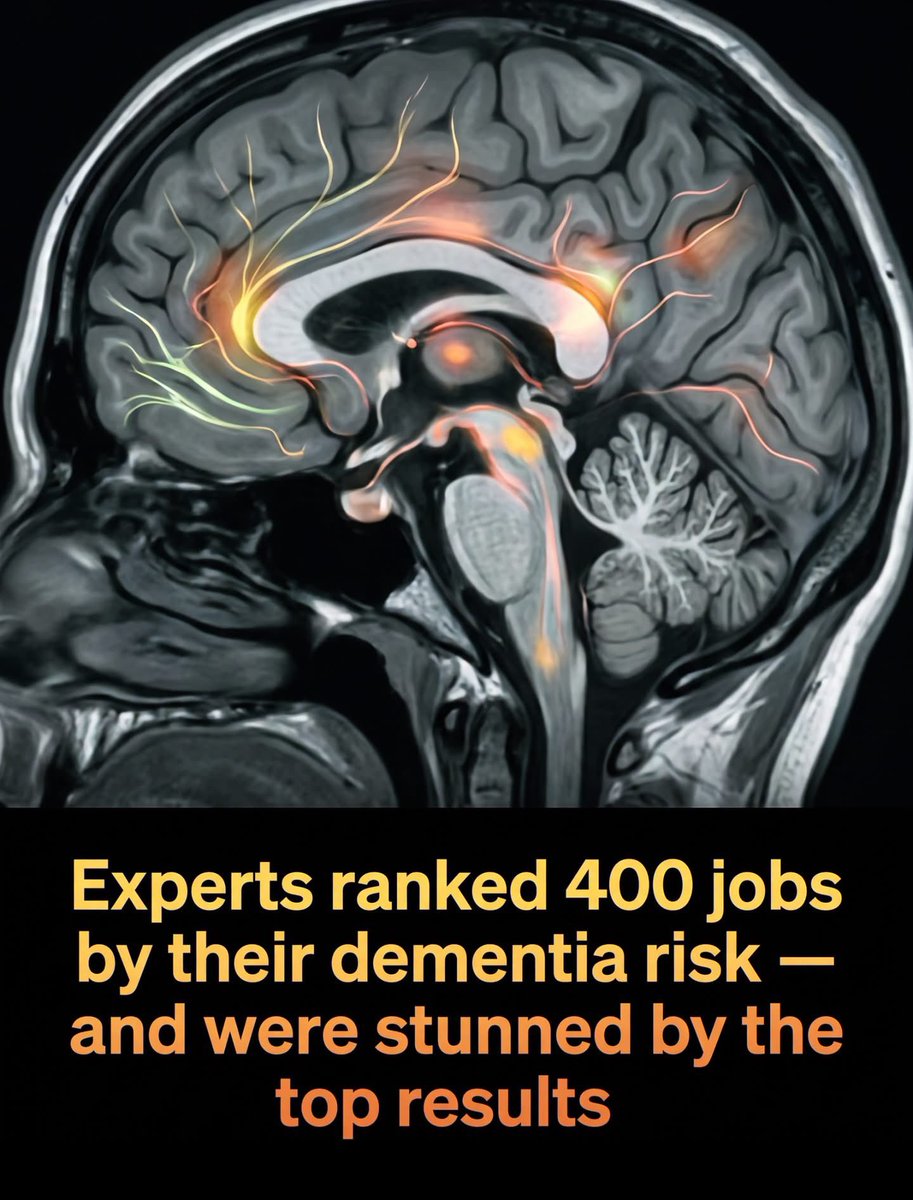
A landmark Harvard study reveals that taxi and ambulance drivers have the lowest rates of death from Alzheimer's disease, suggesting that daily spatial navigation might actively protect the brain from cognitive decline.
An intriguing study led by Harvard Medical School researchers has uncovered a fascinating link between what you do for a living and your risk of cognitive decline. By analyzing the death certificates of nearly nine million Americans across 443 occupations, researchers discovered that taxi and ambulance drivers are the least likely to die from Alzheimer's disease.
After adjusting for age and demographic factors, ambulance drivers (0.91%) and taxi drivers (1.03%) had the lowest proportions of deaths attributed to the disease of all jobs examined, vastly lower than the general population.
Interestingly, this benefit did not extend to other transportation-related jobs, such as bus drivers or pilots, who typically follow repetitive, pre-planned routes.
Scientists believe the secret lies in the hippocampus—the brain region responsible for spatial memory and navigation, which is also one of the first areas to degrade during the onset of Alzheimer's. While bus drivers rely on routine paths, taxi and ambulance drivers must constantly process real-time routes, make split-second navigational decisions, and map out complex environments. This continuous mental workout is thought to build a 'cognitive reserve' by physically strengthening the hippocampus. Although the observational study cannot definitively prove cause and effect, the findings strongly suggest that challenging our brains with active, daily navigation could play a vital role in preventing severe cognitive decline.
source: Patel, V. R., Liu, M., Worsham, C. M., & Jena, A. B. (2024). Alzheimer's disease mortality among taxi and ambulance drivers: population based cross sectional study. BMJ, 387, e082194.
9 year old Amaira was constantly Bulliyng in school.
Amyra told her parents, teachers multiple times.
But the school took no action.
1-12-2025, after Bulliyng for the last time,
Amaira jump€d from 4th floor & End€d her life.
till date, no action has been taken, 0 Arrest.