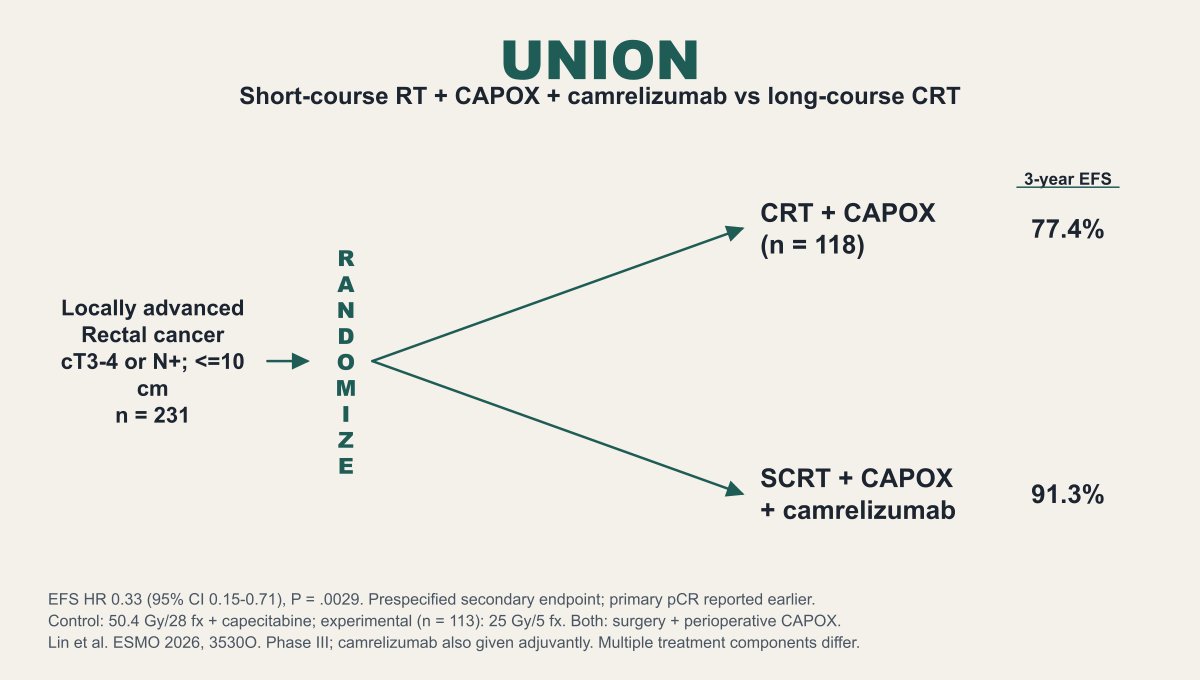
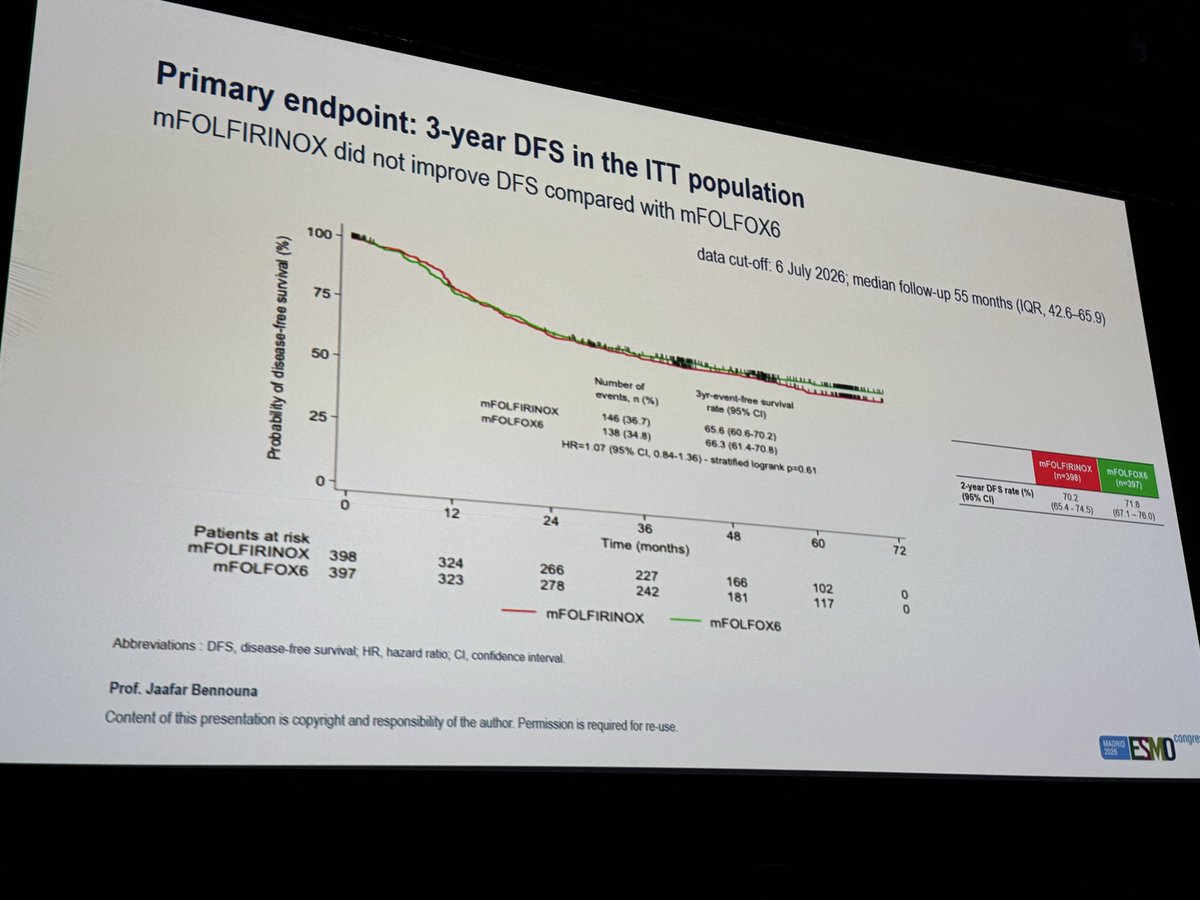
UNION: 3y EFS 91% vs 77% with SCRT/CAPOX/camrelizumab vs long-course CRT/CAPOX in rectal cancer. HR 0.33 (95% CI 0.15-0.71).
Impressive signal. But RT schedule and IO both changed, so this doesn't isolate the benefit of either.
#ESMO26#radonc
https://t.co/IU5gid4jyS
An important milestone in rectal cancer care: the @FDA has granted accelerated approval of dostarlimab for adults with previously untreated stage II or III dMMR/MSI-H locally advanced rectal cancer.
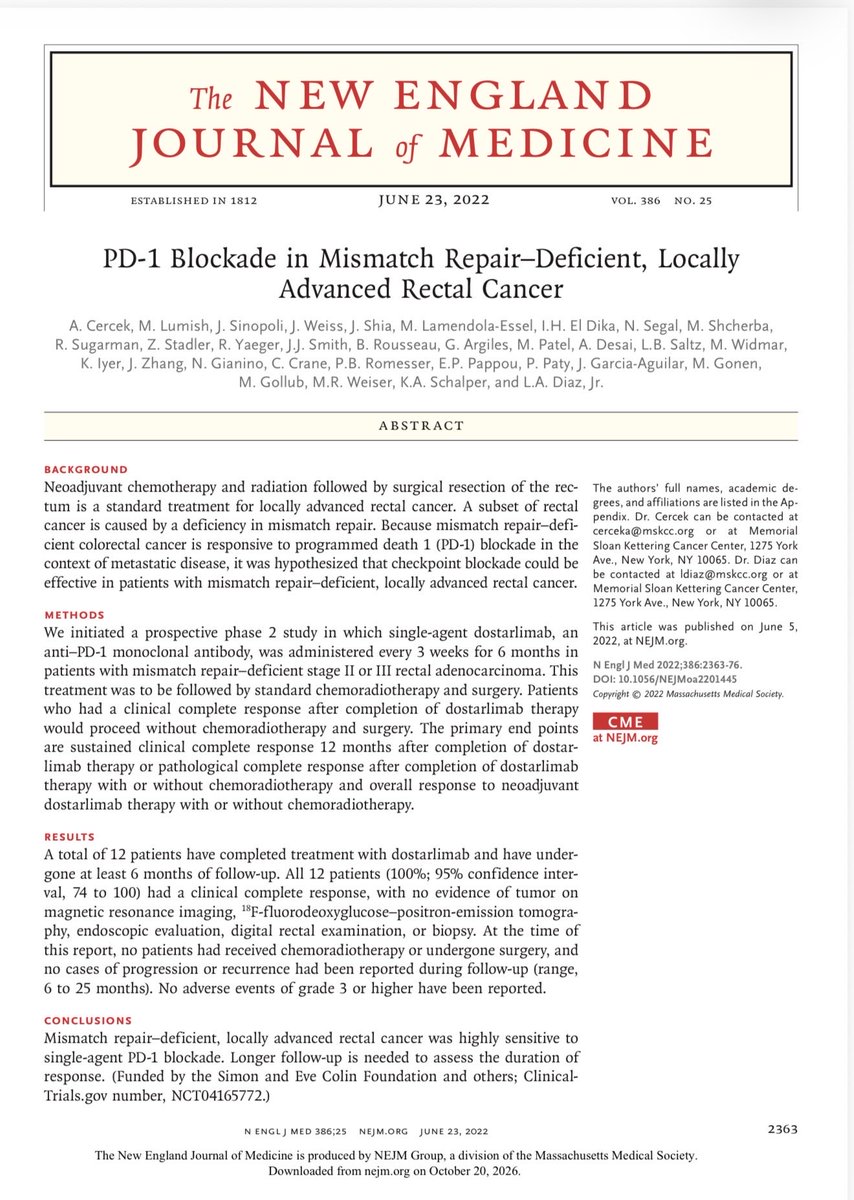
In 2022, the initial @NEJM report found a clinical complete response in all 12 patients who completed six months of dostarlimab. The result was striking, but came from a small cohort.
The 2025 NEJM report expanded the evidence: all 49 patients with rectal cancer who completed treatment had a clinical complete response and chose nonoperative management. Two-year recurrence-free survival was 96% in this cohort.
The approval was based primarily on AZUR-1, a multicenter phase 2 trial of 154 patients, with supporting data from the NEJM study.
For eligible patients, this approach may help avoid chemoradiation and surgery, underscoring the importance of routine MMR/MSI testing at diagnosis. Close surveillance by an experienced multidisciplinary team remains critical, and longer follow-up is needed to confirm durability.
#RectalCancer #Immunotherapy #ColorectalCancer #PrecisionOncology
@AndreaCercek@MSKCancerCenter@ASCO@ASCRS_1@GaertnerWB@SWexner
Can ctDNA surveillance change what we can offer patients when colorectal cancer recurs?
This phase III FIND trial provides compelling randomized evidence that it may.
Among patients with resected nonmetastatic colorectal cancer who subsequently developed recurrence, ctDNA methylation-guided surveillance more than doubled the proportion receiving curative-intent metastasis-directed therapy:
48.1% vs 23.6% with standard surveillance
RR 2.03, P=.008
Recurrence was detected a median 3.9 months earlier with ctDNA-guided surveillance. Importantly, liver metastases were identified with more favorable features for potentially curative treatment, including fewer lesions, smaller tumors, and more unilobar disease.
To me, the most important implication is that ctDNA may be moving beyond simply predicting recurrence towards helping us detect recurrence at a point when curative treatment may still be possible.
Whether this earlier intervention ultimately translates into an overall survival benefit remains unanswered, and mature survival data will be critical.
Still, this is an exciting step toward more personalized and potentially actionable surveillance after colorectal cancer surgery.
#ColorectalCancer #ctDNA #ColorectalSurgery #CancerSurveillance #PrecisionOncology #SurgicalOncology
@JCO_ASCO@ASCO@ASCRS_1@AmericanCancer@AmCollSurgeons@AmColSurgCancer@SWexner@GaertnerWB
One of my fav 📝 with 🧢 @DrDavidLarson at @MayoClinicSurg is now in @ejsotweets
We compared 3Y DMFS & DFS in W&W vs TME patients across pathologic tumor regression grades
Despite favorable baseline characteristics, W&W had outcomes similar to TME with suboptimal responses
Musculoskeletal injury was common among surgeons: 22% reported changing operating responsibilities because of injury, and 59% reported that ergonomic pain affected their ability to work as a surgeon. https://t.co/pwEqwgQIz3
Very interesting and thorough review from @uchicagosurgery on how the #Microbiome impacts #ColorectalCancer recurrence after surgery.
IMHO this is a must-read for anyone who cares for CRC patients.
In the future, will we be successfully targeted and manipulating the microbiome for the prevention and treatment of colorectal cancer?
https://t.co/ofuYcg2yYa
Major abdominal surgery should not start on the day of surgery
Prehabilitation and Complications After Colorectal Cancer Surgery https://t.co/KFIu4iRKxY
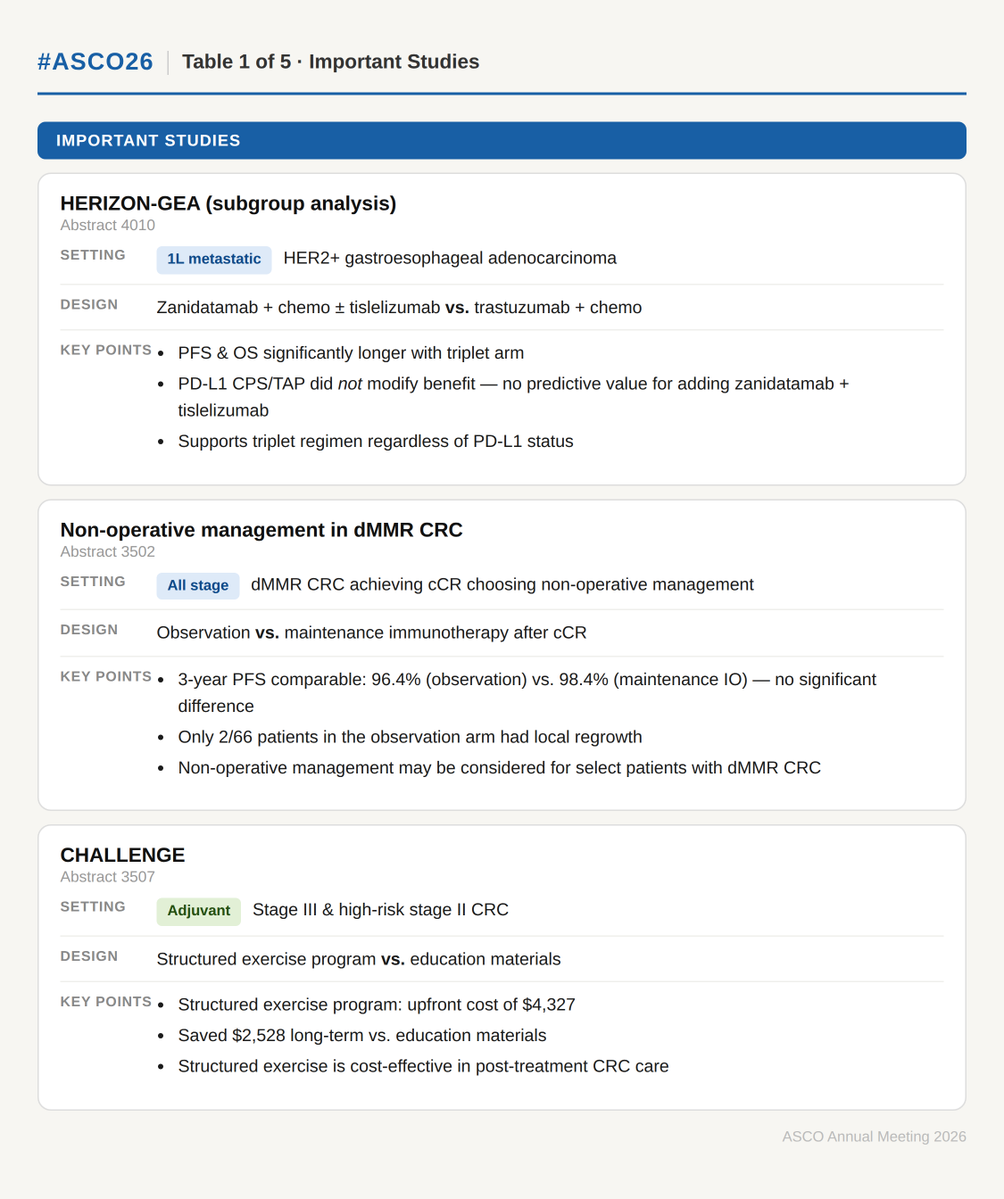
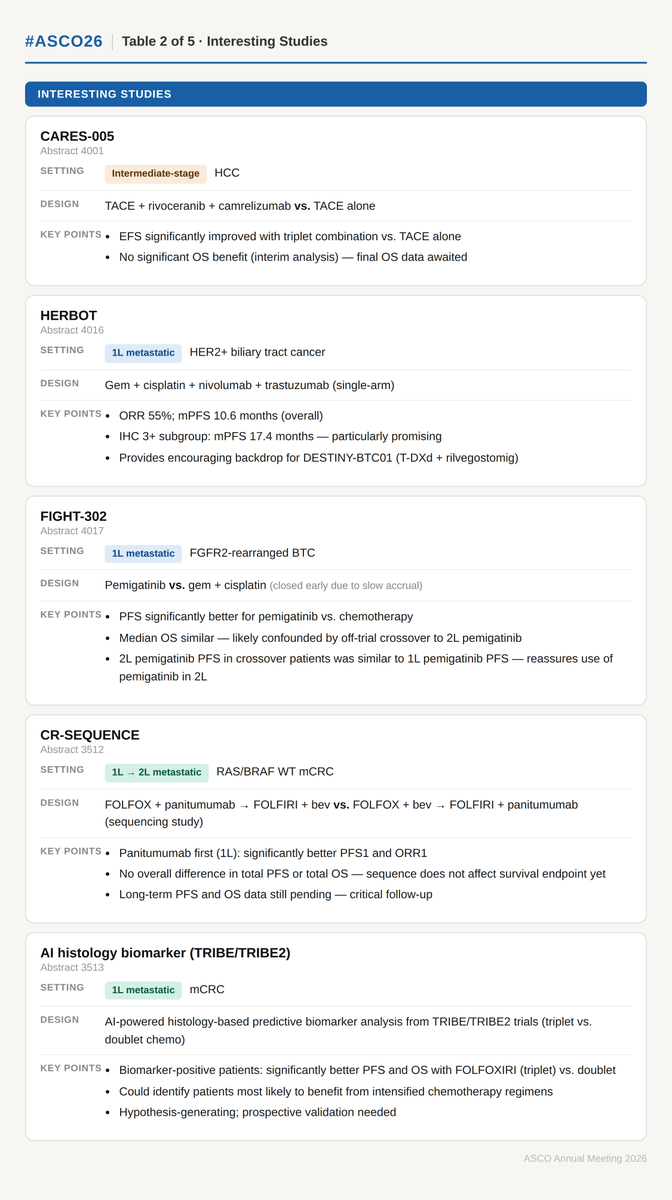
#ASCO26 has released most abstracts. I will break down GI cancer-related abstracts to five tables:
Important studies
Interesting studies
Important negative studies
Novel agents
Practice re-affirming studies
Abstracts that have not been released but are eagerly anticipated: RASolute-302, EMERALD-3, CIRCULATE (AIO), Episode-3, BREAKWATER update, PUMP.
Please see the tables below for the first two tables (important studies, interesting studies). More to come.
@OncoAlert@jgong15 #GIcancer
Watch and Wait for Rectal Cancer: A Risky Gamble or a Safe Strategy for Patients With a Near-Complete Response? | Journal of Clinical Oncology https://t.co/9Q6U6lVt5K
Am I the only one who thinks that this is an absurd recommendation?
Routine Intraoperative Cholangiogram for Elective Laparoscopic Cholecystectomy Is Now Recommended
https://t.co/7Y5969tEIA
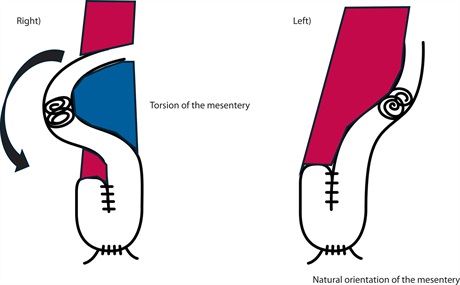
RCT evaluating right vs left-sided ileostomy with IPAA. Is there a difference in stoma outlet obstruction? Read more in this month's #DCRJournal: https://t.co/I6e5ppwm4p
A must read for all #RectalCancer Surgeons 🎯
Nicely written and illustrated 😍
#AnatomicalSurgery
Layer by Layer: The Anatomical ‘Onion Peel’ Approach to Surgery Beyond Total Mesorectal Excision - Davis - ANZ Journal of Surgery - Wiley Online Library https://t.co/R70AfUKujQ