It looks like there is considerable murmuration happening in @bluesky by flocks of #science! Time to migrate... I will switch to using a handle for our physical biology of #embryos lab @McMaster. Please follow: https://t.co/Mss4AHjCjv…
+thanks all in @OzbudakLab and beyond who ended up collaborating with me and teaching me new things in this project as it came to its present form: https://t.co/o3G1Z5nvR9
🌟 New Paper Alert! 🚨
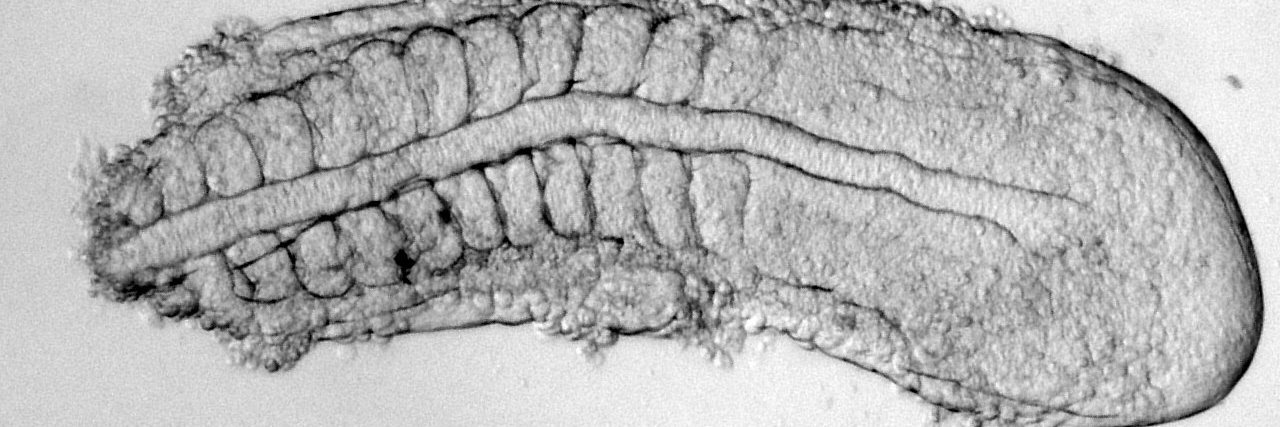
How does a developing embryo know where to place somite boundaries? 🦴🐟
Our latest study https://t.co/3o3DLKI4do in @Dev_Cell reveals a missing piece of the puzzle involving ERK oscillations and the segmentation clock (https://t.co/RHVJiRP4at)
(1/)
+This project eventually bud off the published work which showed how to convince vertebrate embryos lacking a molecular clock to make somites: https://t.co/ZciYNIy1wf
Unexpectedly, clock, a shortlived transcriptional repressor, lowers ERK activity by stabilizing ERK posphatases!+
Ontario friends I am visiting next week! On Wednesday I'll be speaking in Toronto at the MaRs building (1PM in 15th floor seminar room). On Thursday I'm speaking at McMaster (4-5 in MDCL). I'll talk about what happens when flies taste bacteria & swarm intelligence in stem cells!
Delighted to share my latest #devbiol story @NautilusMag. This one’s about James Bond, cilia, and the wondrously complex interplay of embryos and people. https://t.co/h9CdIafnfJ
The desynchronization of cell divisions in early mammalian embryos—once seen as a random process—instead plays a crucial role in ensuring robust development, shedding light on how embryos maintain precision despite biological noise, researchers report in Science. https://t.co/lm4M082XLu
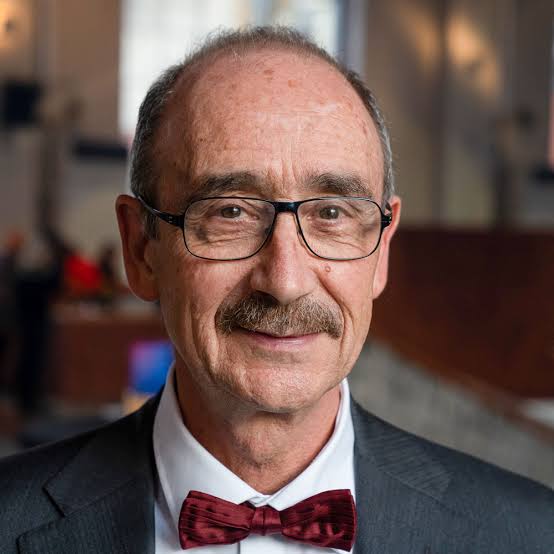
Congratulations to Denis Duboule @Duboule for being awarded the 2025 ISDB Harrison Medal for his contributions to the understanding of gene regulation, particularly the Hox gene family, and their spatial collinearity in vertebrates 🎉🎉🏅 https://t.co/IKnooMFcI1
🧪A team of researchers, led by @HelenFarrants & @ERSchreiter, developed a new way for engineered protein biosensors & bright, fluorescent Janelia Fluor dyes to work together, creating a new biosensor for measuring physiological signals in live animals.➡️https://t.co/oVKLIGmsRP
@Planaria1@schierlab Stumpf definitely had a (quite forgotten) big credit on the "positional information" concept. We had touched it in the first paragraph of the P.I. section here: https://t.co/6rAZ0OewMS
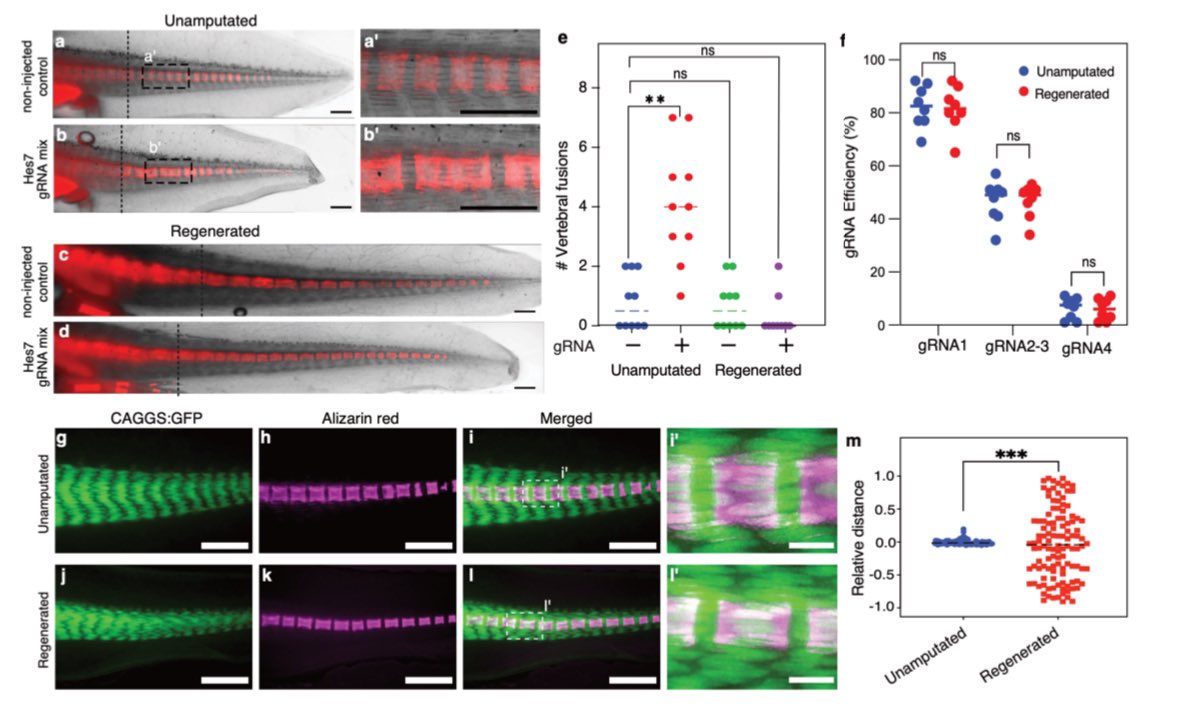
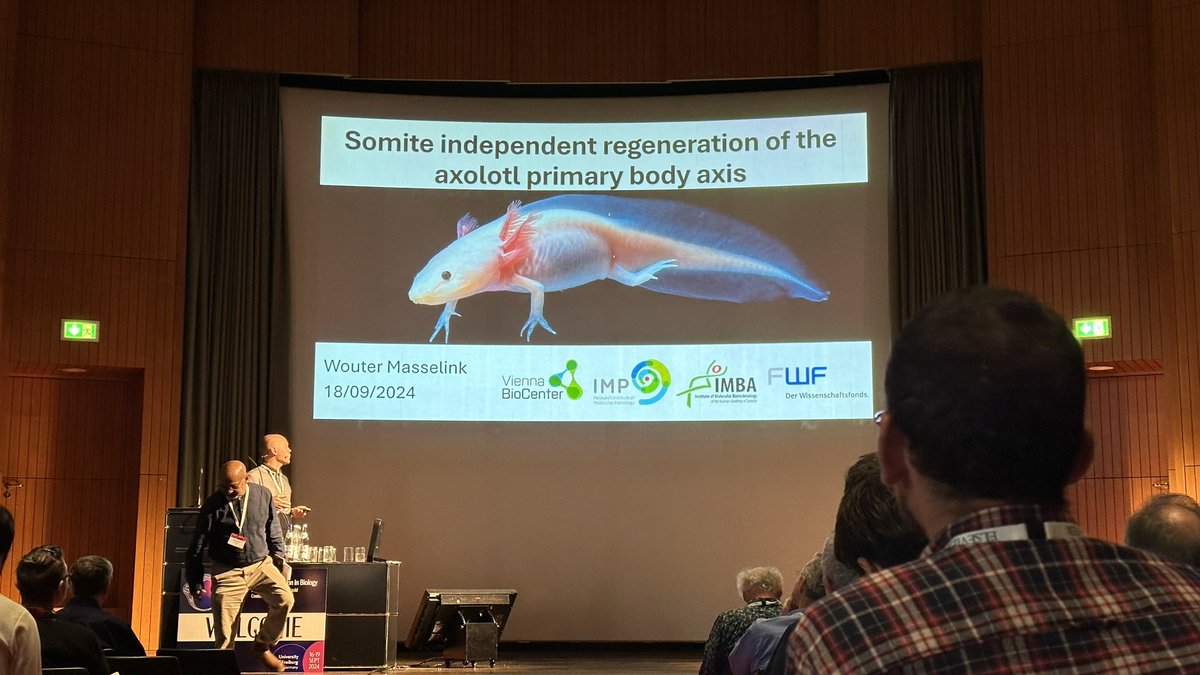
Wouter @WHB_Masselink closes the session with Axolotl
Wouter is sharing with us his data on somite-independent regeneration of the axolotl tail
https://t.co/vVgjVQDvbo
#spemannmangold2024@UniFreiburg@IMPvienna
Finishing your PhD and interested in the Physics of Life? We are in the midst of our annual search for new Fellows. We are looking for both theorists and experimentalists ready for a bit more independence than a regular postdoc. To learn more: https://t.co/5pLw869VNK
Explore the range from symmetry mismatch to stoichiometric variations in the bacterial flagellar motor. Read our paper @Nature to learn more:
https://t.co/m98Df1DuOr
#Animation made using #Blender3d and #MolecularNodes.
New preprint: We have developed an integrated pipeline to i) image gastruloids in toto with dual-view 2-photon🔬, ii) quantitatify cell and tissue-scale patterns of gene expression and morphometric features, iii) interact with the data in @napari_imaging. https://t.co/NvexmiWnHY
I am on the job market this year for tenure-track positions in Canada and the US! My research program will investigate genetic and biological pathway bottlenecks in organ development that result in congenital anomalies, using animal models and microscopy imaging 1/2