looks like the inevitable fight between state licensing boards and AI doctors is now beginning
it's pretty interesting to see the state governance dynamics here - Utah created AI "sandboxes" for companies to test novel AI products if they get approval from the relevant agency.
In this case they got it from the Division of Professional Licensing, which oversees all professional licenses. Not the specific medical licensing orgs who have stronger opinions about this and want to pull the pilot.
Instead of watching an hour of Netflix, watch this 2 hour hour Stanford lecture will teach you more about how LLMs like ChatGPT and Claude are built than most people working at top AI companies learn in their entire careers.
@guyfriedman@rabois@TrySteadyMD ...oh yeah and the claustrophobic telephone booth/roach motel that was self-service - feel like UX/design team failed this part hard - like, why would a sick person feel comfotable alone in a tech box?
@AskCiti ok - but next time your Citigold employee takes our paperwork and loses it by the following week so that corporate "can't find it in the system" , hopefully you'll just refund our lost money
@Citibank is it policy to allow fraudsters to cash a fake check against a Citi bank account, allow it to go through, and then make the account holder go through all the paperwork only to say you can't do anything to get the money back? Asking for a relative
We need a Sunshine Act for corporations
How much do media organizations take from big pharma and big insurance?
Let’s publish it ALL. How do your docs take for shilling GLPs? And how much does ABS, Fox, and MSNBC take from Pfizer, Lilly, and United?
Know your info sources
Doctors should be very worried.
Health insurers are about to do with AI what they already did with nurse practitioners.
It will start innocently enough: cheaper “AI-first” plans with $0 copays if you let the algorithm handle your visit. Employers will jump on it to cut premiums. This will be a no-brainer for countries with socialized medicine as well.
Within a few years, routine visits like refills, minor complaints, lab follow-ups will begin with an AI system that listens, triages, codes, and prescribes. A human doctor will only step in if something looks complex or risky.
That’s exactly how nurse practitioners went from “helping” doctors to replacing them as the front line of primary care. Don't get me wrong, FNP's are great, but the initial "promise" years ago was that they would be physician extenders only.
The difference this time? AI doesn’t get tired, doesn’t need supervision, can be instantly updated with new algorithms and bills at a fraction of the cost.
For insurers, it’s simple math. For doctors, it’s an existential shift.
Would you see the AI doctor for a minor complaint if it cost you nothing?
Every single person should do this. Run your bill through AI, spot the very obvious fraud in nearly all encounters, then have it write a demand/complaint letter.
They are banking on your laziness.
Never pay the first bill. And ask for cash price on everything first.
Would any healthcare operator out there be willing to write a column about a company you admire & why in a totally different category?
I’d be fascinated to read something like this.
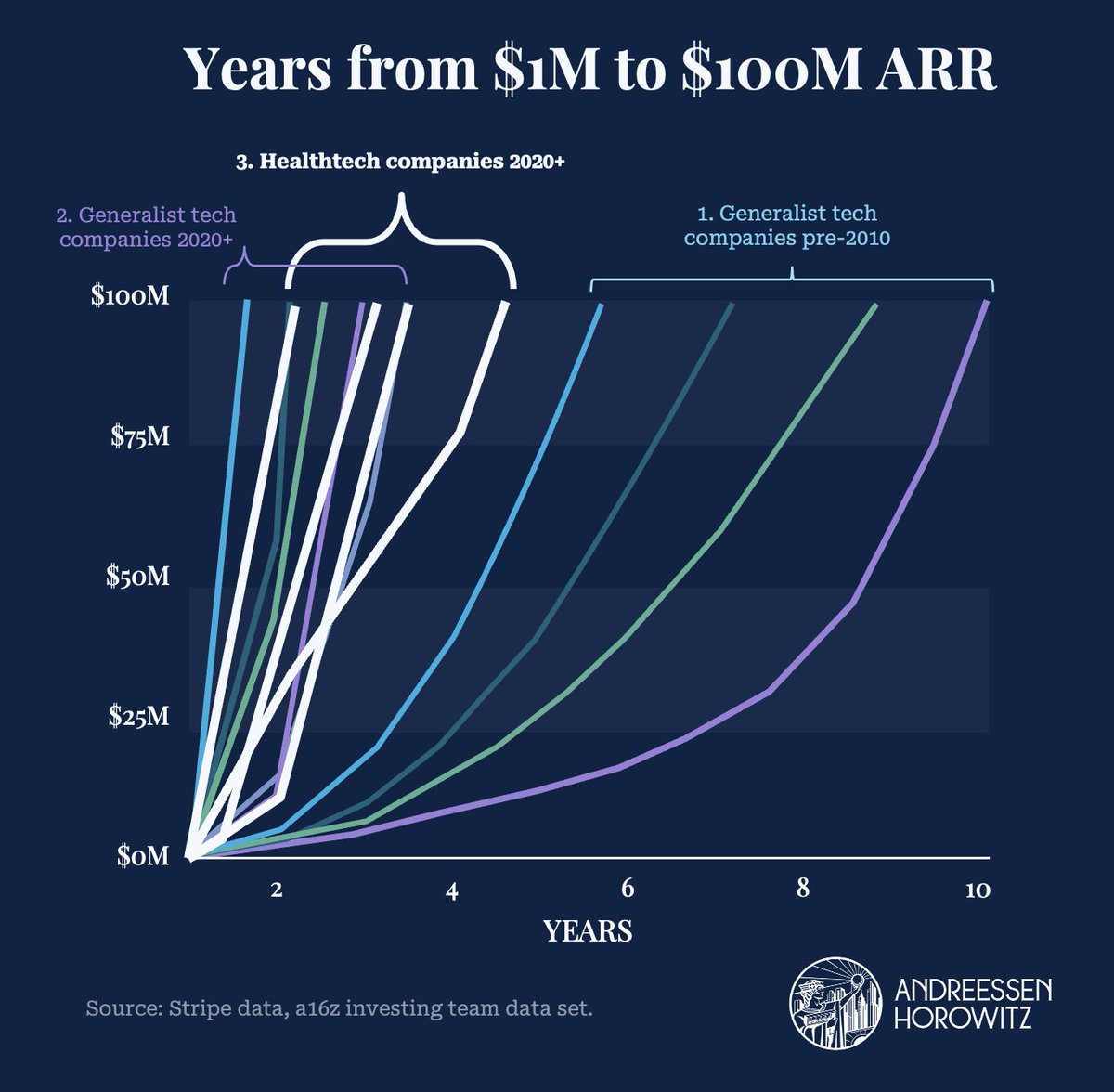
You know those now famous charts showing how quickly new AI startups are going from $1M to $100M ARR? Healthtech now has its own contenders. The chart below shows a sample cohort of post-2020 healthtech companies that have all hit $100M ARR in 5 years or less. It's de-identified to protect the innocent, but the underlying companies represent a number of emerging behaviors being expressed in the market:
⏺️ increase in consumer cash pay
⏺️ rising interest in prevention / longevity
⏺️ fast adoption of AI by healthcare enterprises
⏺️ market pull for challenger health plans
⏺️ appetite for new infrastructure to support new supply-demand dynamics
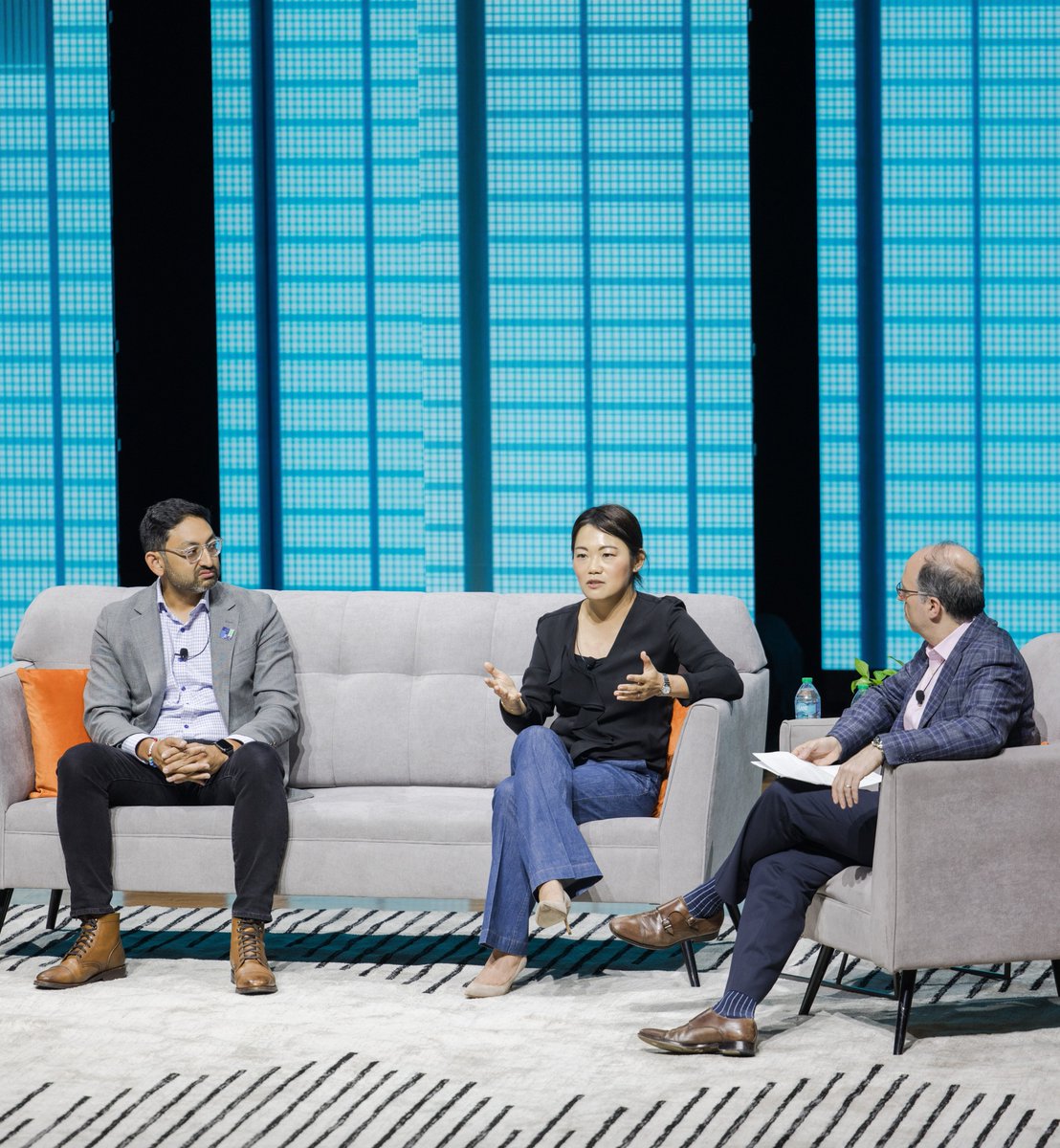
@vijayjpatel, Jed Brody and I talked about this and more (including healthcare robots!) at Nashville Health Care Council's 2025 Sessions earlier this week. The bar on company and business model quality has definitely gone up, but the caliber of private growth stage companies along a number of dimensions (e.g. growth rate, margin, unit economics, geographic and capacity scalability) illustrates the true promise of what tech-enabled healthcare delivery can and will look like in the years to come.
Congrats to NHCC on another great Sessions.
@a16zBioHealth@a16z
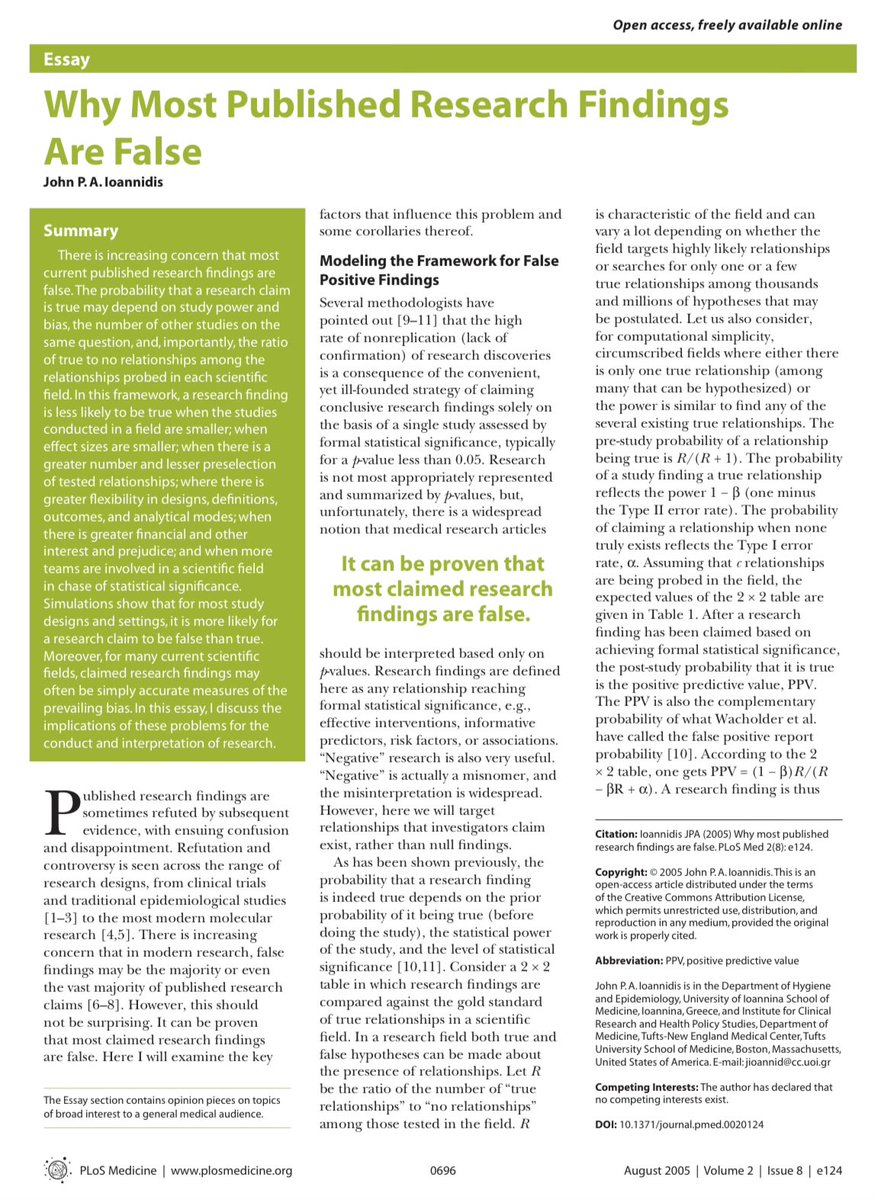
John Ioannidis is a physician researcher @Stanford, one of the most published scientists in the world, a true genius
He shows us why most research is actually… bullshit
This paper should be required reading for all doctors and researchers dogmatically clinging to their claims
Wow, another big round for Abridge.
One note: I’d love for companies to think about using simple copy that’s more emotive. “New paradigm of care intelligence” means nothing, and it’s far more powerful to just say “make the job easier for providers.”
Choose authenticity over jargon.
I’m an ER doctor and former Chief Physician for Public Health.
Here are 6 major threats to your family’s health that you’re probably not thinking about—
But should be.
A 🧵 worth your attention: