@_David_Li@garykbrixi Truly fascinating! Such a clever way to use genome language models to discover ncRNAs. Really intrigued by these arrays and what they might be doing 🤔 Huge congrats to @_David_Li, @garykbrixi and the teams!
Really impressive accomplishment by @tanya_fesenko Fesenko and the Klaviyo engineering team 👏 Proud to see Tanya’s leadership featured here.
Read and clap at this fantastic article! 🙌 https://t.co/6evPtUw7wa
Thrilled to share our latest work on TIGR system at
@zhangf
lab! A special thanks to
@zhangf
for his extraordinary leadership, support, and scientific vision, and to all co-authors. Intrigued about TIGR? Follow the thread!
We are excited to report the discovery of TIGRs, a widely-occurring RNA-guided system found in bacteria and their viruses. TIGRs consist of a peculiar repeat region which is transcribed into RNA and processed into multiple guide RNAs to direct TIGR-associated proteins to their DNA targets. https://t.co/ketXqFVQqw
We are excited to report the discovery of TIGRs, a widely-occurring RNA-guided system found in bacteria and their viruses. TIGRs consist of a peculiar repeat region which is transcribed into RNA and processed into multiple guide RNAs to direct TIGR-associated proteins to their DNA targets. https://t.co/ketXqFVQqw
Excited to share DIRECTED (Delivery to Intended REcipient Cells Through Envelope Design): a programmable platform for cell-type-specific delivery. https://t.co/CRGaG3szJ5
Thank you to @FrangiehChris, @mircoscopy, @GuilhemFaure, Rhiannon Macrae, @zhangf 1/7
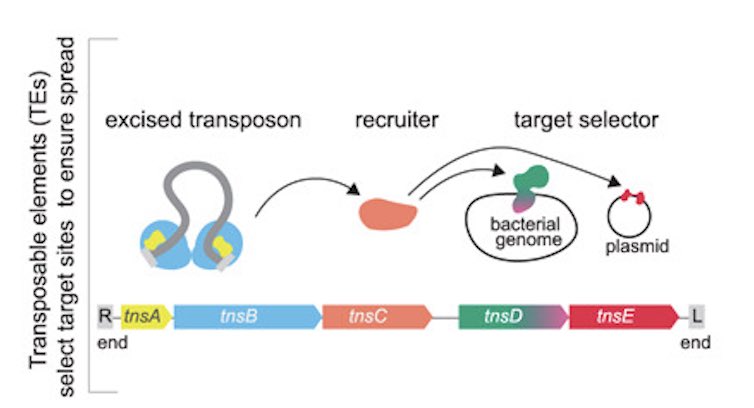
Thrilled to share our latest work on Tn7 transposon at @zhangf lab! A special thanks to @zhangf for his extraordinary mentorship and support, and to all co-authors for their dedications, commitment and expertise. Intrigued about this transposon? Follow the thread!
1/N Excited to unveil Tn7 transposon target selectors study! What defines the target specificity of Tn7-like Tn to spread to MGEs & integrate back into bacterial genomes? https://t.co/BYzsbFBO1Q #transposons#Tn7#CAST
Congratulations to @thestrecker, Esra Dimircioglu, @_David_Li, @GuilhemFaure, and co on another tour de force study in @ScienceMagazine! Elegant biology & beautiful integration of diverse techniques. Still so much more to explore! See David’s tweets for details.
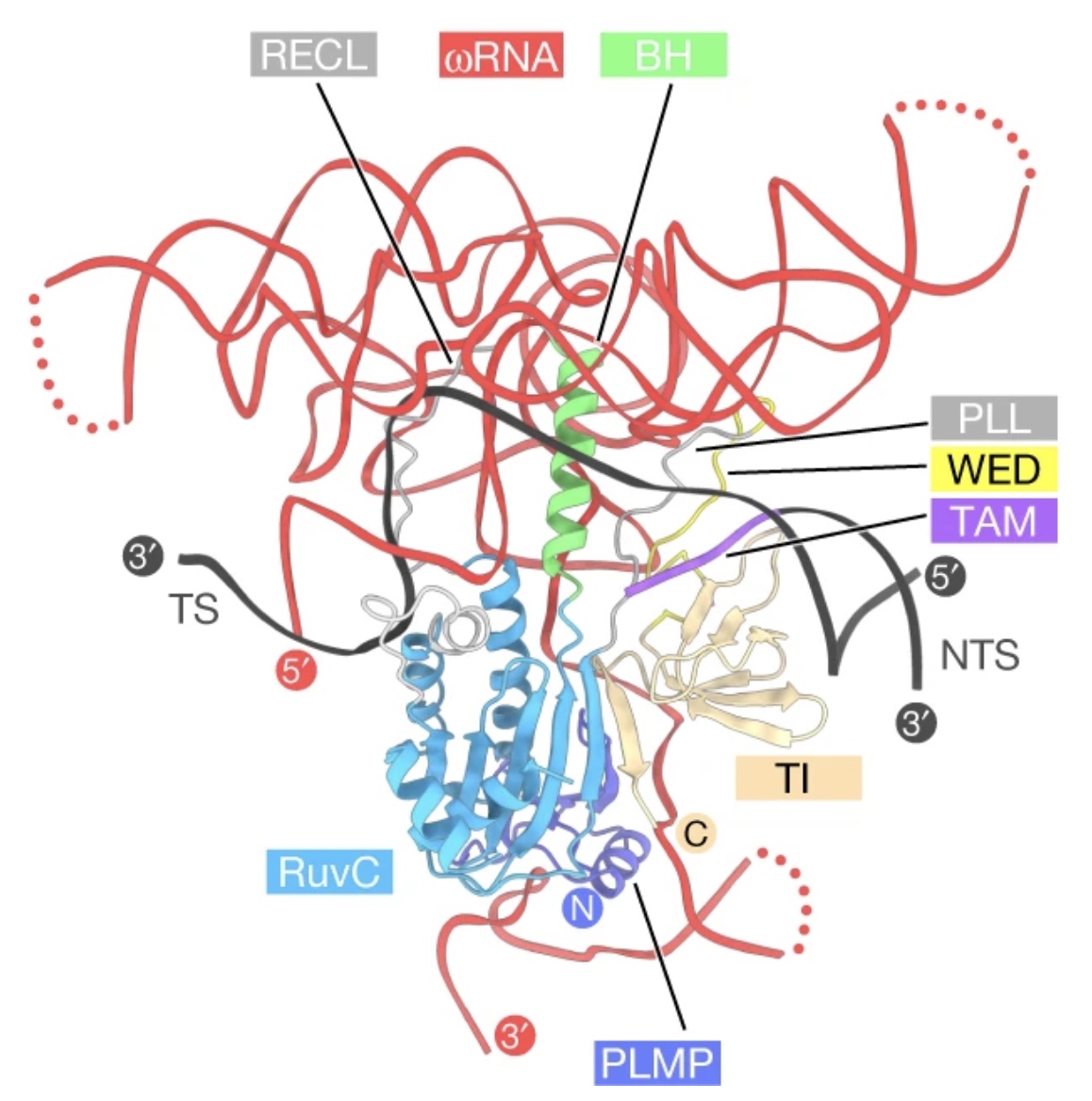
We’re excited to report today in @nature the cryo-EM structure of the OMEGA family member IsrB in complex with ωRNA and target DNA. https://t.co/jwlPWHUr0J
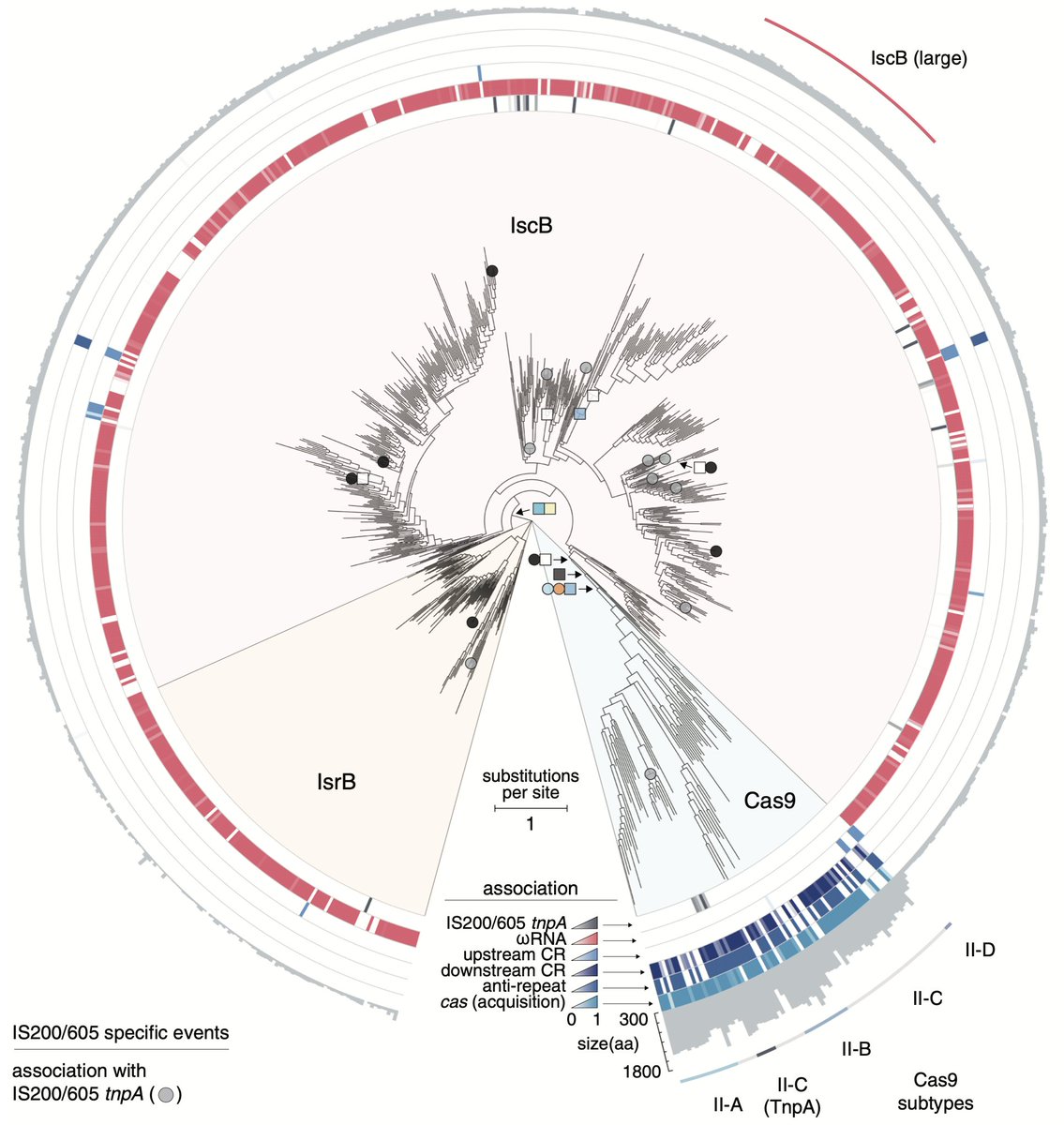
CRISPR technologies are powerful gene editing tools because they are programmable. We are excited to describe 3 new programmable systems, IscB, IsrB, and TnpB, some of the most abundant genes on the planet, with potential for gene editing. @ScienceMagazine https://t.co/dY8FXBYIM8
CRISPR systems are quite diverse, including some, like CRISPR-Cas13, which target RNA. @soumya_kannan12 & @altaetran found tiny versions of Cas13b (Cas13bt) that can be used to create RNA editors small enough to fit into a single AAV for in vivo delivery. https://t.co/dvnC8l29uY
We are really excited to share our work on a new modular RNA delivery technology called SEND, built from endogenous components found in the mammalian genome. @ScienceMagazine https://t.co/0HRvKkDAFV
@gaofir Hi and congratulations! I would be really interested in watching your presentation, could you please share the zoom link if it is public? Thanks!
We are pleased to share a follow-up story to our study of CRISPR-associated transposases (CAST) led by Makoto Saito, @LadhaAlim, @thestrecker, and Guilhem Faure: https://t.co/R8lCNnKUYR. 1/5
New video from @IRPatNIH in which I describe our exploration of the genomic characteristics that may make SARS-CoV-2 deadly #COVID19#coronavirus https://t.co/x5t5ejQCEI
Our paper leveraging machine-learning for the discovery of novel anti-CRISPR proteins is out! With @joeBondyDenomy, @eugene_koonin and others
https://t.co/G1xbpO3H8r
News: NIH researchers identify key genomic features that could differentiate SARS-CoV-2 from other coronaviruses that cause less severe disease https://t.co/Bqanvs5Zbi
Our paper about SARS-CoV-2 genomic determinants of pathogenicity is out.
Read our paper here: https://t.co/SuTlM1JQV1
NIH Press release: https://t.co/LtZkCMKevJ