Can we use RNA to insert kilobases of DNA into the human genome, opening up a new way to engineer cells or treat disease?
Excited to share our latest work turning a retrotransposon (a “jumping gene” with an RNA intermediate) from songbirds into a genome editing tool. 🧵 (1/7)
Could the folding of synthetic gene circuits in 3D shape how genes are expressed? Today @ScienceMagazine we report on the role of gene syntax in shaping feedback between transcriptional activity and genome folding for advanced circuit design🧵 (1/n)
Hot off the press! Our latest paper led by @fernpizza , understanding how plasmids evolve inside individual cells. These small pieces of self-replicating DNA live inside bacteria and can transfer antibiotic resistance genes, but they also compete with one another to replicate. 1/
The Wilkinson Lab is open for science! @MSKCancerCenter
🧬We'll be finding funky new RNA biology, mainly by looking at reverse transcriptases (i.e. the Best Enzymes In The World)🧬
🚨New paper alert!🚨 Cells integrate signals into decision-making. But how do levels of signaling influence cell-fate transitions? Is more always better? Or is there an “optimal” level for cell-fate programming? If we could tune signaling, could optimize production of neurons? Read on! (1/n)🧵
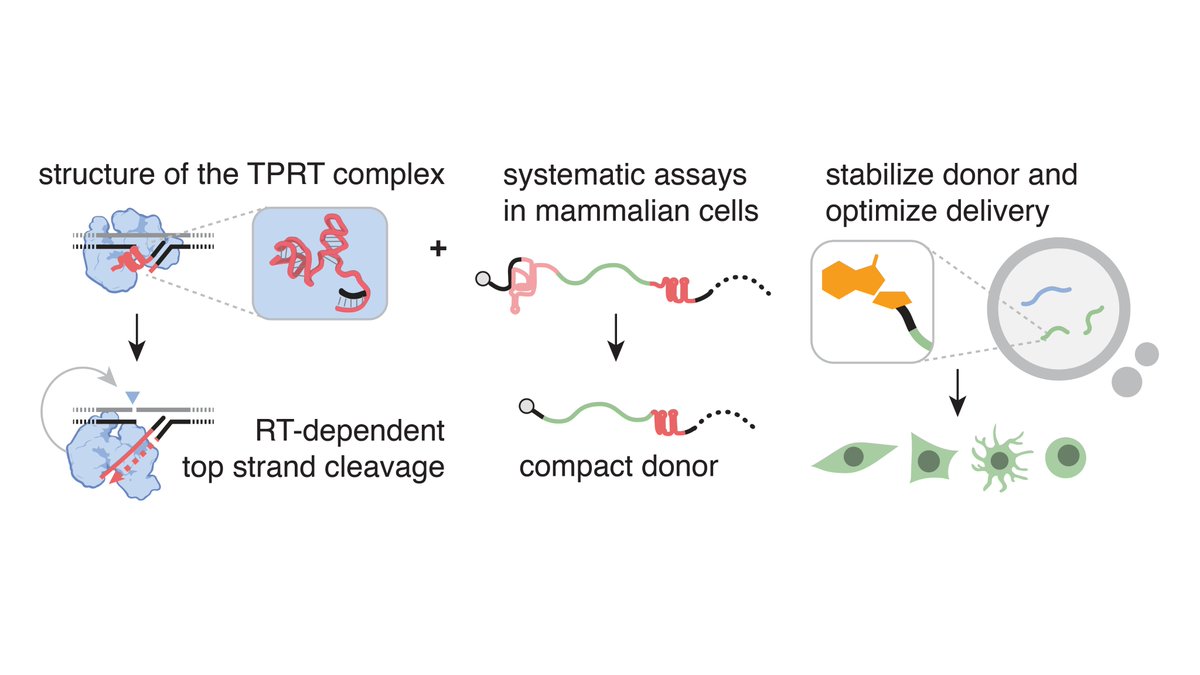
Can we use RNA to insert kilobases of DNA into the human genome, opening up a new way to engineer cells or treat disease?
Excited to share our latest work turning a retrotransposon (a “jumping gene” with an RNA intermediate) from songbirds into a genome editing tool. 🧵 (1/7)
Full story here! https://t.co/Z5CPbS3Ett
We hope this expands the toolkit of retrotransposon-based gene editors. Also, don’t miss related work from others like @CollinsRNPLab, who have also illuminated how R2 can be used for mammalian genome engineering. (7/7)
This project was a huge team effort. Shoutouts to:
@maxewilkinson: structure + biochemistry + birb animation 🐦⬛🥚
@HongyuChenChem and @LDangliang: RNA chemistry
@zhangf: incredible mentorship
… and all the amazing authors that worked tirelessly to make this possible. (6/7)
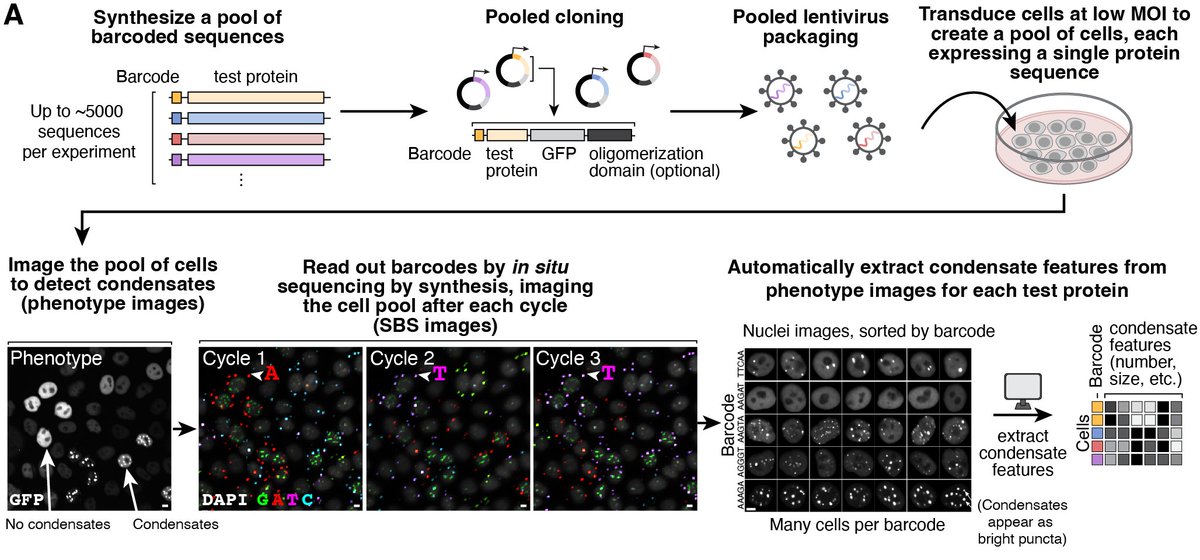
In the nucleus, many intrinsically disordered proteins (IDPs) form condensates. What IDP sequence features drive this behavior? We developed CondenSeq, a high-throughput method to measure nuclear condensate formation & applied it to ~14000 IDPs to find out
https://t.co/qfa8jtvFOp
The amount of bizarre political advertisements on my feed is getting out of hand 😳 is it finally time to swap platforms? I am https://t.co/xtgwr0YJuM, I’ll try to re-add people there too (this feels like getting a new phone in the 2000s).