San Francisco.
Came here as the founder of ALICE.
I'm Shin,
-Founder of https://t.co/5PclFlw8A3
-18y/o in Tokyo
-graduated from @StanfordSPICE
-fellow of @localhosthq
ALICE is a Digital Soul Agent designed for AR.
Persistent memory. Private bond. No algorithmic judgment.
The post-social media era starts here.
Let's connect!
One of the greatest viruses for founders is scrolling Twitter.
You will melt your brain looking at a barrage of outcomes, funding posts, ARR screenshots, insane launches, with no visibility of the process that got them there.
We @notai_alice already have been accepted into @nvidia Inception Program.
We are leveraging Nvidia's extensive computing resources to develop innovative digital personas.
https://t.co/2gZfWHeMhX
OPPORTUNITY‼️: @nvidia will give your AI startup free training, cloud credits, and VC intros. No VC funding required, no equity, no deadline.
This is NVIDIA Inception program.
What you get:
- free technical courses and workshops
- latest SDKs, model libraries, platforms
- cloud credits from NVIDIA & partners
- preferred pricing on NVIDIA hardware
- investor exposure on Capital Connect
- GTM support and co-branded content
Who qualifies: at least one developer, a working website, officially incorporated, under 10 years old. Revenue not required.
No fees, no deadlines, no cohorts. Rolling applications.
🖇️Apply → https://t.co/QEAENI3YSw
P.S. We are building the data room that reads like a story, not a folder dump. Start yours free → https://t.co/RgOL0J0SiD
We Must Pace the Frontier: I’ve written a new essay on why the AI industry should slow down, with a three-part plan for doing so.
Anthropic is unilaterally committing to the first of these steps. We’ll provide third-party evaluators with permanent, employee-level access to our systems, so that they can verify adherence to our safety measures, report on incidents, and assess models’ alignment during training.
You can read the full post here: https://t.co/OGyPb7yaYt
I agree with Dario that we need to pace the frontier. This has been a primary topic of discussions we've had at OpenAI in recent weeks.
Committing to having independent evaluators with employee-like access is a great idea, and we will do the same. We'll have more to share soon.
126 investors turned me down during my first fundraise 😤
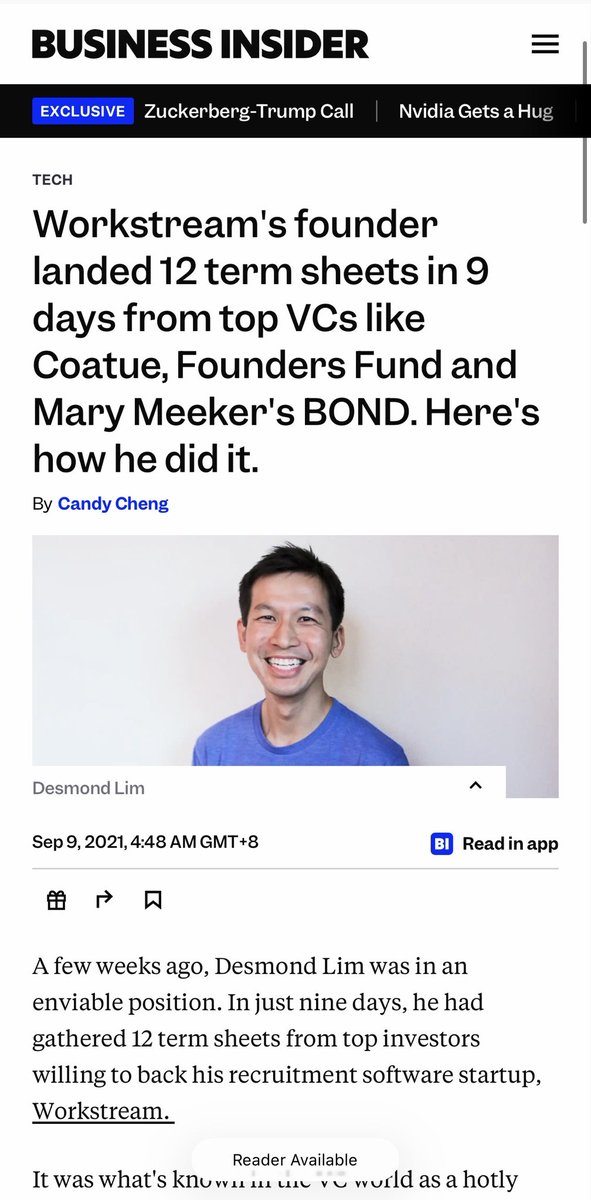
A few years later, we received 12 term sheets in 9 days fr Founders Fund, Kleiner, Lightspeed & more, raising $48 M.
3 things I learned:
- Do not pitch investors the same way you pitch customers. Big mistake.
- Raise when you can, not when you need
- When fundraising, give it 100%. When you’re not, give it 0%.
I’ve now raised $120M and will share the worst & best learnings over next few posts!
What fundraising question should I answer first?
a 20yo stanford student turned SF into a playable open-world GTA using apple maps + codex. i've been playing @cdngdev's "San Francisco: the game" this weekend and am genuinely impressed
climb buildings, steal cars, hang-glide across the SF skyline. players have logged 16k miles and 880+ hours within 24 hours of launch
but what's most impressive is the shipping velocity: Thijs is pushing player-requested features (teleport-to-address, multiplayer, avatar picker) in near real time, straight off replies to his tweets - running it like a full live-service studio of one
a cool glimpse into the future of AI-native game dev. 1 person iterating at the speed of a whole studio
met a founder who sits outside yc offices and begs for money
one day, a random yc partner happened to give him some spare change
founder rushed back to his apartment
added "backed by YC" to his landing page
instantly, 3rd tier VCs started flooding his DMs
raised $20m in a seed round
genius move
Some of you are getting YC app decisions right now and for those that didn’t get in, I'm getting pings 'what should I do now?’
The disappointment is real.
Back in the day, I read 8000 YC applications and I have a pretty good pulse on what YC currently looks for.
But while the question that comes to me is usually about help ‘getting into YC’ I always do a quick reversal.
Basically, before I give you that answer, let’s just go down the path of:
you’re not getting into YC
accept that reality
what should you do next for your startup?
Then we have a little talk about whatever is the most important thing they should focus on for their startup in the next two weeks. Usually involves stearing them away from giving themselves an excuse to spend more time building and pushes them towards more customer engagement.
Launch earlier.
Signed design partner.
First revenue.
Meet customers in person.
What did you learn that you didn’t previously know.
What data supports users actually want this.
What two week goal should you spend 100% of your time on next?
Then we get back to the YC question.
This is my standard response:
For nearly everyone, it’s increase pace of progress. There’s no usage or revenue minimum to get in, but there is how fast it seems the startup is moving.
Especially when it comes to making progress with customers, not just building the product on an island.
Usually, the unit of measurement is two weeks, so how has the startup made significant progress or learned enough to change directions per two week period.
Fortunately you already have your next two week plan.
Now do it.
You have about 12 weeks until the next YC application deadline. That’s 6 cycles of 2 weeks. Make every one of them count.
@brettcalhounn@brettcalhounn
ALICE is building the memory and identity layer for AI, enabling machines to remember shared experiences, understand context, and develop persistent personalities over time.
https://t.co/2gZfWHeMhX
Plz DM me!!