I'm fascinated by efforts to make animals (or parts thereof) photosynthetic.
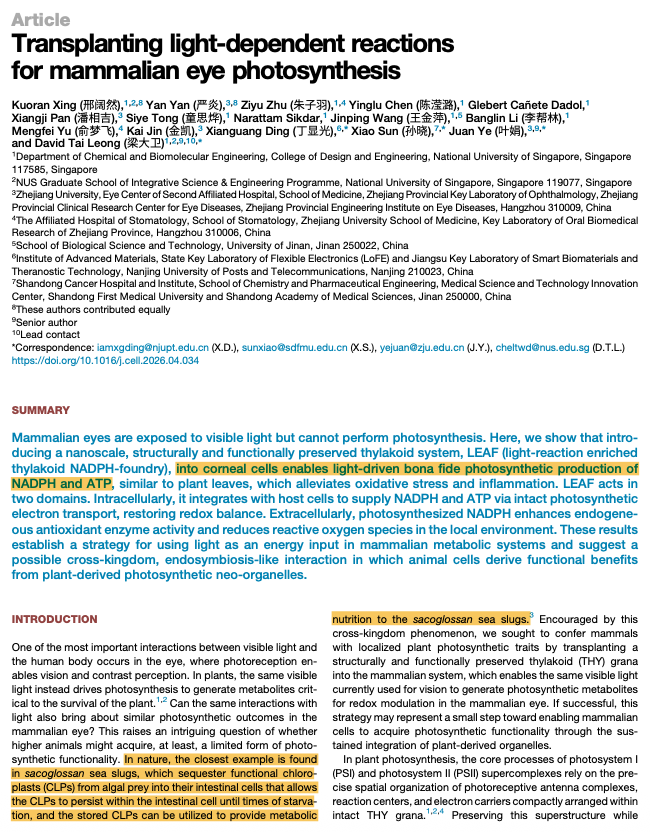
For the latest attempt, published last week, researchers took thylakoids from plant chloroplasts (the little membranes that carry photosystem I and II proteins) and inserted them into the eyes of mice. Specifically, they gave the animals eye drops containing the thylakoids twice a day for five days.
The thylakoids went into corneal cells (apparently they are small enough that the cells endocytose them?) and did photosynthesis, making NADPH and ATP from light. This isn't a gene therapy, though; the eye cells cannot make more of these plant enzymes, and so the photosynthesis only happens for about 8 hours before the enzymes are destroyed.
Why do this in the eye? One reason is that light doesn't penetrate tissue deeply; maybe a millimeter. Therefore, the eye is one of the few parts of the body that actually gets light exposure. It is also -- maybe equally important -- immune privileged, meaning these plant proteins don't trigger an inflammatory reaction (which would likely happen in other tissues).
I'm not sure this paper has any real utility, at least not clinically. The authors say that it does (to help treat corneal injuries, for example) but I think it's just expected for authors to make up claims like this to get published in CNS journals.
The more interesting reason to read this paper, I think, is just that it shows light can be used as a direct "metabolic input" in mammalian cells. You can use light to make energy molecules and NADPH, which can then be used by the cell's normal pathways.
This isn't the first paper to do stuff like this, either. There is a rich history of (temporary) photosynthetic animals! In 2011, Christina Agapakis & co. injected living cyanobacteria into zebrafish embryos, and it worked. (No developmental impact on the fish.) In 2024, a Japanese team put chloroplasts from red algae into Chinese hamster ovary (CHO) cells, and the chloroplasts apparently survived and did photosynthesis for two days.
Biotechnologists have a great ability to harness GENES taken from nature to build useful tools and therapies. We can sequence the natural world, collect genes in databases, and use tools like AlphaFold to figure out what they code for.
But our ability to harness entire organelles -- structures crafted over millions of years of evolution, which perform functions that cannot be matched by genes alone -- is severely limited. Animal photosynthesis, and pursuits thereof, might be a useful way to start closing this gap.
🌿 New paper from the lab out in @NaturePlants! We built a single-cell atlas of Arabidopsis leaf development to ask: how does drought reshape leaf gene expression at the cellular level?
https://t.co/rAaY3UvcaH 🧵
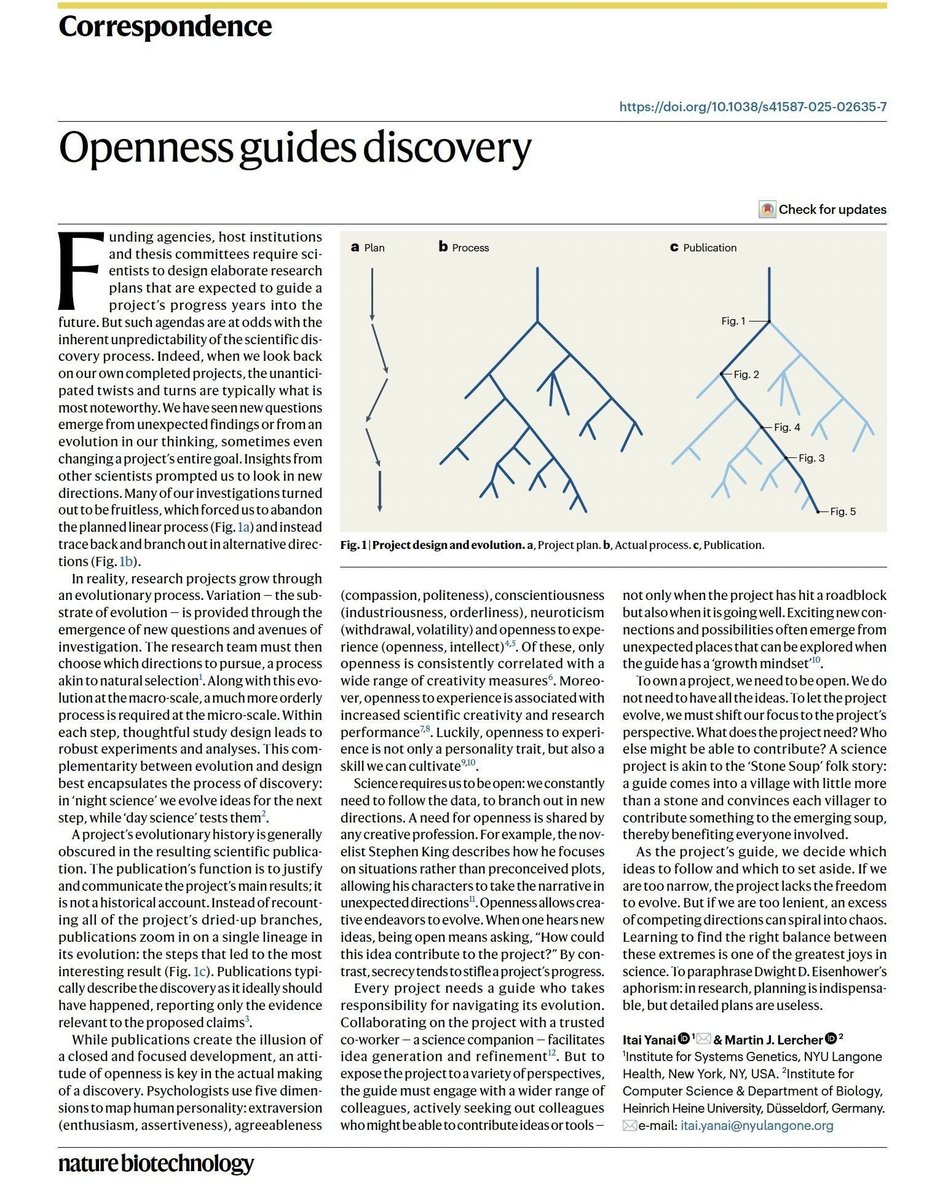
The 3 hardest things to learn as a scientist:
1. Trust the data.. especially when it’s not what you expected,
2. Trust the data.. allowing it to change your direction,
3. Trust the data.. but not too much: test with new data at every turn.
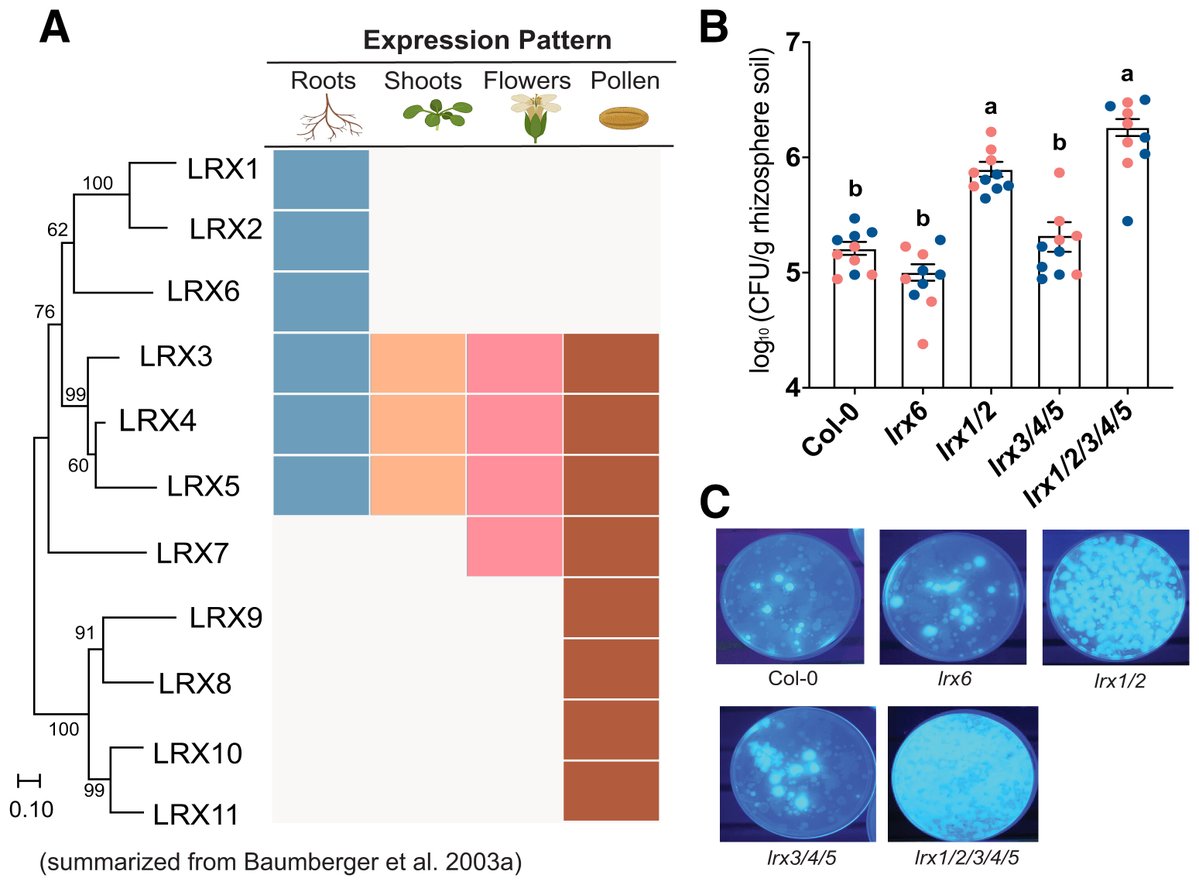
Siyu Song et al. found that FERONIA kinase and LRX1/2 play an integral role in shaping the rhizosphere microbiome. Read the article to learn more: https://t.co/LUPXZhDtIc @SiyuSong3@UBCMicroImmuno
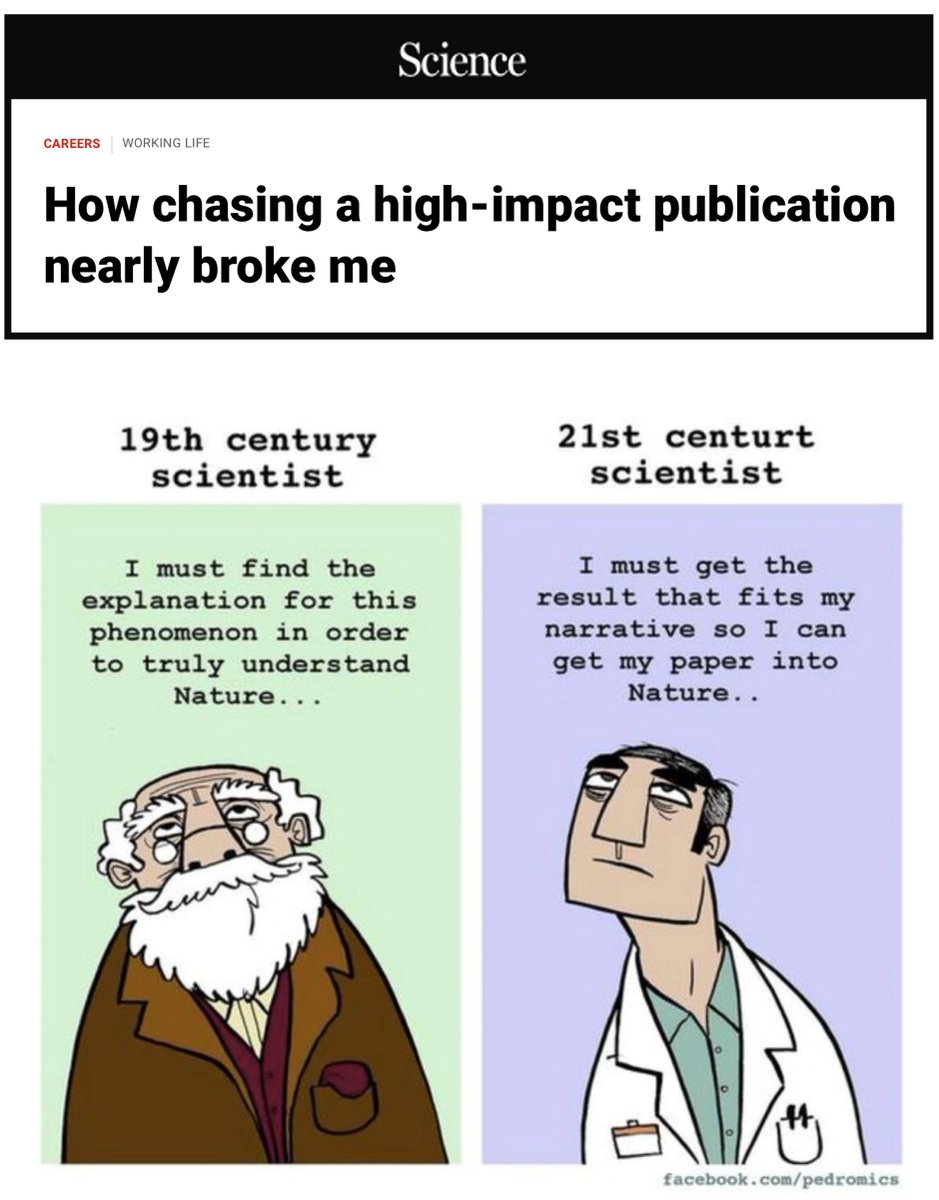
High-impact papers are crucial in academia.
Like it or not.
As a PhD student, you quickly learn that such papers are cool. They make advisors happy. Everyone admires you.
During a postdoc, high-IF papers are not just cool. They are mandatory for a PI job. They give you awards and interviews.
During the tenure track, they often become your ticket to a permanent position. Many young PIs are fighting to get their papers published in Nature/Science/Cell. It’s like getting a micro-Nobel prize. Many feel relaxed only when they publish in Nature (their tenure is finally safe!).
But:
Because such papers require a lot of time (often years), you live in constant uncertainty.
You HOPE you will get it. You spend evenings at work, you look for stronger results, and you’re battling through a battalion of failed experiments.
Then you submit it…
Then:
Stage 1. Editors reject 9/10 papers. Yours might be among them.
Stage 2. The paper goes to reviewers but they are brutal. For some reason (and you know why!) they just don’t want to see your paper in Nature. Many papers get rejected in the first round.
Stage 3. If reviewers can’t come up with reasons to kick you out immediately, they will request a lot of new experiments and changes to your work. Obviously, that will take months (if not years). Of course, some reviewers are great and genuinely help improve your work. But they are not as common as you might hope.
Stage 4. After addressing all problems and submitting it again, you will likely see some reviewers still resisting. They can simply reject your paper because they didn’t like how you addressed their requests. Or they will find new flaws and will get you to do another round of revision. (If you’re lucky, they will accept the paper.)
Stage 5. If reviewers are divided between “accept” and “reject”, the editors may send your paper to additional reviewers. That will start another cycle of hell with a likely negative outcome.
Stage 6. If you are rejected, congratulations - you’ve just wasted months on nothing. But because you need that paper, you resubmit it to another high-IF journal, and it all starts with Stage 1.
So, it’s like gambling.
You gamble your career on this publication.
During those 6–24 months of fighting with reviewers and editors, someone else may publish the same work. Then you’re screwed.
Or your paper is likely not accepted in any high-IF journal. After loosing a year or more on trying to push it through, you will have to publish it in a low-IF journal.
Is it a healthy game?
No. You get exhausted. Anxiety skyrockets.
But unfortunately that’s how academia works. I’ve been through this myself. Most of my colleagues have the same experience. We definitely despise it.
And the worst part of it?
We’ve started to see it as completely normal.
"… I reflected on how we train future scientists. Should we talk more openly with students about failure? When I quietly left research, frustrated at what felt like my lack of accomplishment, was this a typical experience? How often do we inadvertently discourage students from persisting in science, simply by omitting honest descriptions of the failure inherent to the research process? Research is messy and full of failed attempts. Trying to protect students from that reality does them a disservice."
On #InternationalDayOfEducation, take a look back at this Working Life essay on teaching students about scientific failure. https://t.co/CmiwjmRYq3
New Letter: "New alleles of Arabidopsis BIK1 reinforce its predominant role in PTI and caution interpretations of other reported functions" https://t.co/J463P6iOBI
Summary: be careful with legacy T-DNA mutants.
[On the importance of BIKs in science, including @MicrobiomDigest]
If you shock cells with electricity, it will punch holes in the cell membrane and allow DNA to go inside. It's a ubiquitous means to transform or engineer living cells.
And yet, so-called "electroporation" seems like an odd discovery. How exactly did we figure this out?
Well, I dug into various papers from the 1970s and 80s, and this is what I found.
The original idea to "zap" cells with electricity actually had an INVERSE purpose; instead of using electricity to get stuff INTO cells, scientists used it to get stuff OUT of them.
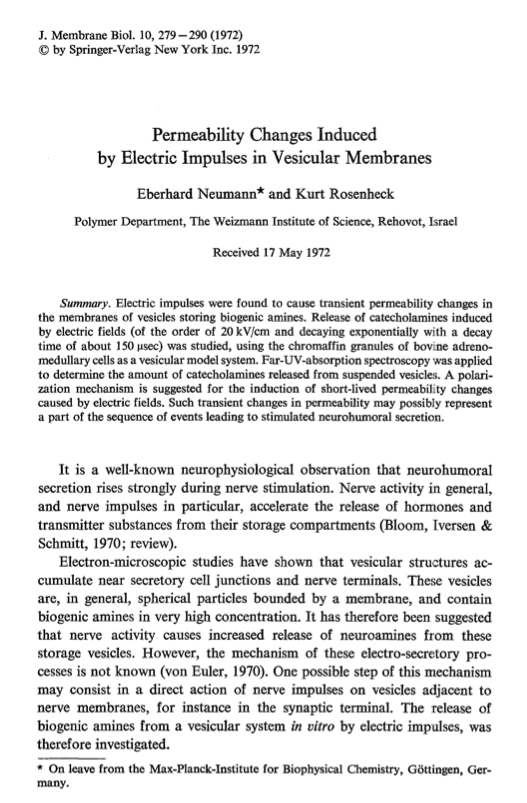
In the 1950s, physiologists like Alan Hodgkin and Andrew Huxley studied squid axons and discovered how nerve impulses cause cells to release neurotransmitters. In 1972, two scientists at the Weizmann Institute (Eberhard Neumann and Kurt Rosenheck) wondered if this same principle would work in isolation; what if we could use controlled pulses of electricity to coax cells to release, well, other things?
The duo took some vessicles filled with ATP and proteins, put them between platinum electrodes, and shocked them. Then, they used a UV spectrometer to see which molecules were released. Surprisingly, they found that small molecules were released while the bigger proteins remained trapped inside.
The duo also discovered that membranes become PERMEABLE, but not destroyed, when zapped with electricity. The electricity punches holes in the membrane only for a very short time.
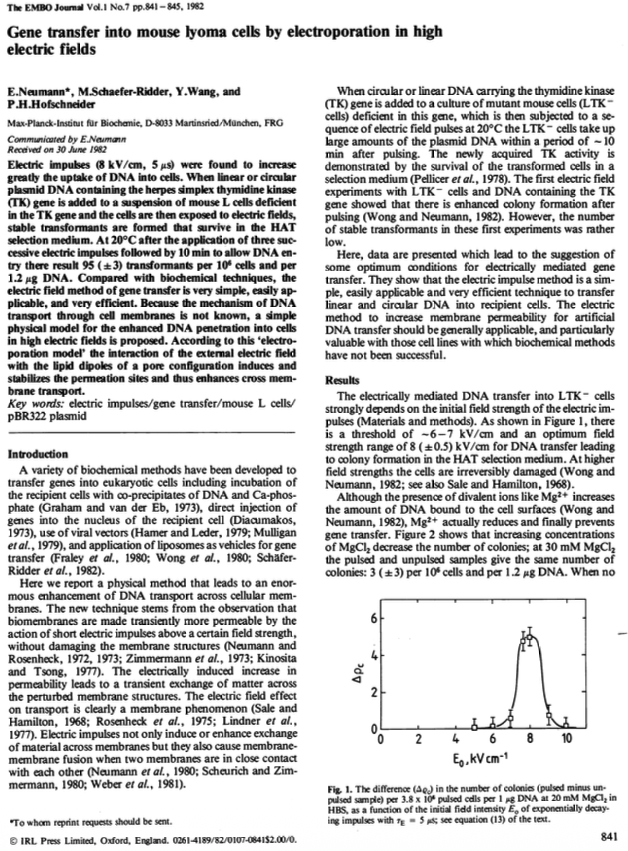
A decade later, in 1982, recombinant DNA has become a widespread technology. Molecular biologists are cloning genes, but find it tedious to get their DNA into cells. The main methods available are calcium-phosphate solutions (which carry DNA through the membrane via electrostatic charges), microinjections, and viruses. But none of these methods work reliably across cell lines.
So Eberhard Neumann (the same guy from 1972) thinks: "Huh, if electricity can punch holes into membranes and cause them to leak stuff out, perhaps I could use it to put stuff in..." And that's what he did.
Neumann took some mouse fibroblast cells deficient in an enzyme called thymidine kinase. The cells need this particular enzyme to grow in a special growth medium, called HAT.
Next, Neumann took some plasmids encoding the thymidine kinase gene and tried to shock it into cells. If the cells took up the plasmid, then they would survive in the HAT broth. If they didn't, then they would die and fail to grow.
He tried many electrical settings, with different field strengths, pulse durations, temperatures, and DNA concentrations. After each attempt, he tried to grow the cells. Using this basic experimental framework, he figured out the optimal settings to transform cells and invented the technology now known as "electroporation." His paper has been cited thousands of times.
TL;DR: The idea to shock cells for DNA transformation came from observations, in the 1950s, that electrical signals in nerves coax cells to release neurotransmitters. Very cool!
We proudly present a new preprint by Leon Pierdzig et al: Wall teichoic acids, glycopolymers specific to Gram-positive bacteria, trigger defense and cell death in Arabidopsis. Cysteine-rich RLKs act as key components in their perception. https://t.co/owvJWnjaVi
Evolving advances of proximity labeling in capturing biomolecular interactions
"Recent innovation of proximity labeling (PL) enzymes and systems"
https://t.co/aWbXGcVgH8
My postdoc Sargis Karapetyan’s paper on the role of the redox rhythm in regulating immune-induced programmed cell death has finally been published. It has been a long process, but I am very proud of the final product. https://t.co/juEERVw3AY
Congratulations, Sargis and coauthors!









![NaturePlants's tweet photo. New Letter: "New alleles of Arabidopsis BIK1 reinforce its predominant role in PTI and caution interpretations of other reported functions" https://t.co/J463P6iOBI
Summary: be careful with legacy T-DNA mutants.
[On the importance of BIKs in science, including @MicrobiomDigest] https://t.co/Jup1BTAEVb](https://pbs.twimg.com/media/G-N09mPWwAApsu9.png)