Sleep & circadian researcher, PhD, Medical doctor.
@NorthwesternU & Associate Professor (docent) @UU_University in medical cell biology. Dance aficionado
🧵(1/7) Proud that our new study is finally out after years of work! 🎉
Did you know even short-term #sleep loss 💤 can result in a molecular fingerprint linked to increased future #cardiovascular disease risk? 🫀 ❤️🩹 https://t.co/ZcFF9IYpVT
Also timing & #exercise 🏃♂️ matter ->
@EricTopol@uk_biobank@PLOSMedicine Interesting, thank you for sharing.
Important however:
This is *not* polysomnography - sleep stages are from actigraphy.
Will differ ~9% for sleep efficiency, ~50 min for duration, ~17 for REM.
"its agreement with gold-standard PSG measurements remains relatively *modest*
I’m excited to share a preprint of my first, first-author research from my PhD! Big thanks to my PIs @greenlab_utsw & @CircadianClocks & all the collaborators that helped with this project!! #NADH#cortisol#circadian
https://t.co/Z8UtK2blVS
this is "spike mongering"
endocrinologists refer to post-meal rises as Glc excursions, not as Glc spikes
return to normal indicates good insulin sensitivity
there's substantial interindividual variability among nondiabetics--modest rises after nutrient-dense foods (e.g., fruit w fiber) or going to the gym are benign & not equivalent to refined-carb loads
CGM in healthy ppl carries real behavioral risks including anxiety, data obsession & dietary patterns in which ppl unnecessarily restrict fruits/whole carbs or fear exercise-induced glycogen responses, medicalizing normal physiology without proven net benefit
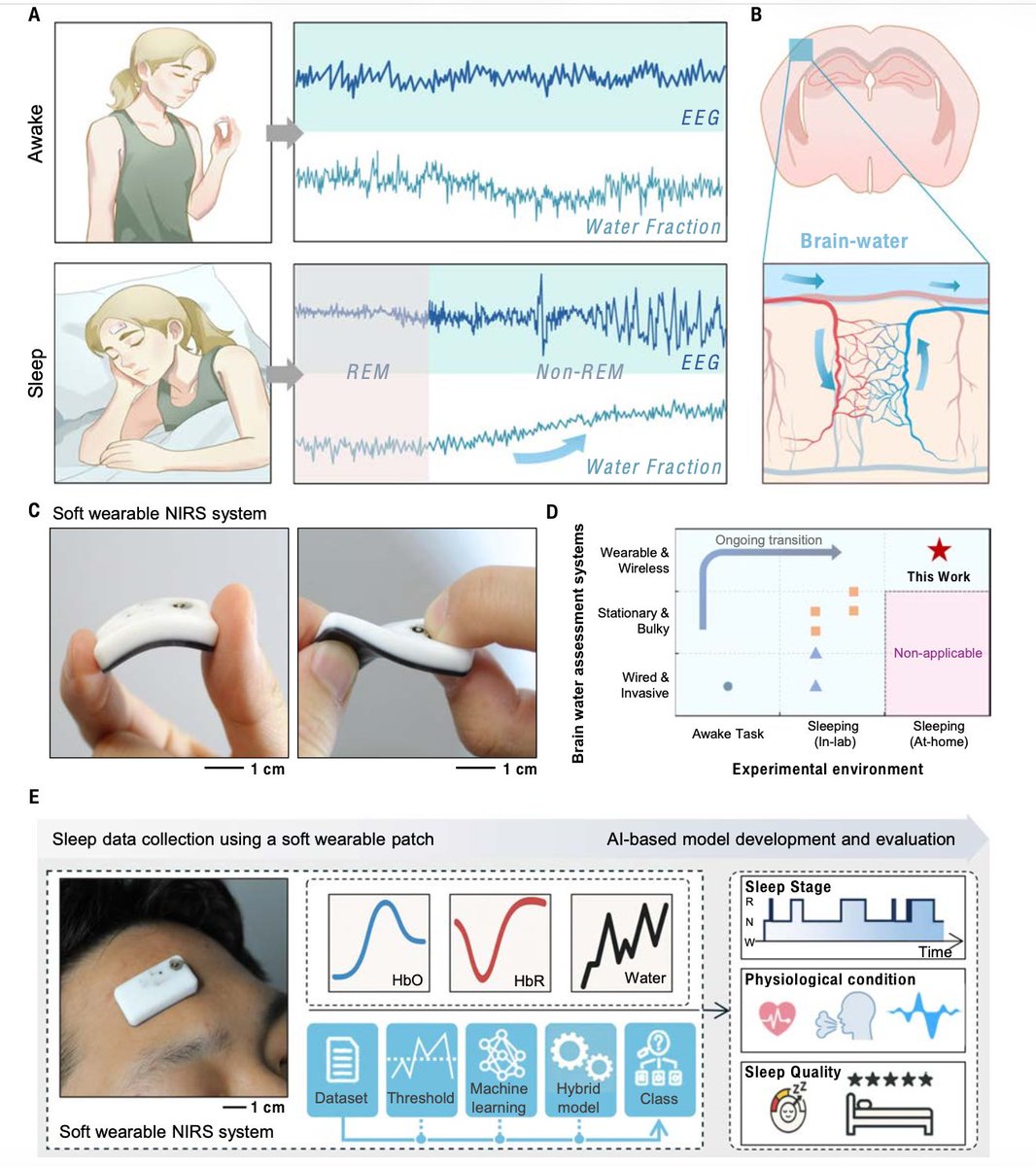
Today's sleep quality tracking relies on movement algorithms. Published today @ScienceAdvances is a wearable patch that tracks the flow of glymphatics via brain water dynamics https://t.co/98ZfsA15xf
@Panaclete@EricTopol@Nature@hcpearson ...If you focus on sleep
Although they do mention her SMARRT intervention, which did also include sleep as one lifestyle parameter to improve, and showed improvements in the multi-risk factor score in their 2-year RCT
https://t.co/g45TkfecPT
@Panaclete@EricTopol@Nature@hcpearson Yeah, I saw that. So, in that way also surprising that sleep still got no mention.
Not that I like AI summaries. But case in point, this is literally what you get when googling her important work.
Update: NIH now exempts Basic Experimental Studies in Humans from clinical trial classification. With @proferikrichter we made this case in 2024 (+ support of 95 colleagues) — mechanistic human studies are not clinical trials! Journals & WHO should follow https://t.co/UeMrsAWDeA
Online now!✨Iiams, Skinner et al explore the effect of early-onset, lifelong time-restricted feeding in >500 male and female mice, and report extended healthspan in male and female mice, and extended lifespan in male mice @SamIiamsClever@CircadianClocks https://t.co/Bno0Mf5tAO
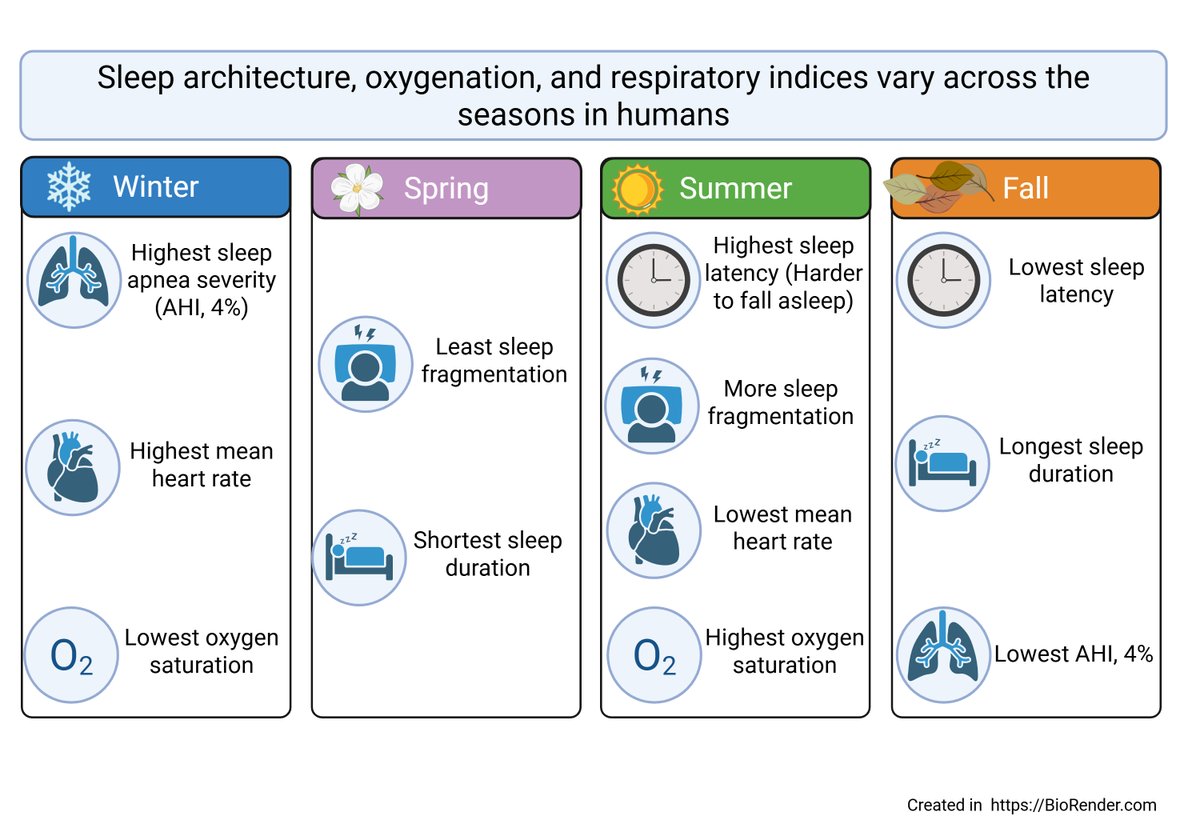
A study published last month in #JBR shows that humans exhibit seasonal changes in sleep, oxygen levels, and respiratory indices. Environmental rhythms and human biology are tightly linked!
https://t.co/9do84PZRv2
Ingen borde bli överraskad av det här. Tyvärr är det dock många som tror att det Huberman förmedlar är etablerad vetenskap.
Dr Andrew Huberman gets Fact-checked by MD PhD Doctor - YouTube https://t.co/xvPwrzNDR0
In a randomized trial of a PCSK9 inhibitor [for LDL cholesterol lowering] vs placebo for patients with diabetes and no known heart disease, there was significant reduction of major cardiovascular events including deaths
#ACC26@JAMA_current
https://t.co/mzuI79c4IN
Our collaboration with Dr. Lisa Chow and her team found that TRE (without dietary advice) produced similar outcomes in food and nutrient intake as instructed caloric restriction. https://t.co/JjrO9kIn4a
Joseph T. Bass, MD, PhD, joins the Mind & Matter podcast with Host Nick Jikomes to discuss circadian clock mutations and disruptions, hormone rhythms, and weight management.
Listen to the full episode: https://t.co/jVKyv8QQEY
Our new study in @NatureComms with Applied Cognition used computational + PK modeling and a 2‑site crossover clinical study to show that during sleep, glymphatic clearance - not synaptic release - drives overnight changes in plasma Aβ and tau in people.
https://t.co/hUhM5OhbJv
Thank you to Drs @JCedernaes, Bettina Sielaff & Christian Benedict for an aptly named and excellently written Editorial summarizing and contextualizing the study: Time to regularize sleep regularity
https://t.co/oAD5iCtM7t
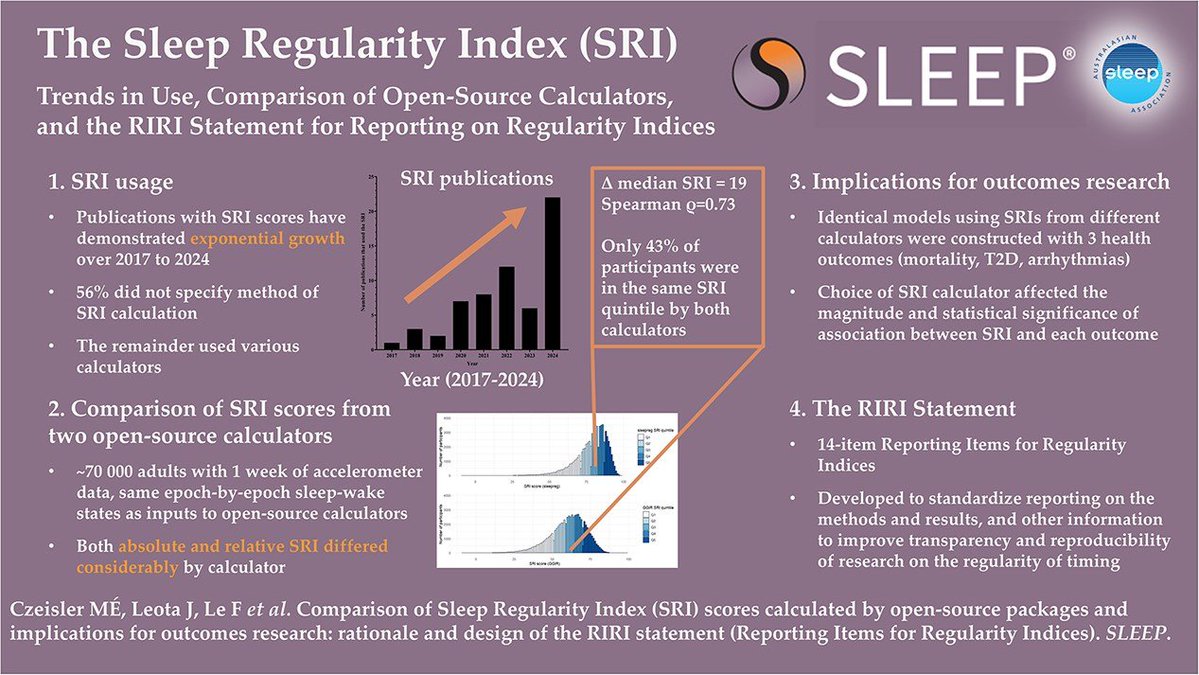
The Sleep Regularity Index (SRI) is a strong predictor of health & disease
In SLEEP, we report:
➤📈SRI use
➤>50% non-disclosure of SRI methods
➤Two calculators produced discrepant SRIs
Introducing the Reporting Items for Regularity Indices (RIRI)🧵
https://t.co/2dVdZGoFdr