In @NatureCVR, I share suggestions to bring the best of @NIH to #academia. When we work together to fulfill commitments, we can be better scientists and public servants. Universities should give #earlycareer and #physicianscientist a level playing field! https://t.co/6HKb74dxR6
Excited to share our protocol (https://t.co/z0S8woqkEX) in @bioprotocolbyte to rapidly screen through CRISPR hits! Thanks to Vivian Xia, Dr. Arun Padmanabhan, and @gsmithMDPHD and all those @UCSF who "validated" it for us!
New in #Genomics:🧬
Rapid multiplexed flow cytometric validation of #CRISPRi sgRNAs in tissue culture
Full protocol: https://t.co/mP6aJCYGVY
👏@JChorba and colleagues
When you're back on cardiology at Zuckerberg General 1 yr later as a PGY2 w/ this incredibly diverse, awesome rock star team! ❤️❤️ Shout out to Dr. Chorba who encourages heart healthy exercise w/ 6 flights of stairs daily! 😅💪🏾😁 @UCSFIMChiefs#zsfg
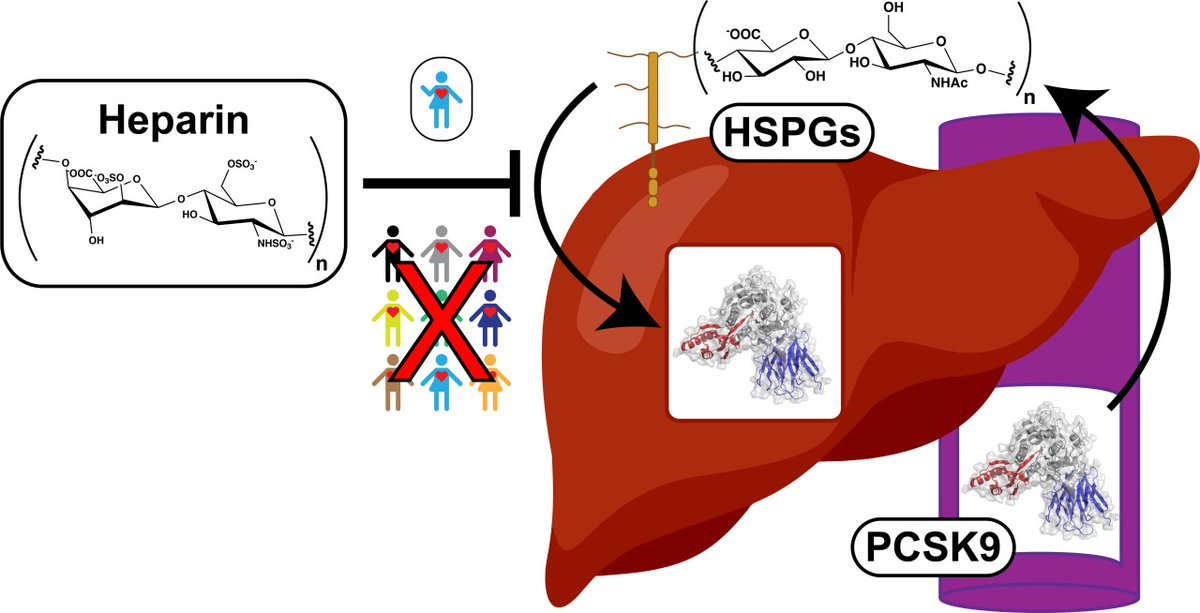
In the most recent issue of ATVB, Xia and colleagues report on the relationship between heparin and plasma levels of PCSK9 - data from humans! Learn about the nuances between findings in animals vs the human in ATVB!
(4/4): Great work from a fantastic team: Dr (to be) Vivian Xia and the cath and clinical labs @UCSFCardiology and @ZSFGCare (@LucasZierMD, Bee Ong, and Drs. John MacGregor and Alan Wu).
(1/4): Excited to share our lab’s latest tweetorial! Now out in @atvbahajournals (https://t.co/QUtK7at4TO), we asked an important clinical question: can the binding between #PCSK9 and heparin be repurposed to use heparin as a cheap PCSK9 inhibitor and lower #cholesterol?
(3/4): This was true #frugalscience: we simply used remnant blood samples from routine care (which would otherwise be discarded!), so we could study the outcomes in the ideal physiologic system: real humans! And #peerreview (thanks reviewer #2!) led to our more nuanced answer.
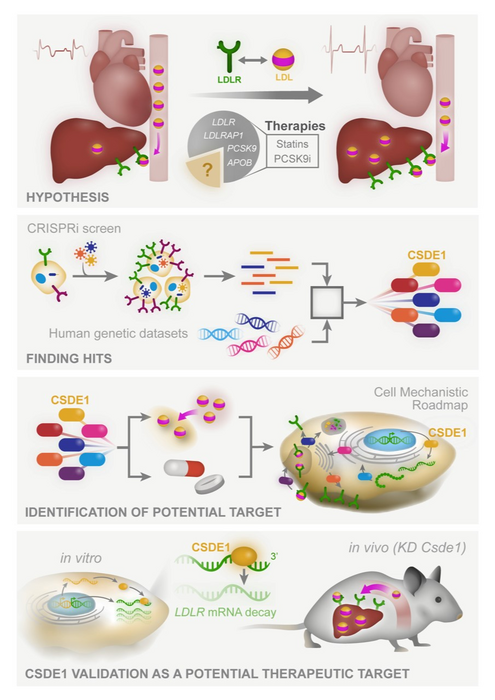
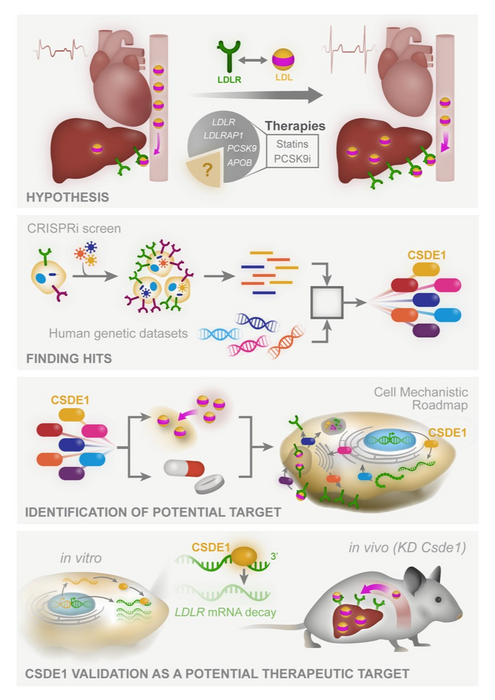
Today is #WorldCRISPRDay—ICYMI, the @JChorba lab at @UCSF recently leveraged #CRISPR screening to show the protein CSDE1 is a key regulator of the LDL cholesterol receptor, and could offer a feasible target for new #HeartDisease therapies. https://t.co/hlghcuzC29
Blown away by the story of @ElectrosomeUCSF and @ZaroLab on the structural basis for “chaperone” assisted quaternary complex formation of ion channels. Paradigm-changing, yet makes sense! Is this druggable? Do we drug it now and just don’t know it? (https://t.co/UIsFd6jkCA)
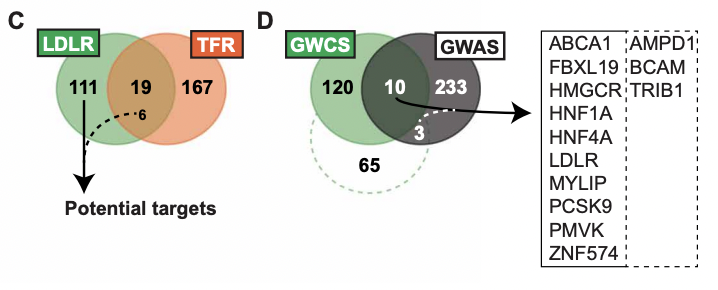
Loved this paper from @JChorba@gsmithMDPHD@pnatarajanmd. Such a well written example of a CRISPRi screen, with careful validation of the positive hits. Candidate genes are prioritized based on specificity and GWAS overlap.
https://t.co/pNcLY6b2hY
Congrats to my @UCSF colleagues @DrEmilyGoldberg and @JChristophUCSF on being recognized for the research rock stars they are! (https://t.co/wNjZVYllCK)
Nice summary of our collaborative work led by @gsmithMDPHD@JChorba discovering CSDE1 as a novel regulator of LDLR in @NatRevCardiol https://t.co/G4VtyKvmC3
(https://t.co/wte5I4sz3B @ScienceTM)
A #CRISPR based screening study reveals that the protein CSDE1 is a key regulator of the LDL cholesterol receptor and could offer a feasible target for new #HeartDisease therapies, according to new experiments from the @JChorba lab at @UCSF. https://t.co/6US6wsquHY