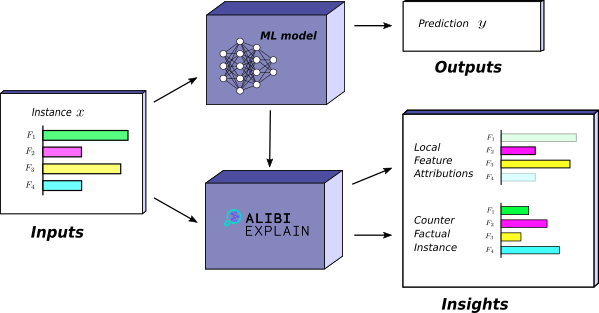
Very pleased to release Alibi with @arnaudvl3 and @seldon_io - an open source library for #MachineLearning model inspection and interpretation. Currently includes Anchors (@guestrin), contrastive explanations (@pinyuchenTW) and trust scores (@_beenkim): https://t.co/DS2xMyXifY
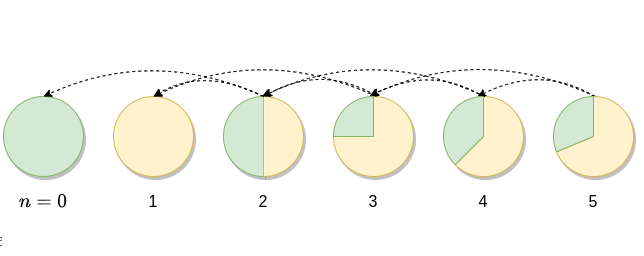
@fishnets88 I found the same problem on stack exchange and it reduces to finding integer points on a hyperbolic curve for which there is a known method to generate all such points! https://t.co/hAZyG2UJf1
@fishnets88 Luckily WolframAlpha gives the first few solutions: https://t.co/xw8aCBnBEB (the negative branch doesn't give any extra):
r=3, b=1 (3/4*2/3=0.5)
r=15, b=6 (15/21*14/20=0.5)
r=85, b=35 (85/120*84/119=0.5)
We are excited to announce the release of Alibi Detect v0.11.0, featuring widened serialisation support and a new backend that allows drift detection to be rapidly performed on large datasets. https://t.co/q8lp8MaZZY
We are pleased to announce the release of Alibi Explain v0.9.0 with support for calculating global feature importance via Permutation Importance or Partial Dependence Variance. https://t.co/W9kNoM0D4c
New version of Alibi Explain out with a focus on explaining the global behaviour of any black-box model via partial dependence plots! Shout-out to @RSamoilescu for the contribution and to the rest of the team @seldon_io for numerous improvements!
We are delighted to announce the release of Alibi Explain https://t.co/W9kNoMhG6c v0.8.0 featuring support for Partial Dependence plots, enabling global explainability of any model.
Monitoring for drift can be a complex endeavour, involving multiple ML components. To make life easier, we are pleased to announce the release of Alibi Detect v0.10.0!
Check out one of the newest additions to Alibi Explain - a prototype selection method that can help you understand your datasets better. Shout-out to @RSamoilescu for leading the work!
We are happy to introduce a new XAI tool in Alibi Explain 0.7.0 arsenal. ProtoSelect - Bien and Tibshirani (2012) https://t.co/FXzsxSN8nq - is a prototype selection method to construct a condensed view of a dataset and an interpretable classifier: https://t.co/XMh2RXiv5p
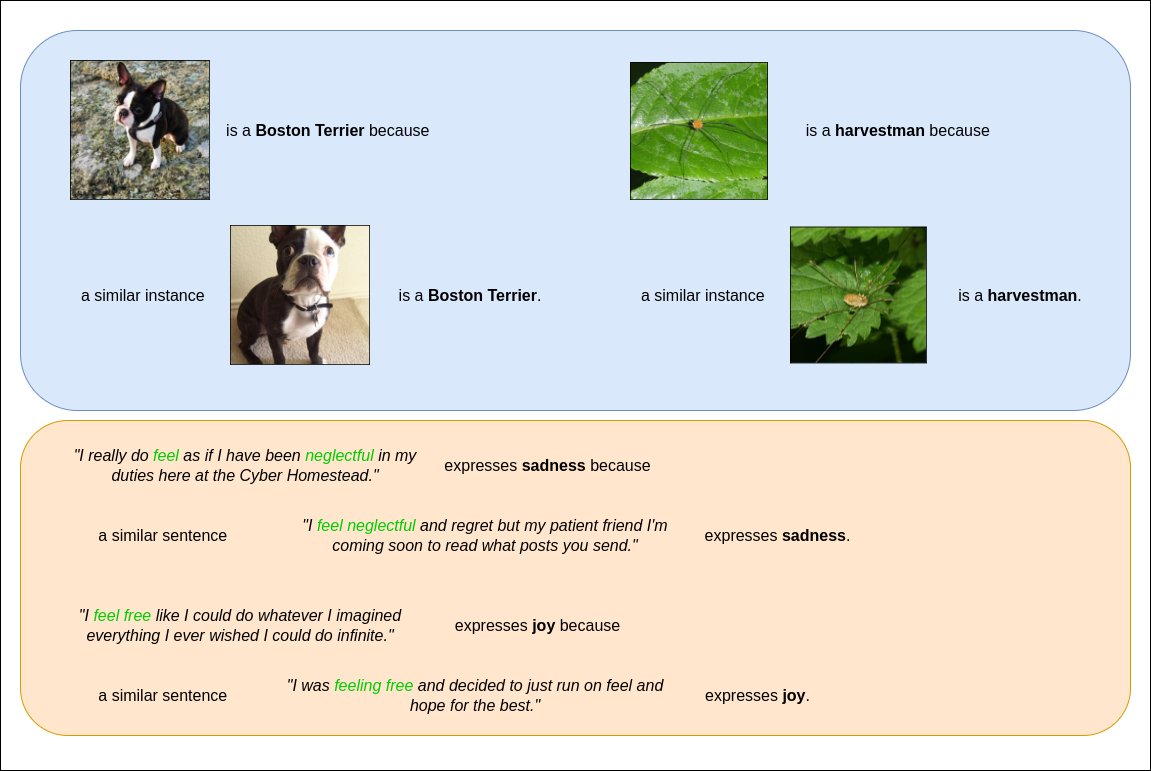
The recent Alibi Explain 0.7.0 release includes a new class of explainers. Similarity-based explanations are probably one of the most intuitive and visual explanations one can get: https://t.co/ieJZ6p5X1U
Very pleased to have our paper on context-aware drift accepted at #ICML2022! See the thread below for motivation and overview of the method 👇 @seldon_io@SeldonResearch
Proud to see @seldon_io represented at @aistats_conf with original research on calibrated multivariate change detection! Shoutout to @ollyjcobb for spearheading the research!
We're delighted to announce new research affording ML practitioners control over which changes to their data distribution should - and should not - be identified as drift.
Available now in Alibi Detect 0.9.0!
Docs: https://t.co/TC9nGn86Zd
Paper: https://t.co/cZFEXuDMti
🧵
@AsteroidTracker thanks for providing the cool NEOWS API (https://t.co/Pe29Gobot1)! I was wondering where the "is_potentially_hazardous" field comes from? I followed the data sources on the CNEOS website but didn't find this information there either.
Nice to see our earlier findings in Alibi Detect for drift detection on graphs confirmed by this ICLR’22 paper! As shown in https://t.co/vgSxMB04un we also saw strong MMD drift detection performance using embeddings from a random GIN model on molecules with different scaffolds.
Massive shoutout to @oblibob who's been working on this for the last few months since joining @seldon_io! What a way to get immersed in a completely new topic!
We're very excited to share our gentle yet comprehensive overview of explainability as part of the Alibi Explain documentation. We hope to help practitioners and anyone interested in XAI to orient themselves in this complex yet increasingly relevant topic https://t.co/OfWdRPo2jY.