Some personal news: I joined the @ACLU to lead its national campaigns team.
At a time when our democracy faces unprecedented challenges, I wanted to be part of an organization on the front lines of defending them.
This article helps explain why.
The American Civil Liberties Union will spend more than $50 million on the 2026 midterm election, with half going toward efforts to ensure smooth administration of elections as President Trump seeks to exert more control over the process. https://t.co/EuutyqoZ3w
My conversation with John Arnold (@johnarnold).
Few people I've spoken with have as wide a view of the global system as John.
He was one of the most successful energy traders of all time, and after stepping away from markets he built a foundation devoted to solving America's most critical systemic problems in a principled way.
John's recent trip to China was the catalyst for this conversation, and I feel lucky we all get to learn from him.
We discuss:
- His trip to China and what it taught him about robotics, AI, and EVs
- What it takes to be the best (and what it costs)
- Building the best seat in the market
- The state of energy markets today
- NIMBYism as the impediment to progress
- What he thinks about the wave of nuclear startups
- Fixing America's broken systems: healthcare, criminal justice, education, and journalism
Enjoy!
Timestamps:
0:00 intro
0:45 China’s Rapid Transformation
3:53 Lessons from the Chinese EV Market
6:12 Robotics
11:22 The Discipline of an Elite Trader
15:42 Leveraging Scale and Proprietary Data
17:36 Lessons from the Baseball Cards
21:15 Trading Natural Gas and Market Dynamics
25:34 Innovation in the Modern Energy Sector
27:02 High-Level Goals of the U.S. Energy System
32:59 Overcoming NIMBYism
36:10 The Challenges of U.S. Transmission Lines
37:55 The Future of Nuclear, Fusion, and SMRs
44:00 The Economics of Solar and Battery Storage
48:28 Data Center Demand
50:28 Housing Reform
53:32 Rethinking the Role of Philanthropic Foundations
57:05 Improving the Criminal Justice System
1:01:58 Privacy and Security
1:05:03 Education and Life Outcomes
1:06:41 The Promise and Pitfalls of EdTech and AI
1:09:12 Identifying Market Failures in Healthcare
1:12:10 The Role of Regulation Across Different Systems
1:14:06 Journalism as the Fourth Estate
1:16:41 The Kindness of Hard Truths
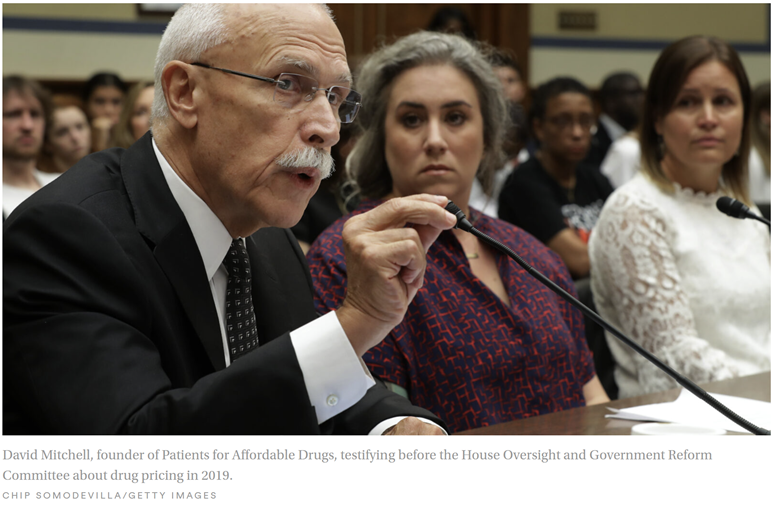
RIP, David Mitchell, founder of Patients for Affordable Drugs and an incredible human being.
David entered health policy as a patient. Diagnosed with a form of leukemia and dependent on an expensive medication, he experienced firsthand how opaque pricing could place crushing financial strain on patients. Rather than treating that burden as inevitable, he turned it into a mission.
While leading a mission-driven communications firm, David started working with two early grantees of our drug pricing portfolio,@peterbachmd and @icer_review. When he decided to retire from the agency, he wasn't ready to give up his work fighting for fair and sustainable drug pricing.
In 2016, he started a patient advocacy org, P4AD. Because he was unwilling to take any money from pharma, philanthropic funding was essential. @Arnold_Ventures was his first call. It was an easy yes. Not only did he never ask for a salary, but he and his wife gave $75k every year to the org.
Many people and groups played important roles in getting Medicare negotiation passed into law in 2022 but no one was more important than David. In collecting tens of thousands of patient testimonials, he gave voice to the millions of Americans whose access to medicines is limited by price. “Drugs don’t work if people can’t afford them,” he was fond of saying.
David understood the policy details, shaped the strategy, and spoke with unusual clarity, while (sadly) also having a deeply personal connection to the issue. He became the face of the movement, testifying before Congress multiple times and serving as an essential interview for anyone writing on drug pricing.
He continued to work full time on P4AD until early 2025, when he stepped back to focus on his health and family. His legacy is a movement that made affordability central to health care reform and ensured that patients have a seat at the table. He will be deeply missed, but his work will live on.
Scott Galloway puts his money where his passions are. He and @RichardvReeves have transformed the discourse around boys in recent years, in ways that are already helping us all to raise good young men. Go @profgalloway!
Support https://t.co/9B0E4HGG5r
I do.
There is more and more evidence that putting computers and tablets on students' desks (1:1 devices) was a terrible mistake. I agree with @AdamMGrant that "it's time to remove laptops [and tablets] from classrooms."
There's a nascent trend of colleges offering a 3-year bachelor's degree that I could see becoming a norm in the future.
Of 8 theories that explain the value of a 4-year degree, all but the human capital theory can be mostly satisfied in 3 years. The 4th year is as costly in time, dollars and opportunity cost as years 1-3, but offers highly diminished added value for most students.
The 120 credit hour bachelor's degree is arbitrary, dating back more than 100 years. The purpose of college, makeup of the student body, and expectations of employers are wildly different today. But college accreditors are a creature of habit and, until the past 2 years, few were willing to stray from the norm.
An accreditor approved 2 colleges, BYU-Idaho and Ensign, to offer a 3-year degree in 2023. Since then, all accreditors have either changed their rules or started the process. The degree has a modified name, like "accelerated" or "applied", for those who choose to distinguish between graduates of each. I predict most employers will not.
Utah, Indiana, and Maine have each encouraged their public universities to pursue the option. Massachusetts is next. The option increases the number of students a state school can serve and lowers the cost to the student.
The 4-year degree won't go away, nor will graduate school. But many employers will be satisfied with the knowledge, signaling, and growth that a shorter degree offers and it will likely improve the value proposition of higher ed for many students.
👀 Cassidy announces AARP has endorsed his Medicare Advantage upcoding bill in press release just now
AARP says it "protects older Americans, strengthens oversight, and helps to ensure the long-term sustainability of Medicare"
A new study finds that when hospitals acquire physician practices, those doctors raise their prices by 15% within 2 years compared to independent peers. Healthcare M&A should be about integration and efficiencies. Too often, it's just about leveraging higher reimbursements rates.
Thank you to @camoosomiller for having me on as a guest on The Friday Reporter. It was a a lot of fun sharing my perspective and the work of @Arnold_Ventures - give it a listen: https://t.co/nPtNapgQNd
So many industries now use quick-payoff, lottery-style mechanics to spark demand, turning us all into what @profgalloway calls dopamonsters.
- Daily stock options and 3x ETFs rather than mutual funds
- In-game and parlays rather than point spread
- Daily fantasy rather than season long
- Hunt for the rare insert sports card and discard the rest
- Ultra contemporary art over the established
- Speculative tokens over BTC
- Sneakers with limited editions sold through lotteries
- Mobile gaming with loot boxes
Reversing which fuels get subsidized and which get penalized every time control of Washington shifts is about the stupidest way to run an energy system that needs long term planning and stable supply chains.
🚨 NEW: The Senate serves up a second helping of pork 🐷
While they trimmed some of the House’s worst tax handouts, they also kept billions in pork, and added billions more — far outside the House's budget target.
Here’s what was cut, kept, and cooked up anew:
https://t.co/QrdT2sagID
Just days after patients helped keep the pharma-backed ORPHAN Cures Act out of the Senate reconciliation bill text, lawmakers have brought it back — but we still have a chance to stop it.
“Patients are infuriated to see the Senate cave to Big Pharma by reviving the ORPHAN Cures Act at the eleventh hour,” said Merith Basey, Executive Director of P4ADNow.
Keep the pressure on our elected officials to put patients and taxpayers ahead of massive pharma profits. Send a letter to your senator now: https://t.co/fRAIbu3O39
Read the full statement: https://t.co/0Bgexzlna5
🚨🚨🚨🚨BREAKING: DON BACON, Nebraska Republican, will not seek releection.
JOE BIDEN and KAMALA HARRIS both won the Omaha based seat.
This will become a prime pickup opportunity for Democrats in 2026.
It was inevitable had either party won unified control in November that they'd punt on Manchin/Barasso and try permitting reform alone this year, despite almost certainty of being axed by the parliamentarian. Now we're there. It's time for serious, bipartisan permitting reform.