This week we will have the great pleasure to welcome the international elite in research of cardiac arrest outcomes to Lund. Looking forward to learning, exchange ideas and get super inspired. See you there?!? #postcarelund
#ESCCongress 2022 is coming up and it is time for an important tweetorial 👍😀
Saturday morning the #BOX_trial will be presented providing high quality evidence for blood pressure targets after #OHCA. Below I will outline the evidence so far. Hang on!
#cardiotwitter
1/n
PCI is increasingly performed in comatose survivors of out-of-hospital cardiac arrest who also undergo therapeutic hypothermia. A new study demonstrates that the incidence of definite stent thrombosis in these patients is substantial (19.2%). https://t.co/YEVeBHpS7x
@load_dependent@NephroP@MDBeni@khaycock2 My colleagues published normal values for Htx a few years ago. Slightly smaller LV, mean stroke volume 62ml. Basically no difference in EF. https://t.co/58Z06SaIBe
Researchers perform an individual patient data meta-analysis of TTM and TTM2 trials of hypothermia after cardiac arrest and find no difference in 6-month mortality with hypothermia to 33°C versus normothermia. https://t.co/gAQ4FOYabf
#CardioTwitter#CriticalCare#MedTwitter
@PCC_PharmD@PulmCrit@ttm2trial@nielsen_niklas Patients on ⬆️⬆️ Pressors might be too sick to show a difference. But vasopressors might be protective during rewarming with vasoplegia. This is the best categorization we could come up with. But still post-hoc..
Letter regarding “Effects of targeted temperature management at 33 °C vs. 36 ��C on comatose patients after cardiac arrest stratified by the severity of encephalopathy” by Nutma et al. https://t.co/Ds2QwQ1UA9
@NickJohnsonMD I think that graph is a bit simplistic. The regression implies that the Absolute risk reduction would be 30% if a trial only included patients without bystander CPR. Improbable.
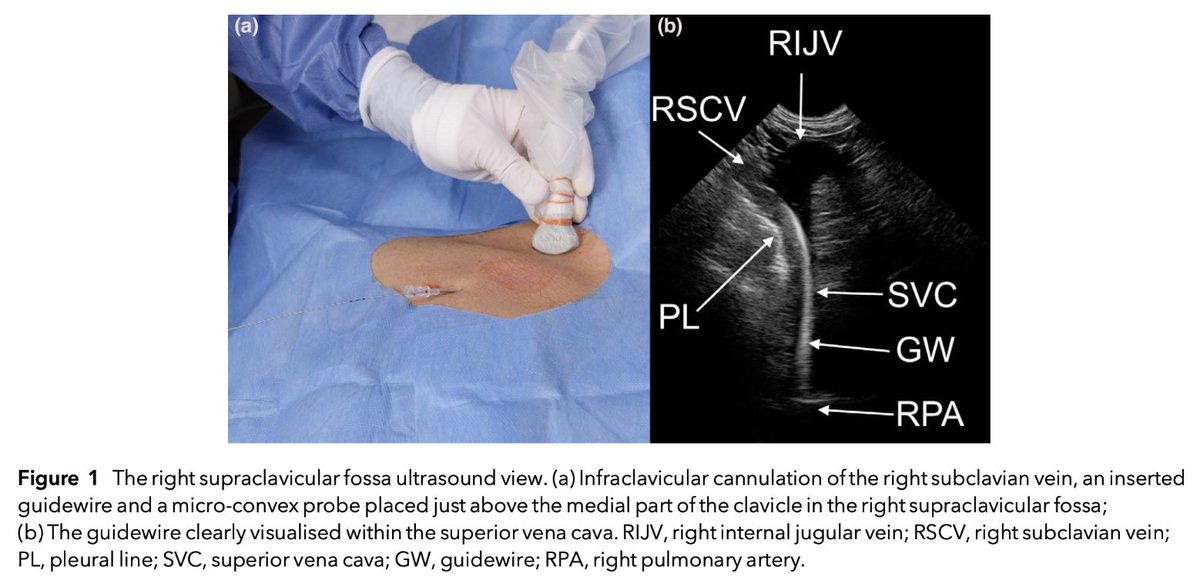
🔐This new prospective observational study from @robinlunden and @OBorgquist demonstrates that the right supraclavicular fossa ultrasound view is useful for correct catheter tip positioning in right subclavian vein catheterisation.
🔗https://t.co/Y7NKMB0vtB
Just Accepted Paper: Using contemporary data from nationwide population-based registries, this study showed early discharge (i.e., within 2 days of admission) to be safe in low-risk patients with STEMI treated with primary PCI. https://t.co/4tnq1bWkug
This just makes sense. Finding very low levels of NSE, neurofilament particles, and other neuronal hiomarkers after carfiac arrest implies HOPE and should help mitigate therapeutic nihlism
#CuringComa#MedTwitter
https://t.co/bPhVrDMyRp
@DogICUma@BenjaminAbella@Ilcor_org@kurzmc@USresus4life @ritty_pcas_md Working on a publication on breakdown and timing. Not all events during maintenance phase. Arrhythmias common immediately after ROSC and in the cath lab, especially in STEMI.
@DogICUma@BenjaminAbella@Ilcor_org@kurzmc@USresus4life @ritty_pcas_md Roughly a third of the events in the hypothermia group were bradycardia. And 1 in 4 in the normothermia group. We don’t have detailed descriptions of “expected” events.