National Security Expert on China | Indo-Pacific Foreign Policy & Defense | International Trade & Economics | Cyber, AI & Emerging Tech. RTs≠endorsement.
We are excited to announce our new cohort of visiting fellows for 2025-26! 🌎 👏 Throughout the year, Penn students and faculty will be able to engage with and learn from this outstanding group of experts from around the world. Read more:: https://t.co/6vzcfuztM9
Lee has the opportunity to position South Korea as a forward-looking middle power by investing in defense, green technologies, and regional diplomacy beyond the U.S., aligning with his broader economic and strategic goals. Read more here: https://t.co/XOCM80oOQA
What’s next for the U.S.-Korea alliance? I argue that President Lee Jae-myung is taking office amidst deep domestic polarization & global uncertainty... his early restraint from political retaliation suggests a pragmatic leadership style focused on restoring democratic trust.
Lee must navigate strained U.S.-ROK relations, manage rising defense and nuclear debates, and maintain delicate ties with China and Japan while balancing alliance commitments and regional security dynamics.
Most importantly, getting AUKUS right supports the proposition that the U.S. can engage in high-end burden sharing in defense innovation which is essential to long-term competitiveness and expanding our own defense industrial base. https://t.co/Y3aEVOhsnA
What’s next for AUKUS? @StephenTankel and I argue that in ordinary times, an AUKUS review would be considered routine, not concerning. Even so, a review of AUKUS, if done right, is opportunity to improve the partnership while wrapping it in an “America First” banner.
AUKUS remains a strategic imperative for the United States vis-a-vis strategic competition with the PRC, and both Pillar 1 and Pillar 2 afford incredible opportunities to leverage private sector innovation in the United States and allied nations.
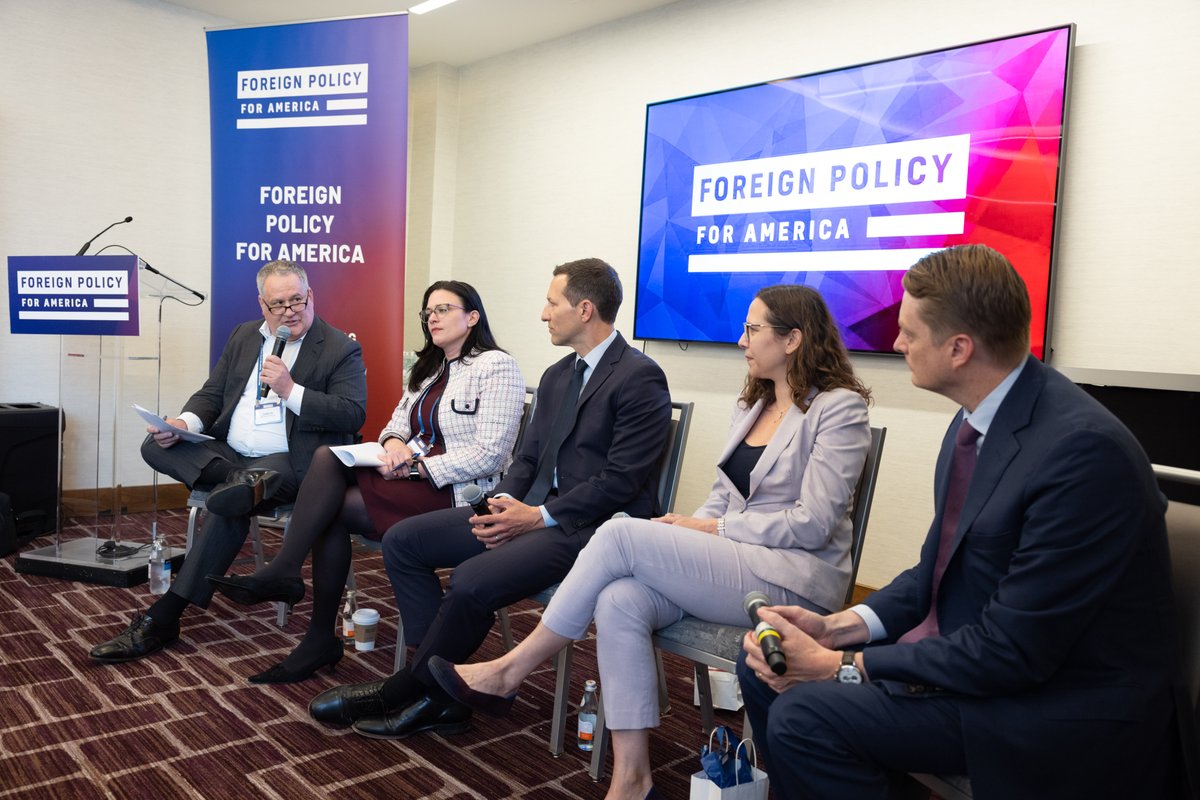
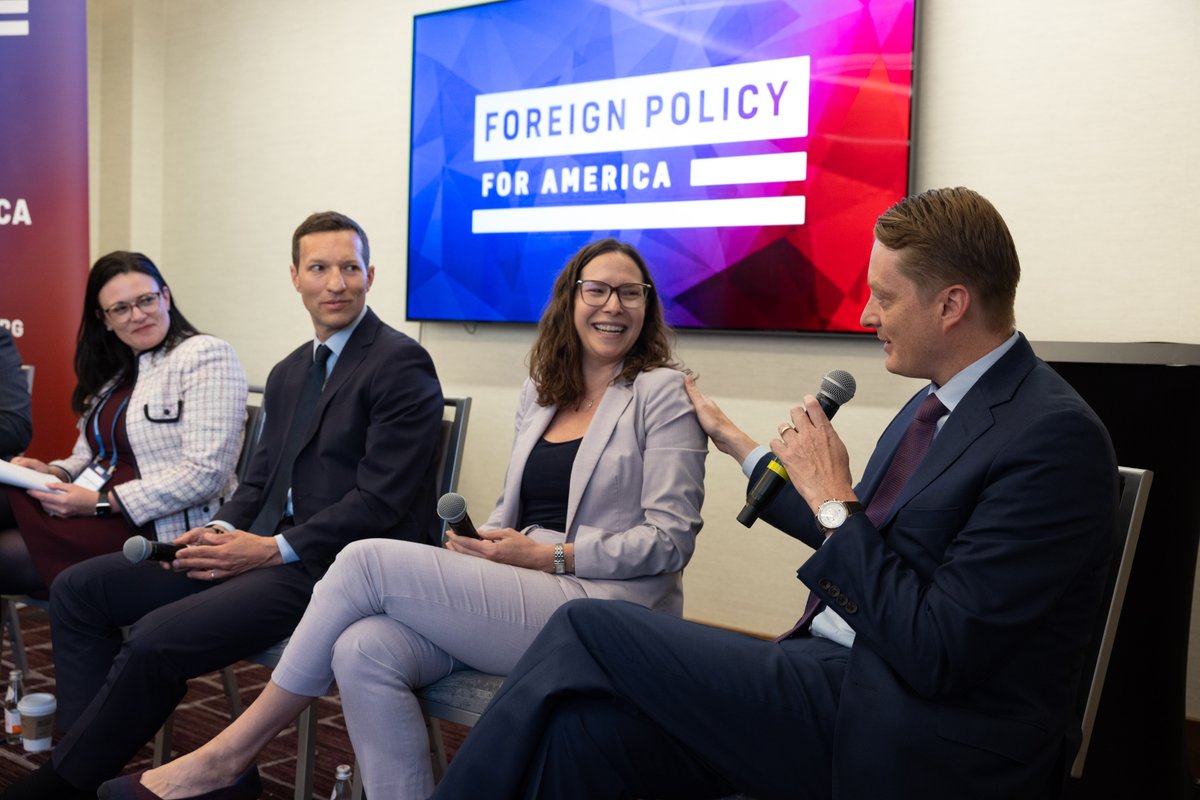
A play in two acts. The first is dread when @dimi is bearing down on you with follow-up questions in front of live audience. The second is relief in having @rosenbergerlm sitting next to you with a superb answer. Thank you @FP4America for including all of us in great discussion.
After 6+ rewarding years at @HouseForeign, I’m thrilled to return to @StateDept as a Senior Policy Advisor at @USUN in Washington. I look forward to working on Indo-Pacific issues for the incomparable @LindaT_G (when confirmed) and @jeffreyprescott!
If you are in line before the polls close, stay in line. If you are having trouble casting your ballot, call our voter protection hotline: 1 (833) 336-8683
Please help us recognize Black American National Security & Foreign Policy Next Generation Leader Taylor - Taylor Redick is a policy analyst at the U.S. House Committee on Foreign Affairs where she works on matters related to sub-Saharan Africa and human rights.
Young South-East Asian Leaders Initiative, called out in the @CNASdc report as "an important supplement to official high-level diplomacy," was cut from $7.8M last year to $2.7M in FY21. Noice! https://t.co/STXoc6a9VO
I’m running to replace Mitch McConnell in the U.S. Senate. Everything that’s wrong with Washington had to start somewhere—it started with him. With your help, we can defeat Mitch and defend democracy. Join us: https://t.co/c4b0WAp4ji
.@Twitter @Policy must answer why it appears that Chinese dissident voices have been silenced just days before the 30th Anniversary of the Tiananmen Square massacre. @jack
.@AbeDenmark's important new piece warns against "developing a broad strategic concept for geopolitical competition with China without first developing a deep and nuanced understanding of China itself." https://t.co/PRdRquVTYB
“The rebuilding activities at Sohae demonstrate how quickly North Korea can easily render reversible any steps taken towards scrapping its WMD program with little hesitation. This poses challenges for the U.S. goal of final, irreversible and verifiable denuclearization.”