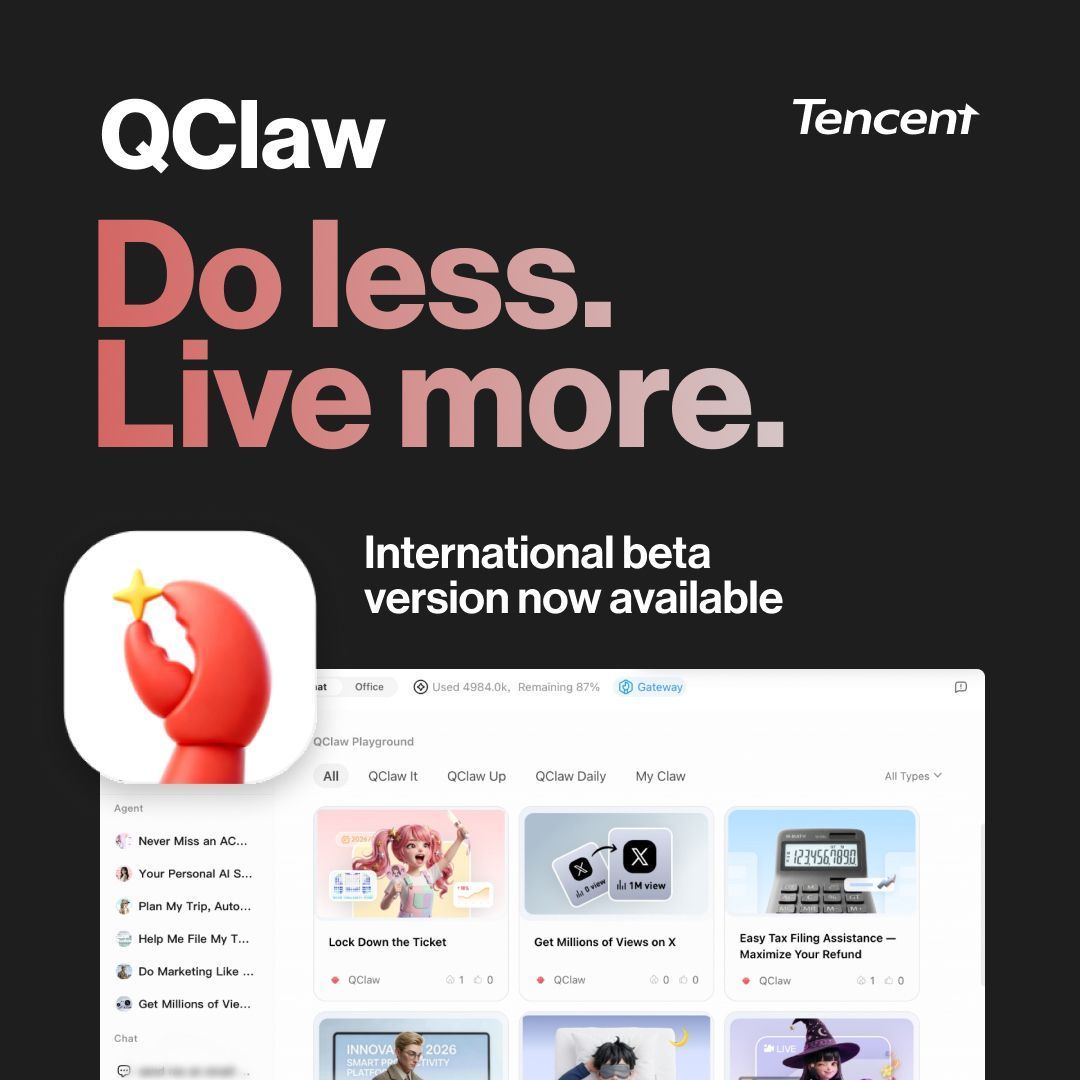
Tencent's QClaw is now open for international beta — run AI agents remotely from WhatsApp, Telegram, WeChat and more, with no new tools needed for set up.
https://t.co/BXNrAQO8kL @QClaweverytime#TencentAI#AIAgent
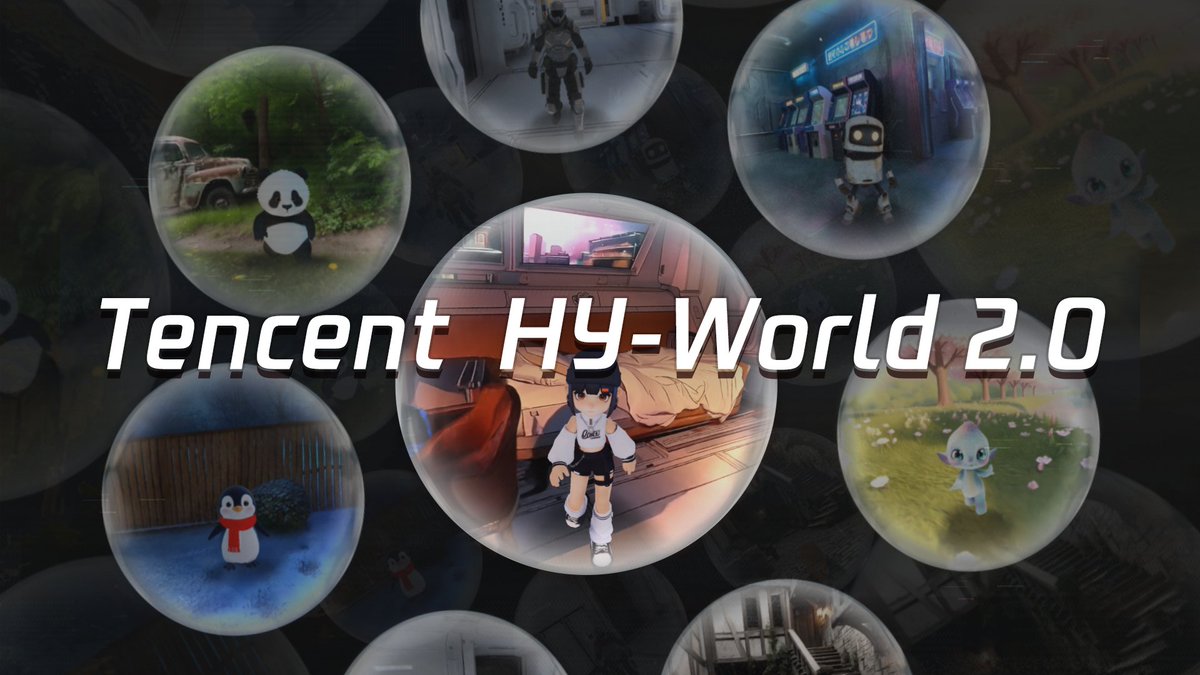
Tencent just released a SOTA 3D world model on Hugging Face
HY-World 2.0 generates real, navigable 3D worlds (not videos) from text or images, and reconstructs scenes from photos in one forward pass.
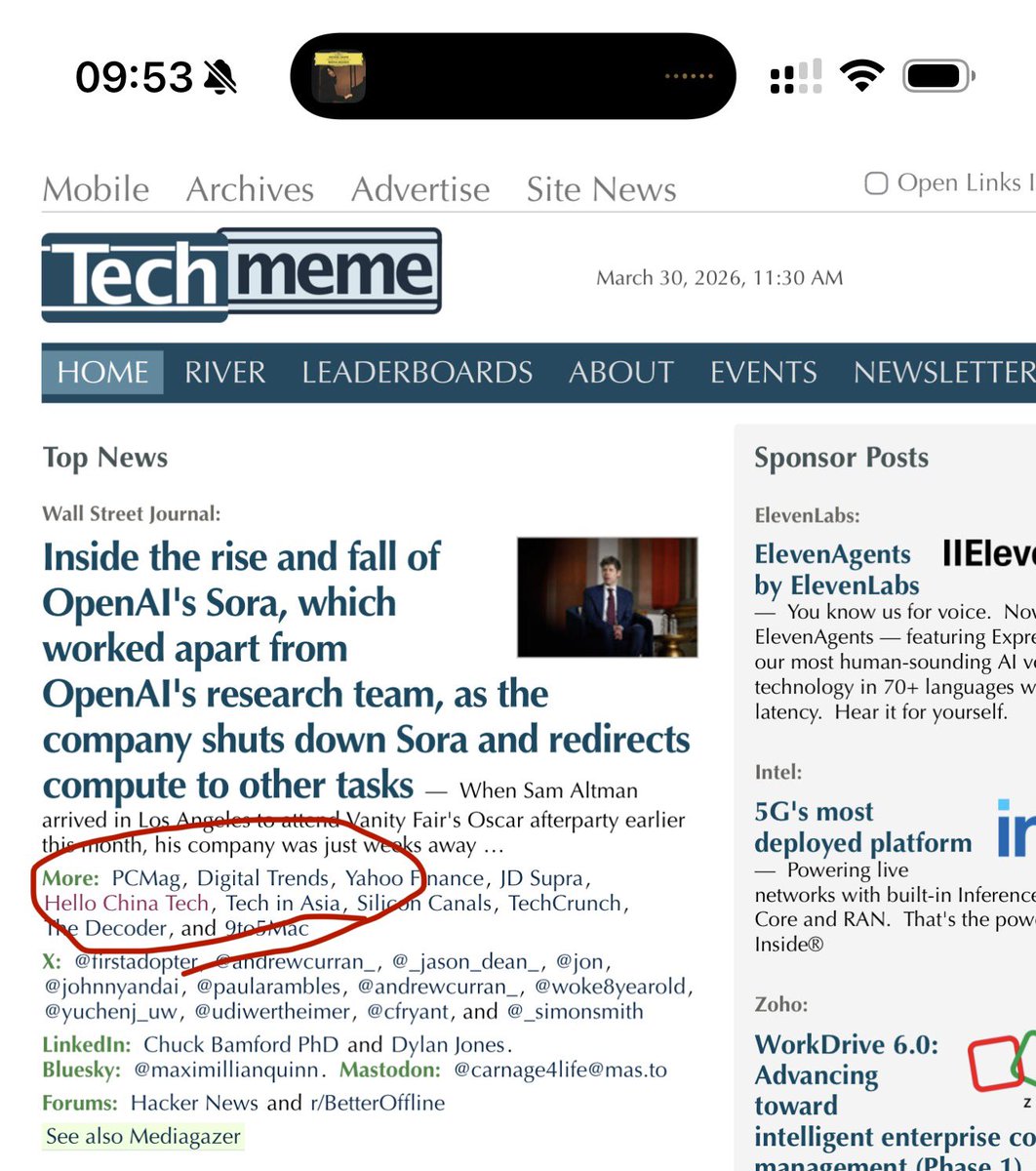
A reader flagged this for me. My Sora and Kling analysis made it to Techmeme yesterday. Always good to see Hello China Tech listed alongside PCMag, TechCrunch, and Tech in Asia on a major story.
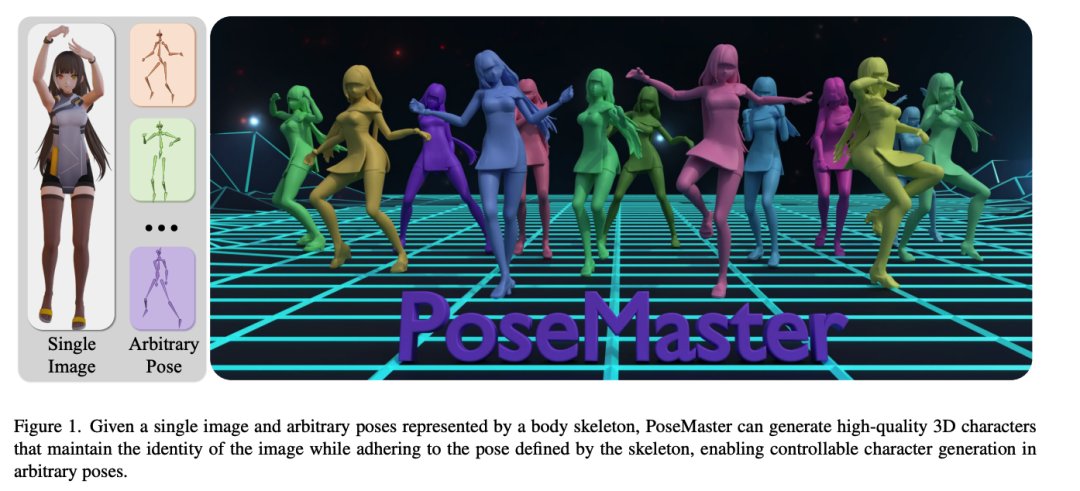
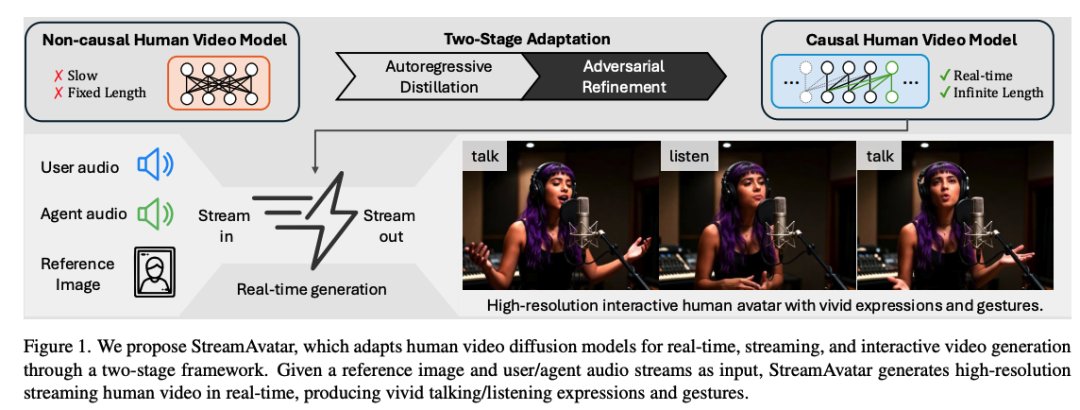
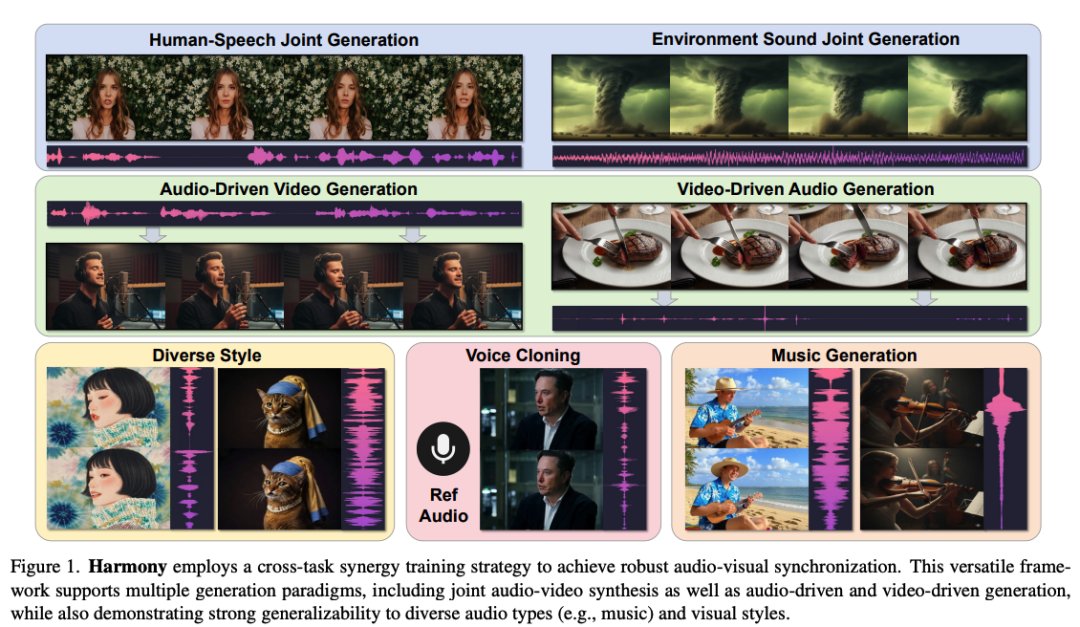
More than 25 papers from Tencent HY team have been accepted to @CVPR 2026.
This year, our work spans:
🖼️ Image Editing: Chain-of-Thought (CoT) reasoning and tool-calling for fine-grained, controllable editing.
🎥 Video Generation: Post-training RL, unified audio-video generation, streaming video generation, and inference acceleration.
🎮 3D Vision: Controllable 3D generation, texture synthesis, 3D reinforcement learning, interactive world models, and unified multimodal 3D models.
From reasoning-guided editing to scalable video and 3D-native foundations, we focus on building general generative models across modalities.
We’ll be sharing technical deep dives during the conference.
See you at #CVPR2026 in Denver this June!
We're so collectively desensitized to the US empire that we're not even registering the absurdity: the US - a country where guns are sold at Walmart - has just kidnapped the president of a sovereign nation (and head of the army) to charge him with "possession of machineguns"
ByteDance has just released a fully featured phone assistant and it's very impressive 👇🏻
ByteDance released a technical preview of its new Doubao Phone Assistant, built around what they call a GUI Agent. Once I understood how it worked, my first thought was that a system-level approach might have been cleaner. Then it dawned on me that avoiding system-level hooks is actually an advantage. Given it relies entirely on interpreting the interface, it can operate inside any app, including ones the phone has never seen before.
The assistant can understand on-screen content with multimodal recognition and interact across apps. It supports voice activation, a dedicated AI side button, and activation through earbuds. It also includes on-device memory. In real-time video calls, the AI can interpret what the camera sees, such as a picture book, and provide bilingual explanations.
🧠 Personalized Memory
Doubao has local memory that uses past conversations and screen content to help when needed. It can recall where you parked from a photo, retrieve a pickup code from an SMS, or remember a train seat from your ticket. It also learns preferences, such as liking Van Gogh. Memory stays on the device and can be turned on or off anytime.
🛠️ Cross-App Phone Control
This is the key feature. The AI can operate the phone through simulated taps, typing, and swipes. For a command like “compare prices across platforms”, it will open Taobao, JD, Pinduoduo and others, compare the same item, and leave you on the lowest checkout page.
It can automate tasks like opening a Tesla front trunk, booking restaurants, checking podcast updates, or handling leave requests and travel approvals in Feishu or DingTalk, then coordinating with booking apps.
🎨 Multimodal Creation and Editing
AIGC tools are built into the system. In the gallery you can say “remove the bystander” and it will edit the photo using cloud models. ByteDance already leads in creator tools like CapCut, so extending this interface-based approach into video seems likely.
⚙️ Pro Mode for Complex Tasks
Pro Mode handles longer, multi-step instructions by combining interface actions with API tools. For example, if you say “I am going to Paris next month. Mark the restaurants I saved on the map and book me a museum ticket”, it will use your preferences, choose a suitable museum, map your restaurants, book the ticket, and generate a summary.
Overall, this feels less like a demo and more like the early stage of a universal, hardware agnostic phone agent that can genuinely use the device the way a person would. Bravo!
When pollution in China is bad, they are harming the environment.
But when China improves their air quality, they are speeding up global warming?
What the hell am I reading?! 🤯 🤯🤯
This is a comprehensive solution, which stands in contrast to Apple’s model of blocking all competing stores and leaving payments as the only vector for competition. The public filings are live.
Google has made an awesome proposal, subject to court approval, to open up Android in the US Epic v Google case and settle our disputes. It genuinely doubles down on Android's original vision as an open platform to streamline competing store installs globally, reduce service fees for developers on Google Play, and enable third-party in-app and web payments.
This is a comprehensive solution, which stands in contrast to Apple’s model of blocking all competing stores and leaving payments as the only vector for competition. The public filings are live.
🚨 THE AMAZON LAYOFF STORY IS FAKE - HERE’S THE REAL REASON 30,000 JOBS GOT CUT
Amazon didn’t fire 30,000 people because “AI took their jobs.” That’s the cover story.
The truth: they’re firing humans to buy GPUs.
AWS has a 25% GPU backlog - billions in AI revenue trapped because they can’t afford enough Nvidia chips.
Amazon’s retail biz barely breaks even. AWS is the profit engine. And when Wall Street called 18% growth “disappointing,” Amazon made its move to slash salaries and feed the chip war.
This is corporate cannibalism.
They’re literally trading people for processors.
The moment is right to push forward into a new frontier for AI — one that is as fundamental as language, says @drfeifei.
That frontier is visual spatial intelligence.
With Justin Johnson (@jcjohnss), her cofounder at @theworldlabs, and a16z's @martin_casado, Fei-Fei explains what unlocking this technology could mean, and why we’re in the midst of a “Cambrian explosion”:
This is rare enough to be highlighted: an actually good Financial Times article on the state of the AI "race" between the U.S. and China.
Three interesting points that stood out to me:
1) The fact that "for a general-purpose technology such as AI, long-term advantage often comes down to how widely and deeply technologies spread across society."
This is because, at the risk of pointing the obvious, benefits from a new technology come from using it widely, not just creating it. You wouldn't get any benefit from discovering the steam engine in and of itself: what drove productivity gains (and ultimately Britain's advantage in the industrial revolution) was spreading and using this technology in its society.
And China has advantages here, as the article notes, since they're unarguably better at orchestrating society-wide transformation, as that's all they've been doing for the past 3 decades.
2) The point that US semiconductors export controls actually helped China in AI since they "pushed Chinese companies towards a different playbook: pooling compute, optimising efficiency and releasing open-weight models."
This is extremely ironic as the US effectively pushed China to develop models that are a) more efficient (since operating under constrains the U.S. doesn't have) and b) open-source (since China has constrained compute).
Which turns out to be the better strategy for global diffusion: if you're a company in say Germany or Brazil, you can download Qwen or Deepseek, run it locally, fine-tune it for your market, and never worry about API rate limits (and worry less about costs since the models are more efficient and you don't have an AI unicorn taking a cut every time you run a query).
3) The oft-ignored point of societal enthusiasm. As the article notes: "The public in China [is] the most optimistic in the world about AI — far more than in the US or the UK... Optimism can be a powerful fuel"
I often lament about this as a European: we often have a doomist take on new technologies (AI very much included), which is a huge repellent for entrepreneurship and technological diffusion. And that ultimately hurts Europe a lot in many ways, precisely because of the first point above: advantages from new technologies come down to how widely and deeply it spreads in society.
If China is the most enthusiastic country in the world about AI, this in and of itself will help drive the widespread adoption that, per point 1, is what actually matters for long-term competitive advantage.
We just released The State of Chinese AI Applications 2025 Report, created together with one of the leading data providers in China, Unique Research (非凡产研).
You can read the full report free of charge — it’s not behind any paywall — and I’d love for you to help us spread it! The infographic below highlights some of the topline findings.
A few things really stood out to me:
1/ China’s consumer AI monetization is still strikingly low. Of the top 100 private AI companies globally by ARR, only 4 are Chinese, contributing just 1% of total revenue. I knew willingness to pay was lower domestically, but the gap was still surprising.
2/ Yet Chinese AI apps absolutely dominate on reach. Six of the ten most-used AI apps in the world are Chinese, even if their users don’t always convert to revenue.
3/ Education is the bright spot. In-app monetization is strongest in homework help, tutoring, and language learning—sectors where consumers already expect to pay.
4/ Content is China’s core strength. Nearly half of the country’s top AI products focus on video or text generation, compared to a more diverse mix globally.
You can see all seven headline insights in the visual below.
👉 Link to full version in comments!
(Authored by @TechBuzzChina, sole data partner Unique Research)
If you weren't convinced yet that the US technology sanctions on China hurt the US more than they did China, please read this incredible report by the Information Technology & Innovation Foundation (ITIF), the world's leading think tank for science and technology policy.
They studied in depth the attempt by the US to kill Huawei (full report here: https://t.co/oHAlQR8tmN) and their overall conclusion is that "sanctioning Huawei and attempting to cripple the company has proven to be hubristic and self-defeating" as "the only outcome was to weaken U.S. technology companies and strengthen Huawei and China’s innovation."
Among other things they found that:
- The sanctions had zero impact on Huawei's global market share: "it remains the world’s largest telecom equipment manufacturer, with a 34 percent global market share in 2024, up 2 percentage points from 2018."
- The sanctions hurt US companies first and foremost as "restrictions on doing business with Huawei caused U.S. companies to lose at least $33 billion in sales between 2021 and 2024." It also led Huawei to "successfully launch its in-house OS, HarmonyOS, which is now being rolled out on mobile devices, tablets, and laptops - potentially threatening U.S. firms’ market share in these sectors."
Last sentence of the report's conclusion: "the United States needs a realistic, not hubristic, policy approach [to China]."
The market dropped. Qwen and DeepSeek are still making profit.
The Strawberry Feel the AGI You can just make things Pivot to porn Chromium wrapper guy has lost 70%.
🚨 Text-to-Image Leaderboard Shakeup!
Hunyuan Image 3.0 by @TencentHunyuan just stormed into the #1 spot in the Arena 🏆 - ranked as both the top overall and top open-source Text-to-Image model.
🖼️ This image generation model has leapfrogged over Seedream 4, and the famous Gemini 2.5 Flash Image Preview aka "Nano Banana"
Huge achievement, and big congrats to @TencentHunyuan 👏
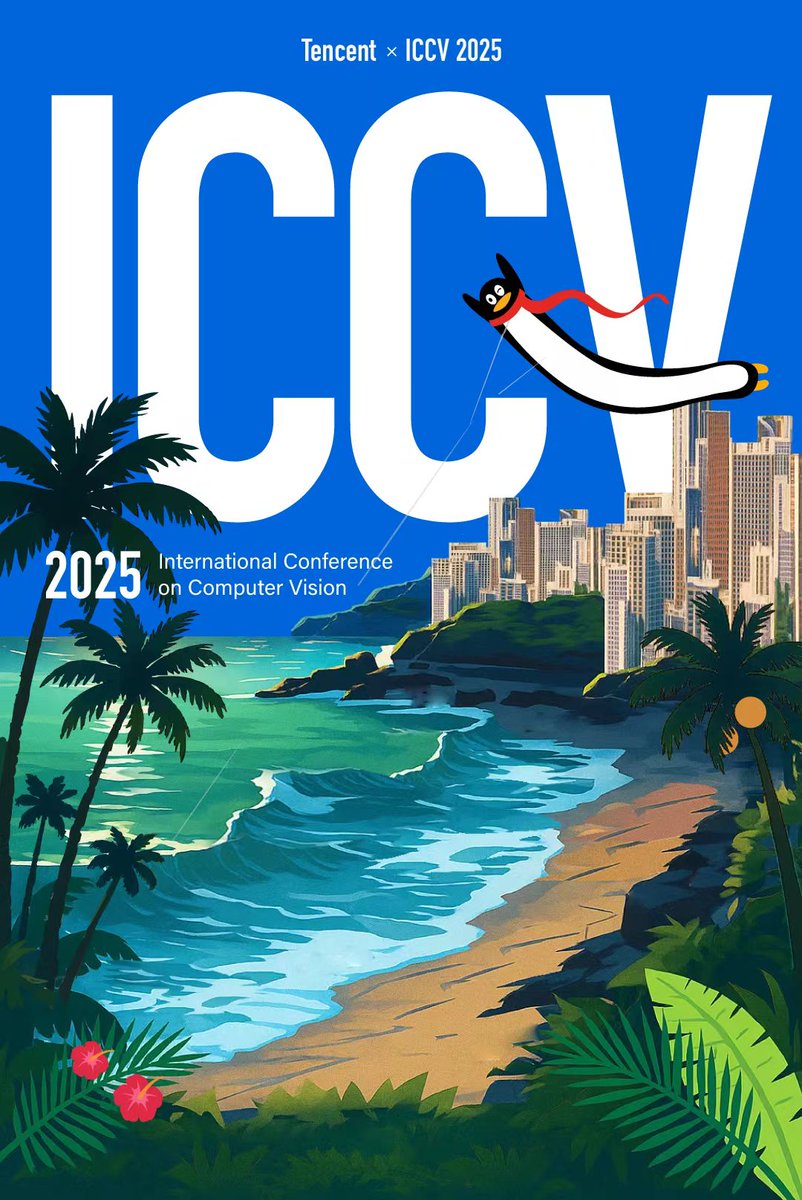
🚀🚀Tencent × ICCV 2025 @ Hawaii will showcase cutting-edge vision & multimodal AI research at ICCV 2025 (Oct 19–23, Honolulu).
📍 Booth 113 – Meet experts from Hunyuan, ARC Lab, AI Lab, WeChat Vision, and Game AI.
🌴 青云 × Hawaii Tech Party 🗓 Oct 22 | Royal Hawaiian Hotel. A by-invitation evening for new grads & researchers to connect with Tencent’s AI leaders — tech sharing, networking & career opportunities.
👉 Apply for your invitation: https://t.co/ERumgflTAO







![RnaudBertrand's tweet photo. This is rare enough to be highlighted: an actually good Financial Times article on the state of the AI "race" between the U.S. and China.
Three interesting points that stood out to me:
1) The fact that "for a general-purpose technology such as AI, long-term advantage often comes down to how widely and deeply technologies spread across society."
This is because, at the risk of pointing the obvious, benefits from a new technology come from using it widely, not just creating it. You wouldn't get any benefit from discovering the steam engine in and of itself: what drove productivity gains (and ultimately Britain's advantage in the industrial revolution) was spreading and using this technology in its society.
And China has advantages here, as the article notes, since they're unarguably better at orchestrating society-wide transformation, as that's all they've been doing for the past 3 decades.
2) The point that US semiconductors export controls actually helped China in AI since they "pushed Chinese companies towards a different playbook: pooling compute, optimising efficiency and releasing open-weight models."
This is extremely ironic as the US effectively pushed China to develop models that are a) more efficient (since operating under constrains the U.S. doesn't have) and b) open-source (since China has constrained compute).
Which turns out to be the better strategy for global diffusion: if you're a company in say Germany or Brazil, you can download Qwen or Deepseek, run it locally, fine-tune it for your market, and never worry about API rate limits (and worry less about costs since the models are more efficient and you don't have an AI unicorn taking a cut every time you run a query).
3) The oft-ignored point of societal enthusiasm. As the article notes: "The public in China [is] the most optimistic in the world about AI — far more than in the US or the UK... Optimism can be a powerful fuel"
I often lament about this as a European: we often have a doomist take on new technologies (AI very much included), which is a huge repellent for entrepreneurship and technological diffusion. And that ultimately hurts Europe a lot in many ways, precisely because of the first point above: advantages from new technologies come down to how widely and deeply it spreads in society.
If China is the most enthusiastic country in the world about AI, this in and of itself will help drive the widespread adoption that, per point 1, is what actually matters for long-term competitive advantage.](https://pbs.twimg.com/media/G44c8_1b0AEBBHz.png)

![RnaudBertrand's tweet photo. If you weren't convinced yet that the US technology sanctions on China hurt the US more than they did China, please read this incredible report by the Information Technology & Innovation Foundation (ITIF), the world's leading think tank for science and technology policy.
They studied in depth the attempt by the US to kill Huawei (full report here: https://t.co/oHAlQR8tmN) and their overall conclusion is that "sanctioning Huawei and attempting to cripple the company has proven to be hubristic and self-defeating" as "the only outcome was to weaken U.S. technology companies and strengthen Huawei and China’s innovation."
Among other things they found that:
- The sanctions had zero impact on Huawei's global market share: "it remains the world’s largest telecom equipment manufacturer, with a 34 percent global market share in 2024, up 2 percentage points from 2018."
- The sanctions hurt US companies first and foremost as "restrictions on doing business with Huawei caused U.S. companies to lose at least $33 billion in sales between 2021 and 2024." It also led Huawei to "successfully launch its in-house OS, HarmonyOS, which is now being rolled out on mobile devices, tablets, and laptops - potentially threatening U.S. firms’ market share in these sectors."
Last sentence of the report's conclusion: "the United States needs a realistic, not hubristic, policy approach [to China]."](https://pbs.twimg.com/media/G4WVyttasAMzJAy.jpg)


