LIVE: An uncrewed @SpaceX Dragon spacecraft is preparing to head back to Earth with cargo and scientific experiments from the @Space_Station. Undocking is scheduled for 12:05pm ET (1605 UTC). https://t.co/RAc6LEvOcX
What's up for June?
The solstice brings summer to the Northern Hemisphere. Jupiter and Venus will appear close together in the night sky, and Mercury will join them soon after. The Moon will also pass in front of Venus on June 17. Learn more: https://t.co/Ujal0GZVJU
Our @NASARoman space telescope is officially slated to launch on Aug. 30!
Get the details and follow Roman's journey on our new Roman Space Telescope blog: https://t.co/72iud38kMm
60 years ago today, Surveyor I made a three-point soft landing on the Moon—the first soft landing for America's space program—AND accomplished on its first try. Over the next 6 weeks it returned more than 11,000 images of the lunar surface including this one featuring its shadow.
The mission was one of the great successes of NASA's early lunar program.
On Venus, a day (one full rotation on its axis) lasts 243 Earth days. The planet rotates extremely slowly.
Meanwhile, a year (one orbit around the Sun) lasts only 225 Earth days.
This means a day on Venus is actually longer than its year, which is unique in the solar system!
Starship V3 lifting off under the power of all 33 Raptor 3 engines from Starbase, Texas, on test Flight 12. It broke its own record as the most powerful rocket to ever lift off.
NASA’s MAVEN (Mars Atmosphere and Volatile Evolution) spacecraft launched in 2013 from Cape Canaveral Space Force Station in Florida to observe the Martian atmosphere and its evolution.
Now that mission has come to an end.
Join NASA's teleconference at 2 p.m. EDT on Wednesday, June 3, to hear MAVEN’s achievements. Details: https://t.co/CTvZbjdqB6
NEWS: @SpaceX received FAA clearance for Starfall, a circular uncrewed reentry capsule to return up to 1,000 kg payloads from orbit via parachute splashdown
It enables safe recovery of microgravity-manufactured materials, completing the logistics loop for orbital industry
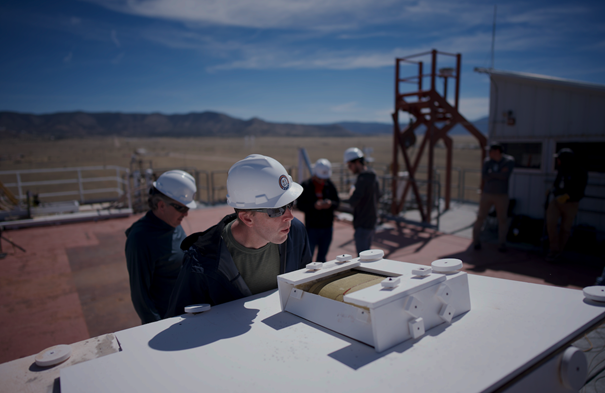
The heat is on for NASA’s Dragonfly. 🔥 The team completed thermal-structural testing on heat shield materials at Sandia National Labs, reaching temperatures of 4,500°F, to ensure it can withstand Titan’s atmospheric entry ahead of a planned 2028 launch.
https://t.co/pusZSa715a