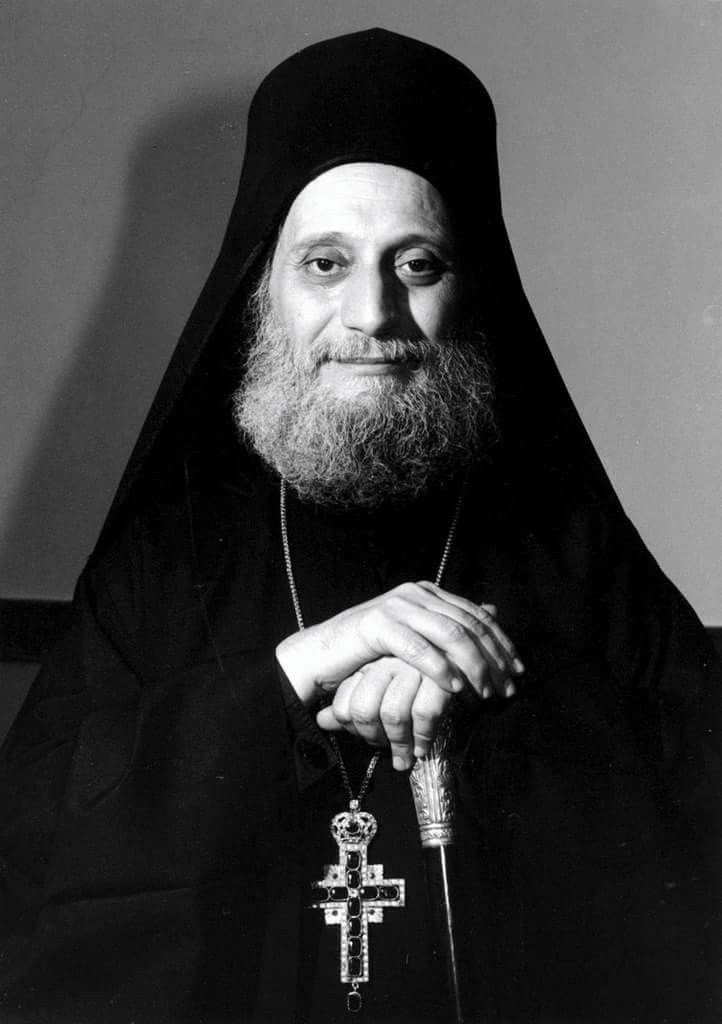
“Would that I could always be aware that God exists, that God is faithful, as the Scriptures tell us (1Cor 1.9), and that He does not change His mind or revoke His promises or retract His love or withdraw His gifts from us! Nor does He let Himself get carried away by our inadequacies or our sins. God does not go back on His commitment to us: He forgives us instantly, and after the admission of our guilt and ensuing change of heart, He immediately gives us greater graces than what we had had before. God is so great, so close, so faithful, so capable, and so merciful that none of us could ever think of a more suitable person to have a chat with!”
-Elder Aimilianos of Simonopetra, On Prayer: Problems & Temptations, pp. 23-24
“When a bad thought enters our mind, we get frightened and sometimes believe we have already become bad people. But not every thought that passes through our head is our choice.
One thing is the temptation; another is to welcome it, feed it, and turn it into action. This is where watchfulness is revealed!
We do not need to obsessively examine every flicker of the mind until we lose our peace. What we need is not to make a nest for evil.
If envy appears, let us not build arguments for it; if the desire for revenge appears, let us not prepare its plan. Let us return to prayer and to good work, and when thoughts overwhelm us, let us ask for guidance and the right help.
God does not ask us to control every involuntary appearance of a thought, but to learn what we choose to do with it. Not every guest knocking at the gate must be invited to the table.”
Father Calistrat Chifan
@SumnerChance@LogosAndLaw The second premise is easily misunderstood, though. What God speaks is contained in figures that themselves are often erroneous.
@mcraig84@garrettham_esq@AiG Agreed. Which is why the great church fathers advocated a different way of reading than plain literalism and why what appear as "mistakes" are equally inspired, to remind us.
@mcraig84@garrettham_esq@AiG The Bible is an anthology, not a single document. A potential error in one place has no relevance to the contents in another.
Ironic Protestants accuse Cathlodox of engaging in "empty ritual" and then advocate doing things they admit are devoid of meaning just because they're "commanded to."
@ChristandGuitar@BreeSolstad The crux of the whole issue is that Bible as greatest authority is no different than the reader being the authority. Thus it is hyper individualism.