I am a #cardiovascular and #regenerative biologist @uicpharmacology. Tweets and opinions are mine. Retweets are not endorsement. @chicago #STEM @uicmedicine
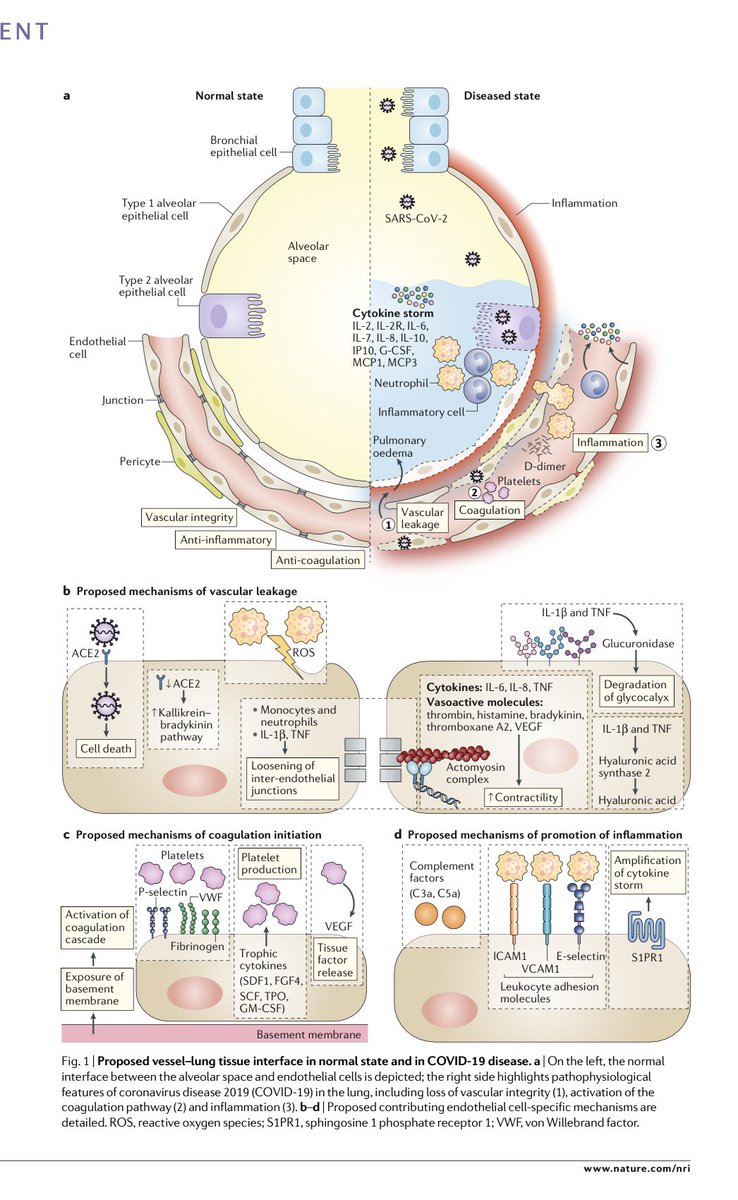
Pulmonary vascular development is a dynamic continuum where endothelial identity and niche signals shape the gas-exchange interface
https://t.co/NzthpUGP6E
Scientists have created one of the most detailed 3D reconstructions of a human cell (eukaryotic cell) ever produced.
This groundbreaking model, often termed a "Cellular Landscape Cross-Section Through a Eukaryotic Cell," combines data from X-ray tomography, nuclear magnetic resonance (NMR), and cryo-electron microscopy to map molecular structures in extreme detail.
Organoid researchers!! Save the date for the annual "Organoids are Us"-symposium. Held at the Beatrix Theater in the center of beautiful historic Utrecht. Venue is a 20 minute train ride from Schiphol Airport Amsterdam. Program will follow shortly.
Together with UC Berkeley we are announcing the laser phase plate - a breakthrough in atomic resolution imaging. This is the brightest continuous wave laser in the world, 100 million times the intensity of the surface of the sun.
Phase contrast plays an important role in microscopy, but it was thought close to impossible for electron microscopy, where it would require interfering with an electron beam. Holger Mueller and Robert Glaeser proposed exactly this using a standing wave laser. It has taken over 15 years to make this a reality. Biohub partnered with UC Berkeley and Mueller to support this work and to engineer and build the technology.
Contrast has been the critical barrier to achieving atomic resolution imaging of the cell. In cryo-electron tomography, a cellular imaging technology that uses electron microscopy, the low contrast makes it impossible to resolve anything but the largest proteins within their cellular context. The laser phase plate removes that barrier.
With advances in AI this breakthrough in contrast will start to open up a new frontier in structural biology, that will allow us to see the molecular machines of the cell, and how they assemble into far more complex and dynamic systems, and understand how they work.
Incredibly exciting announcement.
Johns Hopkins University will provide $80M per year for the next two years to support large Life Sciences projects.
(1) Transformational Science Teams awards: >$10M each, $40M/year.
(2) High-impact individual awards: $200-500K each, $40M/year.
After 25 years of brave & brilliant work by hundreds of scientists in my lab to understand then safely reverse aging for the first time, it was moving to witness the first human dose being delivered 🥹 https://t.co/veQsyUEORz
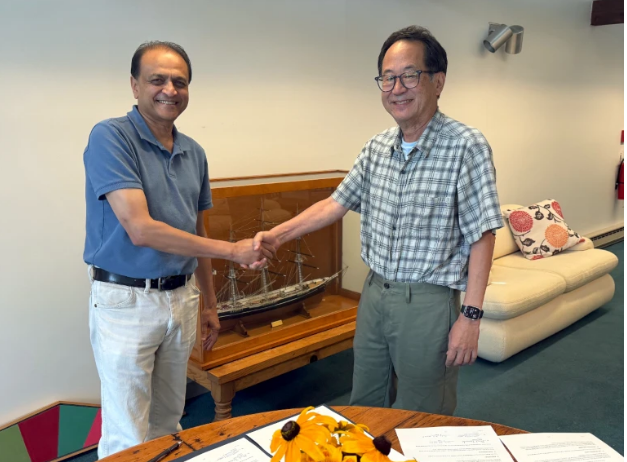
@NobelPrize-winning scientist Harold Varmus, MD, a pioneering cancer researcher and former Director of the @NIH and @theNCI, visited the Cancer Center and the lab of Director Jan Kitajewski, PhD.
#CancerResearch
Read more here: https://t.co/00nVqry5WS
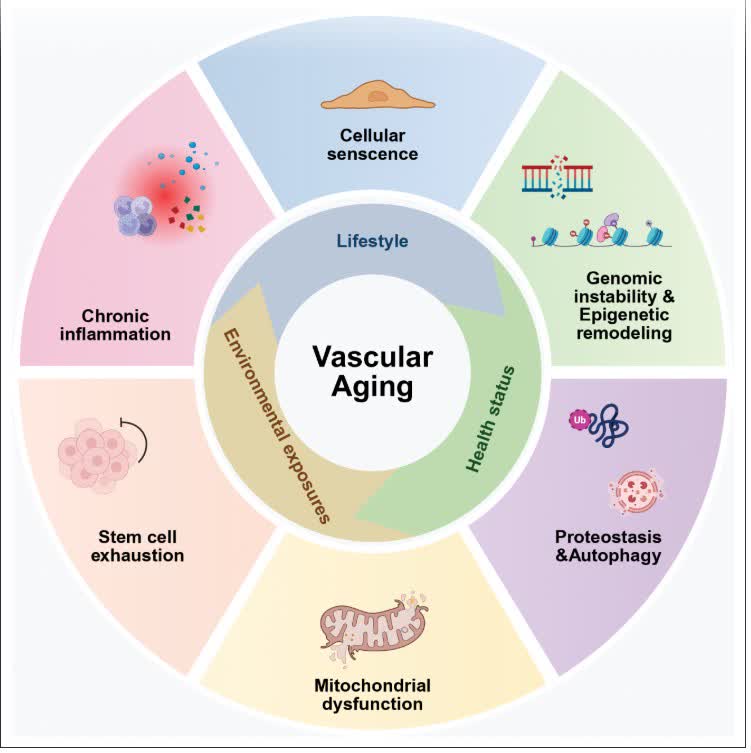
Age-related vascular changes contribute to disease. What drives vascular aging and how can these insights lead to new therapies? @AgingPitt https://t.co/6hD2E2R9gp
Stryder Meadows from Tulane at University of Illinois Chicago, hosted by Monica Lee. An outstanding presentation on his laboratory’s research- vascular biology of HHT, the two-hit hypothesis, and the role of T-cadherin; engaging talk and excellent discussion. @vascularbiology
Researchers show that a type of #AI known as a large language model often outperformed physicians at diagnosing complex and potentially life-threatening conditions, including decreased blood flow to the heart, even in the fast-moving stages of real ER care when information is limited.
In early ER cases, the model identified the correct or a very close diagnosis in about 67% of cases, compared with roughly 50% to 55% for physicians. And the technology is only getting better.
Learn more: https://t.co/UIsEV54b5Z
Cell biologist Mark Terasaki will give US$25 million of his own money to preserve the legacy of a pioneering scientific institute in Woods Hole, Massachusetts. https://t.co/yutaHoo5pc
I came back to the United States, hearing about a very sad news: Craig Venter passed away today. He is a pioneer, successfully sequenced the first Human genome, and tried to create Synthetic Cells. We lost a giant in Science. RIP.
@JCVenterInst
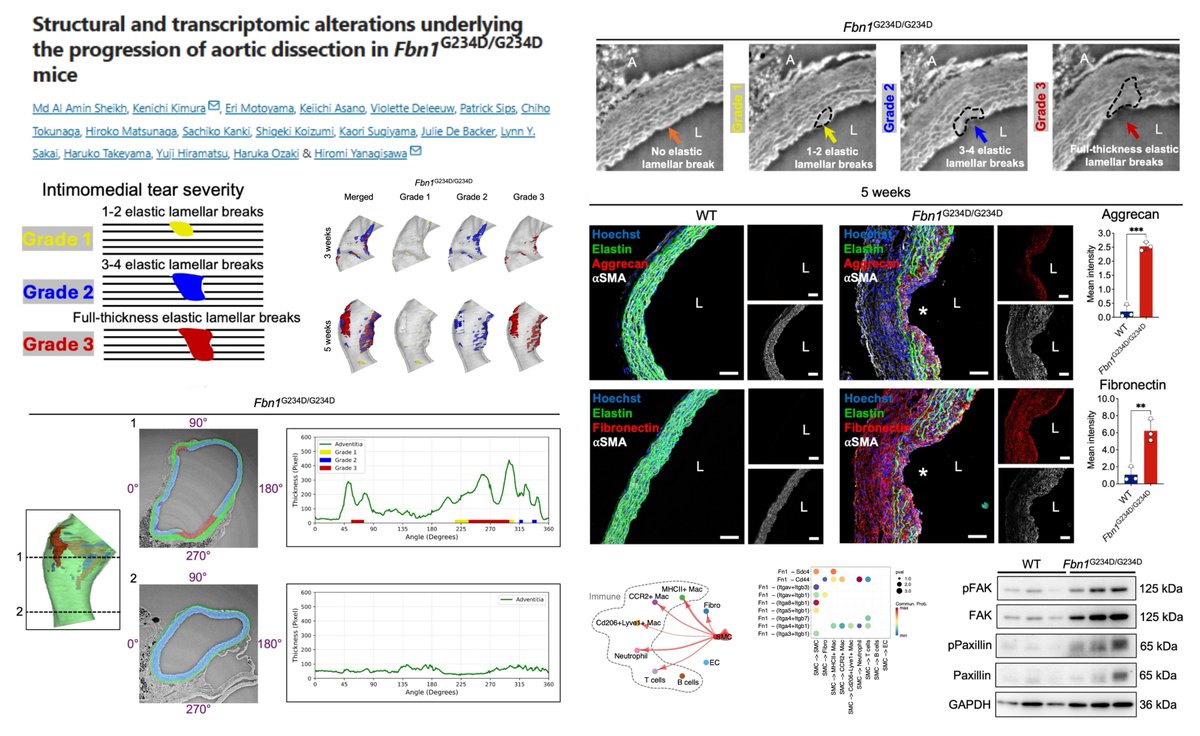
Another cool Aorta paper from Dr. Hiromi Yanagisawa lab!🤠
Fbn1 G234D🐭➡️Spontaneous ascending aortic dissection at 3~5 wk of age
Very careful immunohistology
+synchrotron X-ray tomography
+scRNAseq analysis into 🐭Intimomedial Tears😎
👉A trend of ⬆️tear volume at inner vs outer aortic curvature
👉Inner medial accumulation of Aggrecan
👉Spatially confined loss of Smooth Muscle Cell contractile proteins at tear sites
👉SMC-immune cell communications
👉Transmural 4x layered transcriptomes of human dilated (n=4) vs dissected (n=3) aortas
👉A potential Fibronectin-Integrin-FAK pathogenic cascade
#AortaEd
@KenichiKimura8@HYanagisawaLab@SciReports 2026
https://t.co/Pz6PcbhY0q
What is VIPR?
A Noncontiguous Code for RNA-Guided DNA Recognition Preceded CRISPR
Peter H. Yoon, Kenneth J. Loi, Zeyuan Zhang,…….Jennifer A. Doudna PhD
doi: https://t.co/K3VZpn9FsI
This article is a preprint and has not been certified by peer review [what does this mean?].