Beyond excited to see our work in @JAMASurgery
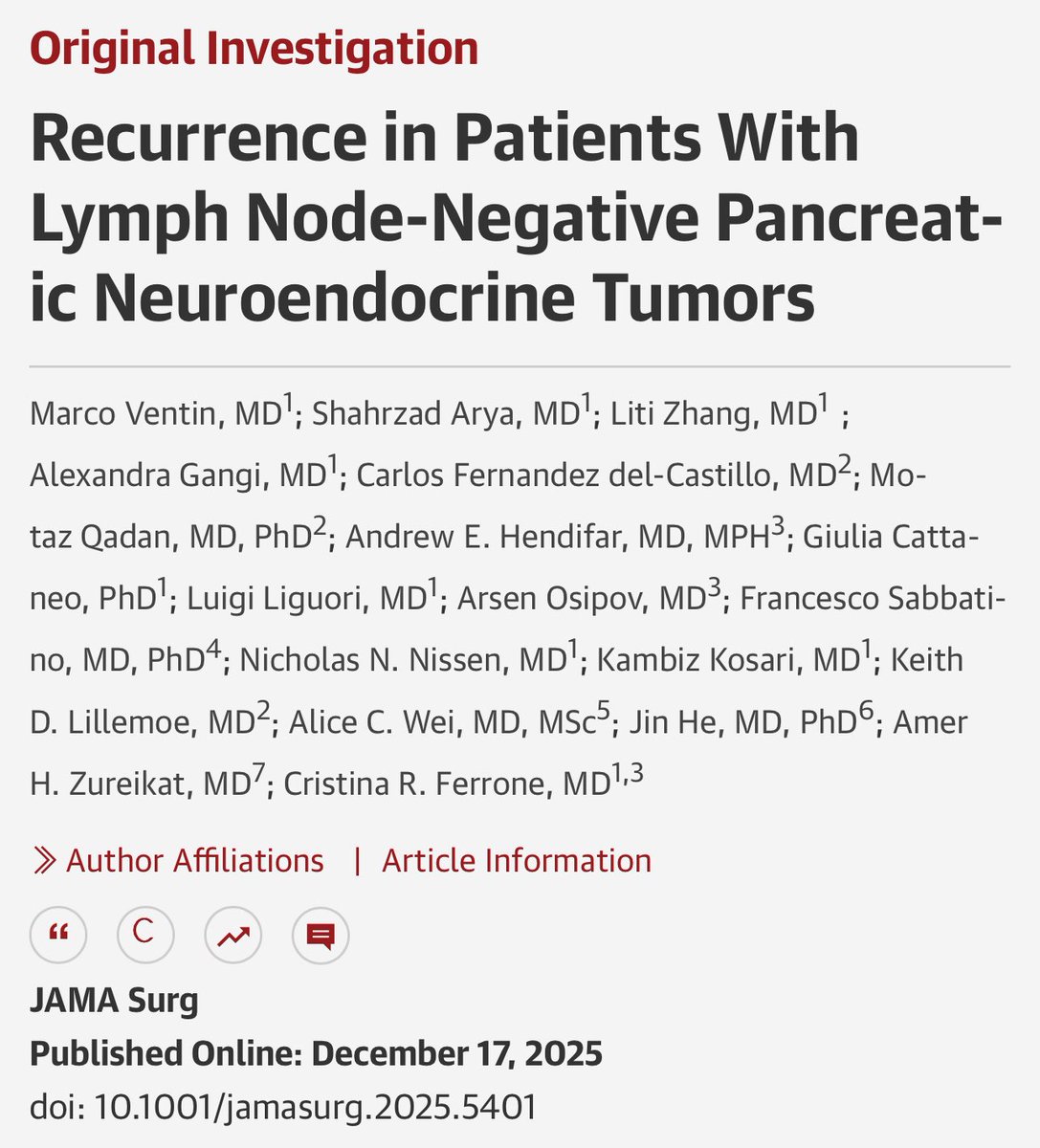
We developed a risk score for recurrence and survival in LN–negative PanNETs, identifying patients at low, moderate, and high risk to guide risk-adapted postoperative surveillance and management. #PANDA
https://t.co/pMyOABWSf7
Exciting to see our manuscript out @JournalofExper1 B7-H3 CAR T cells eradicate intrahepatic cholangiocarcinoma and induce durable response in preclinical models. @MGHSurgery@CedarsSinaiMed@curecc https://t.co/gwHX0VQPTC
Drain fluid amylase levels on postoperative days 1 and 3 accurately estimated the risk of clinically relevant postoperative pancreatic fistula after pancreatoduodenectomy. https://t.co/qHlU55qhU8
A very high yield read - Surgical management of pancreatic neuroendocrine tumours | BJS | Oxford Academic @BJSurgery @HalletJulie https://t.co/sR80BYrhS8
MARGINS SHOULD NOT AFFECT SURVIVAL IN SYSTEMIC CANCERS LIKE PDAC. Margins can be reflective of biology, similar to positive LNs. After neoadjuvant tx bad biology progress so for those getting tonsurgery margin loses its significance.
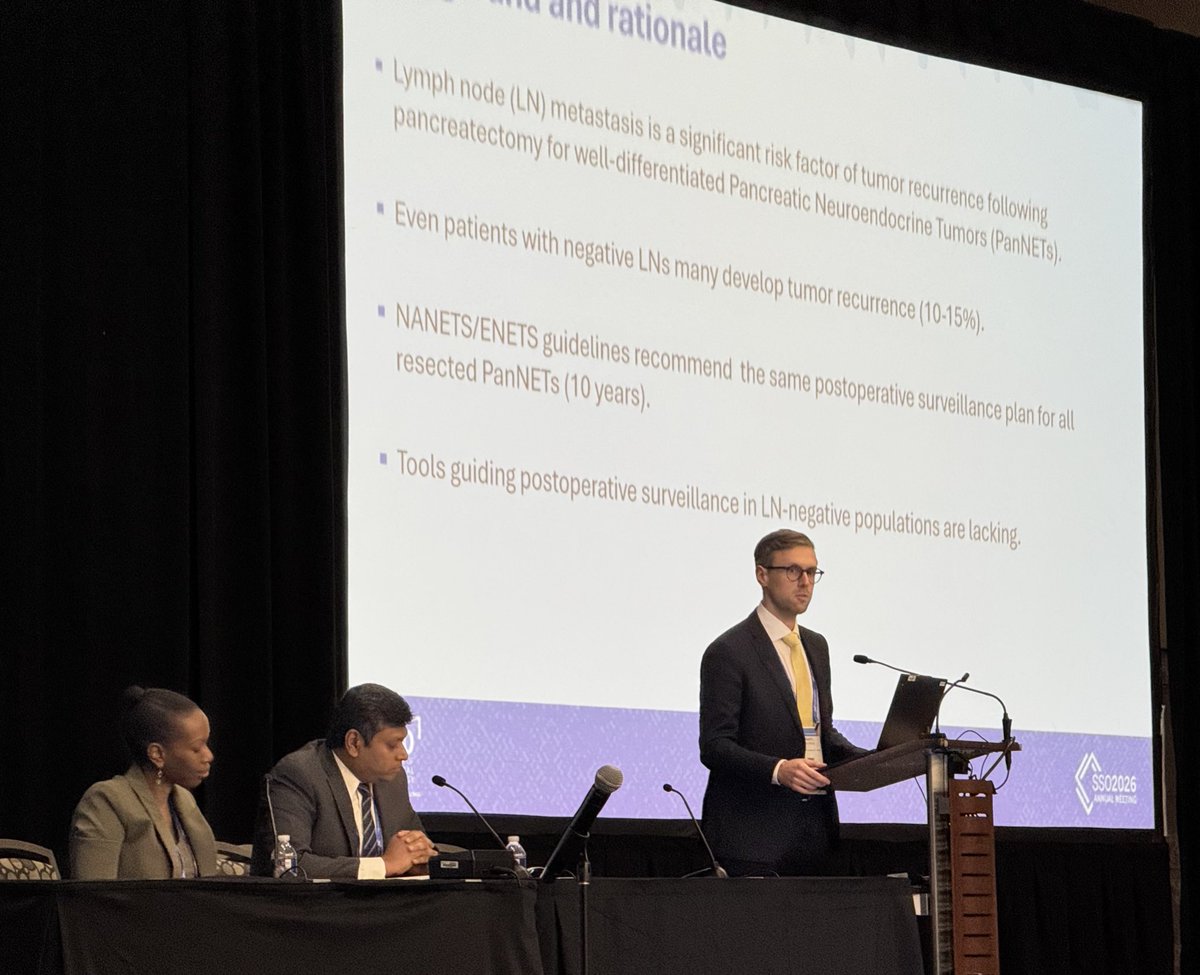
Honored to present our @JAMASurgery research today at the #SSO2026! Grateful to all the mentors and the scientific committee for this podium. Great HPB debates! @UCIrvineSurgery
Development and Prospective Validation of a Cell-free DNA–Based Model for the Early Detection of Pancreatic Cancer | Cancer Discovery | American Association for Cancer Research https://t.co/gUqYYxUkNQ
Check out @AnnSurgOncol Implications of Homologous Recombination Deficiency for Neoadjuvant Platinum-Based Chemotherapy in Pancreatic Cancer https://t.co/VbQkTIoukk
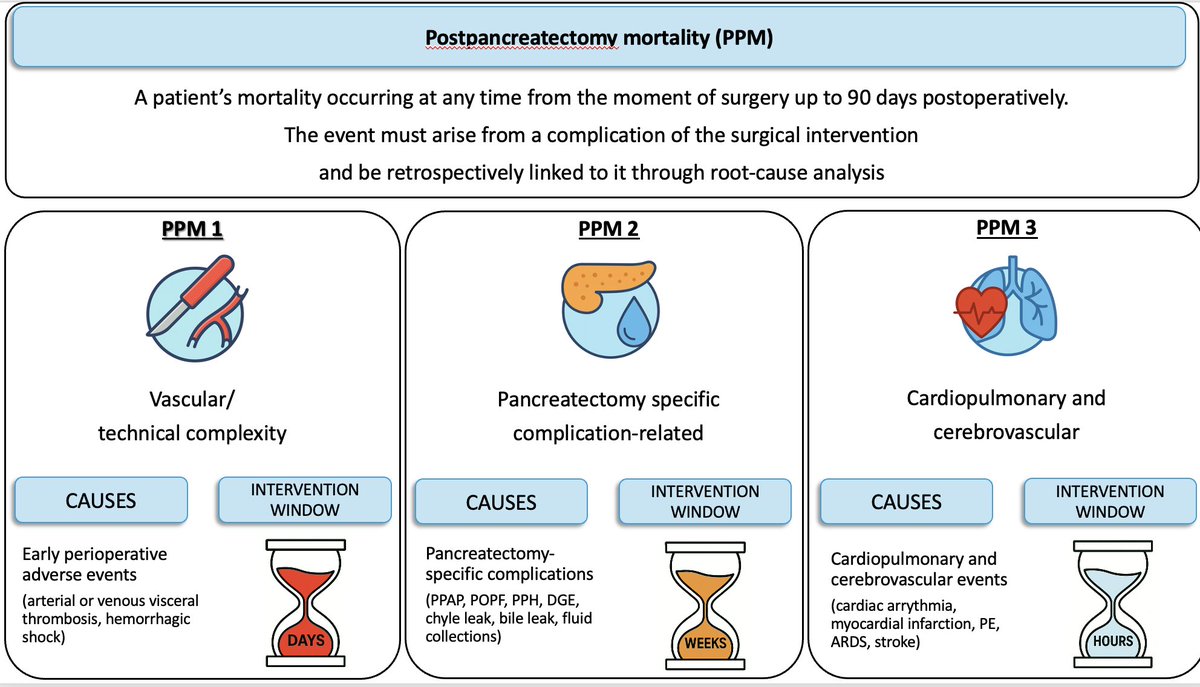
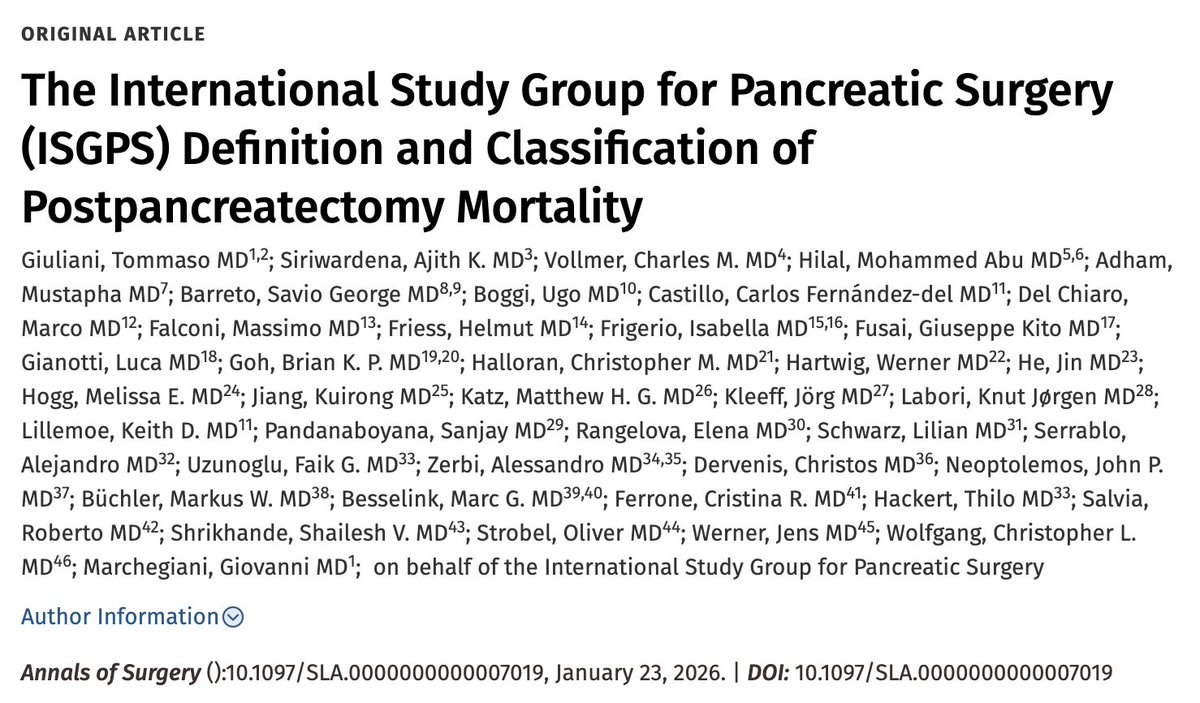
🔵 Post pancreatectomy mortality: the new seminal paper from @ISGPS_news@AnnalsofSurgery
👉 occurring within 90 days from pancreatectomy linked to it through root-cause analysis
3️⃣ categories ✂️ vascular complexity 💦 pancreas specific 🫀 C/P sudden
https://t.co/dxlWbiiaQq
Among patients with unexplained acute recurrent #pancreatitis and pancreas divisum, endoscopic retrograde cholangiopancreatography (ERCP) with minor papillotomy does not reduce the risk of another episode of acute pancreatitis or related sequelae.
https://t.co/ZloBDyYsu0
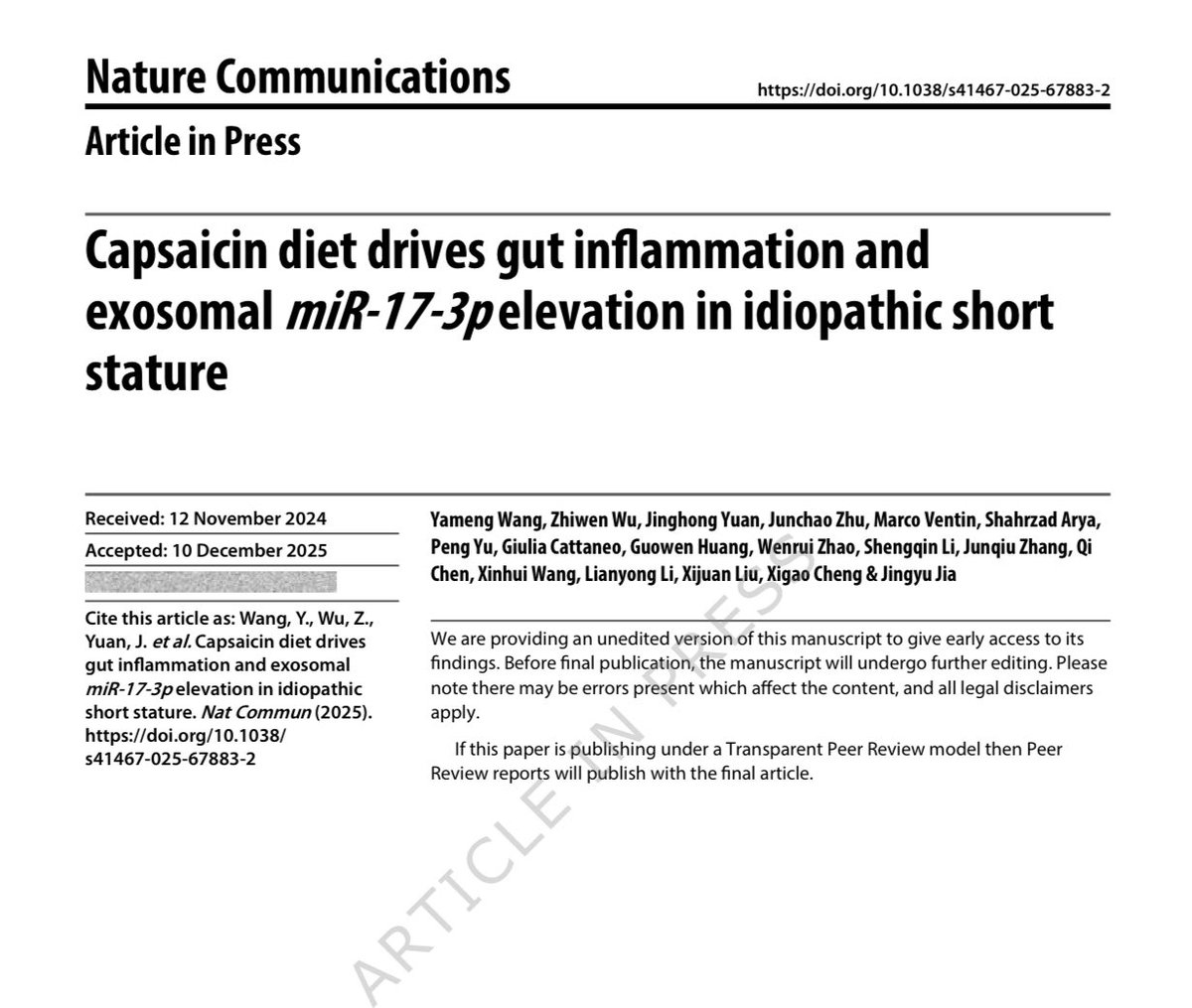
Our new study unveils the association and underlying mechanisms between high spicy diet consumption / capsaicin-induced chronic gut inflammation and idiopathic short stature. @NatureComms
Happy New Year!
https://t.co/BstpDDwfvE
Predicting Recurrence in Lymph Node-Negative Pancreatic Tumors
by Ventin M, Arya S (...) Ferrone CR et 15 al. in JAMA Surg
🪡 read our summary 👉 https://t.co/JTk6e6AuNl
📖 read the article: https://t.co/ikAi4TMtVm
Among patients with PDAC undergoing postneoadjuvant pancreatoduodenectomy, revision of pancreatic neck margin did not improve outcomes compared to incomplete resection. https://t.co/ruPzR1UiBI
Grateful to @timnewhook19 & @VautheyMD for their guidance throughout this project!
Huge thanks also to my friends & colleagues @mateolendoire@Haddad_Antony for their help!
Treating obstructive jaundice
➕minimizing cholangitis ➕ adequate sFLR 🟰 safe resection of pCCA
Spleen-Saving Techniques in Distal Pancreatectomy: Key Findings
by Arya S, Ventin M (...) Ferrone CR et 9 al. in Ann Surg
🪡 read our summary 👉 https://t.co/Xd9beSaXVD
📖 read the article: https://t.co/zZciT8tNvi
Clinically useful papers to help predict outcomes following curative intent resection of NETs are extremely helpful for clinicians counseling patients. This is one such paper you should read if you take care of patients with pancreatic NETs.
A large study (770 patients) looking at recurrence risk following resection of lymph node negative pNETs. Overall recurrences in almost 11% of resected patients, but factors such as larger tumors, higher grade, and lymphovascular invasion predicted increased recurrence risk.
3 risk categories (low, moderate, and high risk of recurrence) predicted recurrence -- 2.4%, 9%, and 27.7%. Easy to apply in clinic.
Some info provided on mutations but more data on that are needed.
Excellent work!
https://t.co/wFdM9BysHH