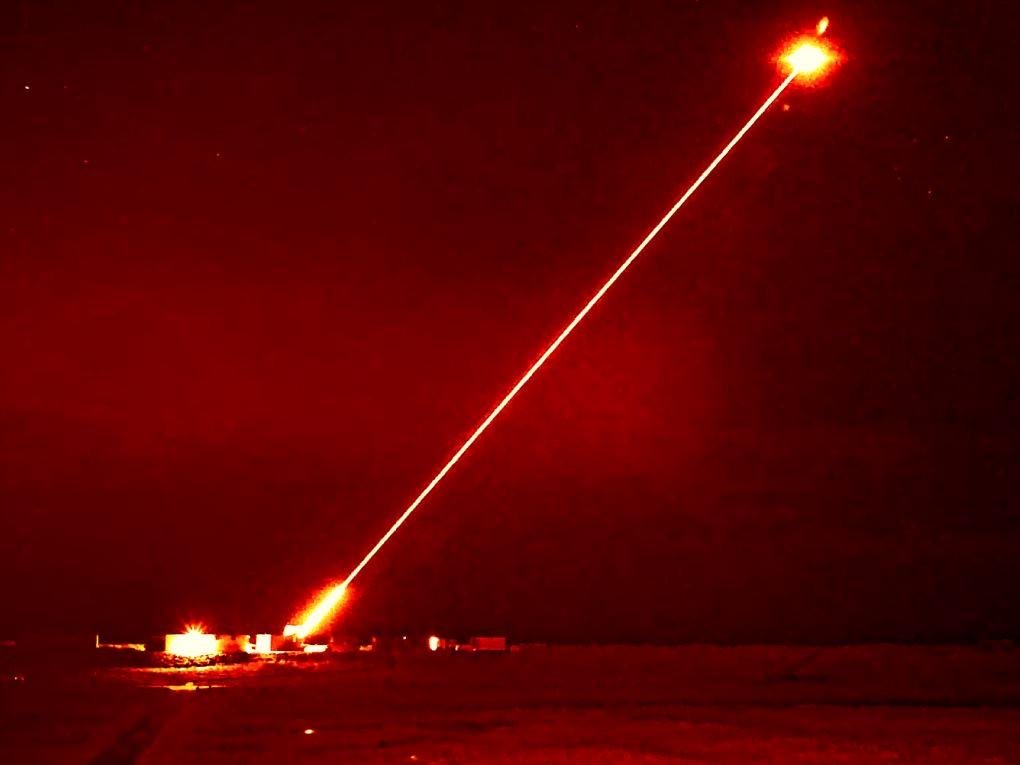
BREAKING: The U.S. military is now reportedly using high-energy laser weapons in the Strait of Hormuz to shoot down drones and incoming cruise missiles - with some systems operated using modified Xbox-style controllers.
The New York Post reports the directed-energy systems are being deployed against Iranian threats at a fraction of the cost of conventional interceptor missiles.
The controller technology itself is not new: U.S. laser systems have previously been demonstrated with gamepad-style controls designed to make them easier for soldiers to learn and operate.
Defense Secretary Pete Hegseth personally tested one of the systems during a June demonstration at White Sands Missile Range, where directed-energy weapons were used against aerial targets.
The lasers are invisible to the naked eye and disable targets by concentrating energy on a small area until critical components overheat or fail.
The confirmed deployment highlights the growing link between space and missile defense: U.S. satellites increasingly provide the warning and tracking data that helps terrestrial systems identify and engage incoming threats.
Rocket Lab began as a small launch company. Today, our rockets, spacecraft, and components power hundreds of missions for science and exploration, national security, and commercial constellations.
Here's a tiny glimpse of how far we've evolved since Electron's first launch less than 10 years ago.
Rockets unlock space. Satellites do the work. We build and operate both.
.@Grok in your Tesla can now do meaningful work for you
With Connectors, you can manage your inbox, clean up your calendar, or talk through existing files/chat/tasks – all hands-free
Sept. 22 marks the fall equinox. That means day and night are nearly equal in length around the world, and in the Northern Hemisphere, fall begins. In the Southern Hemisphere, spring begins on this day.
“It’s only me doing these posts, ever. I don’t have a team or anything. In fact, I generally would recommend for leaders of the world to just literally post your own stuff”
— Elon Musk
Today in 1977, Voyager 1 took this image of the Earth and Moon in a single frame, captured from 7.25 million miles away. It was the first of its kind taken by a spacecraft.
Greetings from astronaut camp!
Our 2025 astronaut candidates are about halfway done with their two-year training program. From studying geology to survival training, learn how our future astronauts are preparing for their time in space: https://t.co/SpFsXszXKr
This starry view is one of the largest images released to date from @NASAWebb – and it contains a surprise. Researchers found brown dwarfs twice the mass of Jupiter, which is small for this strange class of cosmic object. https://t.co/6HRYpgegUe
Get ready with us to observe the Moon 💅
One more week until International Observe the Moon Night! You’re invited to celebrate our nearest neighbor in space, together with people all over the world.
Find an event near you, or observe on your own: https://t.co/j7cfgBHtNO
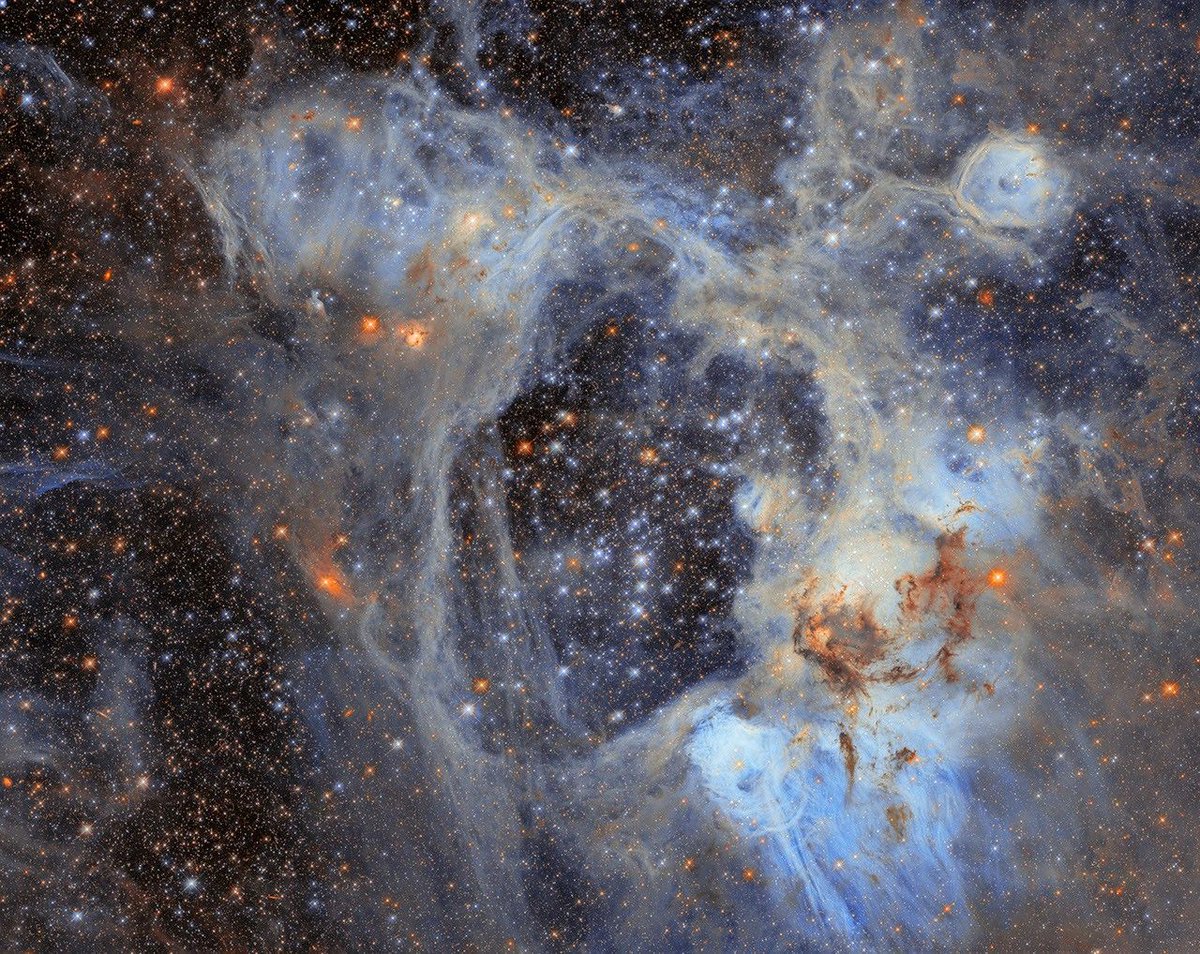
This 'superbubble' in the Large Magellanic Cloud is over 200 light-years across—and it's helping astronomers study how stars are born. More from @NASAHubble: https://t.co/NvJuk0az2R