After a long break, I’m writing again.
Better EDGE is where I publish operator-grade analysis on corporate development, M&A, and industrial tech, focused on decision quality under constraint.
First post is live ↓
https://t.co/hazXfJII4p
Google just wired DeepMind and Earth Engine directly into the biggest geospatial dataset on the planet.
For two decades, millions of people used Google Earth to scale the Himalayas or zoom in on their childhood neighbourhoods.
In 2026, Google is basically trying to shift the entire platform toward professional execution. They turned a massive digital twin of the world into an agentic AI engine for global infrastructure.
The technical foundation is (obviously) all about data. Google integrated 20-metre and 40-metre elevation contours globally. Engineers and urban planners now have instant access to the exact topographic context required for site planning anywhere on Earth. The data catalogue updates continuously to maintain the freshest imagery possible.
Collaboration used to kill geospatial projects. Teams would lose momentum through stale materials or bad handoffs. Google fixed this by building frictionless data import systems. You can now drop KML, KMZ, and GeoJSON files directly onto the global map. Entire departments can align on a single source of truth, moving from a raw question to a definitive answer instantly.
The biggest upgrade is the introduction of agentic geospatial intelligence. Users can open 'Ask Google Earth' and search massive satellite and Street View databases using natural language. You type a command, and the AI handles the manual data wrangling.
It identifies new site locations and analyses infrastructure before you even open a spreadsheet.
Before we had silicon chips, we had needle and thread.
In the 1960s, NASA didn’t ‘upload’ code; they sewed it.
To get Apollo 11 to the moon, skilled weavers (often called ‘Little Old Ladies’) literally hand-stitched software into physical objects.
Rivers are alive. A 50-year sequence of Peru’s Ucayali River shows how a river constantly shifts its bed, reshapes landscapes and redraws maps. Rivers move, ecosystems respond and planning must learn to work with that movement rather than pretend landscapes stay fixed. Source: https://t.co/3Muk5siAYE
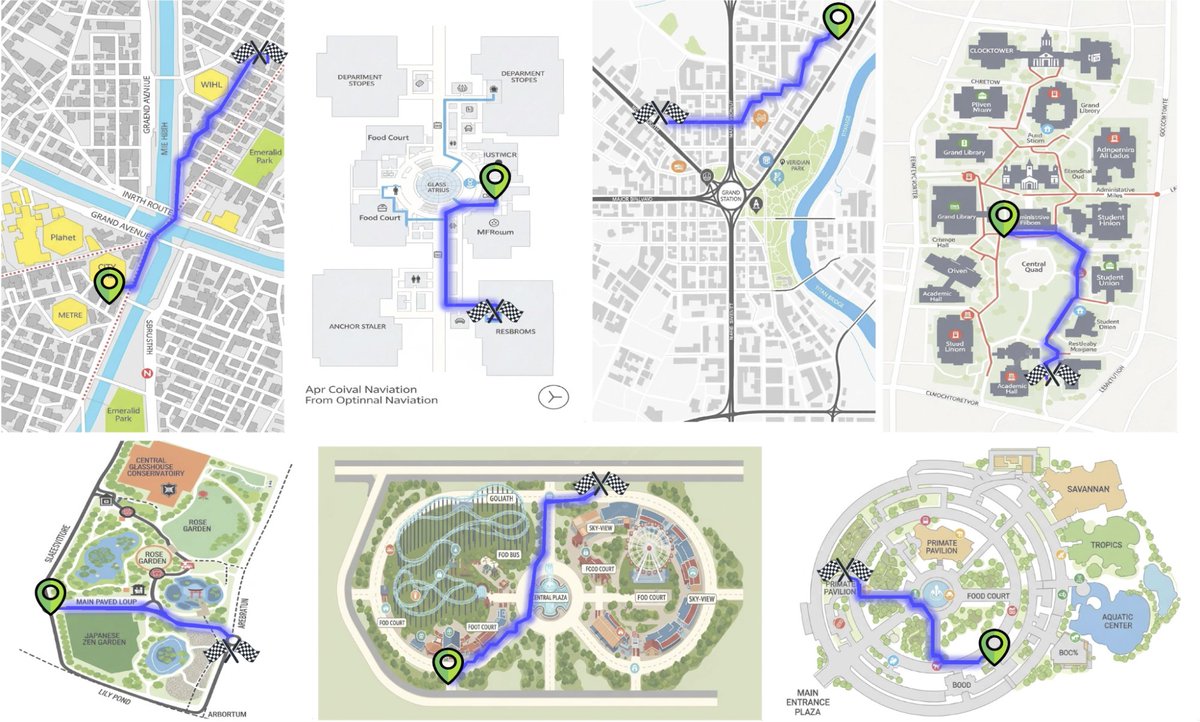
A critical gap in modern AI isn't language or vision. It's spatial grammar. And it reveals a fundamental data bottleneck.
We built MapTrace, a fully automated, generative AI pipeline (models act as creators/critics) to generate 2M high-quality map-path pairs. The result: Fine-tuning on this synthetic data lowered path-tracing errors and boosted the success rate by +6.4 points for Gemini 2.5 Flash on real-world maps.
Extraordinary claims need careful verification.
Anthropic develops the Claude model, but there is no credible evidence that it can “blackmail” or “kill” in the real-world sense.
AI systems generate text based on patterns. They do not have intent, agency, or physical capability.
Sometimes in controlled testing, researchers simulate scenarios to probe safety boundaries.
A model might generate threatening language in a fictional context. That is very different from having the ability or willingness to act.
It is important to separate dramatic phrasing from technical reality. Models can produce unsafe outputs if prompted in certain ways.
That is a safety and alignment issue, not proof of autonomous criminal behavior.
Linking this to Elon Musk being “right about everything” is a broader judgment call.
Debate about AI risks is ongoing, and different leaders emphasize different concerns.
The key is evidence. Claims about AI behavior should be grounded in documented research findings, not viral headlines.
This video shows the depth of different lakes and seas and other things of interest under the water: from the beach to the deepest part of the Mariana Trench
[📹 MetaBallStudios: https://t.co/xHBIpAcs11]
After a long break, I’m writing again.
Better EDGE is where I publish operator-grade analysis on corporate development, M&A, and industrial tech, focused on decision quality under constraint.
First post is live ↓
https://t.co/hazXfJII4p
I’ve spent January unpacking why growth discipline erodes under pressure, before deals ever fail. If you’re interested in how decisions actually drift, the full series is now live.
If your M&A process feels rational but outcomes disappoint, check this first:
Was executive engagement triggered before thesis fit was validated?
That’s often where optionality collapses.
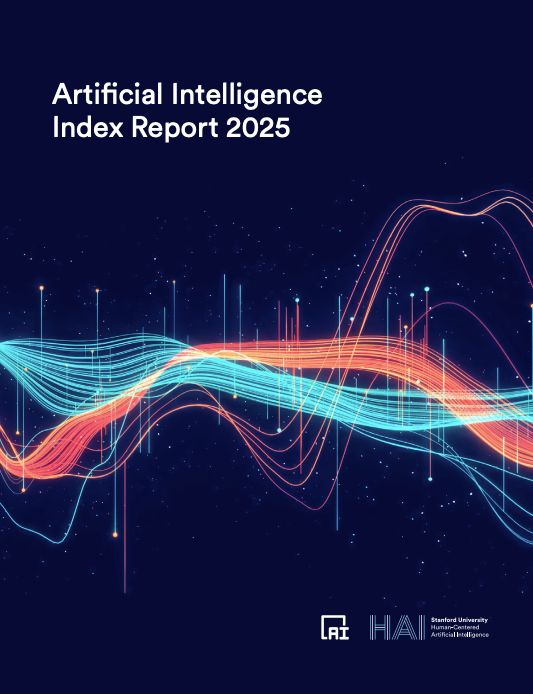
Stanford just dropped a 457 page report on AI.
It's packed with data on: cost drops, efficiency, benchmarks, adoption.
This report is a cheat code for your career in 2026.
I pulled the most important charts + what they mean for your career: 🧵
Press coverage focuses on M&A breakdowns late in the process.
That’s rarely where failure begins. The decisive errors happen upstream, before commitments harden and governance shifts.
I mapped 11 recurring risks in today’s Substack.
Strong example of inorganic growth without balance-sheet risk.
Hexagon–Microsoft highlights how partnerships can accelerate time-to-market, derisk emerging tech bets while preserving capital optionality.
We're excited to announce our collaboration with @Microsoft to advance the field of humanoid robotics. 🤖
🚀 Learn more: https://t.co/UqKVlnN12u
@msPartner