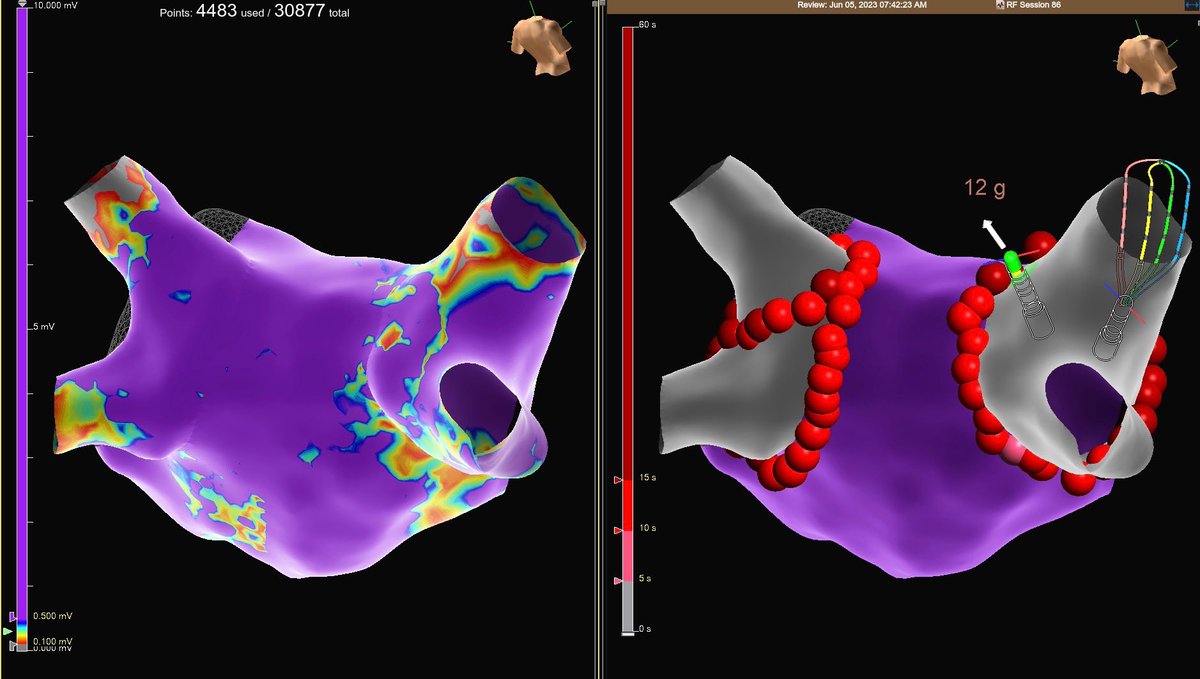
@MaggieBinEP Nice models. When you say heat map, what are you showing on the left? It doesn’t look like a voltage map but I don’t see the Volt/LAT scale. The map on the right, is that a contact map for PFA? Thanks! Fellow Abbott mapper here
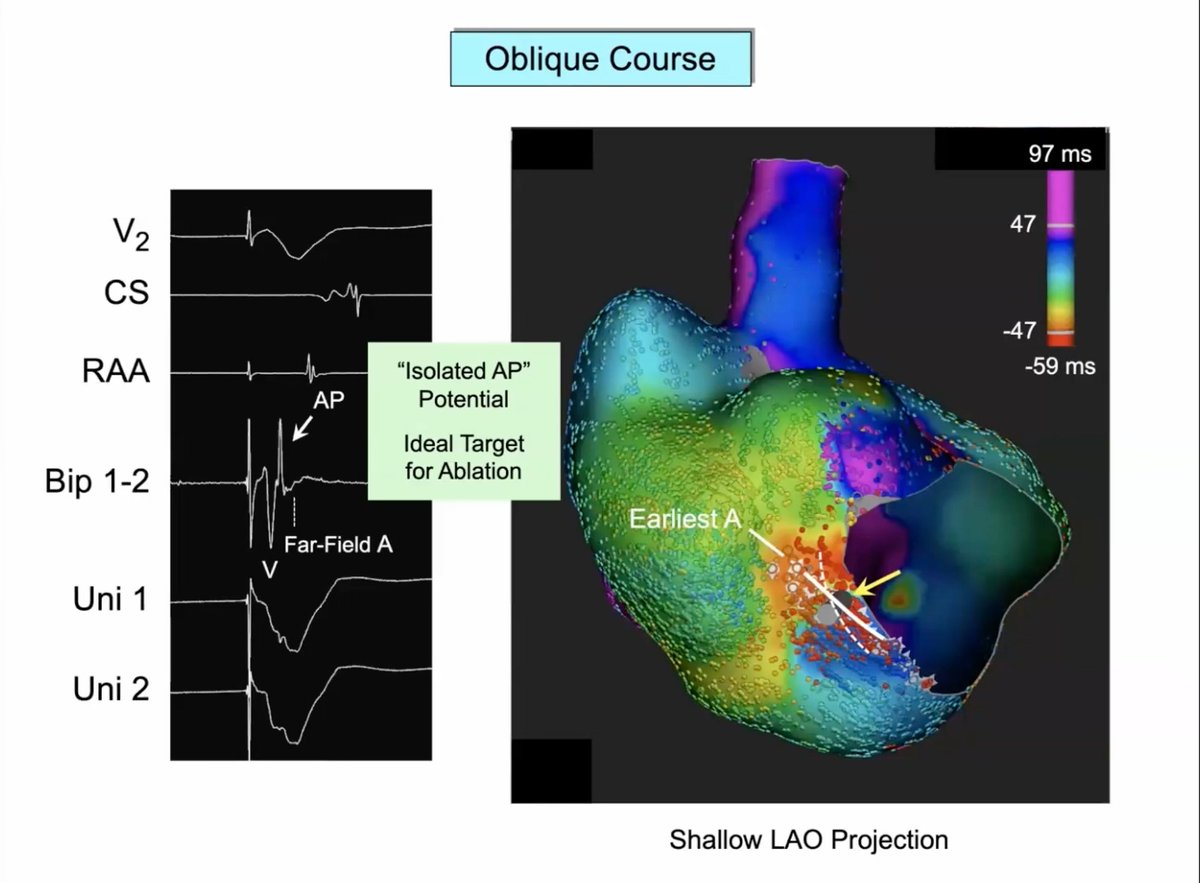
@PVC_on_HERS Nice map! Fellow Abbott mapper here (Central PA). If I’m understanding correctly, this is an activation map in slow-fast (typical) AVNRT. Your earliest LAT region is early atrial activation via the retro fast limb. Late LAT reflects the ensuing antegrade (slow limb) conduction?
@forkknifecab_EP@georgecrowell Interesting. So the first beat of VT advancing the Atrial EGM is a sign of a retrograde conducting pathway? Similar to His synchronous PVCs in tach. Am I correct about that thinking? If so, where was the pathway located?
Recurrent stable VT with inferobasal isthmus and exit. Prior VT ablation 2 years ago. Thoughts on ablation strategy? Case performed by @Maeskander. #EPeeps
🚨Latest #OpenAccess Article in
@JICE_EP
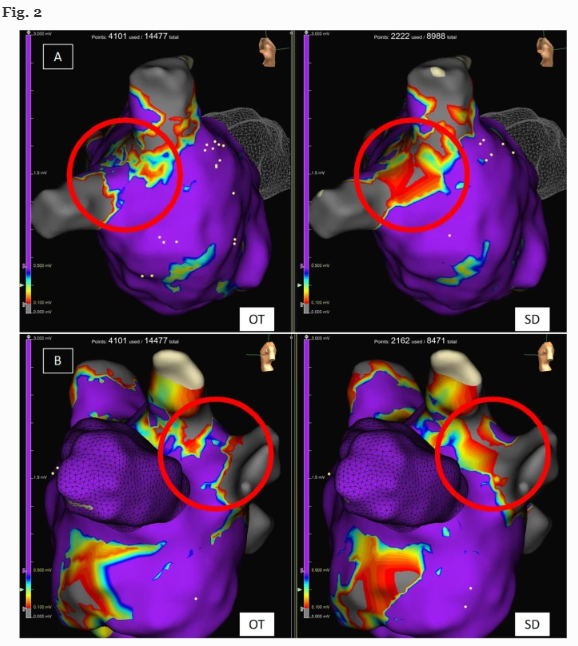
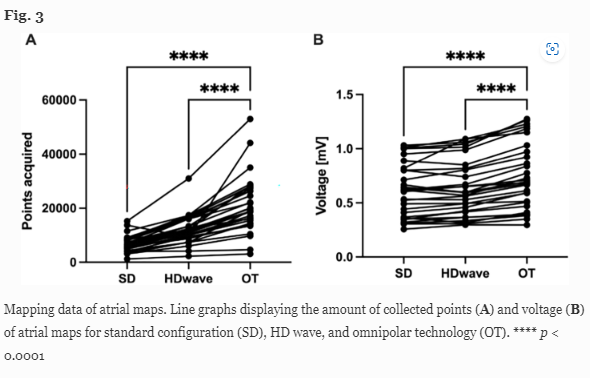
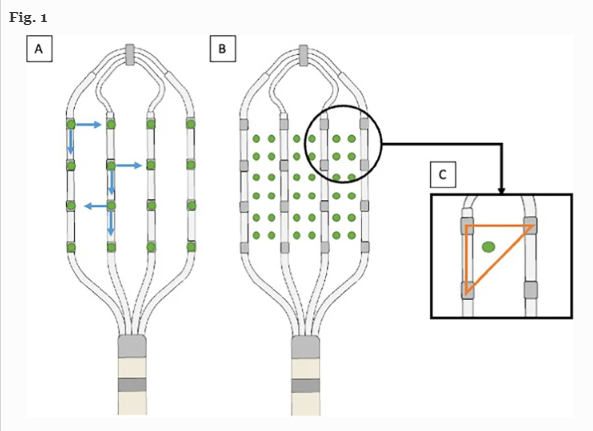
Omnipolar Mapping Technology—a New Mapping Tool to Overcome “Bipolar Blindness” Resulting in True High-Density Maps
by S Dittrich, C Scheurlen, @JvdBruck @LukerJakob @danielsteven_ep & @AriSultanEP
🧐📖https://t.co/9Nnf4FsKCT
#EPeeps
Truly remarkable remote case support at HRS by Dr. Bernard, @Skhatib55, and our Abbott Remote Specialist team.
Really powerful demonstration of how #EnSiteConnect & @medinbox can transform the reach of EP.
#AbbottProud#HRS2023
#OTNF annotation used to automatically display fascicular conduction AND slow conduction (DZs) in ICM w septal disease on a single map. No dynamic windowing, no manipulation. Just smarter annotation, cleaner maps and more informed decision making. @JRWinterfield@MUSC_EP