In @ScienceMagazine today
Blocking a prostaglandin receptor (EP2) can keep tissue resident macrophages clearing senescent white blood cells from aged organs, slow their aging
in experimental mouse model
https://t.co/LN573dqQDq
https://t.co/oRnAtX1g0t
Can senolytics truly reprogram aging across multiple organs?
A comprehensive new study in Nature Aging provides one of the most detailed single-cell maps yet of how the senolytic combination dasatinib + quercetin (D+Q) remodels aging tissues.
Using bulk RNA-seq, scRNA-seq, snRNA-seq, histology, and functional phenotyping across bone marrow, thymus, adipose tissue, liver, muscle, brain, kidney, pancreas, heart, and lung, the authors systematically profiled the biological consequences of senolytic intervention in aged mice.
Key findings:
🔹 Immune rejuvenation
Enhanced T-cell receptor signaling
Increased B-cell activation and immunoglobulin production
Improved macrophage phagocytic programs
Preservation of immune-cell population stability despite senescent-cell clearance
🔹 Metabolic remodeling
Improved glucose tolerance
Improved insulin sensitivity
Reactivation of thermogenesis pathways
Enhanced adiponectin signaling
Restoration of lipid metabolism programs in adipose tissue, liver, and muscle
🔹 Reduction of core aging hallmarks
Cellular senescence ↓
SASP signaling ↓
DNA damage ↓
Chronic inflammation ↓
Fibrosis ↓
Oxidative stress ↓
One of the most intriguing observations is that macrophages emerged as a highly D+Q-responsive cell population across tissues. Aging-associated inflammatory and senescence signatures were reduced, while phagocytic functions improved, suggesting that macrophage remodeling may be a major mechanism underlying systemic senolytic benefits.
The study also addresses a critical translational question:
When should senolytic therapy begin?
Comparing interventions initiated at 15, 18, or 20 months of age, the strongest attenuation of senescence markers, fibrosis, and tissue dysfunction was observed with earlier and longer treatment duration. This supports the emerging concept that midlife may represent a critical intervention window for geroprotective therapies.
Importantly, short-term D+Q treatment produced limited evidence of major hematologic, hepatic, or renal toxicity in this study, although long-term human safety remains unresolved.
Rather than acting on a single pathway, D+Q appears to induce coordinated remodeling of:
→ immune systems
→ metabolic networks
→ fibrotic programs
→ inflammatory microenvironments
across multiple organs simultaneously.
This work moves the field beyond "senescent-cell clearance" toward a systems-level understanding of how senolytics reshape organismal aging.
#Aging #Senolytics #Dasatinib #Quercetin #SingleCell #Immunosenescence #Inflammaging #Longevity #NatureAging #Geroscience
Reference: Hou J et al. Profiling the molecular and physiological effects of senolytic treatment on aged mice identifies immune, fibrotic and metabolic remodeling. Nature Aging (2026).
Sleep and ageing may follow a U-shaped curve: both short (<6 h) and long (>8 h) sleep were linked to
faster biological ageing,
higher disease risk,
and greater mortality.
Across multiple organs and omics measures, the “sweet spot” was ~6.4–7.8 hours/night. 😴 #SleepScience #HealthyAging #Longevity
https://t.co/sSafdgIwep
Fantastic fantastic work! This is what non rushed and detailed mechanistic work looks like. The findings will likely tilt the entire landscape of mRNA vaccines! Congratulations @Lo_Zanzi@kjena21 !
🧵We just published in @NatureComms and I'm excited to share what we've been working on.
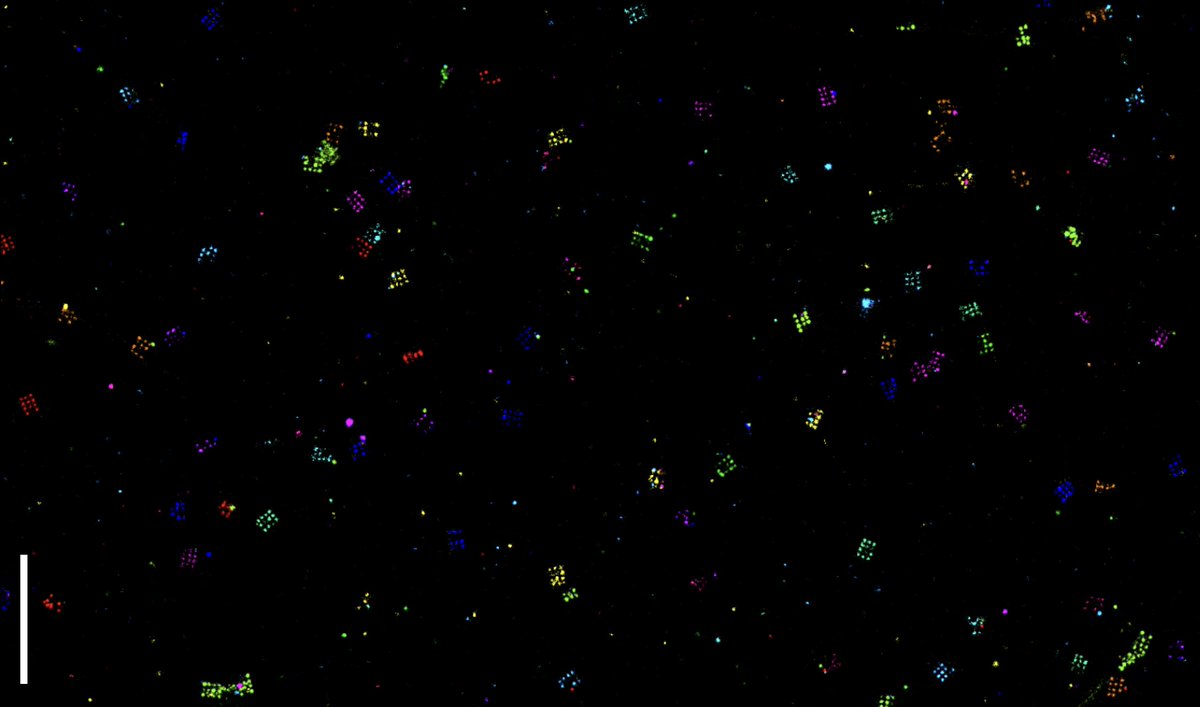
We expanded the speed-optimized DNA-PAINT sequences from 6 to 12 — enabling faster, higher-resolution multiplexed super-resolution imaging of up to 10 cellular targets. Here's the story. 1/n
The MAPPI setup we @AndreaBassi78@lab_costa published in @ScienceAdvances shows its versatility, enabling us to design amazing experiments that we never thought could be possible...
https://t.co/4DHOXTKSeC
So, now guess what this video is showing❔❔
OxPLipids and IL-10- Who would've thought! Amazing story from @Lo_Zanzi lab!
Epigenetic silencing of interleukin-10 by host-derived oxidized phospholipids supports a lethal inflammatory response to infections: Immunity https://t.co/G82O6WOrXD
FROM CELL DEATH TO REGENERATION: What if dying cells -come back to life? Now online @embojournal I https://t.co/eOKTg6qVnk , we aim to answer this question. Here is the journey. If you🩷science, please dont 🛑till the end of 🧵, I promise you will not regret. 1/n
Happy to have been part of this fascinating story at the edge of futuristic science- uncovering geroprotectors using a novel AI platform! @ahuja_77#AgeXtend
https://t.co/SPedwldVtY
Exciting new findings!! Thrilled to share our latest work in @SciImmunology which uncovers how restricted access of newborn Kupffer cells to the bloodstream affects bacterial clearance, increasing risks of dissemination and mortality. As a bonus, we also made it on the cover of the magazine!!
Check it out: https://t.co/ZRdAahytTc
Huge congratulations to @brunaraujodavid for her amazing work! 🎉
What an incredible piece of work from
@calico
The giant mouse study explains
1) How the terms “healthy" & "long life” are more nuanced and less interchangeable than we like to imagine.
2) Why/how Dietary Restriction/Fasting might help.
https://t.co/QxfbzWEfC1
A beautiful story from the @Andersonbuglab!!
@Ravi_Research
Metabolite-based inter-kingdom communication controls intestinal tissue recovery following chemotherapeutic injury: Cell Host & Microbe https://t.co/Zr6SFg0eLu
📢Call for Applications!
@NImmunology is hosting an "Advanced #Immunology Course" in October for PhD scholars, postdocs, & clinical researchers. It is your chance to learn from experts in the field📚🔬🦠
Apply now!
Application Deadline⌛️ 22 Sept
🔗https://t.co/ss7PZPZ2jR
A number of new studies on gasdermin were published recently. @broz_lab and I put together a review to summarise and discuss our current understanding of gasdermins during cell death and inflammation.
https://t.co/j2ApEYIfp9
#ImmunoCannibalism! #EveryCellIsAnImmuneCell! @ElaineFuchsLab &co show @Nature that stem cells sense lipids released by apoptotic cells (& retinoic acid from healthy cells!) & become phagocytic to clear cell corpses & maintain tissue homeostasis! https://t.co/t1HSCTBjFB