Congress’ bipartisan National Security Commission on Emerging Biotech is calling on FDA to go through notice and comment rulemaking on its “plausible mechanism” pathway, among other recs - https://t.co/GS7tJx7cWN
Biotechnology can seem hopelessly broad, especially to newcomers. Genetic engineers often use completely different methods than drug "hunters," who have very different backgrounds from protein designers. And so on.
When I teach people about biotechnology, I often ask them to picture a giant tree with lots of branches and leaves.
1 / The roots of this tree are all the *fundamental* biology stuff. It's biophysics and biochemistry and microbiology. It's Lehninger's textbook and the Central Dogma. All of biotechnology involves life, and so this is the stuff about how life actually works.
When learning about biotechnology, I find it's often useful to begin by focusing PURELY on the cell. Just start by reading about cells and how they work; transcription and translation and cell membranes, and how they make energy, and so on. Cell Biology by the Numbers, a free online textbook, is an excellent starting point.
Once you're able to hold a picture of a cell in your mind, then you can expand it to learning about tissues, or the immune system, or more complex interactions between cells.
2/ The trunk of the tree is methods. This is the PCR and CRISPR and ELISA assays and all the core techniques that biotechnologists use to do their work. These methods tend to differ based on cell lines; so people who engineer plants (like corn and rice) have some unique methods compared to people who engineer, say, cows or microbes. But some methods are also used across all organisms!
If I was re-learning biotechnology today, I wouldn't spend a ton of time on methods. I generally don't think they're that useful, unless there is a clear gap in capability and you need to invent a new method to solve it.
3/ The branches of this tree are applications. Most people think of biotechnology as being about medicines and vaccines, but that is a myopic view! Biotechnology is actually, at its core, about the ability to ENGINEER LIFE. And so it involves everything from making humanity a spacefaring civilization (by protecting our genomes against radiation, say) to making more nutritious crops or safeguarding biodiversity, or detecting the next pathogen outbreak before it spreads.
It is incredibly difficult to understand everything happening in all these branches, because there is just so much of it and every branch has its own lingo and conferences and group chats and subtexts.
TL;DR When I teach biotechnology, I encourage students to pick one application that they'd like to learn about (like making peptide drugs, say, or protein design) and then we work backwards through the methods and down into the roots to map out what needs to be learned. This mapping exercise is easiest to do together with an expert in that domain, of course.
If you want to learn about biotech, but don't know how to get started, I'm open to having a 10-minute call with you about it. My email is niko[at]asimov[dot]com.
Most of biology is locked behind a single problem no one talks about — DNA delivery. You can’t edit a genome if you can’t get DNA into the cell.
We @CultivariumFRX built a self-driving DNA delivery workcell to change that.
Thank you to the @US_FDA, @MartyMakary, @TracyBethHoeg, and colleagues for hosting a great workshop on reducing animal models in regulatory science! Was exciting to participate with many others from the FDA and @NIH, and set the stage for the kick off of CATALYST soon @ARPA_H!
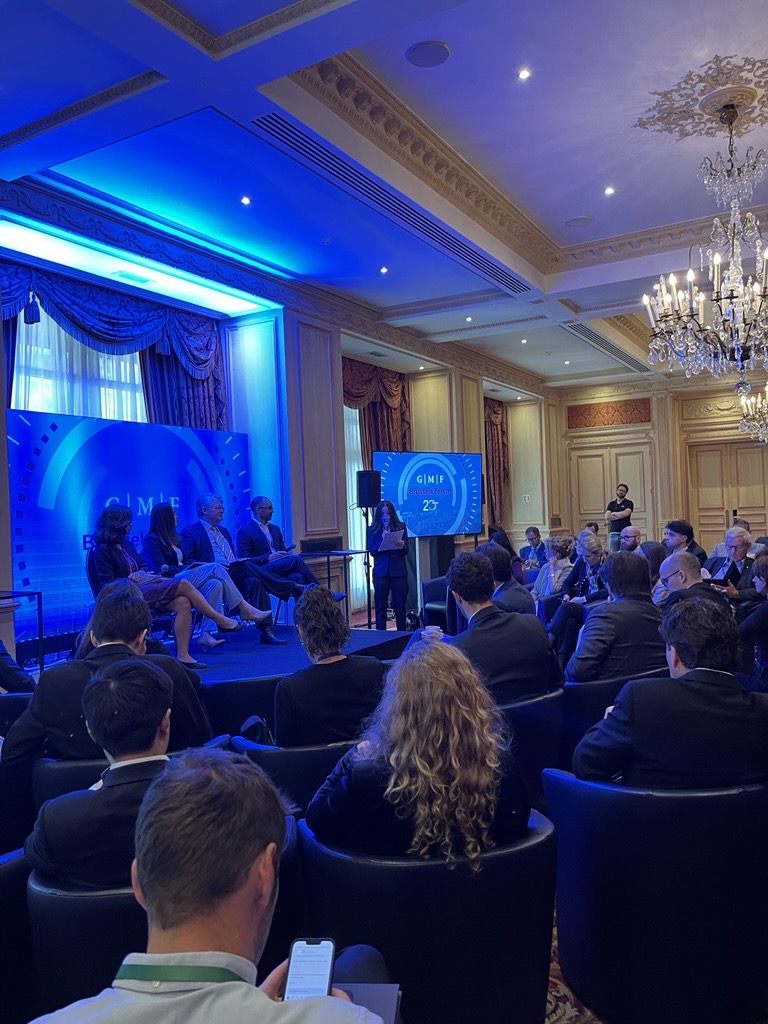
#BrusselsForum day 2, breakout session: Grading Made in China 2025: Did Beijing’s Industrial Tech Strategy Deliver?
🇨🇳 GMF's @LindsayPGorman moderates a conversation with Fernando Dominguez Pinuaga, Vice President Global Outreach, Sandbox
Agatha Katz, Partner, @rhodium_group@Michelle_Rozo, Vice Chair, National Security Commission on Emerging Biotechnology, US
Jörg Wuttke, Partner, DGA Group
@RNicholasBurns, former US Ambassador to China
@Michelle_Rozo, Vice Chair, National Security Commission on Emerging Biotechnology
@KSoltisAnderson, pollster and writer
➡️ Browse the speaker lineup: https://t.co/XrSYr6IQlZ
Vice Chair, National Security Commission on Emerging Biotechnology, @Michelle_Rozo joined @NGirishankar on the podcast Betting on America to discuss how AI is transforming biology and its role in engineering life.
Watch here: https://t.co/Ir0qyxut6c
Tomorrow, at 10:00 a.m. ET, @Michelle_Rozo, Vice Chair, National Security Commission on Emerging Biotechnology, joins @NGirishankar on the podcast Betting on America to discuss how the biotechnology revolution will change the world.
Watch here: https://t.co/Ir0qyxut6c
This morning, I visited the future headquarters for Heartland BioWorks, Indiana’s new Tech Hub designated and funded by the CHIPS and Science Act.
In the years to come, this location will be the epicenter for Hoosier biotech innovation, manufacturing, and training.
🧬New Biotech Report🧬
China’s industrial policies are skewing the biotech playing field. In their new report, @AnnaPuglisi838 & Chryssa Rask explore how Beijing is using the playbook that worked for Huawei and 5G to build up BGI. https://t.co/NqVqOo4Tpf
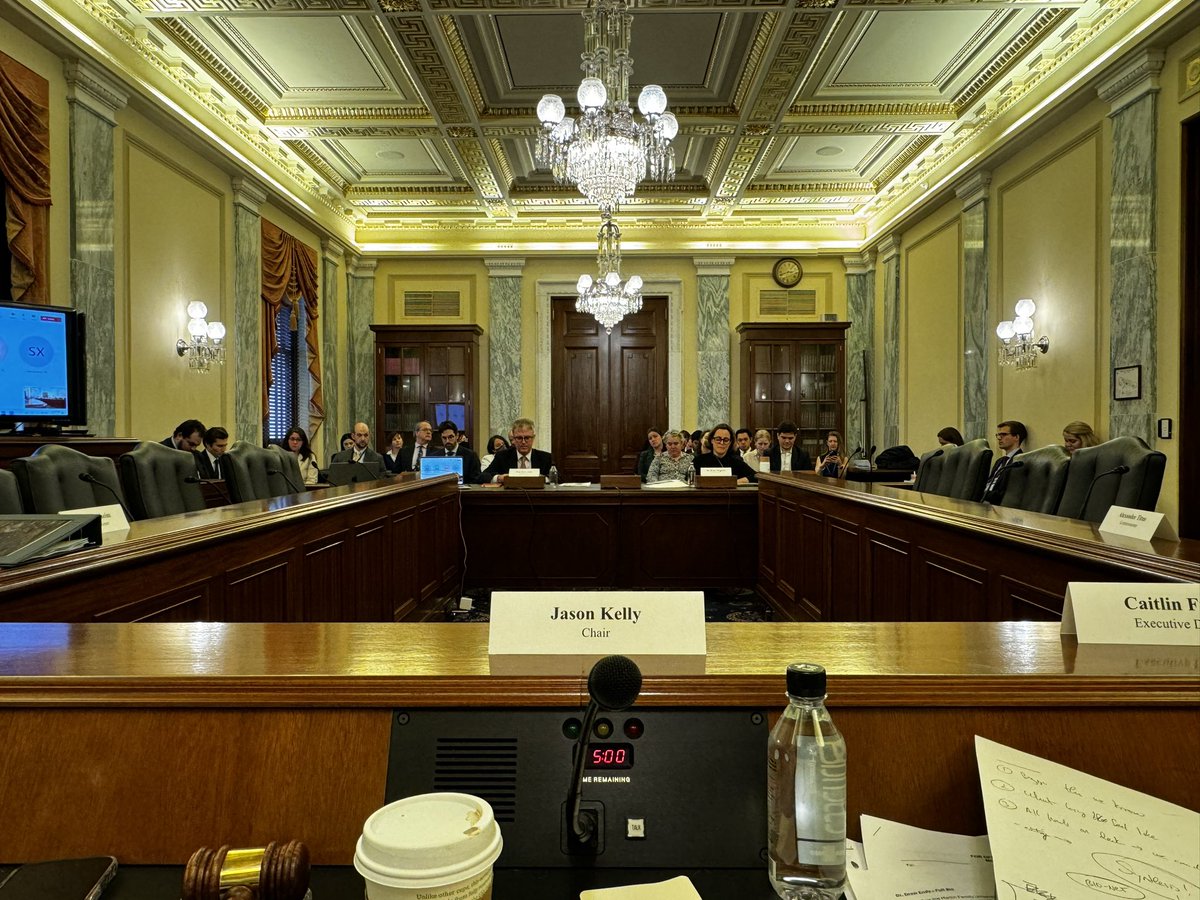
Honored to welcome fellow commissioners on the National Security Commission on Emerging Biotechnology (NSCEB) for a series of events in Indiana.
We began our day with a tour of the @IndianaUniv Indy Biotech Lab and a listening session with Hoosier biotech leaders.
The NSCEB is a national commission that will shape Department of Defense activities regarding emerging biotechnology and provide recommendations to Congress on the national security implications of biotechnology.
Fortunate to have @ARPA_HDirector and @DrewEndy join us to kick off the first meeting of 2024 of the National Security Commission on Emerging Biotech !! 🇺🇸🧬
Inspiriting for the commissioners to hear how great a biodesigned future could be and how USG could make it happen!
.@Michelle_Rozo, Vice Chair at the National Security Commission on Emerging Biotechnology:
“AI is revolutionizing biotechnology...our adversaries are keenly aware of the breadth of the potential here and are investing heavily across these domains.”
Happy to share the 1st report from the National Security Commission on Emerging Biotechnology! 🇺🇸🧬
https://t.co/qKNr8D7WMz
It includes legislative recs from the commission as well as how we're organizing work over the next 2 years!
Great work by the staff and commissioners!👏 We'd love your ideas and feedback at [email protected]
Great discussion with @jrkelly, @Michelle_Rozo, Dov Zakheim and Paul Arcangeli on #biotechnology, #AI and EU-US cooperation 🤝
My key takeaway💡transatlantic decision-makers must work together to enable life science innovation 🏥 and mitigate the risks of biotechnology misuse ⚠️
Great meeting today of the national security commission on emerging biotech !🇺🇸
Thanks to @ebenbayer and @ecovative for mushroom-packaging lined case (so soft!!) and mushroom leather handled gavel!! 🍄And to @Biomason for the bioconcrete block to hit! 🦠 worked perfect !😄🙌🙌🙌
Synthetic biology is a critical technology like AI and the US is well positioned to lead globally — just gotta keep it rolling ! 🌱🧬
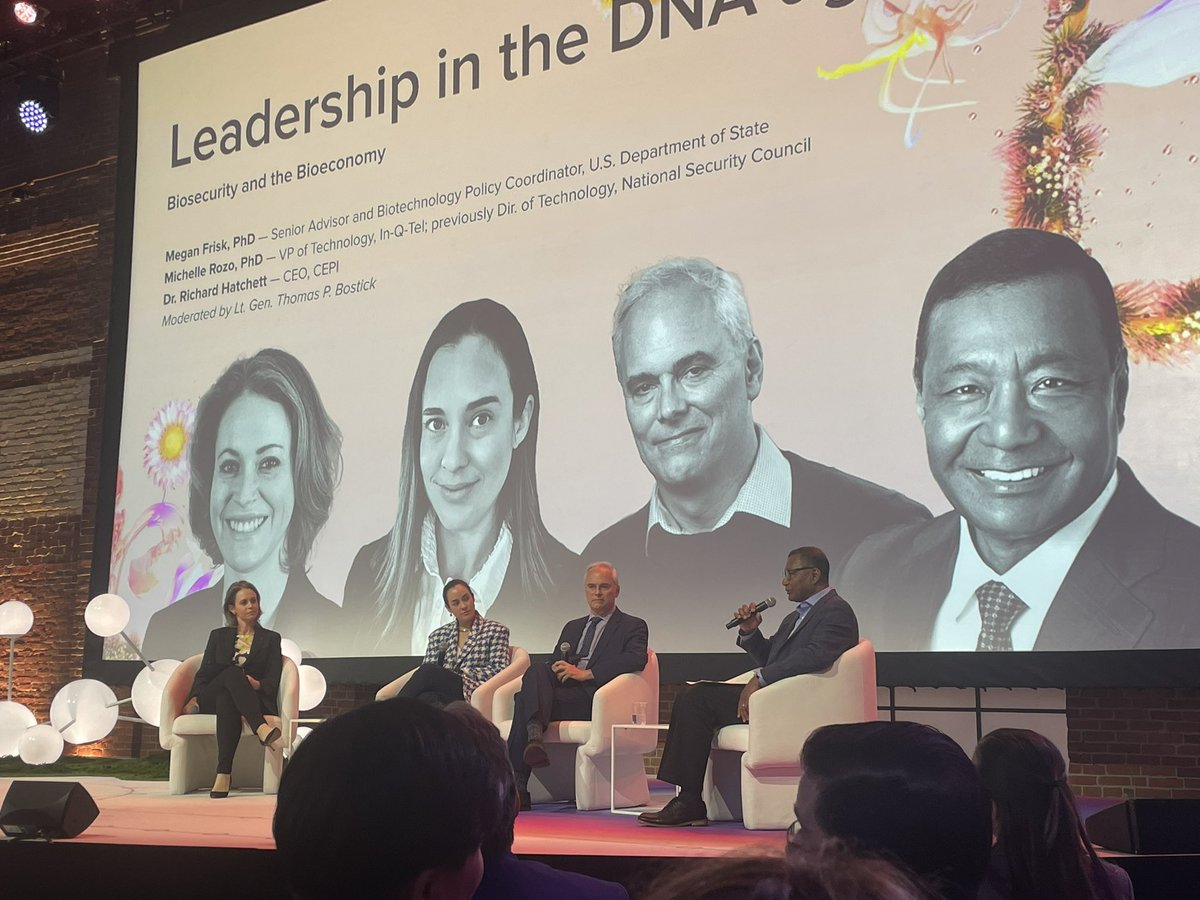
“Biology doesn’t respect borders” and we must build in multilateral resilient systems with a large, diverse group @Michelle_Rozo on Leadership in the DNA Age at #GinkgoFerment
Legislative leaders name members of National Security Commission on Emerging Biotechnology: @jrkelly and @Michelle_Rozo were respectively named chair and vice chair of the National Security Commission on Emerging Biotechnology. https://t.co/GR52Au3TnB



![NikoMcCarty's tweet photo. Biotechnology can seem hopelessly broad, especially to newcomers. Genetic engineers often use completely different methods than drug "hunters," who have very different backgrounds from protein designers. And so on.
When I teach people about biotechnology, I often ask them to picture a giant tree with lots of branches and leaves.
1 / The roots of this tree are all the *fundamental* biology stuff. It's biophysics and biochemistry and microbiology. It's Lehninger's textbook and the Central Dogma. All of biotechnology involves life, and so this is the stuff about how life actually works.
When learning about biotechnology, I find it's often useful to begin by focusing PURELY on the cell. Just start by reading about cells and how they work; transcription and translation and cell membranes, and how they make energy, and so on. Cell Biology by the Numbers, a free online textbook, is an excellent starting point.
Once you're able to hold a picture of a cell in your mind, then you can expand it to learning about tissues, or the immune system, or more complex interactions between cells.
2/ The trunk of the tree is methods. This is the PCR and CRISPR and ELISA assays and all the core techniques that biotechnologists use to do their work. These methods tend to differ based on cell lines; so people who engineer plants (like corn and rice) have some unique methods compared to people who engineer, say, cows or microbes. But some methods are also used across all organisms!
If I was re-learning biotechnology today, I wouldn't spend a ton of time on methods. I generally don't think they're that useful, unless there is a clear gap in capability and you need to invent a new method to solve it.
3/ The branches of this tree are applications. Most people think of biotechnology as being about medicines and vaccines, but that is a myopic view! Biotechnology is actually, at its core, about the ability to ENGINEER LIFE. And so it involves everything from making humanity a spacefaring civilization (by protecting our genomes against radiation, say) to making more nutritious crops or safeguarding biodiversity, or detecting the next pathogen outbreak before it spreads.
It is incredibly difficult to understand everything happening in all these branches, because there is just so much of it and every branch has its own lingo and conferences and group chats and subtexts.
TL;DR When I teach biotechnology, I encourage students to pick one application that they'd like to learn about (like making peptide drugs, say, or protein design) and then we work backwards through the methods and down into the roots to map out what needs to be learned. This mapping exercise is easiest to do together with an expert in that domain, of course.
If you want to learn about biotech, but don't know how to get started, I'm open to having a 10-minute call with you about it. My email is niko[at]asimov[dot]com.](https://pbs.twimg.com/media/G6ikqivbYAE9Y_z.png)