@KatFromOz Students love using Minecraft socially, so using it in a way that promotes learning and collaboration is an authentic use of ICT. Team building and collaboration are key 21st Century Skills so it's important that the we promote them when looking at various global issues.
This Minecraft event would allow students to explore sustainability in a fun and engaging way! I will use Minecraft within my unit to help students to plan their community garden and sustainable food packaging.
How could you use Minecraft in your unit? #educ4750#UoNTeach#STEM
Green homes 🏠
Water reclamation 💧
Responsible forestry 🌲
Clean energy 💡
Recycling ♻
Sustainable food 🥙
From April 19–23 join @TheCobblestoneC for a week of #EarthDay lessons and build challenges in #MinecraftEdu. Register now: https://t.co/ZY7ZzR86Jo
@Hugh10297614 This would be a brilliant use of ICT and Minecraft Hugh. It's important that students first consider their immediate school community before extending their ideas to the wider local community because this can allow students to identify their place within a wider global context.
@Benjami49687352 @NGKids It's interesting to see that the one resource supports two totally different pedagogies that support community action, your games-based approach and my inquiry-based approach. I wonder if it also supports different stage levels? I am focusing on Stage 3, what stage are you doing?
@NGKids is a great resource for students conducting research on climate change & plastic pollution, providing students with information written for them.
Are there any tabs in the link below that you could use with your students? #educ4750#SDG12#SDG13 https://t.co/J24UG8xqKU
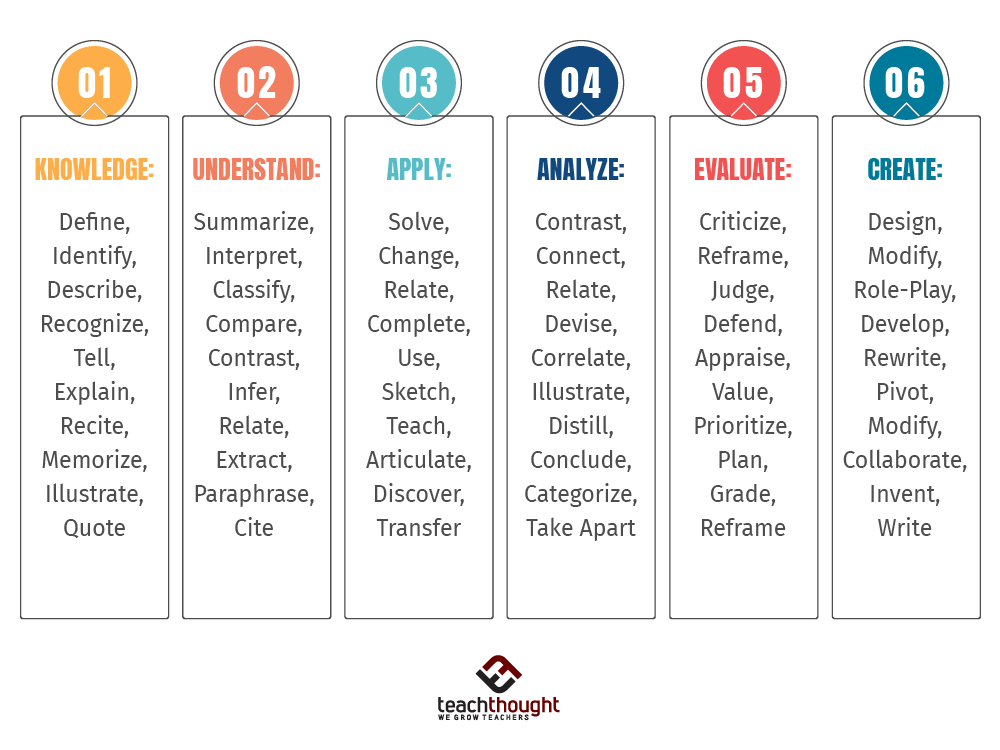
@NicoleD58337587 It's important that all levels of Boom's Taxonomy are used within units because it allows students to develop a deep understanding of content. I will use the element of 'creating' as the basis of my summative assessment so students can show their deep understanding.
@JuliaBe64274003@aiden_dennis@Megan48699918 I'm implementing the general capability of 'critical and creative thinking' in my unit and as you said it can be hard to understand what that may look like. I love how the link provides different resources like posters and activities that can be used to meet students needs.
During my unit of work, I will address all elements of Blooms taxonomy to allow students to develop a deep understanding of what they are learning. For the summative assessment I will focus on the area of 'create'.
What pedagogies will you use in your unit? #educ4750#Blooms
“Blooms taxonomy works ideally as an assessment design tool. If students can consistently work with the topic in the columns–designing, recommending, differentiating, comparing and contrasting- then they likely have a firm grasp on the material.” https://t.co/KtHCe2AlVb
@Miss_Jess_H@GreentreeSky@Miss_Jess_H you could integrate ICT into this by using the @litterati app. It allows you to photograph, tag and categorise rubbish that you find in the local area. This would allow students to track their habits and how the community is going with reducing rubbish.
@Miss_Jess_H Small changes can make the biggest difference! This website is great because it outlines simple ways that students can make a difference. A weekly habit I would encourage is meal planning, it would involve the whole family, and students could educate them on the topic.
Clean Up Australia is more than just Clean Up Australia Day, they have a range of information and resources linked to various waste issues like food and plastic waste. Have a look at the link below to see what you can find! #educ4750#SDG12#UoNTeach
https://t.co/B56GwLO0Sr
@Miss_Jess_H@Megan48699918 Another resource you might want to look at @Miss_Jess_H and @Megan48699918 is the Junior Landcare Learning Centre. They outline how to plan a garden that includes plants that will be the most beneficial to the local environment. Here's the link https://t.co/KXLnDeU3Es
@Miss_Jess_H@Megan48699918 Gardenate is great for students planning a garden, and because it's ICT they will likely be more engaged in the activity than if a paper planner was used.
@Miss_Jess_H@sarah_aggett@GreentreeSky@MissJoyTweets I'm combining those 2 ideas in my unit Jess! During my school's fete I will run a stall where the local community can get a reusable wax wrap or a cloth shopping bag that was made by the students so they can start making more sustainable choices in their life.
@Miss_Jess_H@Thomson_Teaches@LandcareAust@MissJoyTweets Another approach that you may want to look into is propagating vegetables to grow a new crop, which focuses on reusing. A community organisation, local expert, or Aboriginal representative could be included in the propagation approach to educate students on sustainable gardening.
This is a brilliant resource to explain to students about seasonal produce for school gardens, the only downfall is it's not aligned with Australia's seasons!
Has anyone found a similar chart for Australia's seasons? #educ4750#UONTeach#schoolgarden#sustainability#teaching
It's finally finished! The Self-Sufficient Schools @VegSchoolMeals A2 Vegetable Planner. I'll be adding a printable version to the https://t.co/EsmhEqogi0 website. #VegSchoolMeals@TheSchoolSeedB1
@aiden_dennis Deep understanding would be a great one to link to Bloom's! The higher stage of creating is a brilliant way for students to present that they do have a deep understanding of a topic by creating something using what they have learnt as the foundation.
@ImogenSlackSmi1 I'm glad that you found this helpful Imogen! It's important that we address sustainability throughout different KLA's because students have different interests and abilities and they should be given the opportunity to explore this issue in various ways.
@aiden_dennis I didn't think to incorporate the Quality Teaching Framework Aiden, thank you pointing out that link! Are there any areas of the QTF in particular that you will link to Bloom's Taxonomy?
@JuliaBe64274003 We tend to forget about Bloom's Taxonomy during planning, but the elements of applying and creating lend themselves perfectly to inquiry and problem-based learning, where student are able to apply what they know to real-work contexts and try to solve real-world problems.
@Megan48699918 This is such an interesting approach Megan! I'm doing SDG12 so I'll be looking at how sustainability and plastic waste is portrayed in different elements of the media, specifically how facts are portrayed and how waste can be reduced through a critical literacy lens.
@JuliaBe64274003 I will be looking at 'The Adventures of a Plastic Bottle: A Story about Recycling' by Alison Inches, looking at how plastic production is having an impact on the environment. It's a great book and provides lots of key information!
@GreentreeSky@CordaJesse@Miss_Jess_H@JuliaBe64274003@NoahJWynne My school has a dedicated Aboriginal Education teacher so I would consult with them as to how I could integrate Indigenous Perspectives into my lessons, specifically my outdoor ones. I would also use resources from the Junior Landcare Learning Centre to see what they recommend.