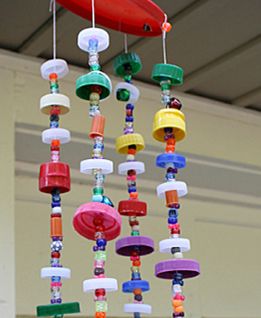
@jessicarustin1 Some really great ideas @jessicarustin1. In the past, I have had students use their plastic water bottles and caps in a visual arts lesson to make wind chimes/catchers. for the bottles you can cut them into rings/bands and paint them for visual appeal.
For those of you looking for some more #eco-friendly #household goods for cleaning or storage Lisa at Branches of Me has a local business on the #CentralCoast that provides #sustainable goods. high-quality products you will not be disappointed with. https://t.co/l8wJMsvZqQ
@Lilycostello15 Incredible. I recently heard that it takes nearly 200L of water to produce a single almond. There is so much water use in manufacturing that goes unnoticed to the general population. This is a great resource for teaching about rain & drought in Australia https://t.co/C0USqCtAeN
When teaching about consumption and production we need to look into waste. Stop food waste provides information on what we can do to reduce waste. What other ways can we teach our students about consumption and waste? #SDG12#teaching#stopfoodwaste#UoNTeach
@Lilycostello15 A great visual teaching tool. With this concept, it is also a great idea in the upper years to include the recycling symbols that we generally see on our packaging. It is a good idea for the students to learn that there are multiple forms of recycling for different materials.
@Lilycostello15 This is a very confronting question. I know I would like to be more conscious, however, sometimes convenience is more practical. How can we teach our students the importance of critically thinking about consumption and environmental impacts?
@Lilycostello15 At Kanwal Public, they know that not all parents are comfortable with kids walking alone while they are at work, the school has a set mapped out route they use every year where the parents can drop the kids, & a group of students walk to school with a teacher. It is great
@aiden_dennis@Lilycostello15 Great find @aiden_dennis, thanks for sharing @Lilycostello15. I had no idea there were so many locations we could take our students to learn more about water, biodiversity & nature. Do you know of any other locations other than those listed on this website?
@chelsseck @Lilycostello15 Great idea @chelsseck, what sort of projects would you make? I like to have students help reduce trash by collecting 3 pieces of rubbish on their way to/from school and out in the playground. It is a great way to give students a sense of responsibility for the environment.
@Lilycostello15 This is unbelievable. Manufacturing processes around the world are responsible for a lot of what we do to our environment. I will be rethinking paper use in the classroom, incorporating more ICT use to reduce this impact. @lillycostello15 what are some ways you might reduce paper
@Lilycostello15 Great find @Lilycostello15. I found a great video that I will be using & then have students start with a collaborative research project before we begin our unit. I would like my students to engage with using video format to present their own findings too. https://t.co/POB3bsIGBD
@MissZRay This is a great video you could share with your class to introduce food waste. @alex_talty@Corey79567614@MaxTownsend_ how would you introduce the topic to your class? https://t.co/XGizhDbGNv
@MissZRay Thanks for sharing @MissZRay. Another great way to use your sustainable garden is to make traditional Aboriginal foods. This is a great way to incorporate 8-Ways into your unit. @MissE_Educ@GreentreeSky@MissJoyTweets do you have any thoughts on this?
@MissZRay This is an interesting fact. I encourage my students to use what they already have before buying more, most can foods do not have a best before and can be stored for years. Fresh produce is very different but we can extend its life by the way we store it. https://t.co/fDAF3w3VCI
@MissZRay What a great idea @MissZRay linking recent impacts to change in habits. It would be interesting to find out from students how their eating habits changed during learning from home, what food choices were they making, were they limited due to inability to go shopping regularly?
@GreentreeSky In my classroom, I encourage students to collect 3 pieces of rubbish on their way to/from school and in the playground. Similar to #take3forthesea. Every piece of rubbish counts. In reality, we need to think of ways to reduce waste before it becomes mindless trash. @MissE_Educ
This is also a great resource for teaching about #SDG12. Students can benefit from understanding how #recycling products and packaging goes hand-in-hand with consumption and production. What are some classroom activities we could use to encourage students to recycle? #uonteach
We talk a lot about recycling but do we talk enough about reusing? This video powerfully states the facts and truths about recycling which could prompt an insightful classroom discussion.
What products do you use that are reusable?
#UoNTeach#Educ4750#SDG14
@MissE_Educ There is an organisation in QLD called Caps Crusade, They collect caps through schools & local businesses. Their website even has a sorting chart. In return, they give the donator bricks to build community projects with. https://t.co/mEl1iWoqIN
What can we do with "non-recyclable" bottle caps? We can donate them to be recycled and used to make #prosthetics. In #Australia a Victorian company, Envision is doing this.
What a great way to help the community. https://t.co/j8stjTFW1n
#uonteach#educ4750#ReduceReuseRecycle
@MissE_Educ Another great ICT resource is Canva. It is a great interactive publishing tool with a variety of features. I also enjoy using Prezi, I find that students engage with the presentation animations in Prezi. There are endless ICT resources we can use. @bdcnly do you know of any?
Attention teachers, check out #jamboard! It's a part of @GoogleForEdu & allows students to combine handwritten & digital text, with images & post-it notes in the one document, & multiple students can work on the one document. How would you use Jamboard? #educ4750#UoNTeach#STEM