🌱 Powering Regenerative Local Economies with Web3
How can local communities use blockchain tools to strengthen local economies? From local funding rounds, to ecological regeneration, to new ways of organizing and circulating value.
Together, Ethereum Localism and Regen Coordination offer a compelling vision for a future of blockchain and peer-to-peer technologies.
🔷 What's up with @Ethereum? 🔷
Over the last decade, Ethereum has grown from a scrappy experiment into the second largest cryptocurrency in the world, with a vast ecosystem of apps, developers, and capital flowing through it. But after years of rapid growth and market hype, Ethereum is now at a crossroads.
Amidst market volatility, geopolitical shifts, and increasing centralization in tech, the community is asking a critical question:
👉 Will this infrastructure continue to serve primarily as a vehicle for financial speculation — or can it power real-world, community-driven impact?
In this new piece, I explore Ethereum Localism — a growing movement that reimagines Ethereum not as financial infrastructure for the few, but as a coordination layer for local economies and regenerative communities. I also share how @ReFiDAOist & @RegenCoordinate are putting this vision into practice.
This is about more than just blockchain. With failing global systems, we need to rethink how we fund, govern, and regenerate — from the ground up.
Full post below 👇
https://t.co/lcwHdDfPKZ
@RegenCoordinate@ReFiDAOist@greenpillnet@CeloPublicGoods@BioFiProject @maearthmedia @OurBloomNetwork@agroforestDAO@Gitcoin@karmahq_@SilviProtocol@hypercerts @OSObserver @Atlantis_p2p@metricsgarden@CommonApproach@Celo@OctantApp 💚
gm, world.
9 years, 500+ visitors, zero tweets. Time to fix that.
Giveth House is a community home in Sants, Barcelona, for people building in Ethereum, ReFi and public goods. No prices: you give what feels right.
1/ gm gm! 🌱
it's been a while 🥹
we haven't been sharing much publicly as we've been busy restructuring ReFi DAO:
for the first time, the network elected its own Steward Council, and the DAO now runs on it!
the story + an invite to our end-of-year call on Dec 9 🧵👇
1/ gm gm! 🌱
it's been a while 🥹
we haven't been sharing much publicly as we've been busy restructuring ReFi DAO:
for the first time, the network elected its own Steward Council, and the DAO now runs on it!
the story + an invite to our end-of-year call on Dec 9 🧵👇
Here's our conversation with @MontyMerlin on
Designing New Regenerative Systems | Monty Merlin on ReFi & Bioregional Finance.
What if a logging license could become a license to regenerate?
love it and the video explains it so nicely. however, is slightly confusing when you just land on the site to figure out what it all means. I think some good work could be done on the UX and launage to make it super simple to understand. But awesome stuff overall and congrats on the launch!
Follow along with GrowFi co-founder @regenavocado and learn how to purchase campaign tokens using $USDC on Ethereum mainnet and earn real yield from regenerative projects. Link to campaign below 👇
Our first campaign is live on Ethereum Mainnet! We are raising $2500 to do our first swag production run.
Buy $TSHIRT and earn $STYLE and help fund our commemorative t-shirt collection "Where's the Forest".
Right now you can purchase campaign tokens and earn up to 40% on your position paid out in USDC and/or physical products. We need to hit a minimum $250 for staking to go into effect.
For every $20 shirt we sell on the platform, stakers can earn up to $10 for every future sale redeemed in $USDC or physical tshirts.
Early stakers earn higher yields on the bonding curve. Scroll down to watch the tutorial video and access the live campaign site.
Thanks to our lovely models @wordsgirljul and @jhscheufen
I appreciate the many offers and references to technologies, tokens, protocols, and products.
I also feel I need to keep asking myself is I am starting from the tool, or from the living system?
Am I trying to fit a community into a protocol, or am I really listening to how care, labour, trust, memory, repair, production, and future commitments already move?
This work keeps reminding me to slow (the f*ck) down.
Before asking whether a technology can be integrated, I want to better understand the underlying patterns.
What is the economy here, in practice? What obligations already exist? What should be measured, and what should not be reduced? Where might a tool help? Where might it distort, extract, or capture attention?
I am much more interested in alliances than integrations.
And I need to hold that standard for my own work too.
The question I want to keep returning to is not:
Can this community use this protocol?
But:
Can I be of service to a living settlement system without making my tool, model, or theory the center?
@MsMelChen The solution is to rally around open source.
That's the only way to compete with a superpower technology network effect if you are not a superpower yourself. And it's the only way to bring the rest of the world along on the same team as you.
Open source.
Applications are open for Ma Earth Funding Round 3.
$500k in matching grants for 100 grassroots nature projects worldwide.
Apply through Ma Earth's new collective funding platform, purpose built for community-led regeneration.
Learn more at https://t.co/kAbfw5q0lR
Six years ago today, Celo mainnet launched on Earth Day! 🥳
The @Ethereum Layer 2 built for the real world has processed 1.27B+ transactions, bringing fast, low-cost stablecoin txs to 600K+ global users every day
What does this look like in practice? Here's a better look ↓
How we digitized tree planting — and earned a bit of crypto 🌱
We’ve reached a point where we can not only talk about impact, but actually record it in digital form.
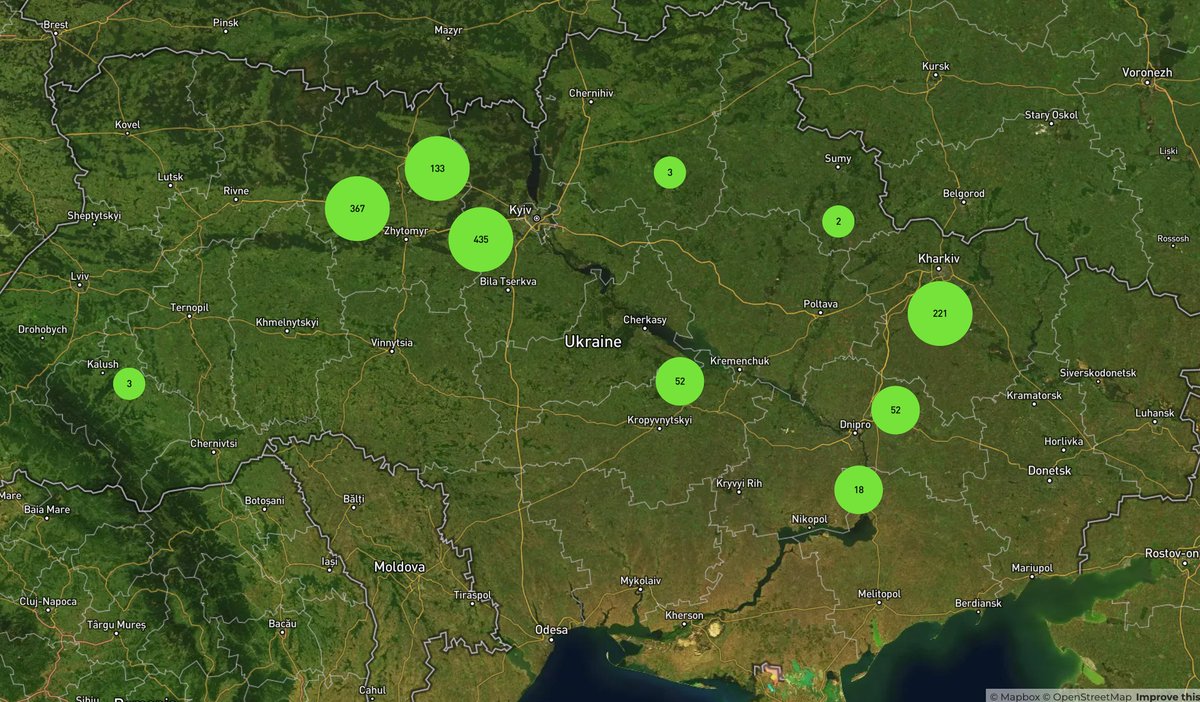
It’s not a final system yet, but already on @SilviProtocol you can see around 1,100 verified and digitized trees across more than ten of our locations.
One detail stands out: most of these plantings are happening in frontline regions. If you look at the map, it becomes obvious.
In reality, we planted closer to 2,500 trees. And this highlights a core issue — the gap between physical work and Web3 accounting.
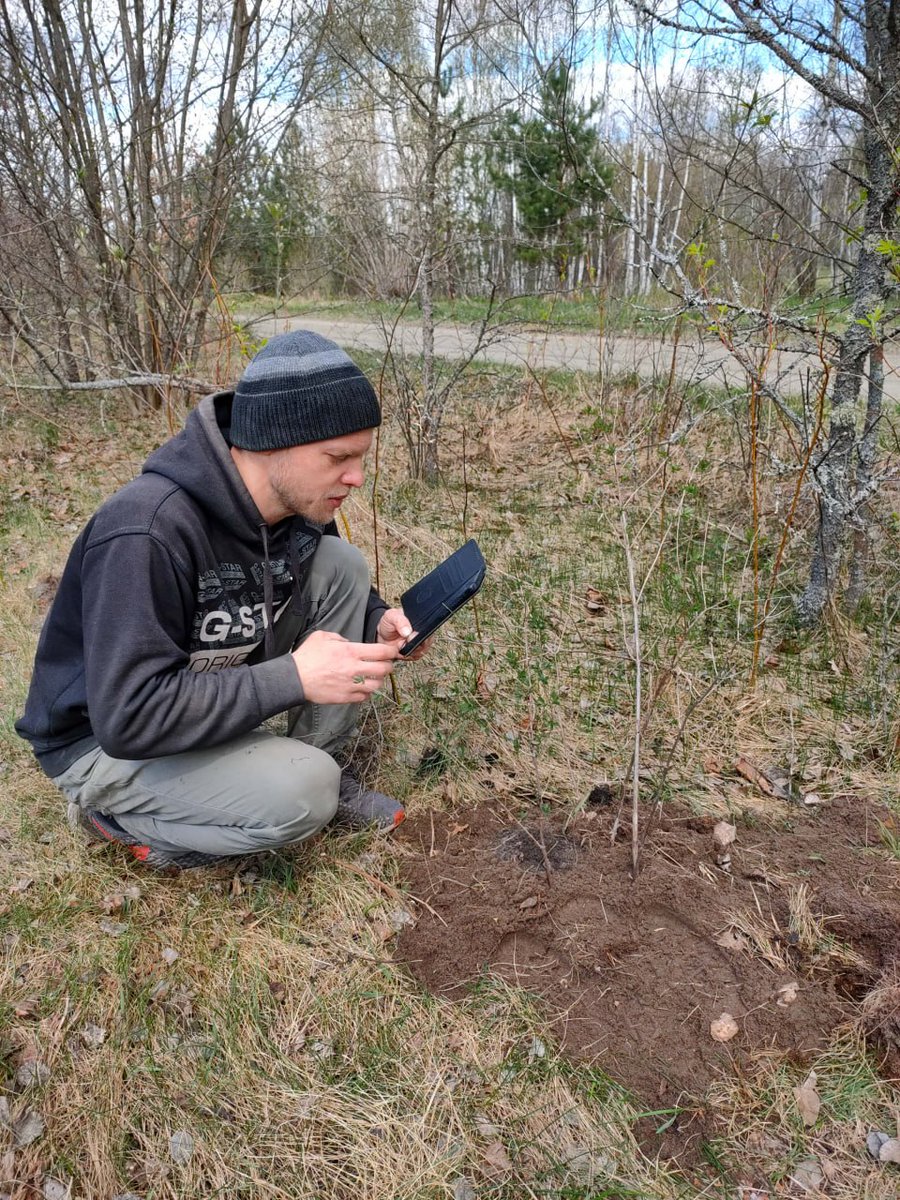
In the field, things don’t follow a script.
Geolocation can shift by tens of kilometers due to security constraints.
Phones fail to capture points.
People work with their hands — not with apps.
To fully operate in this system, we would actually need to upgrade devices across the network — phones, laptops — otherwise the digital layer simply can’t keep up with real-world activity.
Still, even with these limitations, the results are tangible:
— ~2,500 trees planted
— 1,100 digitized and verified
— 12 projects created on the platform
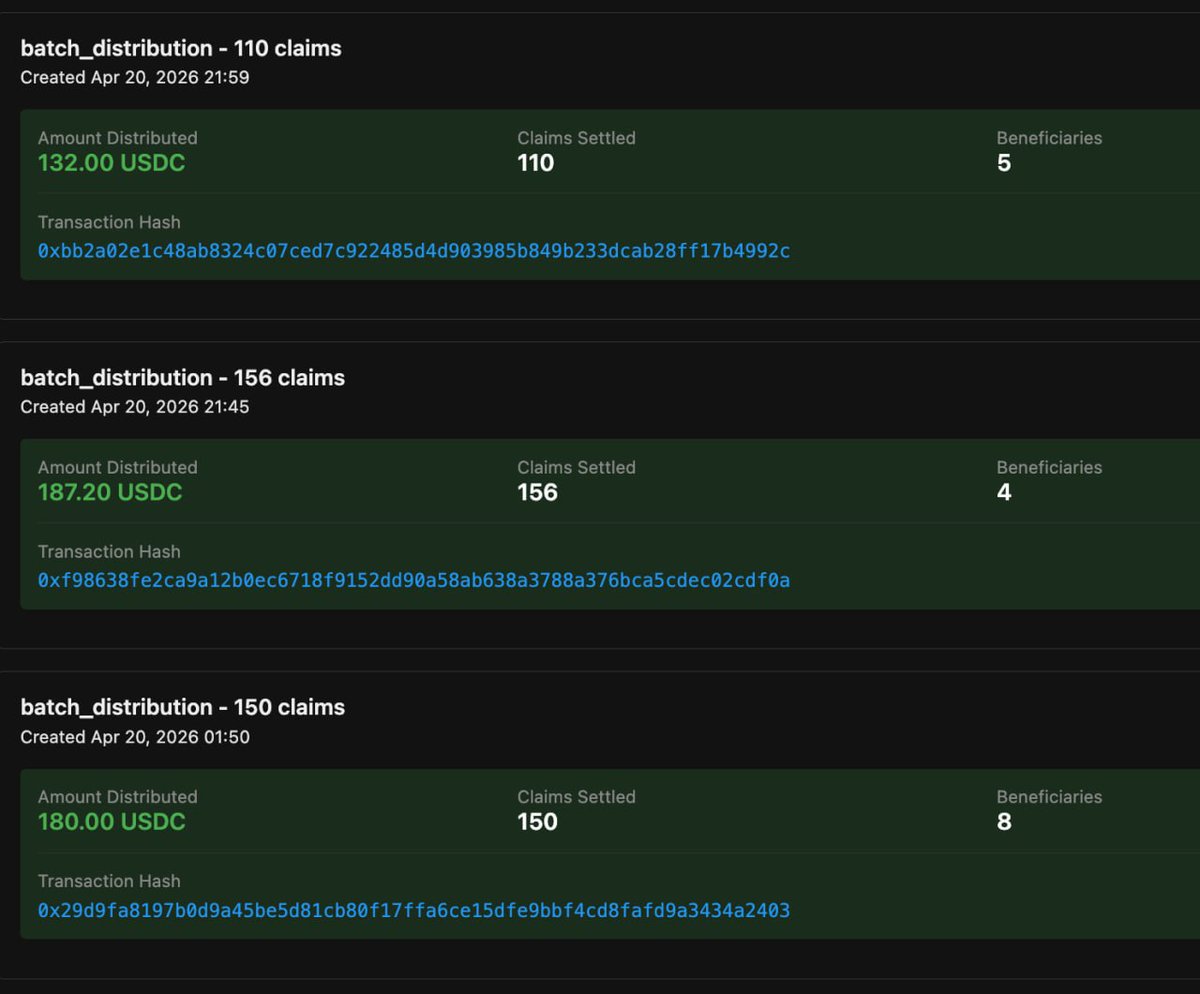
— 480 USDC already paid directly to local wallets
This is what an emerging horizontal economy looks like.
The model is simple:
Each verified tree brings $1.20 USDC upfront
$0.80 USDC after one year if the tree survives
This is not “income” in the traditional sense. It’s a tool:
— to support local initiatives
— to create incentives for impact verification
— to onboard communities into Web3 (wallets, transactions, validation)
In practice, it’s a preparation layer for more complex systems — carbon credits and biodiversity markets.
What matters is accessibility.
The onboarding is simple, the mechanics are clear, support is responsive, and payments are relatively fast. This allowed us to test everything not in theory, but in real conditions.
At this stage, we can confidently recommend this approach to others:
permaculture groups, foresters, volunteers — anyone involved in tree planting.
Because this is one of the few tools where a physical action — planting a tree — already has a digital trace and a basic economic layer around it.
Special thanks to @DjimoSerodio for continuous support and fast responses to all our “field-level” challenges. Without that, this experiment likely wouldn’t have worked.
#ecovillage #treeplanting #ReFi #Web3platform #tokenizing
Shout out to @MontyMerlin for pre-purchasing 2 liters of olive oil and supporting @RifaiSicilia
Another success story for @ReFiDAOist and model for local nodes to follow.