Founder President of IYNS, Establishing Indian Nuclear Prorgam2.0, Nuclear & Fusion policy enthusiast; founder of WiN-India, co-founder of Women in Fusion
Fueled by investment and innovation, fusion is gaining momentum. At #WNE2025, industry leaders explored what it will take to build a global fusion ecosystem.
Read the full article on our blog to for more about the latest developments: https://t.co/Hkd2Fr1o57
Mme @nsitharaman a participé à une table ronde sur le thème « Comment favoriser l’émergence d’une nouvelle classe moyenne ? » lors des Rencontres Économiques d’Aix-en-Provence, un grand forum économique organisé à l’Université Aix-Marseille, en France.
M. Joaquim Miranda Sarmento, ministre d’État et des Finances du Portugal, Mme Nadia Fettah Alaoui, ministre de l’Économie et des Finances du Maroc, ainsi que Mme Véronique Bédague, directrice générale de Nexity, ont également pris part à la discussion.
@PMOIndia@MEAIndia@FinMinIndia@nsitharaman@PIB_India@mygovindia@IndianDiplomacy
Union Minister for Finance & Corporate Affairs Smt. @nsitharaman visited the International Thermonuclear Experimental Reactor @iterorg in Cadarche, south of France, today.
ITER is a large-scale international collaboration aimed at building the world’s largest experimental tokamak nuclear fusion reactor. The project involves seven main member countries, including India, with additional cooperation agreements with many other countries.
FM Smt. @nsitharaman witnessed a presentation and India’s contribution to ITER by Mr. Alain Becoulet and Mr. Kattalai Ramachandran Sriram. Later during the guided visit, the Union Finance Minister was informed of the facilities at ITER with a walk through Cleaning Hall and Assembly Hall Walk and a view of Tokamak Pit.
The Union Finance Minister appreciated the dedication of the ITER engineers and scientists engaged in ITER experiment, which is one of the most ambitious nuclear fusion energy projects in the world, and a significant step toward sustainable and limitless clean energy for the future.
FM Smt. @nsitharaman also commended the work of Indian scientists, engineers and associates, as well as notable industry players such as L&T, Inox India, TCS, TCE, HCL Technologies, among others, who are contributing to the project over the last two decades.
Smt @nsitharaman interacted with Shri Ajaikumar Shankar, an engineer from Coimbatore, Tamil Nadu, currently contributing to the International Thermonuclear Experimental Reactor (ITER) project.
Shri Ajaikumar Shankar is a graduate from Anna University, Chennai with a specialization in Advanced Manufacturing.
Smt @nsitharaman interacted with Indian professionals from Larsen & Toubro (L&T) contributing to the International Thermonuclear Experimental Reactor (ITER) project in Cadarache, France.
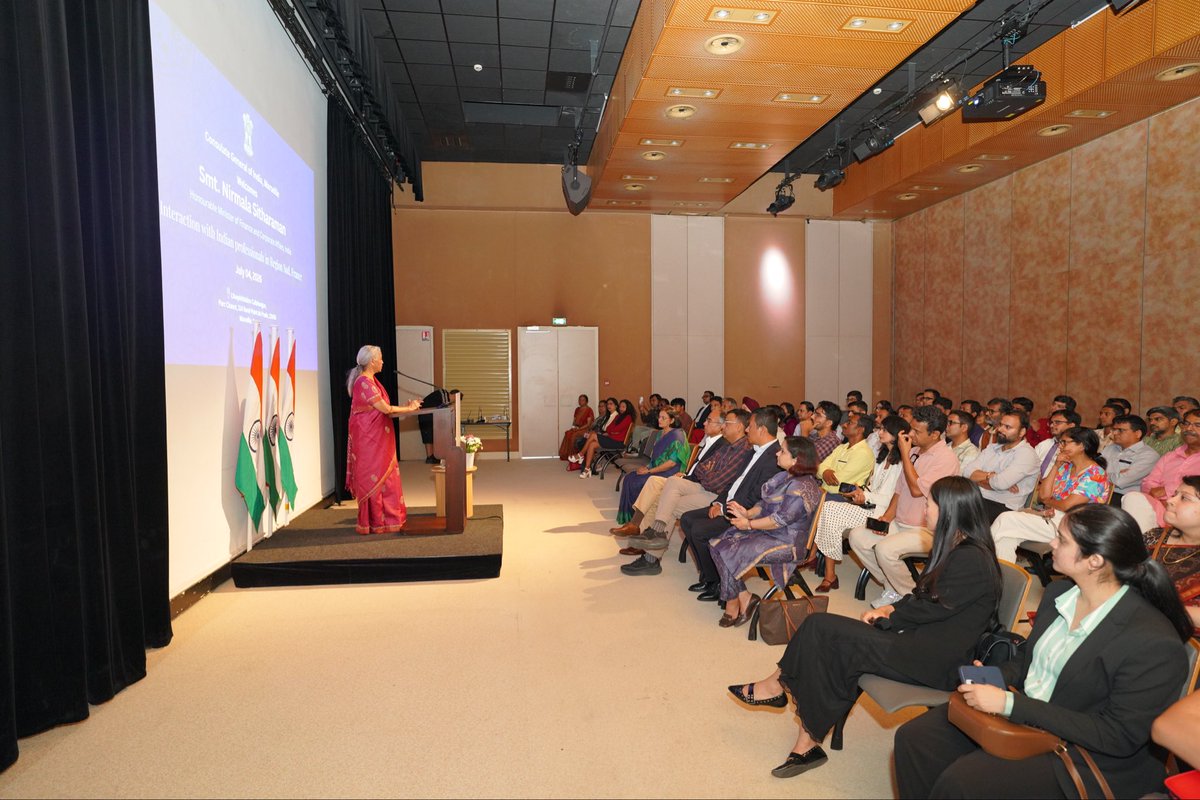
Union Minister for Finance and Corporate Affairs Smt. @nsitharaman delivers the keynote address to the Indian diaspora at a gathering being held at Marseille, France, today. Later, the Union Finance Minister also interacted with the members of the Indian diaspora.
@IndiaembFrance
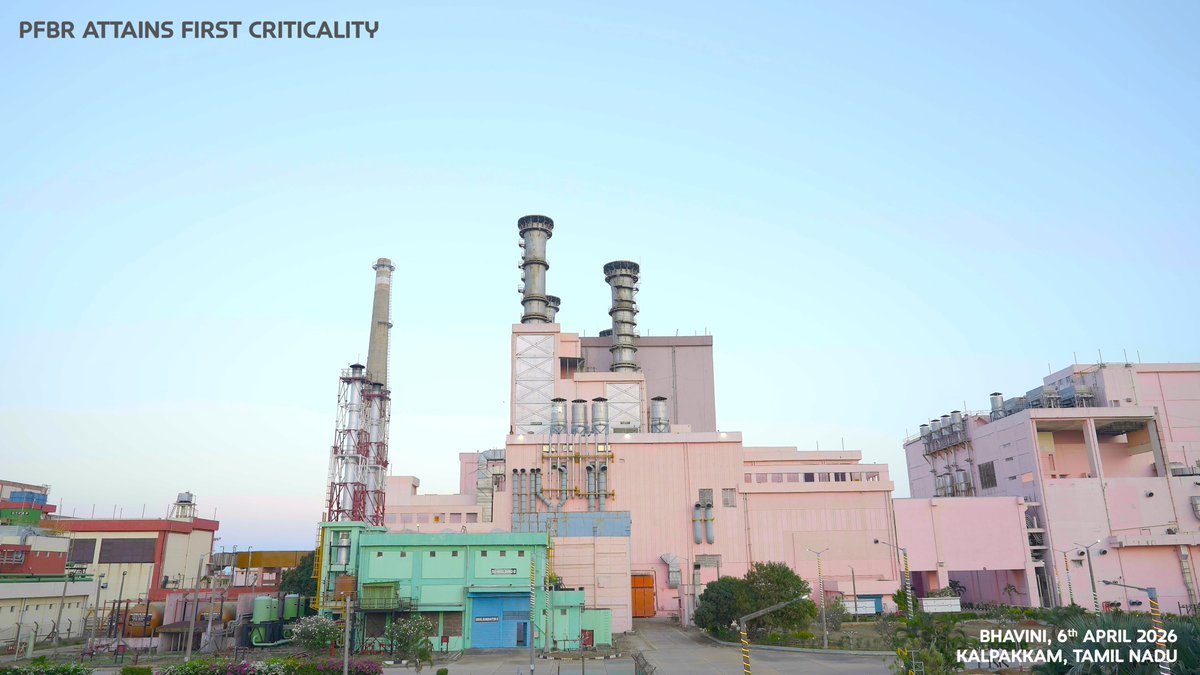
Today is a historic day. India has entered 2nd stage of our three stage nuclear power program with the achievement of clriticality of PFBR. Congratulations to every contributor to this critical technology that makes India only the second country to operate a large fast reactor.
🇮🇳 PFBR Attains First Criticality: A historic milestone in India's nuclear energy journey
The indigenously designed and built Prototype Fast Breeder Reactor at Kalpakkam starts sustained nuclear chain reaction. 1/2
@PMOIndia@narendramodi@DrJitendraSingh@iaeaorg@PIB_India
India’s nuclear regulator stands among the world’s best.
Safely operating with multiple safeguards while producing 8 GW of nuclear power reflects the dedication and integrity of AERB and @NpcilOfficial@iaeaorg has readily admitted it.
None 🇮🇳 nuclear safety expert has raised real concerns on the #shantibill2025 Bill, only few politically driven objections have surfaced.
As independent civil society, @YouthIyns driven by science and national interest, we are open to dialogue.
We invite you & other MPs and stakeholders to join an honest, evidence-based conversation to clear doubts and move forward together.
Please accept the invite
@ShashiTharoor@RahulGandhi
#arvindsawant
@ArunNehru_DMK@ManishTewari@YouthIyns@Nitendra_S@SMunot57176
A brilliantly written piece @smritiirani ⚡️
Aptly describes the potential of nuclear energy & the cooperation that can lead to multifaceted changes in
India-EU energy association as well!
@YouthIyns@Nitendra_S@SMunot57176@Sapna_nuke
𝐅𝐫𝐨𝐦 𝐌𝐢𝐬𝐬𝐭𝐞𝐩𝐬 𝐭𝐨 𝐌𝐞𝐥𝐭𝐝𝐨𝐰𝐧: 𝐓𝐡𝐞 𝐂𝐚𝐬𝐜𝐚𝐝𝐞 𝐓𝐡𝐚𝐭 𝐁𝐞𝐜𝐚𝐦𝐞 𝐂𝐡𝐞𝐫𝐧𝐨𝐛𝐲𝐥
We are starting our series on one of the most talked about accidents in the human history- “#Chernobyl Accident”. We have heard it many times in different versions, but here we are trying to capture the truth, i.e., what the #data really says. This week, let’s try to understand Chernobyl #accident by an example.
Imagine driving a car with a hidden design flaw. Whenever the driver is applying brakes, the car doesn’t stop suddenly as it accelerates first and then slows down. Now, one day a group of engineers plan to conduct a test. The experiment is to check if the car’s spinning wheels can keep the steering and brakes alive even when the engine is turned off. The idea makes sense but is the situation conducive?
Anyway, the engineers also switched off airbags and ABS considering that safety systems won’t be needed. The test began but due to resistance from the experienced driver to perform the experiment, a fresh driver (with license but minimal to no experience) was asked to carry out the experiment that day. The car generally travelling at a steady pace of 80kmph, was made to slow down rashly for simulating engine turn off scenario. Since the braking was too hard, the speed suddenly dropped to 10 kmph. To fix this, the driver quickly accelerates, making the car jerk forward and unstable. Warning lights flashed but all went ignored.
The car now reaches downhill terrain and further speeds up. The driver slams the brakes but, remember the flawed design, it further accelerates violently. The car goes out of control and crashes into a barrier and explodes.
This story is not only about that car accident but also holds true for the Chernobyl mishap. A risky experimental test plan, inadequately trained engineers, poor communication, disabling of key safety systems, operating the reactor at a dangerously low power, removing the control rods much below safety limits, and at last, human errors under pressure, everything queued up to cause one of the most talked about accidents in human history.
In the upcoming weeks, we will try to highlight some of the details about this accident, i.e., what the data really says.
#Nuclear #iaea
@Nitendra_S@SMunot57176@Gaurav_Gullaiya@Sapna_nuke
But what was Chernobyl Nuclear Plant and the impact of its accident
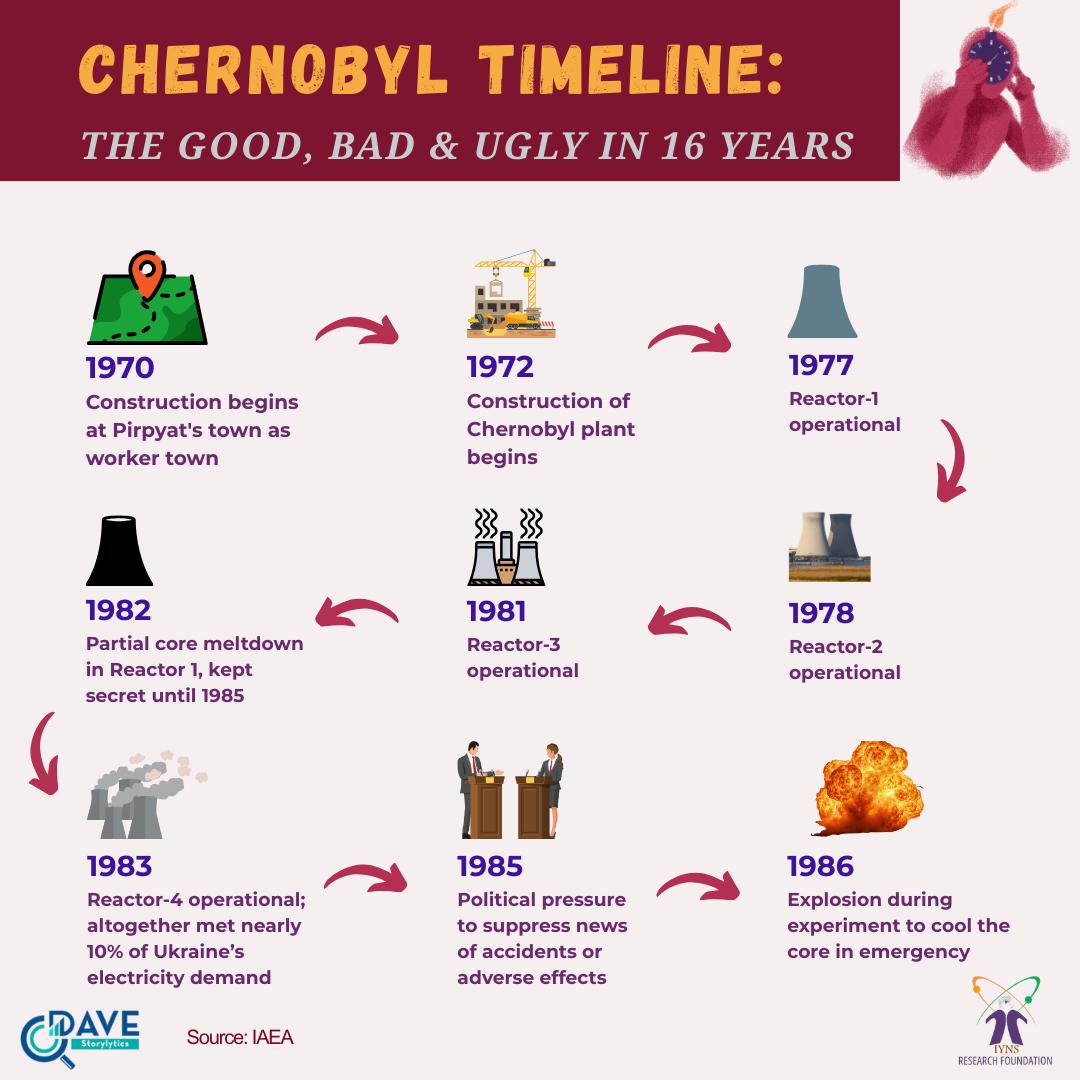
Last week we understood the #Chernobyl Accident with its analogy with a car accident. We saw a disaster in the end. But was this the purpose of the Chernobyl. No. Chernobyl was an ambitious project of that time. It was also planned to become the world's largest nuclear plant with a total of 12 reactors. With four reactors at that time, it was the largest nuclear plant in the Soviet Union and provided for 10 per cent of the entire electricity demand.
So, what went wrong? A series of events. The accident was not a consequence of a single day's fallout but a series of least probable events and decisions, all combining together. And its impact? Let’s discuss this in detail. Since the Chernobyl plant was situated at the western border of the country that’s why the radiation reached many far flung European countries too.
The United Nations Scientific Committee on the Effects of Atomic Radiation, UNSCEAR report showed that the mean effective dose equivalent in the first year on thyroid was 760 µSv in Belarus, 670 µSv in Austria, 590 µSv in Greece, 1400 µSv in USSR and even 190 µSv in Turkey. While the permissible limit of radiation was much higher than these values, 50,000 µSv per year, public fear was at its peak. This implied the level of radiation phobia instilled among the common people without the proper reasoning. And the effect of this fear is still in the mind of people, and affecting the growth of the nuclear industry.
Next week we will analyze is the Chernobyl site still dangerous with data that speaks the truth.
#IAEA #Nuclear #NuclearFacts #MythBusting
@Nitendra_S@SMunot57176@Gaurav_Gullaiya@Sapna_nuke @davestorylytics
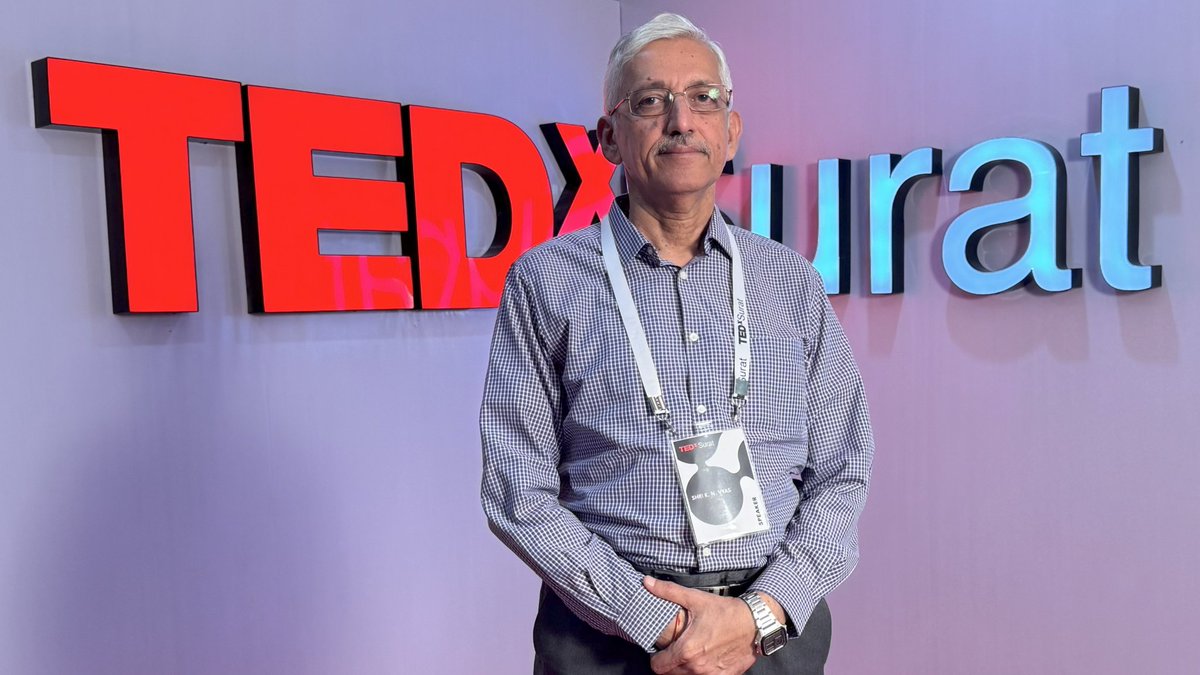
Powering Life Beyond Power: Shri K. N. Vyas, Homi Bhabha Chair Professor and former Secretary, DAE & Chairman, AEC, delivered an inspiring @TEDx talk in Surat, demystifying atomic energy and showcasing the immense promise of nuclear power. 1/3
“Leaders don’t see the future, they see the dead-end of what they’re doing. Still, they continue to solve it through innovation, because it’s important for humanity”, as said by Dr. NITENDRA SINGH (@Nitendra_S ) at the @GastechEvent in the session: “𝐀𝐭𝐭𝐫𝐚𝐜𝐭𝐢𝐧𝐠 𝐭𝐡𝐞 𝐥𝐞𝐚𝐝𝐞𝐫𝐬 𝐨𝐟 𝐭𝐨𝐦𝐨𝐫𝐫𝐨𝐰, 𝐭𝐨𝐝𝐚𝐲”.
It was an intriguing discussion with young participants and fellow panel participants Gregor Pett Sarah Groot Shapel Ann-Kathrin Merz Adriana Reais Pinto Gianluca Valenti. Thanks to Christie Marshall for arranging it so well.
#Energy #EnergyTransition #ClimateChange #CapacityBuilding #NuclearEnergy #Gastech #IYNS #youth #Futureleaders #Leadership
𝐖𝐡𝐚𝐭 𝐡𝐚𝐩𝐩𝐞𝐧𝐞𝐝 𝐭𝐨 𝐫𝐚𝐝𝐢𝐚𝐭𝐢𝐨𝐧 𝐥𝐞𝐯𝐞𝐥𝐬 𝐚𝐟𝐭𝐞𝐫 𝐭𝐡𝐞 𝐂𝐡𝐞𝐫𝐧𝐨𝐛𝐲𝐥 𝐚𝐜𝐜𝐢𝐝𝐞𝐧𝐭?
From the last two weeks we are discussing the Chernobyl accident in terms of data. First, we discussed it with its analogy with a car. Last week we discussed the significance of Chernobyl NPP and the impact of the accident. This week we will discuss how the radiation level varied after the accident till today.
One can see in the image that the radiation was very high immediately after the accident, but it significantly subsided within a week. It reached up to 20,000 mSv an hour. However, the radiation level dropped to around 3.6 mSv an hour by the end of the day. Later, radioactivity slowed down and a year later, in 1987, radioactivity stood slightly above the background radiation. At present, the radioactivity level is comparable to the natural background radiation. The fluctuation in radiation level is due to different nature and decay of different radioactive material.
The accident spread more fear than radiation. The radiation subsided in a couple of weeks but due to the lack of awareness and instilled phobia through misinformation about nuclear, a huge panic erupted amongst the common public, causing a significant dent in the growth of the nuclear energy sector in the 1990s.
Nevertheless, the technical and scientific teams around the world knew this reality and kept going with the nuclear advancements. As a result, the country that witnessed the Chernobyl accident - Ukraine - now depends on the same source to meet half of its electricity requirement, according to the World Nuclear Association.
But it is true that if the Chernobyl accident had not happened, the shape of nuclear energy would have been different now. In the next article, we will discuss how the Chernobyl mishap made the momentum slip for nuclear energy.
#iaea #iyns #davestorylytics #NuclearAccident #NuclearSafety #Data #CaseStudy #NuclearEnergy #MythBusting
@Nitendra_S@SMunot57176@Gaurav_Gullaiya@Sapna_nuke @davestorylytics
India Energy Week 2025 | Nuclear Powering the Future ⚛️🌱
At @IndiaEnergyWeek 2025, a bold vision echoed across the forum — 100 GW of nuclear capacity by 2047. But ambition alone isn’t enough.
🔍 Dr. NITENDRA SINGH (@Nitendra_S), President of IYNS, delivered a powerful address spotlighting the real enablers of this transition:
1. Workforce Readiness: Bridging the skill gap across academia, industry, and policy.
2. Access to Research Reactors: Empowering students, researchers, and innovators with hands-on infrastructure.
3. Youth & Women in Nuclear: Championing inclusive leadership in the clean energy movement.
His key message:
👉 100GW is not the finish line — it's a milestone.
To decarbonize a sector still 70% reliant on fossil fuels, we must cultivate talent, democratize nuclear knowledge, and align policy with purpose.
#NuclearForFuture #100GWby2047 #EnergyTransition #IYNS #IndiaEnergyWeek2025 #CleanEnergy #SustainableIndia #WomenInNuclear #YouthInNuclear #IndiaEnergyWeek2025 #ViksitBharat2047 #IEW2025 #UrjaKaMahaKumbh
@DAEIndia@NITIAayog@IndianOilcl@HPCL@BCG@Gaurav_Gullaiya
https://t.co/SL13oG8a2a