In new research out in @JPART1991, @_Oliver_James_ and I study whether public service users' responses to performance information reflect (directionally) motivated reasoning or if responses can be explained by Bayesian updating (from potentially incorrect prior beliefs).
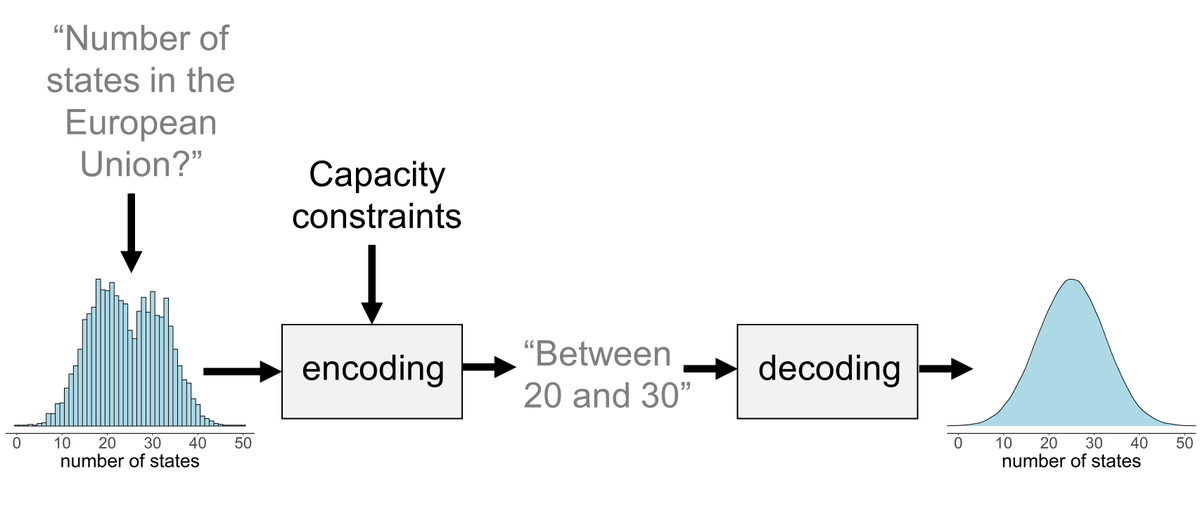
Our paper on the logic of guesses is now out (w/ @NeilBramley and Chris Lucas).
We provide a new information-theoretic perspective on many phenomena (old and new) in judgment under uncertainty.
🧵
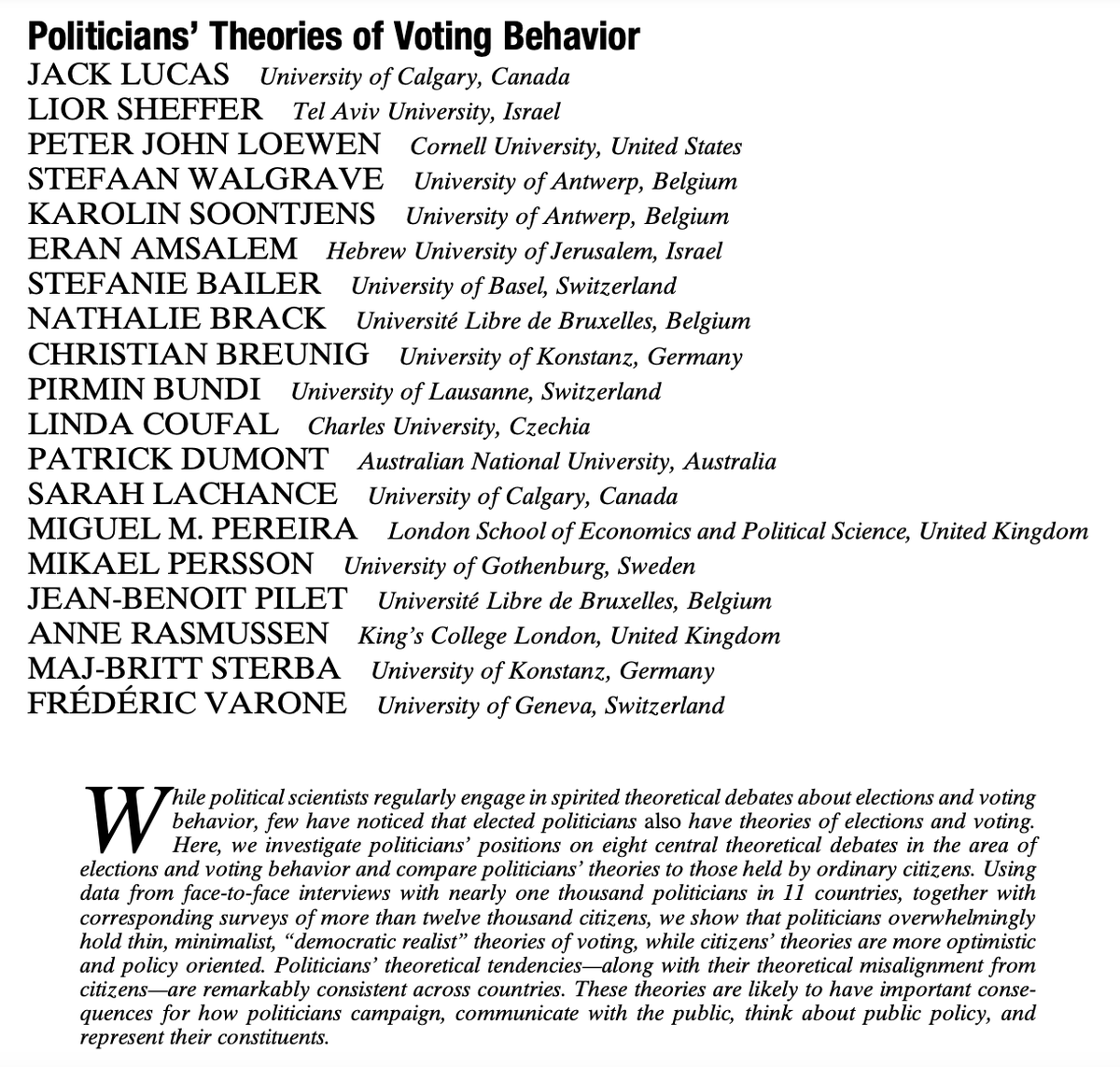
Now in @apsrjournal: What do politicians think about their voters? Fielding face-to-face surveys to 982 sitting politicians in 11 countries, and surveys of 12,000 citizens, we find they have remarkably consistent - and cynical - theories of voters: /1
https://t.co/RRVjarAb8M
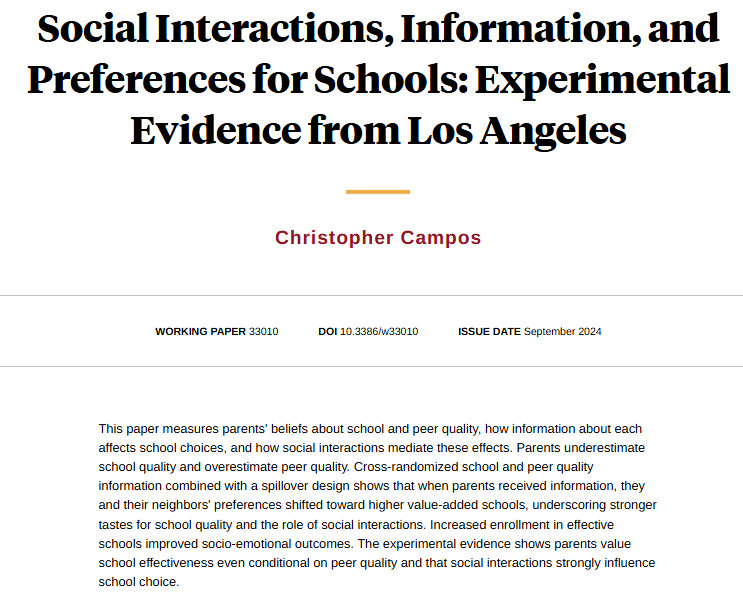
Experimental evidence from Los Angeles shows parents value school effectiveness even conditional on peer quality, and that social interactions strongly influence school choice, from @cqcampos https://t.co/1PeVaHgIuE
The notion of “probability” is both familiar (we use it), and mysterious (we would typically struggle to define it).
Here is a 🧵 to remove the mystery and make the meaning of “probability” more intuitive.
🤷Should you include a “don't know” (DK) option in a survey question?
➡️@madselk & @CBWlezien show the exclusion of a DK option can matter, mostly for low-information respondents and on low-salience issues https://t.co/dl5XBzv28c #FirstView#OpenAccess
My latest is now up @The_JOP!
Using data from @LASchools, I show how electoral incentives can lead to inequalities in school funding.
Thx to all who supported this project and provided feedback, especially @vkoganpolisci @payson_julia @LeslieKFinger!
https://t.co/H0zN7g6v1n
Exciting findings about citizen coproduction in "Coproduction of core and complementary tasks in times of service decline: Experimental evidence" by @PeterRDamgaard, Niels Opstrup, & Mette Kjærgaard Thomsen.
https://t.co/ub47u5aS9c
NEW PAPER w/ @eriksantoro@j_kalla@ronchuli
There's a widespread idea that we will persuade other people more effectively if we listen to them first
The NYT has said it, social psych says it, & my previous research has assumed it
In a new study, we find it's likely wrong 🧵..
Peter Rasmussen Damgaard (@PeterRDamgaard) researches service delivery and citizens' behavior as users, coproducers, and voters. Peter was already Asst. Prof. @PA_SDU and has now been promoted to TT Asst. Prof. You can check out some of his work here: https://t.co/chbgLVawxW
We are happy to announce that we have hired *three* tenure-track assistant professors who will join us in the Public Administration Research Group (@PA_SDU). All three will be introduced here briefly:
Saying an effect size is "small" or "medium" is meaningless. But we didn't have a set of guidelines for saying it better. Now we do, thanks to this awesome piece by @DavidFunder and Dan Ozer--I think everyone doing behav science research should read this. https://t.co/IdGkJfHVUD
Doctor quality matters a lot.
Norwegian study finds that replacing one of the 5% worst general practitioners with one of average quality generates a social benefit of $9.05 million.
Via @jonasvlachos.
https://t.co/3si2LUckoU
Great thread on how shocks to natural geography causes prosperity. @ChristianVedel uses two really fascinating historical shocks to Danish waterways that I also recently learned about myself. Very cool stuff!
In addition to the general call above (across disciplines), we also have a PA specific PhD call open. The deadline is also October 15th for this call: https://t.co/zmZQX81ZRZ