This is the silent part that people wouldn't know.
Behind closed doors inside a medical conference, a large group of clinicians and researchers giving a standing ovation to another group of clinicians and researchers who found a way to increase survival in patients suffering from one of the, if not the, worst cancer in humans.
Metastatic pancreatic cancer.
They'll do this and then be on their way to see their patients the next day as if nothing happened.
And then work on something new to better what they did in this room.
That is how medical science works.
Value it and value its practitioners.
New study combining microscopic imaging, AFM, and mass spectrometry reveals hypoxic pancreatic tumors that induce cytoskeletal and nuclear mechanical changes that promote cell invasion, opening new avenues for therapeutic strategies that target mechanics. https://t.co/6IvvkZG8tV
In the New and Notable "Hypoxia and the limits of nuclear passage," Iden Kurtaliaj highlights the paper "Hypoxia-driven changes in nuclear morphology as a determinant of cell migration." https://t.co/pmtpVlyTrB
Congratulations to Jean Bennett, Albert Maguire (@ScheieEye) & Katherine High (@ChildrensPhila), recipients of the 2026 @brkthroughprize in Life Sciences in recognition of their pioneering work developing gene therapy for inherited blindness! https://t.co/u5TiwWYU1I
🔔New paper alert! Why does high-fat diet promote #PancreaticCancer? And does the type of fat matter? Epidemiologists have asked this for decades. Our new paper in @CD_AACR shows that fat composition — not just fat quantity — governs cancer development . https://t.co/LmKSIpfKWq
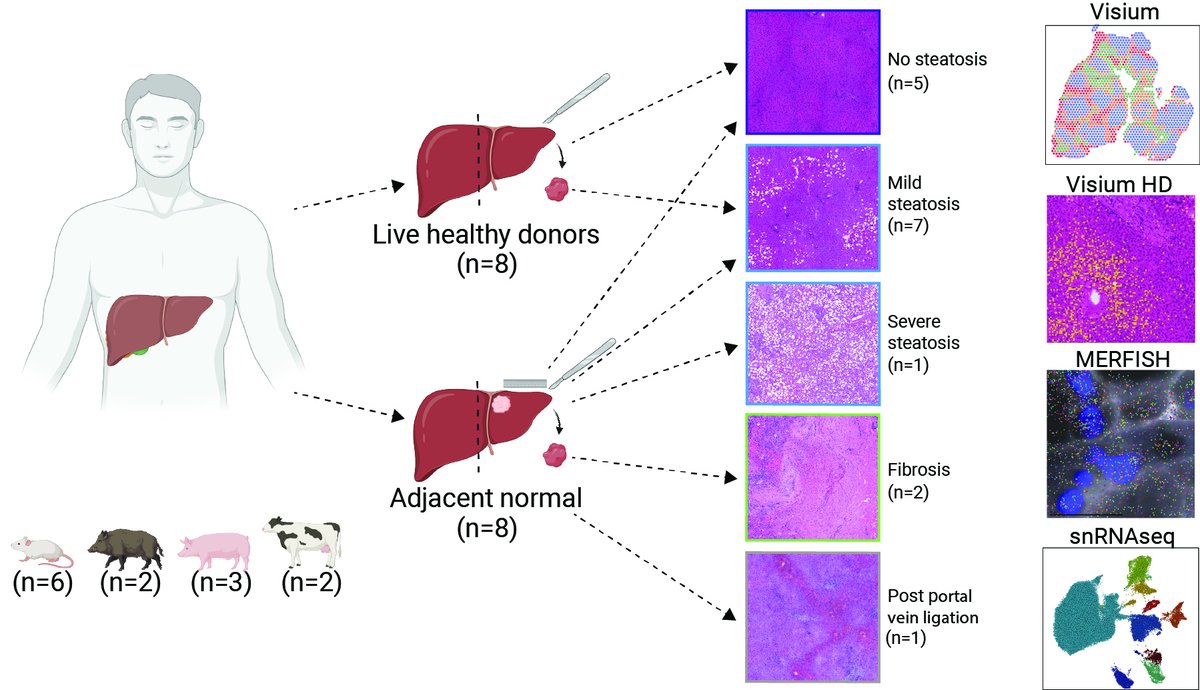
Our paper on zonation in the truly healthy human liver is out in @Nature: https://t.co/I4Mjpnl8Pe
Acquisition of healthy human tissues for cell atlas studies is challenging. The regenerative capacity of the human liver enabled analysis of tissues from living organ donors.
PLIN5 phosphorylation identified as a lever to tune hepatocyte lipid flux, suggesting therapeutic potential for targeting mitochondria–LD coupling #MASLD#MASH https://t.co/cI38RuZPyW
My postdoc work is now out!
Condensates are powerful ways to break symmetry and cells do remarkable things with them. Here we show that in a multinucleate fungus, a condensate regulates translation of a cyclin and a formin, in distinct locations. 1/
https://t.co/E4yiyyp4hg
We can know more than we can tell, but now Al can capture it. Our multimodal agent analyzes lab videos to generate protocols & catch common lab errors. Preserving tacit knowledge in proteomics. Now in @MolSystBiol! @patiskowronek#Google
https://t.co/sxIgEQzTSx
It is now know that #EMT is not a simple binary switch but occurs through a series of different tumour states. In this Review, Dong and Blanplain discuss this and the pharmacological implications for targeting EMT to overcome therapy resistance.
https://t.co/ZsCo68DkRH
How come tension propagates super slowly in some cells (@ZS_biophys), but very fast in others? We suggest it's all about the intracellular pressure and the degree of membrane "crumpling" by the cytoskeleton! https://t.co/5b8Ey8cGg8 @DharanRaviv@avishai231@TheEliaLab
#OPENACCESS: The ordering of unsaturated phospholipids, based on the position of a double bond, is key to a delicate balance between the mechanical stability and fluidity in a cell membrane to function as an organizational platform and a barrier.
https://t.co/m0CQ2E38K0