CAC down 42% after finding a banger. 🔥
Spend up 23%🚀
This is exactly what happens in your ad account when you find a banger.
The entire ad account starts spending more with better cpa.
Now in order to find those ads you need....
To build somekind of engaging narrative.
- Find good stories.
- Make sure your edits keep attention.
- Learn from previous tests
Rinse and repeat.
🚨 Anthropic, the company behind Claude, just committed $150 million to put 1,000 people inside nonprofits across America.
Their job: help those organizations actually use AI.
Here's the gap they're trying to close 👇️
AI tools exist. They're powerful, widely available, and increasingly affordable.
But most nonprofits — food banks, veterans' charities, education programs — have no engineers to help them use those tools.
Even if the software is free, someone still has to configure it, train staff, and build the right workflows.
Enter Claude Corps.
Fellows earn $85,000 a year to embed full-time at a nonprofit for 12 months.
They get five hours of weekly Claude training and an extensive AI usage budget for their work.
These aren't unpaid interns. They're deployment engineers, with salaries and mentors.
The range of organizations joining tells the whole story.
➡️ RAINN, which runs the national sexual assault survivors' hotline, wants help building
safer digital tools for survivors.
➡️ Montgomery County Food Bank wants AI for donor analytics and food distribution
forecasting.
➡️ REEF, a marine conservation group, needs tools for underwater survey teams in Key Largo.
No two organizations are using it for the same thing.
Applications are open now. The first cohort of 100 fellows starts October 2026.
You need fewer than two years of work experience and comfort with Claude.
Anthropic plans to open-source the infrastructure and eventually replicate this
internationally.
➡️ Why this matters beyond the fellowship itself:
Anthropic just spent $150 million proving something the industry often pretends isn't true.
Powerful technology doesn't spread itself.
Someone has to show up, learn the organization, and do the work in person.
What's a nonprofit or community you'd love to see use AI better?
#AI #Anthropic #AIForGood #TechForGood #ClaudeCorps
I’m opening up more guest spots on the podcast!!
If you’re building in ecommerce, TikTok Shop, retail, creator commerce, AI, media buying, or anything that is changing how brands grow...
I want to talk to you
The best conversations are always with operators who are actually in it
If that’s you, or you know someone who would be a great guest, send me a DM
Last week I was with Andy Houghton on Behind the Camera to discuss how brands can build creator ecosystems, the strategies behind successful TikTok Shop growth, and why social commerce is becoming one of the most powerful revenue channels today
👇 links in comments
3 cities down. 1 to go. 🔥
NYC, Miami, and LA each brought together 75-100 retention marketers from the brands and agencies actually moving the needle.
Tactical sessions you can apply tomorrow and live Q&A where attendees workshop their biggest retention problems with experts in the room.
Austin closes it out tomorrow with just 2 seats left.
Grab yours: https://t.co/QNYwB1sv6e
Here's a pattern I see all the time:
Customer buys Product A. Brand is thrilled.
Brand tries to sell them Product B immediately.
Customer ignores them. Brand thinks they're not interested.
But maybe they're not ignoring you.
Maybe they're just not done with Product A yet.
There's a concept called "Consumption Velocity". How fast does the customer use the thing they bought?
If they cancel their subscription, they usually do it on a Monday.
Don’t email them on Tuesday with "We're sad to see you go. Here's 20% off".
They just made a decision.
They're not ready to undo it.
If they buy a protein powder, a tub lasts 30 days.
Don't email them about a new flavor on day 7. They haven't even opened the bag yet.
Map your retention emails to the consumption cycle.
For the protein powder: email on day 25 "How's the gains?
If you're running low, here's the new flavor. If you've still got half a tub left, here's a recipe to shake up your routine.”
You give them value either way.
If they're done, they buy.
If they're not, they still engage.
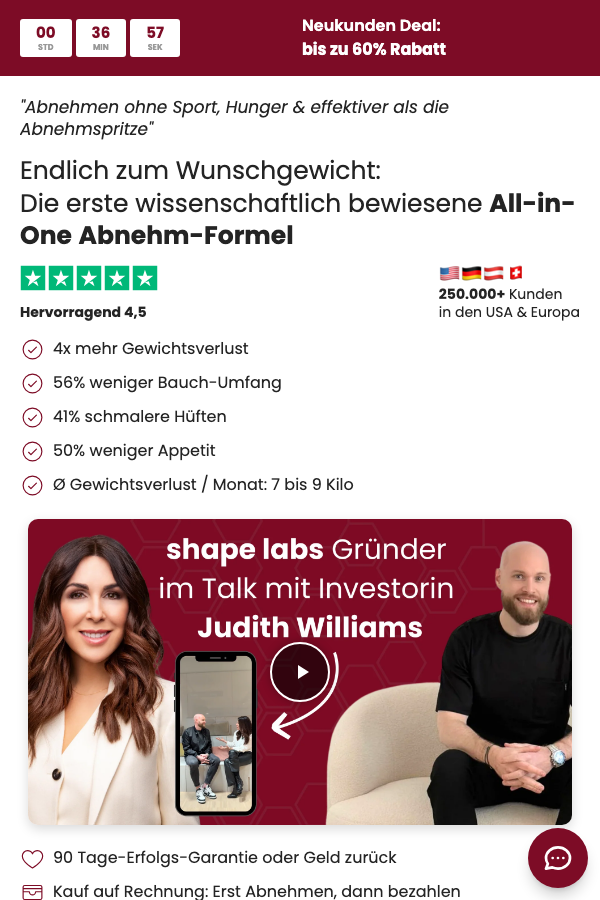
I just found an advertorial that Shape and Science has been running nonstop.
The copy is so damn good it doesn't mention the product until you're deep into the page.
Let me break it down 🧵
AI UGC is one of the most scalable formats and realistic AF. No need to ship product, wait for creators and pay them $100 s of dollars
Put 150+ AI UGC ads in beauty niche in one swipe file. Enjoy mfers: https://t.co/g6GnMkr0Qw
this sounds counterintuitive
but 30K engaged subscribers will out-earn an 80K mixed list.
80K mixed:
• half the list hasn't opened in 90 days
• Klaviyo still charges you for the contacts
• your sender rep gets dragged down with every send
30K engaged:
• opens, clicks, purchases in the last 30 to 90 days
• ISPs read the engagement and reward placement
• the hot segment carries your sender reputation
done right, smaller list can mean bigger checks
After going from 0→ 30,000+ followers in 24 months...
I’m convinced that going viral on LinkedIn can be your #1 inbound channel.
Here's a list of 30 founders in GTM that are killing it on LinkedIn and what they mainly post about:
(bookmark this for inspo!)
• Adam Robinson - Company Building & Bootstrapping
• Gal Aga - Sales
• Anthony Pierri - Positioning
• Marty Kausas - Company Growth
• Dan Rosenthal - GTM
• Fivos Aresti - GTM
• Dharmesh Shah - Product
• Jason M. Lemkin - SaaS
• Henry Schuck - Prospecting & Customers
• Varun Anand - Events & Company Updates
• Nils Schneider - Product Features
• Nick Velkovski - Building In Public
• Tyler Denk 🐝 - Team Growth & Events
• Jaspar Carmichael-Jack - AI & Sales
• Alina Vandenberghe 🌶️ - Reflections & Hot Takes
• Tim Zheng - Company Events & Updates
• Dan Lee - Company Growth & Updates
• Roman Hipp - Company Events & Updates
• Nathan Merzvinskis - Agentic GTM
• Valentin Wallyn - Company Updates & Hot Takes
• Daniel Saks - Agentic GTM
• Mikhiel Tareen - ABM
• George Rekouts - GTM & Data
• Adam Holmgren - Attribution & Paid Media
• Vaibhav Namburi - Growth Hacks & Outbound
• Yuriy Zaremba - AI & Company Positioning
• Arnaud Belinga 🧊🔨 - Company Updates & Demos
• Anthony Goldbloom - AI & Customer Service
• Michael Heiberg - Company Building & Hot Takes
• Austin Hughes - Building In Public
TL;DR:
Personal brand = company brand.
Buyers want to know who's behind the company before they request a demo.
had a sales call with a guy pivoting from Klaviyo/Shopify retention into cold email consulting for D2C brands.
he was building his lead magnet around exactly the same play everyone else runs (free audit, comment a keyword, dm me, book a call).
i told him to throw it away and change it to a “framework”.
here's why:
the FREE AUDIT:
• only converts the prospect who already self-identifies as needing one.
• tiny slice of the people watching your content.
• everyone else scrolls past because they don't see themselves in the offer yet.
the FRAMEWORK:
• converts the whole audience.
• because every viewer can read it, recognise themselves inside it
• either DIY the fix from the framework or realise they want help running it.
• the implementation becomes the natural upsell.
• the diagnostic part becomes pure top-of-funnel.
this is how you stop optimising for booked meetings and start optimising for booked INTEREST.
you build a list of people who already understand your worldview before they ever talk to you.
completely different sales conversation on the other side of that.
→ your framework is the asset that wins trust en masse.
→ the implementation is what you invoice for.
your call though.
I ALWAYS build a projection for every client before i spend a single dollar on ads...
Most of you aren’t doing this
I pretty much need to know the breakeven cost to make these ads work and if any of the ads CAC go above that I IMMEDIATELY cut it
One-way trip to brokie town if you don’t know your numbers
44,223 followers later...
My 2027 prediction for LinkedIn:
1. LinkedIn content continues losing reach every quarter.
2. AI corporate slop saturates the feed.
3. The algorithm shifts to PEOPLE.
Because nowadays, buyers trust individuals & founders.
NOT company logos.
Companies pushing through the corporate brand are bleeding share of voice to founder-led competitors every week.
What works is a 4-pillar layer that turns the founder into the new CMO.
We run this for our own 20-person team and install the same layer with clients.
And we put it into a FULL founder led content playbook.
Inside, it goes over:
• Pillar 1 - Voice Calibration: vocabulary, formats, hot takes and banned topics in a GitHub Markdown guide
• Pillar 2 - Content Cadence: 2 posts/week floor + quarterly long-form mapped to TOFU/MOFU/BOFU
• Pillar 3 - Distribution: first-hour team engagement, Jungler tracking, 20 min/day founder engagement
• Pillar 4 - Team Brand Expansion: extend voice guide to senior team so personal brands stack into company brand
• How a like on a founder post triggers an outbound sequence referencing that post
• 3 failure modes to avoid (ghostwriting, founder doing everything, LinkedIn-only)
Reply FOUNDER and I'll send you the link.
PS
Our team has grown to 120K+ followers collectively with this exact methodology.
“How do I actually become a GTM Engineer?”
I sat down to document the 5 steps (and skills) it takes.
(bookmark this)
1. Use your background as a wedge.
Every killer GTME I know started with either:
• Sales acumen (SDR, AE, BDR)
• Or technical skill (no-code, API, scraping)
One or the other. Sometimes both.
My advice:
Don’t “become” something new. Leverage where you’ve ALREADY been. It becomes your competitive edge when building GTM systems.
2. Learn web scraping inside-out.
GTM Engineers live and die by their ability to pull data from any site.
Start with Instant Data Scraper. Then graduate to PhantomBuster, Apify, Outscraper, and others.
Pro tip... use Unlock Clay GPT (comment “GPT” and I’ll send it to you!) to figure out which tool fits which use case.
E.g., Google Maps = Outscraper. LinkedIn Sales Nav = Prospeo.
The best GTMEs are situationally fluent in tool selection.
3. Build inside Clay (DO THE THING).
Scraped data is useless if you don’t know how to action it.
Practice with real tables.
Try these enrichments:
• Write to other table
• Email waterfalls
• Lookup multiple rows in other tables
• Claygent
• Formula
• find people / find companies
4. Get 2–3 mini wins under your belt.
At this point, you’re dangerous, but unproven.
Find a few folks and offer to build Clay systems for the cost of tools + a testimonial.
5. Go outbound.
Most GTME roles aren’t even posted. They’re created.
Set up automations that alert you when a company mentions “Clay,” “GTM,” or “automation” in their job board. DM me if you want to see my tutorial for how to do this.
Scrape agency directories, enrich them in Clay, then message founders directly. Again, DM me & I’ll share how.
Someone WILL say yes. This role is new. Most companies don’t even know how to interview for it.
That’s your opportunity.
More clicks don't always mean more sales.
Jimmy and Chase unpack why mystery discounts can boost curiosity but still lose to straightforward offers when it comes to conversions.
@yojimmykim@ecomchasedimond
A fashion client was doing $20K per drop on one campaign email.
We added 3 reminder emails to their Black Friday Cyber Monday...
With the SAME email list, they did $78K.
Most brands send one email about a sale and call it done.
People are busy, they see the email, they think "I'll come back later," and they NEVER do.
The top 1% in eCom are sending MINIMUM 3-4 emails per promotion, rotating between educational, storytelling, product-focused, and event-based content, AND following a calendar instead of blasting the list every time they need cash.
That said...
I just built out this swipe file internally for our account managers, and we're giving it away for FREE.
There are over 100 angles you can pull from for any brand in any niche.
You'll also find:
• The exact campaign framework we use for brands doing $100K+/month
• 100 campaign angle ideas you can steal (launches, flash sales, founder stories, UGC, holiday, ingredient spotlights)
• How to structure your content calendar so your list stays engaged and keeps buying
• The 80/20 rule for design vs plain text campaigns
Just comment "CAMPAIGNS" + follow me so I can DM you.
And I'll send it asap.
Ghostwriting is one of the hardest services to fulfill in all of B2B marketing.
I'm building the ultimate AI engine to fix it...
(comment below and I'l give you early access)
- "AI content tools get me 50-60% of the way."
- "I spend HOURS/day hand-editing the same patterns"
- "Clients send back DOZENS of revisions because I can't nail there voice"
- I'm sifting through 500+ posts/day researching winning topics
These are just a FEW of the massive problems ghostwriters/content agencies deal with on a daily basis.
(NOT including the extremely avg high churn rate, annoying client comms, unjustifiable ROI...)
So here's the dirty secret with every AI content tool on the market right now...
When you tell it "don't write like that again," it doesn't matter.
The model literally cannot enforce its own rules.
You can pad the prompt with 10+ instructions and the next post STILL has:
- em-dashes everywhere
- "it's not X, it's Y" reversals in every paragraph
- same overused words
Memory in AI is basically wishing. So I'm building something completely different.
Every edit you make becomes a HARD rule that runs OUTSIDE the model. Pass/fail.
Coders call it linting. Same architecture that keeps AI from writing broken code... now applied to your content.
It gets sharper every batch.
Sounds more like your client every batch.
Eventually you stop editing.
(that's the goal)
Plus the part nobody's solved:
A context layer PER client that actually remembers:
- what worked last batch
- what got cut
- what their CMO hates
- what their ICP responds to.
Not a vague "tone of voice" doc. I'm talkin a LIVE brain that updates every time you ship / get feedback.
And it scales with as many client accounts as you need.
That said...
I'm picking a small group of ghostwriters and content agencieshelp me build it:
→ Early access as features become usable
→ Direct line to shape what gets built
→ Real influence on the roadmap
You'll get a seat at the table to shape the tool you're going to run your business on.
Comment "PARTNER" below and I'll DM you the application.
PS
I've been talking to ghostwriters for months and the same problems keep coming up. If you've been editing the same 10 patterns out of every AI post for a year, you already know what's missing. This is the rare shot to actually fix it.
PSS
Maestro is going to be MORE than just a ghostwriting fix. The full vision:
- A live client brain that absorbs every call, every edit, every Slack message
- Auto-detection of winning hooks/formats from your client's niche
- Visual content generation
- Lead magnet builder
- Funnel builder
- Cold email at scale
- LinkedIn Thought Leader Ads
- Intent signal capture
- Outbound DM automation
- Live ops alerts
Every ecom brand is about to have access to the same AI.
Same capabilities.
Same automations.
Same efficiencies.
Within 12 months, it's table stakes.
It'll write everyone's copy. Build everyone's briefs. Analyze everyone's data.
So the advantage won't be who uses it.
It'll be who's best at what AI can't do.
- Read the room when your customer is about to churn.
- Know when to push your team and when to back off.
- Make the call when the data points in two directions.
- Build the kind of trust that makes someone buy again without being retargeted.
Moats are still built on trust. Not technology.
The future of ecom isn't less human.
It's more intentionally human - in exactly the places AI can't go.